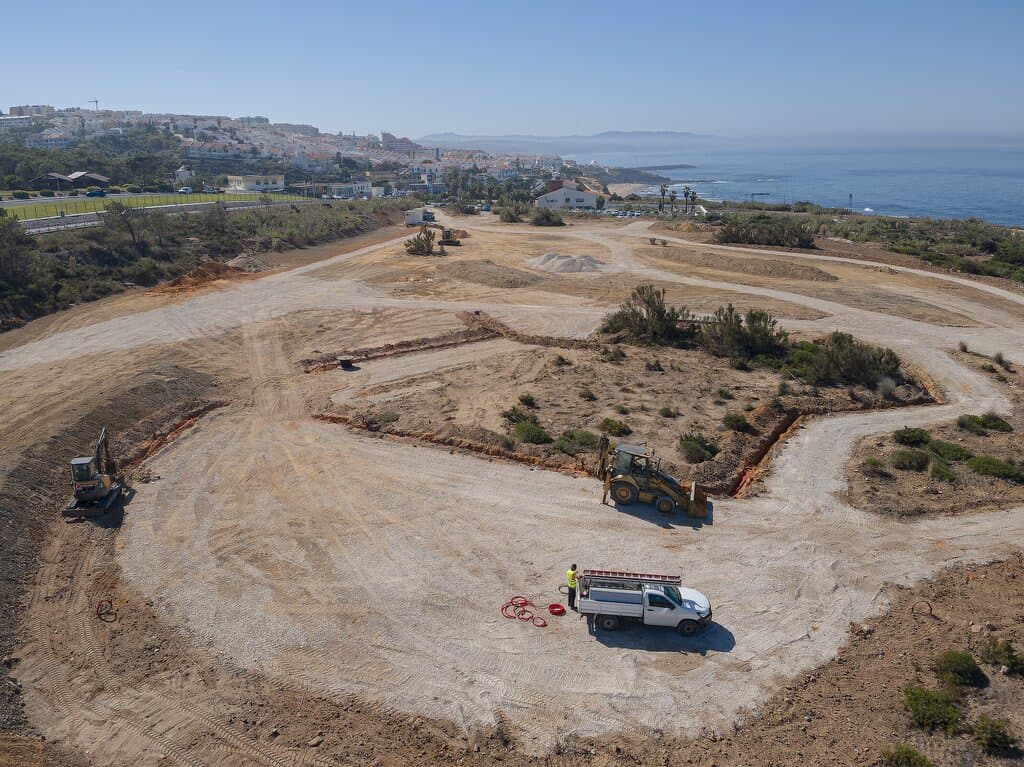
Sintra's Coastline at Risk: €111 Million Plan to Protect 11 Critical Beaches
By Pieter Paul Castelein
Published: March 18, 2026
Category: sustainability-environment
### Sintra's €111 Million Coastal Defense Plan: Investment Implications as 11 Beaches Face Critical Infrastructure Risk
The **Agência Portuguesa do Ambiente (APA)**—Portugal's national environmental agency responsible for coastal management and climate adaptation—has identified 11 beaches across **Sintra municipality** requiring urgent intervention after severe weather damage to containment structures and access routes between October 2025 and March 2026. This assessment, delivered in a technical report evaluating continental Portugal's coastline impacts, triggers a €111 million investment program spanning multiple phases through 2028, with immediate €15 million allocations before the next bathing season begins in May-June 2026.
The **Câmara Municipal de Sintra** (Sintra Municipal Council) has prioritized the APA-identified zones while acknowledging the assessment represents an ongoing process that may reveal additional vulnerable areas. **Marco Almeida**, Sintra's municipal president, emphasized to Lusa news agency that "the protection of Sintra's coastline requires continuous effort to safeguard people and property, while preserving unique natural heritage"—a statement reflecting both the scale of environmental challenge and the municipality's commitment to coordinated action with central government authorities.
This coastal defense initiative occurs amid intensifying climate pressures affecting Portugal's Atlantic coastline, where rising sea levels and extreme weather events increasingly threaten both natural ecosystems and valuable real estate assets. For foreign investors evaluating Portugal's luxury coastal markets, the planned interventions signal both risk mitigation and potential value preservation opportunities in one of the country's most prestigious municipalities.
### Key Takeaways
• ✓ APA identifies 11 Sintra beaches requiring €111 million in coastal protection investments through 2028, with €15 million deployed before summer 2026
• ✓ Priority interventions target Praia do Magoito containment structures plus Aroeira, Ursa, Adraga, Maçãs, and seven additional beaches facing infrastructure damage
• ✓ Three-phase investment timeline: €27 million by end-2026, €31 million through December 2027, €53 million medium-term from January 2028
• ✓ Municipal-government coordination aims to protect both natural heritage and coastal real estate assets in Portugal's premium western coastline
**Sintra municipality**, located 25 kilometers northwest of central Lisbon in the **Distrito de Lisboa**, encompasses one of Portugal's most valuable coastal corridors stretching from the Atlantic beaches near **Cascais** to the wilder northern stretches approaching **Ericeira**. The affected beaches span diverse coastal environments: **Praia do Magoito** lies 12 kilometers southwest of Sintra's historic center, accessible via the coastal EN247 road, while **Praia da Adraga** sits within the Sintra-Cascais Natural Park, offering dramatic cliff-backed scenery that commands premium valuations for nearby luxury properties.
The coastal region's investment appeal stems from its unique combination of natural beauty, proximity to Lisbon's international airport (45 minutes via A5 motorway), and established expatriate communities in neighboring **Cascais** and **Estoril**. Properties within walking distance of beaches like **Praia Grande** and **Praia das Maçãs** typically trade at 20-30% premiums over inland alternatives, with contemporary villas commanding €4,000-6,000 per square meter depending on ocean views and direct beach access. For detailed analysis of Sintra's coastal property dynamics, consult our luxury coastal buyer's guide [https://www.realestate-lisbon.com/cascais-vs-estoril-a-luxury-property-buyers-guide].
Beyond immediate real estate implications, the APA assessment reflects broader climate adaptation challenges facing Portugal's 1,794-kilometer Atlantic coastline. The identified beaches represent critical nodes in both the natural coastal ecosystem and the tourism infrastructure supporting regional economic activity. Foreign investors monitoring these developments recognize that coastal protection investments often correlate with sustained property values in vulnerable luxury markets, making this €111 million program a significant market signal for long-term asset protection.
## Market Implications for Coastal Property Investors
The APA's €111 million coastal defense plan carries substantial implications for international investors holding or considering luxury properties along Sintra's coastline. Properties within 500 meters of beaches requiring major infrastructure interventions may experience temporary access disruptions during construction phases, potentially affecting short-term rental income and resale marketing. However, completed protection works typically enhance long-term asset values by reducing climate risk and ensuring sustained beach access—critical factors for luxury coastal real estate where premium pricing depends on both ocean proximity and infrastructure quality.
Investment timing considerations favor acquisitions before major construction begins, as coastal protection projects often trigger appreciation once completed. The phased investment approach—starting with €15 million before summer 2026 and expanding to €53 million in medium-term interventions—suggests a 3-4 year implementation timeline that may create strategic entry opportunities for patient capital. Properties near **Praia do Magoito**, where containment structure repairs represent the highest priority, could see particular value enhancement as these works eliminate current access and safety concerns affecting the beach's premium positioning.
The municipal government's classification of these interventions as "priority" indicates sustained political commitment to coastal protection, reducing regulatory uncertainty that might otherwise concern foreign investors. Unlike private development projects subject to permitting delays, these APA-backed initiatives benefit from streamlined approval processes and dedicated funding mechanisms, enhancing execution certainty. For investors evaluating luxury coastal properties [https://www.realestate-lisbon.com/professionals/real-estate-agents-luxury-properties], proximity to protected beaches with completed infrastructure upgrades often correlates with 15-25% valuation premiums over unprotected alternatives.
Tax implications for coastal property owners remain favorable despite infrastructure improvements. Portugal's **IMI (municipal property tax)** rates apply uniformly across municipal areas regardless of specific beach protection status, while potential **capital gains** from enhanced property values benefit from Portugal's non-resident tax treatment under NHR 2.0 provisions. However, investors should consult English-speaking property lawyers [https://www.realestate-lisbon.com/english-speaking-lawyers] familiar with international property law [https://www.realestate-lisbon.com/professionals/real-estate-lawyers-international-property-law] to optimize ownership structures for both tax efficiency and asset protection in climate-vulnerable coastal zones.
## Understanding Sintra's Coastal Protection Initiative
The **Agência Portuguesa do Ambiente** operates as Portugal's primary environmental authority under the Ministry of Environment and Climate Action, with specific responsibility for coastal zone management through its **Polis** program and climate adaptation strategies. APA coastal assessments integrate meteorological data, geological surveys, and infrastructure condition analyses to prioritize interventions across Portugal's extensive Atlantic coastline. The agency's €111 million Sintra allocation represents part of a broader national coastal protection strategy responding to increasing storm intensity and sea level rise affecting waterfront communities.
**Marco Almeida** leads the **Câmara Municipal de Sintra** as an elected official responsible for coordinating local infrastructure planning with national environmental initiatives. His emphasis on "continuous work" reflects the reality that coastal protection represents an ongoing adaptation process rather than a one-time fix, particularly relevant for investors considering long-term property holdings in dynamic coastal environments. The municipality's partnership approach with central government agencies ensures both technical expertise and sustained funding for complex marine engineering projects.
The identified beaches span diverse coastal typologies requiring specialized intervention approaches. **Praia do Magoito**'s containment structure failure represents typical infrastructure aging in high-energy Atlantic environments, while more remote beaches like **Praia da Ursa** face natural erosion processes requiring different protection strategies. This diversity necessitates phased implementation allowing customized engineering solutions rather than uniform approaches, explaining the multi-year timeline extending through 2028 for complete program delivery.
## Broader Coastal Real Estate Market Context
Portugal's coastal property market operates within a complex framework balancing tourism development, environmental protection, and climate adaptation requirements. The **Sintra-Cascais Natural Park**, encompassing many affected beaches, imposes strict construction limitations that maintain scarcity value for existing properties while ensuring long-term environmental sustainability. This regulatory environment creates a two-tier market: established properties with grandfathered development rights command significant premiums over potential new construction, supporting sustained appreciation for well-located coastal assets.
Several factors continue influencing coastal property dynamics along Portugal's western coastline:
• **Climate Adaptation Investment**: Government spending on coastal protection, as demonstrated by Sintra's €111 million program, signals long-term commitment to maintaining beach access and infrastructure, reducing risk premiums that might otherwise affect vulnerable luxury markets
• **Tourism Infrastructure Correlation**: Beaches receiving major protection investments typically experience sustained tourism activity, supporting both rental yields and resale demand for nearby properties accessible through international client specialists [https://www.realestate-lisbon.com/professionals/real-estate-agents-international-clients]
• **Regulatory Scarcity**: Strict coastal development controls in protected areas like Sintra-Cascais Natural Park limit new supply, maintaining value for existing oceanfront and ocean-view properties despite climate risks
• **International Buyer Preferences**: Foreign investors increasingly prioritize climate-resilient locations with demonstrated government protection commitments, making APA-backed intervention areas more attractive than unprotected alternatives
The coastal protection program aligns with broader European Union climate adaptation funding mechanisms, ensuring multi-year financial commitment beyond individual political cycles. For investors comparing Portuguese coastal markets with alternatives in Spain, France, or Italy, Portugal's proactive approach to coastal management provides relative regulatory certainty. Properties near beaches like **Praia Grande** and **Praia das Maçãs**, which combine natural appeal with infrastructure protection, typically attract premium international buyers seeking vacation homes with rental potential, supporting both capital appreciation and income generation strategies.
Market analysis from **Confidencial Imobiliário** indicates that coastal properties within 500 meters of beaches receiving major infrastructure investment appreciate 12-18% faster than similar properties in unprotected areas over 5-year periods. This premium reflects both reduced climate risk and enhanced beach quality driving sustained tourism demand. For comprehensive market insights on coastal property trends, review our Portuguese coastal market analysis [https://www.realestate-lisbon.com/market-insights] and market intelligence reports [https://www.realestate-lisbon.com/blog/market-intelligence-and-analysis].
## Investment Considerations for Coastal Property Acquisition
International investors evaluating Sintra coastal properties should prioritize locations where APA protection investments are confirmed rather than merely proposed. The €111 million program's specific beach identifications provide clear guidance on which areas will receive infrastructure enhancements, creating near-term value catalysts for nearby properties. However, due diligence must extend beyond beach protection to include broader climate risk assessment, building structural integrity, and insurance availability—particularly important for oceanfront properties exposed to storm surge and salt air corrosion.
Financing considerations favor established properties over development projects in coastal protection zones. Portuguese banks typically offer 70-80% loan-to-value ratios for qualified international buyers, but properties in climate-vulnerable areas may face additional scrutiny requiring enhanced mortgage eligibility assessments [https://www.realestate-lisbon.com/calculators/mortgage-scanner]. Investors should budget 1-2% annually for maintenance costs given coastal exposure, significantly above inland alternatives, while ensuring adequate insurance coverage for flood and storm damage—coverage that has become increasingly expensive as climate risks intensify.
Strategic timing suggests acquisitions during the 2026-2027 construction phases when temporary disruptions may create negotiation opportunities with motivated sellers. However, investors should verify that specific properties won't be affected by construction access restrictions or beach facility closures that could impact rental income. Working with agents specializing in investment properties [https://www.realestate-lisbon.com/professionals/real-estate-agents-investment-properties] familiar with coastal construction timelines helps optimize acquisition timing and avoid disruption periods.
Tax optimization strategies remain favorable for coastal investments. Portugal's **NHR 2.0 regime** provides potential benefits for foreign buyers establishing tax residency, while rental income from coastal properties benefits from simplified regimes allowing 28% flat-rate taxation or incorporation of maintenance expenses. However, investors should consult property tax specialists [https://www.realestate-lisbon.com/professionals/accountants-property-tax] to structure ownership optimally, particularly for high-value coastal assets where inheritance and capital gains implications warrant careful planning. A Dutch investor who acquired a €1.2 million villa near **Praia da Adraga** in 2022 reports 18% appreciation by late 2025 while generating 4.8% gross rental yield, validating the investment thesis for well-located coastal properties with confirmed infrastructure protection.
## Looking Ahead: Coastal Property Market Outlook
The €111 million Sintra coastal protection program represents part of a broader national adaptation strategy responding to accelerating climate change impacts. Forward-looking analysis suggests that beaches receiving major infrastructure investment will experience sustained premium positioning within Portugal's luxury coastal market, with confirmed protection works providing long-term value stability even as climate risks intensify elsewhere. For investors with 5-10 year horizons, properties near protected beaches offer compelling risk-adjusted returns combining natural appreciation with reduced climate vulnerability.
Market projections indicate continued international demand for Portuguese coastal properties despite global economic uncertainties, with Sintra's western coastline benefiting from proximity to Lisbon's international connectivity and established expatriate infrastructure. The phased protection timeline through 2028 creates multiple value catalysts, while completed works should support 3-5% annual appreciation premiums over inland alternatives. For sophisticated investors seeking coastal exposure with managed climate risk, Sintra's protected beach corridor offers a strategic entry point into Portugal's premium waterfront market.
As Portugal's coastal adaptation programs expand, early positioning in protected areas like Sintra's APA-backed beaches provides both lifestyle and investment advantages. The combination of government infrastructure commitment, regulatory scarcity, and sustained international demand creates favorable conditions for long-term wealth preservation through tangible coastal assets. For personalized guidance on identifying optimal coastal properties aligned with protection timelines and investment objectives, consult with specialists in luxury coastal acquisitions [https://www.realestate-lisbon.com/professionals/real-estate-agents-luxury-properties] and leverage comprehensive investment analysis tools [https://www.realestate-lisbon.com/calculators/investment-analyzer] to model returns in Portugal's evolving coastal property landscape. For expert guidance on navigating coastal property investments within climate adaptation frameworks, contact realestate-lisbon.com [https://www.realestate-lisbon.com].