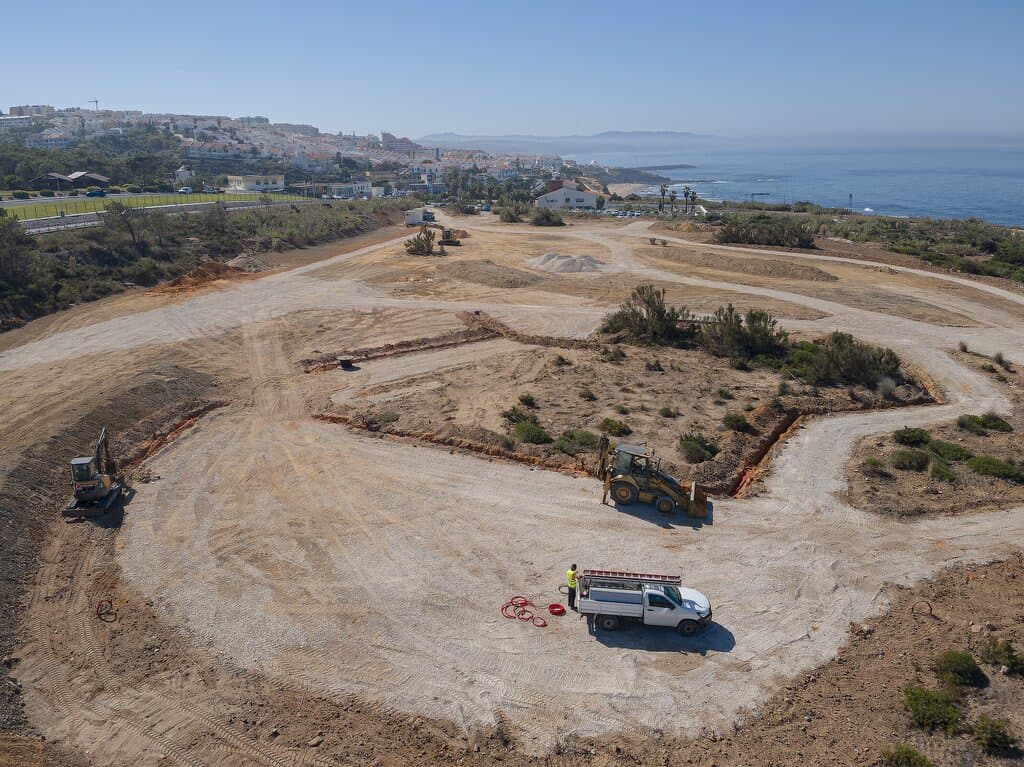
Lisbon Mandates Contaminated Soil Map: Key Implications for Sustainable Real Estate and Investor Due Diligence
By Mihail Talev
Published: September 30, 2026
Category: sustainability-environment
### Lisbon Mandates Contaminated Soil Map: Strategic Implications for Foreign Real Estate Investors and Sustainable Development
In a pivotal move for **Lisbon**'s urban future, the Lisbon Municipal Assembly (AML) has formally approved a recommendation compelling the City Council to develop a comprehensive, detailed map of contaminated soils throughout the capital. This significant measure, championed by the PAN and PEV political parties, is designed to substantially enhance transparency and rigorously ensure environmental safety across the Portuguese capital, directly impacting real estate development and investment considerations.
### Key Takeaways
• ✓ Lisbon Municipal Assembly mandates creation of detailed contaminated soil map
• ✓ Initiative aims to significantly increase environmental transparency and public health protection
• ✓ Essential for responsible urban planning, guiding future development and land use
• ✓ Signals Lisbon's commitment to sustainable growth, influencing long-term property values and investor due diligence
The strategic positioning of **Lisbon** as a burgeoning European hub for both tourism and foreign investment necessitates robust urban planning. This new mandate directly addresses growing concerns regarding soil contamination in various urban areas, a critical factor that can profoundly impact the quality of life for residents and the viability of new developments. The initiative underscores the city's commitment to proactive environmental governance, a key consideration for international buyers and developers.
By meticulously identifying and mapping critical areas of contamination, the City Council will be empowered to implement more precise and effective interventions. This will ensure that future urban regeneration projects, new residential zones, and commercial developments are constructed on environmentally sound foundations. Such a measure is expected to foster more sustainable and informed practices in the city's territorial management, aligning seamlessly with broader sustainability goals [https://www.realestate-lisbon.com/buying-guide/sustainability] and the increasing demand for green building practices in the real estate sector.
## Market Implications for Foreign Investors
The approval of a contaminated soil map in **Lisbon** introduces a new, critical dimension to real estate investment due diligence. While this may initially appear to add complexity to the acquisition process, it fundamentally enhances transparency, providing foreign investors with invaluable data to make more informed decisions regarding land acquisition, development potential, and potential remediation costs. This proactive environmental disclosure aligns with global trends in Environmental, Social, and Governance (ESG) investment criteria [https://www.realestate-lisbon.com/news/sustainability-environment], which are increasingly influencing capital allocation in real estate.
This municipal commitment to environmental safety and sustainable urban development is a strong positive signal for the long-term stability and desirability of Lisbon's property market. Properties located in areas certified as environmentally sound are likely to command premium values and attract a broader base of discerning investors and residents. Conversely, areas identified with contamination will require careful evaluation, potentially influencing pricing and development strategies. Investors should proactively integrate comprehensive environmental assessments into their investment risk analysis [https://www.realestate-lisbon.com/buying-guide/investment-risks], particularly for large-scale projects or land banking strategies.
Furthermore, this policy shift is poised to stimulate demand for specialized environmental consulting, geotechnical engineering, and remediation services within the Portuguese real estate ecosystem. This creates new ancillary investment opportunities and underscores the importance of engaging with expert civil engineers specializing in geotechnical assessments [https://www.realestate-lisbon.com/civil-engineers-geotechnical-engineering]. Understanding the nuances of such municipal policies is paramount for foreign investors seeking to navigate and capitalize on the evolving dynamics of the Lisbon property market [https://www.realestate-lisbon.com/market-insights].
## The AML's Role in Shaping Lisbon's Future
The decisive action by the **Lisbon Municipal Assembly (AML)** in approving this recommendation highlights its significant and expanding influence in shaping the city's urban and environmental policy landscape. The AML functions as a vital oversight and legislative body, ensuring that the City Council's executive actions are congruent with the broader public interest and Lisbon's long-term strategic development objectives. This particular initiative demonstrates a robust commitment to public welfare and environmental stewardship.
This development also underscores the increasing prominence of environmental considerations within political discourse and urban governance frameworks across Europe. The emphasis on a collaborative approach, which explicitly calls for the involvement of citizens, private enterprises, and governmental entities, reflects a sophisticated and modern understanding of effective policy implementation. Such inclusive strategies are crucial for addressing complex urban challenges in dynamic metropolitan areas like Lisbon's diverse and rapidly evolving neighborhoods [https://www.realestate-lisbon.com/lisbon-real-estate-neighborhoods], fostering a sense of shared responsibility and collective progress.
## Lisbon's Environmental and Urban Development Context
Lisbon, a city celebrated for its historical charm and vibrant contemporary culture, is concurrently navigating the intricate challenges of preserving its rich heritage while accommodating significant modern urban expansion. The issue of contaminated soils, while not exclusive to Lisbon, is a prevalent concern in many established European cities with legacies of industrial activity or periods of intense, unregulated urbanisation. The proactive measure of comprehensive mapping represents a critical step towards bolstering the city's future resilience and enhancing its long-term attractiveness as a global destination.
Several interconnected factors are currently influencing Lisbon's strategic approach to environmental urban planning:
• **Historical Industrial Footprint**: Many areas now ripe for redevelopment carry a legacy of contamination from past industrial uses, necessitating thorough environmental assessments.
• **Accelerated Urbanization**: The sustained pressure to develop new residential and commercial zones demands rigorous environmental scrutiny to ensure public safety and property integrity.
• **Public Health Imperative**: There is a direct and undeniable correlation between soil quality and the overall health and well-being of urban populations, making this a top priority.
• **Global Sustainability Mandates**: Lisbon's policies are increasingly aligning with national and international commitments to environmental protection, green building standards, and broader sustainable development goals.
These factors collectively underscore the imperative for robust environmental policies and advanced tools, such as the proposed contaminated soil map. Such initiatives are fundamental to supporting Lisbon's continued trajectory as a sustainable, economically vibrant, and highly desirable location for both living and strategic real estate investment. Furthermore, a deep understanding of the Municipal Master Plan (PDM) for Lisbon [https://www.realestate-lisbon.com/lisboa/pdm] is indispensable for any serious developer or investor.
## Strategic Investment Considerations
For foreign investors actively evaluating opportunities in **Lisbon**'s dynamic real estate market, the forthcoming contaminated soil map presents both a strategic challenge and a significant opportunity. While it will undoubtedly necessitate more rigorous and detailed due diligence processes [https://www.realestate-lisbon.com/professionals/real-estate-lawyers-due-diligence], it simultaneously establishes a clearer, more predictable framework for assessing environmental risks associated with land parcels and existing properties. This enhanced transparency can substantially de-risk investments by providing critical environmental information upfront, mitigating unforeseen liabilities.
Investors contemplating significant development projects or substantial property acquisitions in Lisbon are strongly advised to engage with experienced English-speaking real estate lawyers [https://www.realestate-lisbon.com/english-speaking-lawyers] and specialized environmental consultants. These professionals are essential for navigating the evolving regulatory landscape, ensuring full compliance with environmental standards, and accurately assessing potential remediation costs. Moreover, leveraging advanced property intelligence platforms, such as HomeOS's Simplex 2024 guide [https://www.homeos.pt/simplex-2024/], can provide invaluable insights into legal verification and liability frameworks, which are becoming increasingly central to secure property transactions in Portugal.
The city's intensified focus on environmental safety and sustainable development is also expected to significantly enhance the long-term appeal and value proposition of properties in Lisbon. This is particularly true for discerning buyers and investors who prioritize ecological considerations and seek assets that align with global green building and responsible investment principles. This strategic alignment with sustainability trends is a powerful driver of market value and investor confidence.
## Future Outlook for Lisbon's Sustainable Real Estate
The impending implementation of a detailed contaminated soil map represents a highly progressive and forward-thinking initiative for **Lisbon**, firmly positioning the city as a leader in sustainable urban management within Europe. This measure is anticipated to not only safeguard public health and the environment but also to cultivate a more transparent, predictable, and ultimately more attractive real estate market for both domestic and international stakeholders.
As Lisbon continues its trajectory as a magnet for international investment, expatriates, and digital nomads, such robust environmental measures serve to reinforce its commitment to a high quality of life and responsible, sustainable development. For expert, in-depth guidance on navigating Lisbon's evolving real estate landscape, including its environmental regulations and investment opportunities, prospective investors are encouraged to contact realestate-lisbon.com [https://www.realestate-lisbon.com/].