Sustainable Architecture in Lisbon: Green Roofs and Rainwater Harvesting as Investment Drivers
By Pieter Paul Castelein
Published: September 14, 2026
Category: sustainability-environment
### Sustainable Architecture in Lisbon: Green Roofs and Rainwater Harvesting as Investment Drivers
In a notable development for **Lisbon**'s commercial and residential real estate sectors, two major projects have been recognized as finalists in the **World Architecture Festival 2026**. The **Oriente Green Campus** in **Parque das Nações** and the **Ventura Terra Residence** at the **University of Lisbon** underscore the growing importance of sustainable design as a key driver of property value and long-term investment performance in **Portugal**.
### Key Takeaways
• ✓ Two Portuguese projects recognized as finalists in the 2026 World Architecture Festival
• ✓ Sustainable design focus reduces energy dependence through passive cooling and water management
• ✓ Municipalities like **Sintra** and **Lisbon** are increasingly incentivizing green infrastructure
• ✓ Sustainable features enhance property value and long-term operational efficiency for investors
The **Oriente Green Campus**, designed by **Saraiva + Associados**, exemplifies the shift toward environmentally conscious commercial developments in **Lisbon**. By prioritizing passive design over mechanical systems, these projects demonstrate that high-performance buildings can be both aesthetically pleasing and energy-efficient, a critical consideration for modern Parque das Nações [https://www.realestate-lisbon.com/off-plan/lisbon/parque-das-nacoes] office investments. This strategic approach to design is increasingly becoming a benchmark for premium assets in the capital.
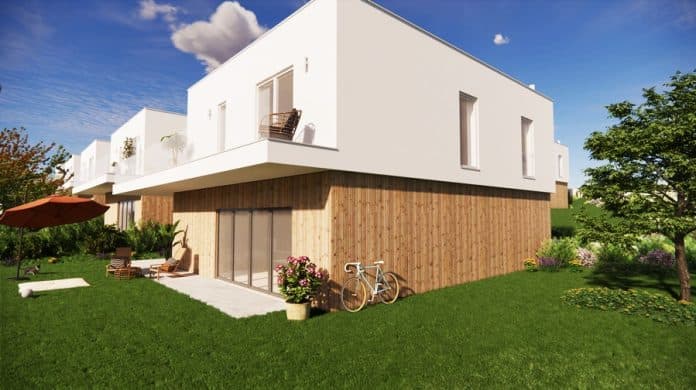
These architectural innovations are not limited to large-scale commercial projects. Residential developments are increasingly adopting **green roofs** and rainwater harvesting systems to improve thermal performance and reduce utility costs. As **Portugal** faces more frequent summer heatwaves, these features are becoming essential for maintaining property desirability and long-term value, particularly in prime areas like Chiado [https://www.realestate-lisbon.com/lisbon/chiado] or Avenidas Novas [https://www.realestate-lisbon.com/lisbon/avenidas-novas].
## Market Implications for Investors
For **real estate investors**, the focus on sustainable architecture signals a fundamental shift in market demand. Properties that integrate **green building** practices are better positioned to comply with future environmental regulations and attract high-quality tenants who prioritize sustainability. This is particularly relevant for international corporate tenants who have strict ESG mandates.
The integration of passive cooling and water management systems directly impacts the **operational costs** of a property. Investors should view these features as strategic assets that improve the market positioning [https://www.realestate-lisbon.com/market-insights] of their assets in an increasingly competitive landscape. By reducing reliance on mechanical climate control, these buildings offer a hedge against rising energy costs.
Furthermore, the availability of municipal incentives, such as tax exemptions in areas like **Sintra**, provides a tangible financial benefit for developers and investors who commit to sustainable construction standards. This regulatory support is a key indicator of the long-term viability of green real estate investments in **Portugal**, and investors should actively seek out projects that leverage these incentives.
## Architectural Background
The **World Architecture Festival** recognition highlights the expertise of Portuguese firms like **Saraiva + Associados** and **CVDB Arquitectos**. Their work demonstrates that traditional Portuguese building methods can be successfully adapted to meet modern sustainability requirements, creating a unique value proposition for the local market.
These projects serve as benchmarks for the industry, showcasing how innovative design can address the challenges of climate change while maintaining architectural integrity. This expertise is increasingly sought after by international investors looking for high-quality, sustainable developments in **Lisbon**, and it reinforces the city's reputation as a center for architectural excellence.
## Lisbon Sustainability Market Context
The market for sustainable real estate in **Lisbon** is evolving rapidly, driven by both regulatory pressure and changing tenant preferences. Investors should monitor several key factors:
• **Regulatory Compliance**: Increasing requirements for energy efficiency and environmental performance in new builds, as outlined in our regulatory and legal frameworks guide [https://www.realestate-lisbon.com/blog/regulatory-and-legal-frameworks]
• **Operational Efficiency**: Lower energy and water costs significantly improve the long-term ROI for property owners, a key metric in our investment analyzer [https://www.realestate-lisbon.com/calculators/investment-analyzer]
• **Tenant Demand**: Growing preference among corporate and residential tenants for sustainable, healthy living environments
• **Municipal Incentives**: Availability of tax breaks and streamlined permitting for green construction projects
These factors are creating a supportive environment for sustainable real estate, particularly for properties that meet modern corporate and residential requirements. Investors who prioritize these features are likely to see better long-term performance and higher asset liquidity.
As the market matures, the distinction between standard and sustainable properties will become more pronounced, with the latter commanding higher premiums and experiencing lower vacancy rates. This trend is already visible in prime office and residential segments across the **Lisbon Metropolitan Area**.
## Investment Considerations
For foreign investors, the focus on sustainable architecture offers a clear opportunity to align portfolios with global ESG standards. When evaluating new developments, consider the long-term benefits of **green building** features, such as reduced maintenance costs and higher tenant retention. As properties face stricter compliance timelines, such as those under the EPBD directive, independent energy performance assessments [https://www.inspectos.pt/inspecoes-residenciais/certificado-energetico] are becoming essential for landlords.
Investors should consult with green building constructors [https://www.realestate-lisbon.com/professionals/constructors-green-building] and sustainable design architects [https://www.realestate-lisbon.com/professionals/architects-sustainable-design] to ensure their projects meet the highest standards. Additionally, utilizing tools like HomeOS's EPBD compliance tracker [https://www.homeos.pt/conformidade-epbd/] can help navigate the complex regulatory landscape and ensure that assets remain future-proof.
## Future Outlook
The recognition of Portuguese projects at the **World Architecture Festival** reinforces **Lisbon**'s position as a hub for innovative and sustainable real estate. The future trajectory of the market points toward increased adoption of green technologies and passive design principles, which will become the standard for all premium developments.
For stakeholders in **Portugal**'s real estate market, these developments provide encouraging signals about the sector's resilience and commitment to sustainability. For expert guidance on sustainable property investment in **Lisbon**, contact realestate-lisbon.com [https://www.realestate-lisbon.com/].