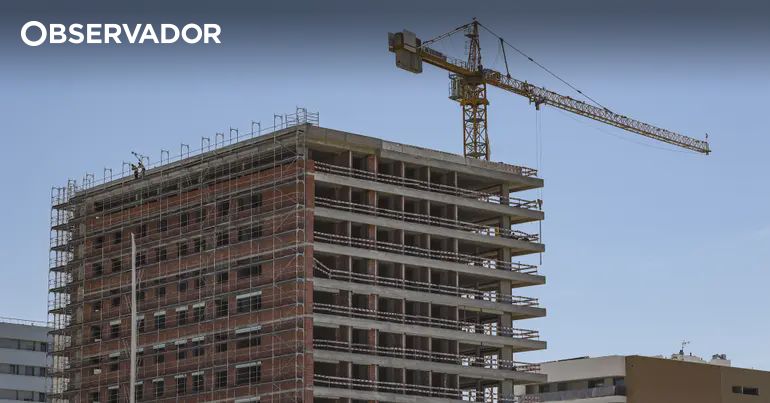
Portugal's Housing Crisis: New Private-Led Model Proposes Debt-Free Construction for Investors
By Nikola Zdraveski
Published: September 15, 2026
Category: investment-insights
### Portugal's Housing Crisis: New Private-Led Model Proposes Debt-Free Construction for Investors
In a significant development for **Portugal**'s housing sector, a new association, **AHDPP (Associação Habitação e Desenvolvimento Por Portugal)**, has unveiled an innovative model designed to address the country's severe housing deficit. This comprehensive proposal aims to facilitate the rapid construction of hundreds of thousands of homes without incurring public debt, strategically shifting nearly all financial and construction risk to the private sector. The initiative represents a potential paradigm shift in how Portugal approaches affordable housing, offering a scalable and financially attractive framework for both domestic and international investors.
### Key Takeaways
• ✓ AHDPP proposes a private-led model for debt-free housing construction in Portugal.
• ✓ Model targets middle-class housing gap, attracting long-term investors with 6.2% annual profitability.
• ✓ Utilizes municipal land concessions and reduced VAT (6%) to lower construction costs.
• ✓ Aims to build 100,000 homes in 5-7 years, addressing Portugal's 300,000-unit housing deficit.
The core of the housing crisis in Portugal disproportionately affects a substantial segment of the middle class—individuals whose incomes are too high to qualify for social housing programs but simultaneously insufficient to afford market-rate properties. This critical demographic includes essential professionals such as teachers, nurses, and police officers, underscoring a significant and growing gap in the current housing supply. The AHDPP's model is specifically engineered to bridge this divide by creating a viable and sustainable pathway for the development of affordable housing units, thereby stabilizing a crucial segment of the population.
The association, which formally presented its proposal in **Lisbon**, advocates for a highly scalable solution drawing inspiration from successful public-private partnership models observed across other European nations. This innovative approach is meticulously designed to circumvent the accumulation of public debt, a pressing concern that, if unaddressed, could potentially lead to the re-engagement of the 'troika' (international creditors) in the coming years. The model's intricate design focuses on establishing balanced incentives for private developers, ensuring that the construction of urgently needed housing units can proceed efficiently, transparently, and sustainably across the entirety of Portugal, including its most sought-after urban and coastal regions.
## Market Implications for Investors
The AHDPP's groundbreaking proposal presents a compelling and potentially transformative avenue for **real estate investors**, particularly those with a strategic focus on long-term, risk-averse opportunities within the Portuguese market. By projecting a fixed annual profitability of 6.2% for projects, such as a typical 200-unit housing development, the model is meticulously structured to attract significant institutional capital from entities like insurance companies and pension funds. This robust, structured approach minimizes direct public sector financial exposure while simultaneously ensuring attractive and predictable returns for private capital, a key differentiator in the current investment climate.
A cornerstone of the model's financial viability is its innovative utilization of municipal land concessions, specifically through the long-term cession of "surface rights"—often spanning periods of 60 years or more. This mechanism substantially reduces one of the primary and most volatile costs associated with large-scale construction projects: land acquisition. When combined with a significantly reduced VAT rate of 6% specifically for affordable housing construction, this comprehensive framework renders projects financially viable and highly attractive for private developers. For both domestic and international investors, this translates into a clearer, more predictable path to profitability and a substantially reduced initial capital outlay, making large-scale housing developments in Lisbon [https://www.realestate-lisbon.com/off-plan/lisbon], Porto, and other key urban areas considerably more appealing.
Furthermore, the introduction of a "tradable contract" concept provides crucial flexibility and liquidity for developers. This mechanism allows for the sale of construction contracts to specialized investment funds or even to a potential State Housing Fund, should the government choose to directly participate. This inherent flexibility offers developers and investors clear exit strategies and opportunities for portfolio management, thereby enhancing the overall attractiveness and de-risking of participating in Portugal's critical housing solution. The model's stringent alignment with Eurostat accounting rules, which mandate that construction risk remains 100% with the private developer, offers an additional layer of transparency and security, particularly for institutional investors, fostering a more robust and trustworthy investment strategy [https://www.realestate-lisbon.com/blog/investment-and-strategy-guides] within the sector.
## AHDPP's Innovative Approach to Housing
The **Associação Habitação e Desenvolvimento Por Portugal (AHDPP)** is led by Rui Miguel Braga, who also serves as the vice-president of the Barreiro municipal council, and benefits from a distinguished advisory board that includes figures such as former Lisbon mayor António Carmona Rodrigues and the renowned architect Miguel Saraiva. This multi-disciplinary and politically diverse expertise forms the bedrock of the association's commitment to developing a non-partisan, comprehensive, and sustainable solution for Portugal's persistent housing crisis. The breadth of experience within the AHDPP ensures a holistic understanding of the challenges and opportunities inherent in large-scale urban development.
Beyond its innovative financial framework, the association's model places a strong emphasis on the integration of **technological innovation** and advanced construction materials. This includes actively exploring and promoting modular construction technologies, such as those originating from Brazil that have already secured European certifications. These technologies are capable of dramatically reducing building costs to values below 1,000 euros per square meter and significantly accelerating project execution timelines. This dual focus on efficiency and cost-effectiveness is absolutely crucial for delivering affordable housing at the scale required to meet the national deficit, while also ensuring high standards of quality and sustainability in new developments.
## Portugal's Housing Market Context
Portugal is currently grappling with a profound housing deficit, which the Bank of Portugal recently estimated at a staggering 300,000 units—a figure equivalent to constructing an entirely new "Lisbon" or "two Portos." This severe shortage represents a critical national issue, exerting immense pressure on property prices, exacerbating accessibility challenges, and ultimately impacting both economic growth and social stability across the country. The AHDPP's model directly confronts this challenge by proposing a coordinated national program capable of launching block tenders across all 308 municipalities, aiming for a unified and efficient response.
Several interconnected factors underscore the urgency and potential transformative impact of such large-scale housing initiatives:
• **Severe Supply Shortage**: The national deficit of 300,000 homes creates immense upward pressure on property prices and severely limits housing accessibility for a broad spectrum of the population.
• **Middle-Class Squeeze**: A significant and growing portion of the middle class finds itself increasingly unable to afford market-rate housing, leading to social and economic strain.
• **Intensified Urbanization Trends**: Continued population growth and migration into major urban centers like Lisbon and Porto exacerbate the existing housing crisis, demanding innovative solutions.
• **Economic and Social Impact**: Housing affordability directly influences labor mobility, attracts foreign talent, and is a fundamental determinant of overall economic productivity and social cohesion.
Beyond the immediate construction goals, the AHDPP advocates for a holistic and forward-thinking approach to urban planning and architectural design. This includes actively promoting solutions for enhanced energy efficiency, the strategic reuse of rainwater (a critical consideration given evolving climate change patterns), and the creation of vibrant community spaces designed to combat urban loneliness. These comprehensive considerations align seamlessly with global sustainability goals and are integral to enhancing the long-term value, desirability, and livability of new developments. For investors, understanding the broader market context [https://www.realestate-lisbon.com/blog/real-estate-market-insights] and these innovative, sustainable solutions is paramount for identifying impactful and future-proof investment opportunities.
## Investment Considerations
For foreign investors, the AHDPP's model offers a uniquely structured and potentially highly lucrative entry point into Portugal's affordable housing market. The promise of fixed profitability, coupled with significantly reduced risk due to municipal land concessions and the transfer of construction liability to the private sector, makes these projects exceptionally attractive for long-term capital deployment. This framework is particularly relevant for investors seeking stable, predictable returns alongside a tangible positive social impact within a growing European economy.
Prospective investors should undertake thorough due diligence, potentially leveraging specialized platforms such as HomeOS's Simplex 2024 guide [https://www.homeos.pt/simplex-2024/] to gain a comprehensive understanding of the evolving legal verification framework in Portugal. Engaging with experienced English-speaking real estate lawyers [https://www.realestate-lisbon.com/english-speaking-lawyers] and accountants [https://www.realestate-lisbon.com/english-speaking-accountants] is absolutely crucial for navigating the intricate legal and fiscal aspects of such large-scale investments. The inherent scalability of the model, with an ambitious target of 100,000 homes within a five to seven-year horizon, suggests a substantial and continuous pipeline of opportunities for both institutional and private investors, fostering sustained engagement in the sector.
Furthermore, the model's strong emphasis on modular construction techniques and advanced energy efficiency standards aligns perfectly with global trends in sustainable and ESG-compliant investment. This not only enhances the environmental profile of the projects but also promises significant long-term operational cost savings, thereby further boosting overall profitability and attractiveness. Understanding the critical importance of pre-purchase inspections [https://www.inspectos.pt/inspecoes-residenciais/inspecao-pre-compra] for new builds is also vital to ensure the highest standards of quality, structural integrity, and regulatory compliance, safeguarding the investment against unforeseen issues.
## Looking Ahead
The formal presentation of the AHDPP's innovative model to the Portuguese Government and its planned engagement with the National Association of Municipalities represent critical next steps in addressing the nation's housing crisis. Should this framework be adopted and implemented effectively, it possesses the potential to fundamentally transform Portugal's housing landscape, providing a sustainable, scalable, and debt-free solution to a pressing national challenge that has long impacted economic and social stability.
For both domestic and international investors, this initiative signifies a unique opportunity to contribute meaningfully to a vital social need while simultaneously securing attractive and stable financial returns within a robust market. The long-term vision of constructing a significant volume of homes, coupled with the integration of technological advancements and a holistic focus on urban quality of life, strategically positions Portugal's housing sector for substantial growth and enduring positive impact. For expert guidance on investment opportunities in Portugal's evolving real estate market, contact realestate-lisbon.com [https://www.realestate-lisbon.com/].