€12 Million River Terminal in Castanheira do Ribatejo: A Strategic Logistics Boost for the Lisbon Region
By Mihail Talev
Published: September 4, 2026
Category: investment-insights
### €12 Million River Terminal in Castanheira do Ribatejo: A Strategic Logistics Boost for the Lisbon Region
In a significant development for **Vila Franca de Xira**'s industrial and logistics sector, the **Castanheira do Ribatejo River Terminal** has entered its final construction phase. This project, representing a total investment of over **€12 million**, underscores the region's growing importance as a strategic hub within the broader Lisbon Metropolitan Area. The initiative, which began in the summer of 2025, is now nearing completion, signaling a new era for multimodal transport in Portugal.
### Key Takeaways
• ✓ €12 million investment in Castanheira do Ribatejo River Terminal enters final phase
• ✓ Project enables 80% reduction in carbon footprint per container via Tagus River
• ✓ Strategic location adjacent to Logistics Platform creates 250 total jobs
• ✓ Infrastructure boost reinforces Vila Franca de Xira as a premier logistics hub
The terminal is strategically positioned in **Castanheira do Ribatejo**, a key industrial zone in the northern reaches of the Lisbon district. By leveraging its proximity to the **Tagus River** and the existing **Castanheira do Ribatejo Logistics Platform**, the facility is designed to streamline the movement of goods between the Port of Lisbon and the country's primary road networks. This location is critical for investors looking at the Vila Franca de Xira municipal master plan [https://www.realestate-lisbon.com/vila-franca-de-xira/pdm], which prioritizes industrial modernization and sustainable urban growth.
The geographic advantage of this site cannot be overstated. Situated near major highways and the river, it offers a multimodal transport solution that is increasingly rare in the saturated central Lisbon market. For those monitoring market insights [https://www.realestate-lisbon.com/market-insights], this development signals a shift toward decentralized, high-efficiency logistics hubs that support the capital's supply chain. The area is well-connected to the A1 motorway, the main artery connecting Lisbon to Porto, making it an ideal spot for distribution centers.
Furthermore, the terminal's integration with the **Port of Lisbon** allows for a more flexible logistical solution. This synergy is expected to attract a new wave of international companies looking to optimize their operations in Southern Europe. The strategic positioning of Vila Franca de Xira as a gateway to the interior of the country and the Spanish border further enhances its appeal to institutional investors and logistics operators alike.
## Market Implications for Investors
The completion of this terminal carries profound implications for **industrial real estate investors**. The ability to move up to 400 containers per day via river barges significantly reduces reliance on road transport, offering a competitive edge in terms of both cost and sustainability. This **market signal** reinforces the value of land and warehouses in the Vila Franca de Xira corridor, where demand for modern logistics space continues to outpace supply.
This development indicates growing demand for high-spec industrial units that can accommodate multimodal operations. For investors evaluating investment insights [https://www.realestate-lisbon.com/news/investment-insights], the project provides a clear indicator of where the next phase of capital growth will occur. The transition from traditional trucking to river-based logistics is not just an operational change; it is a strategic shift that will redefine property values in the northern Lisbon industrial belt.
The transaction provides insights into the evolving priorities of major tenants. Companies are increasingly looking for locations that offer long-term operational stability and reduced environmental impact. As such, properties that offer direct access to the new terminal or the adjacent logistics platform are likely to see significant yield compression and higher occupancy rates over the coming decade.
Investors should consider factors such as the sustainability implications [https://www.realestate-lisbon.com/buying-guide/sustainability] of their portfolios. The estimated 80% reduction in carbon footprint per container is a major draw for multinational tenants seeking green logistics solutions. This alignment with global ESG standards makes the Castanheira do Ribatejo area a prime target for institutional capital looking for future-proof assets.
## Vila Franca de Xira's Strategic Position
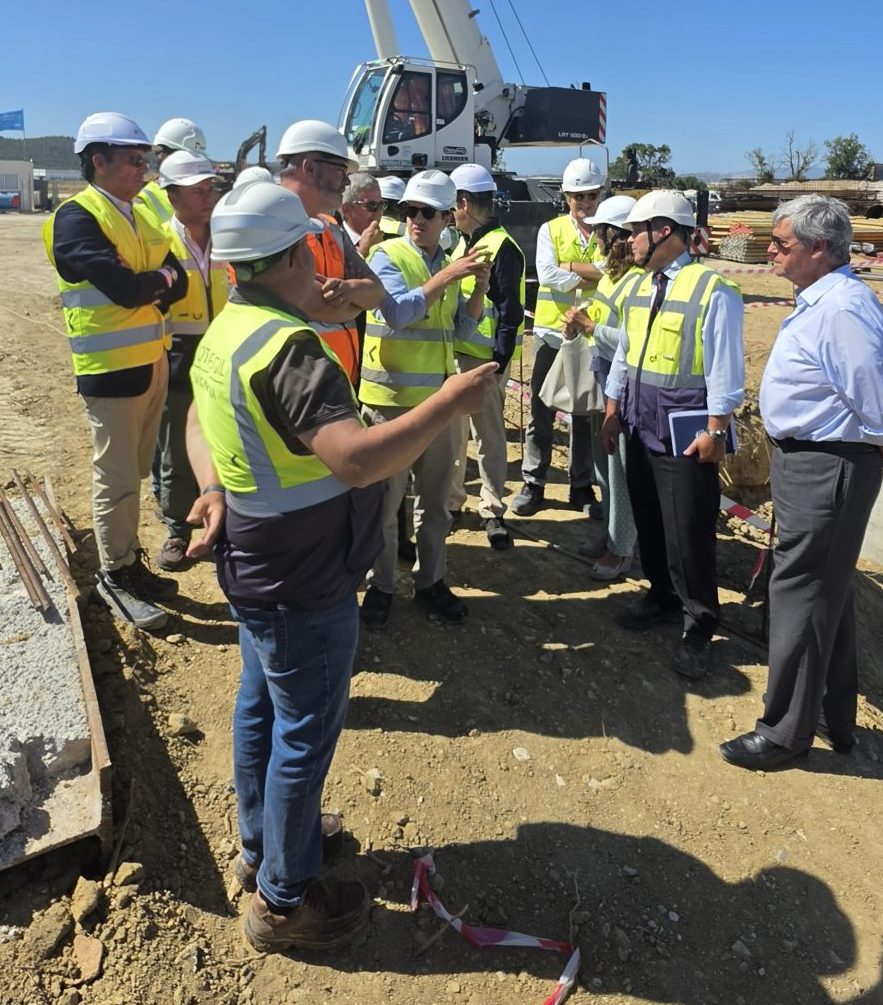
**Vila Franca de Xira** has long been a cornerstone of Portugal's industrial landscape. The municipality's proactive approach to infrastructure, as seen in the '+ Proximity' initiative led by Mayor **Fernando Paulo Ferreira**, demonstrates a commitment to maintaining its status as a logistics powerhouse. The recent visit to the site underscores the local government's support for large-scale projects that drive economic growth.
This terminal is not an isolated project but part of a broader strategy to integrate the **Port of Lisbon** more effectively with the hinterland. By providing a flexible and environmentally friendly alternative to trucking, the municipality is positioning itself as a destination for companies that prioritize efficiency and corporate responsibility. The project also benefits from the expertise of civil engineers [https://www.realestate-lisbon.com/civil-engineers] who have designed the facility to handle high-volume container traffic while minimizing environmental impact.
## Logistics and Infrastructure Context
The Castanheira do Ribatejo project reflects a wider trend in the construction updates [https://www.realestate-lisbon.com/news/construction-updates] sector, where infrastructure is being redesigned to meet modern environmental standards. The transition from road to river transport is a key component of the Lisbon Metropolitan Area's sustainability goals, aiming to remove thousands of trucks from the roads annually.
Several factors continue to influence the market in this sector:
• **Multimodal Connectivity**: The seamless integration between river, rail, and road transport networks provides unparalleled flexibility for logistics operators.
• **Environmental Efficiency**: A significant reduction in CO2 emissions and road congestion aligns with the European Green Deal and local sustainability targets.
• **Economic Resilience**: Diversification of transport routes ensures supply chain stability, a critical factor for investors in the post-pandemic era.
• **Job Creation**: The stimulation of the local labor market through 250 new roles will drive demand for residential real estate in the surrounding areas.
These factors combine to make Vila Franca de Xira a highly attractive zone for institutional investors. The synergy between the new terminal and the existing logistics platform creates a unique ecosystem that is difficult to replicate elsewhere in the region. For those looking at the market intelligence and analysis [https://www.realestate-lisbon.com/blog/market-intelligence-and-analysis] of the industrial sector, this project is a clear standout.
The broader context of the Lisbon real estate market shows a continued push toward the periphery as the city center becomes increasingly congested and expensive. Vila Franca de Xira offers a compelling alternative, providing the space and infrastructure necessary for large-scale industrial operations while remaining within easy reach of the capital's amenities and talent pool.
## Investment Considerations
For foreign investors, this development underscores the importance of looking beyond the residential core of Lisbon. The industrial and logistics sectors offer robust ROI potential, especially when backed by significant public-private infrastructure investment. It is advisable to consult with English-speaking real estate lawyers [https://www.realestate-lisbon.com/english-speaking-lawyers] to understand the specific zoning and tax incentives available in this industrial corridor, as well as the implications of the Simplex 2024 framework [https://www.homeos.pt/foreign-buyers/] for industrial developments.
Strategic timing is essential. As the terminal nears completion, property values in the immediate vicinity are expected to reflect the increased logistical capacity. Investors should also consider the location issues [https://www.realestate-lisbon.com/buying-guide/location-issues] associated with industrial assets, ensuring that their properties are well-positioned to benefit from the new infrastructure. Independent pre-purchase inspections [https://www.inspectos.pt/inspecoes-residenciais] are also recommended for any existing warehouse stock being acquired in the area to ensure structural integrity and compliance with modern safety standards.
The creation of 250 jobs will also have a direct impact on the local residential market. Investors might find opportunities in the 'buy-to-let' segment in Castanheira do Ribatejo and Alverca, catering to the professionals who will be working at the new terminal. This cross-sector synergy is a hallmark of successful regional development and provides multiple entry points for savvy investors.
## Looking Ahead
The future of the Castanheira do Ribatejo River Terminal is bright, with operations expected to scale rapidly following the final handover. This project serves as a blueprint for future infrastructure developments along the Tagus, proving that economic growth and environmental responsibility can go hand in hand. The expected reduction of 1,000 tons of CO2 per year is a testament to the project's forward-thinking design.
As Vila Franca de Xira continues to evolve, it will remain a critical node in Portugal's economic network. The ongoing investment in the northern Lisbon corridor ensures that the region will remain competitive on a European scale. For stakeholders in the Portuguese real estate market, developments like this provide encouraging signals about the sector's resilience and continued appeal. For expert guidance on industrial and commercial property investment in the Lisbon region, contact realestate-lisbon.com [https://www.realestate-lisbon.com/].