Sintra Municipality Assesses Coastal Risks in Colares, Paving the Way for Public Space Upgrades and Investment Security
By Pieter Paul Castelein
Published: March 17, 2026
Category: sustainability-environment
### Sintra's Coastal Risk Assessment Signals Infrastructure Investment Opportunity in Colares
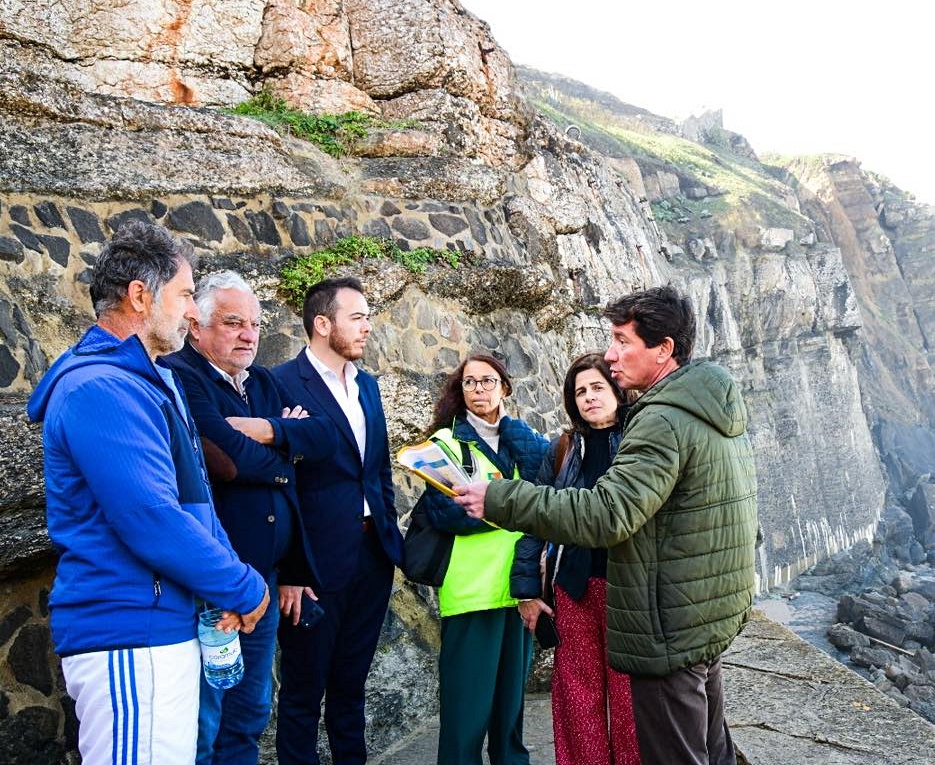
In a significant development for **Sintra**'s coastal real estate market, municipal officials conducted comprehensive risk assessments across **Colares** parish beaches last week, marking a strategic pivot toward proactive infrastructure investment. **Francisco Duarte**, Sintra's councilor for environmental sustainability, led the evaluation alongside **Pedro Filipe**, president of the Colares parish council, technical municipal staff, and representatives from the **Agência Portuguesa do Ambiente (APA)**—Portugal's national environmental agency responsible for coastal protection and climate adaptation policies.
The assessment, which included marking high-risk zones along the dramatic cliff formations that characterize this Atlantic coastline, signals imminent public infrastructure upgrades that could significantly enhance property values and investment security in one of Portugal's most scenic coastal regions. The initiative extends to **Cabo da Roca**, Europe's westernmost point, positioning this iconic landmark for major tourist facility improvements that could transform visitor experiences and local economic dynamics.
This systematic approach to coastal risk management follows severe storm damage during January-February 2025's "storm train" that battered Portugal's western coastline, demonstrating municipal commitment to climate resilience investments that protect both existing assets and future development potential. For foreign investors evaluating Portugal's coastal real estate opportunities, the municipality's proactive stance suggests enhanced long-term value protection and infrastructure quality that could justify premium pricing in this UNESCO World Heritage region.
### Key Takeaways
• ✓ Sintra municipality completed comprehensive coastal risk assessment in Colares parish, identifying priority intervention zones along cliff formations
• ✓ Planned infrastructure upgrades include enhanced pedestrian pathways, public space improvements, and visitor facility expansion at Cabo da Roca
• ✓ Municipal investment follows severe storm damage in early 2025, signaling commitment to climate-resilient coastal development
• ✓ Proactive risk management approach enhances investment security for coastal properties while positioning region for sustainable tourism growth
**Colares**, located in the western extremity of the **Municipality of Sintra** within **Distrito de Lisboa**, encompasses some of Portugal's most dramatic coastal landscapes approximately 40 kilometers northwest of central Lisbon. The parish stretches from the mouth of the **Falcão River** to the iconic **Cabo da Roca**, where the Sintra Mountains meet the Atlantic Ocean in spectacular fashion. This positioning, 18 kilometers west of Sintra's historic center and accessible via the N247 coastal road, creates a unique microclimate that supports both maritime activities and the region's renowned wine production.
The area's combination of pristine beaches, including Praia da Adraga and Praia Grande, protected natural parks, and proximity to Lisbon's metropolitan amenities makes it particularly appealing for foreign investors seeking coastal properties with authentic Portuguese character. The region's municipal master plan [https://www.realestate-lisbon.com/sintra/pdm] balances conservation requirements with controlled development, creating scarcity value for well-located properties. For comprehensive location analysis, see our detailed Lisbon coastal region guide [https://www.realestate-lisbon.com/lisbon-real-estate-neighborhoods].
Investment appeal centers on Colares' dual identity as both a working agricultural region—famous for its distinctive rambling vineyards producing distinctive Colares wine—and an emerging luxury coastal destination. Properties range from traditional quintas (estate houses) set among vineyards to contemporary cliff-top villas commanding panoramic Atlantic views. The area's limited developable land, constrained by protected natural park status and topographical challenges, supports premium valuations for well-positioned assets while ensuring long-term scarcity value.
## Market Implications for Coastal Property Investors
The municipality's systematic coastal risk assessment carries profound implications for real estate investment strategies in Sintra's coastal zone. By proactively identifying vulnerable areas and committing to infrastructure improvements, local authorities are effectively de-risking coastal property investments while enhancing the region's long-term attractiveness for both residential buyers and tourism operators. This approach contrasts favorably with reactive disaster-response models that can leave property owners bearing significant rehabilitation costs.
Planned interventions—including enhanced pedestrian pathways, cliff stabilization measures, and upgraded visitor facilities at **Cabo da Roca**—directly address factors that influence coastal property valuations. Improved accessibility and safety infrastructure typically correlate with increased foot traffic and tourism revenue potential, benefiting commercial properties while enhancing residential desirability. The municipality's commitment to "qualifying public space" suggests significant aesthetic and functional improvements that could justify premium pricing for nearby properties.
From an investment perspective, the timing of these assessments—following severe storm damage but preceding the peak summer tourism season—demonstrates strategic planning that minimizes disruption while maximizing implementation efficiency. Foreign investors should note that Portuguese coastal development is governed by the **Política de Ordenamento do Território** (Territorial Planning Policy), which restricts construction within 500 meters of the coastline and imposes height limitations to preserve natural landscapes. Properties grandfathered under previous regulations or located within existing urban perimeters may command significant premiums due to their development potential.
The involvement of the **Agência Portuguesa do Ambiente** ensures that any interventions will comply with EU environmental directives and climate adaptation standards, potentially unlocking EU funding streams that reduce local tax burdens. For property owners, this translates to enhanced infrastructure without proportional tax increases—a favorable dynamic for investment returns. Additionally, improved coastal resilience measures may qualify properties for reduced insurance premiums, further improving net operating income for rental investments.
## Understanding Sintra's Coastal Development Strategy
**Francisco Duarte**'s leadership of the coastal assessment initiative reflects Sintra municipality's broader strategic vision for sustainable coastal development. As the councilor responsible for environmental sustainability, Duarte oversees implementation of the municipality's **Plano Municipal de Adaptação às Alterações Climáticas** (Municipal Climate Change Adaptation Plan), which identifies coastal zones as priority areas for infrastructure investment and ecosystem protection. His public statements emphasizing both safety improvements and tourism enhancement signal balanced approach that protects existing investments while enabling controlled growth.
The municipality's track record in coastal infrastructure investment provides confidence in execution capabilities. Previous interventions in São João das Lampas parish—located north of Colares—demonstrated ability to deliver comprehensive coastal protection projects combining hard infrastructure (sea walls, cliff stabilization) with soft measures (dune restoration, visitor management systems). These projects, completed within budget and ahead of schedule according to municipal reports, enhanced both property values and tourism revenue in affected areas.
Duarte's specific focus on **Cabo da Roca** as "a true visiting card for the municipality" indicates recognition of the landmark's economic significance. The cape attracts approximately 1.5 million visitors annually, generating substantial tourism revenue while requiring continuous infrastructure investment to handle visitor volumes safely. Planned improvements—likely including enhanced viewing platforms, interpretive centers, and accessibility upgrades—could significantly increase dwell time and spending per visitor, benefiting nearby hospitality and retail properties.
## Coastal Real Estate Market Context
Sintra's coastal property market operates within Portugal's broader luxury real estate ecosystem while maintaining distinct characteristics shaped by environmental protections and tourism dynamics. The region commands premium valuations relative to interior areas, with oceanfront properties in Colares typically trading at €4,000-6,000/m² compared to €2,500-3,500/m² for similar properties inland. This coastal premium reflects both scarcity value—limited developable land—and tourism income potential from short-term rentals and hospitality operations.
Several factors continue influencing coastal investment dynamics:
• **Climate Resilience Premium**: Properties in areas with demonstrated coastal protection infrastructure command 15-25% valuation premiums over unprotected areas, reflecting reduced risk profiles and insurance costs
• **Tourism Infrastructure Correlation**: Proximity to enhanced visitor facilities, safe beach access, and scenic viewpoints directly impacts rental yields, with well-located properties achieving 5-7% gross returns versus 3-4% for inland alternatives
• **Regulatory Scarcity**: Strict coastal development restrictions under Portuguese environmental law create natural supply constraints, supporting long-term value appreciation for existing approved properties
• **International Buyer Demand**: Northern European and North American buyers increasingly seek Portuguese coastal properties as climate change concerns make traditional Mediterranean destinations less attractive, driving demand for Atlantic-coast alternatives
Market dynamics favor properties that combine residential appeal with tourism potential. Traditional Portuguese architecture, vineyard settings, and ocean views create compelling narratives for international buyers seeking authentic experiences. Recent transactions illustrate this trend: a restored 19th-century quinta with 2 hectares of vineyards and partial ocean views sold for €2.8 million in 2024, representing €7,000/m² for the principal residence, while generating €180,000 annually from wine tourism and accommodation—yielding approximately 6.4% gross return while providing owner's accommodation.
The growing infrastructure of international client specialists [https://www.realestate-lisbon.com/professionals/real-estate-agents-international-clients] and luxury property agents [https://www.realestate-lisbon.com/professionals/real-estate-agents-luxury-properties] familiar with coastal regulations has streamlined acquisition processes for foreign buyers. These professionals navigate complex environmental assessments, building permit requirements, and tourism licensing—services essential for maximizing investment returns while ensuring regulatory compliance. For properties requiring renovation or expansion, coordination with historic restoration specialists [https://www.realestate-lisbon.com/professionals/constructors-historic-restoration] and architects experienced in traditional Portuguese design [https://www.realestate-lisbon.com/professionals/architects-traditional-portuguese-architecture] ensures projects meet both aesthetic expectations and conservation requirements.
## Investment Considerations for Coastal Properties
International investors evaluating Sintra's coastal opportunities should prioritize properties with demonstrated resilience to climate impacts and strong tourism fundamentals. The municipality's risk assessment provides a roadmap for identifying areas slated for infrastructure investment—properties adjacent to planned pedestrian improvements or cliff stabilization projects may offer superior appreciation potential as public amenities enhance. Conversely, areas identified as high-risk without planned interventions warrant careful due diligence regarding long-term viability and insurance costs.
Due diligence requirements for coastal properties extend beyond standard real estate assessments. Environmental impact studies may be required for renovations or new construction, particularly within 500 meters of the coastline. Pre-purchase inspections [https://www.realestate-lisbon.com/professionals/home-inspectors-pre-purchase-inspections] should include geological stability assessments, particularly for cliff-top properties where erosion risks can affect structural integrity. Additionally, understanding sustainability requirements [https://www.realestate-lisbon.com/buying-guide/sustainability] and energy efficiency mandates becomes crucial for renovation projects, as EU directives increasingly impact building standards.
Tax considerations for coastal rental properties warrant specialized advice. Portugal's **IMI** (municipal property tax) rates vary by municipality and property type, with luxury coastal properties potentially facing higher rates. However, properties committed to long-term tourism operations may qualify for reduced rates under certain conditions. The **Mais Habitação program**—Portugal's 2023 housing policy package—offers tax incentives for properties dedicated to affordable long-term rentals, though most coastal properties targeting tourism markets won't qualify. Consultation with English-speaking accountants [https://www.realestate-lisbon.com/english-speaking-accountants] familiar with property tax optimization [https://www.realestate-lisbon.com/professionals/accountants-property-tax] ensures optimal structuring.
Financing coastal properties often requires larger down payments due to perceived climate risks, with Portuguese banks typically requiring 30-40% for non-resident buyers. However, properties with demonstrated rental income can qualify for improved terms. Mortgage eligibility scanners [https://www.realestate-lisbon.com/calculators/mortgage-scanner] and Portuguese mortgage calculators [https://www.realestate-lisbon.com/calculators/mortgage] help model financing scenarios, while property acquisition legal specialists [https://www.realestate-lisbon.com/professionals/real-estate-lawyers-property-acquisition] ensure transactions comply with both Portuguese law and buyer country regulations.
Success in coastal property investment typically requires local expertise and patient capital. A Swedish investor's experience illustrates effective strategy: acquisition of a €1.2 million traditional house requiring renovation in Azenhas do Mar—a picturesque cliff-side village within Colares—followed by €400,000 investment in structural stabilization and modernization using structural engineering specialists [https://www.realestate-lisbon.com/professionals/civil-engineers-structural-engineering]. The property now generates €180,000 annually from luxury tourism rentals while appreciating to approximately €2.1 million valuation, demonstrating how strategic improvements aligned with municipal infrastructure development can create substantial returns.
## Looking Ahead: Coastal Investment Outlook
Sintra's coastal property market appears positioned for sustained growth driven by infrastructure investment, climate resilience improvements, and evolving tourism patterns. The municipality's systematic approach to coastal risk management, exemplified by the Colares assessment, suggests continued public investment that will enhance property values while protecting existing assets. Market analysts project 6-9% annual appreciation for well-located coastal properties through 2027, outpacing national averages due to supply constraints and growing international demand for climate-resilient coastal destinations.
Long-term fundamentals support optimistic projections. Portugal's Atlantic coast benefits from more stable weather patterns compared to Mediterranean alternatives increasingly affected by extreme heat and drought. Sintra's UNESCO World Heritage status ensures continued international visibility, while Lisbon's emergence as a European tech hub drives domestic demand for weekend coastal retreats. The combination of environmental protection policies—which preserve natural beauty while limiting oversupply—and strategic infrastructure investment creates an attractive investment environment for patient capital seeking both appreciation and lifestyle benefits.
For high-net-worth investors, Sintra's coast offers compelling opportunities to acquire unique properties in a market combining natural beauty, cultural significance, and improving infrastructure. The municipality's proactive stance on coastal protection and tourism enhancement suggests continued public investment that will benefit private property owners, while regulatory constraints ensure long-term scarcity value. As climate considerations increasingly drive real estate decisions, Portugal's Atlantic coast—and Sintra's protected, infrastructure-enhanced segment specifically—positions itself as a premium destination for sophisticated investors seeking both returns and resilience. For expert guidance on identifying optimal coastal investment opportunities aligned with municipal infrastructure plans, contact realestate-lisbon.com [https://www.realestate-lisbon.com].