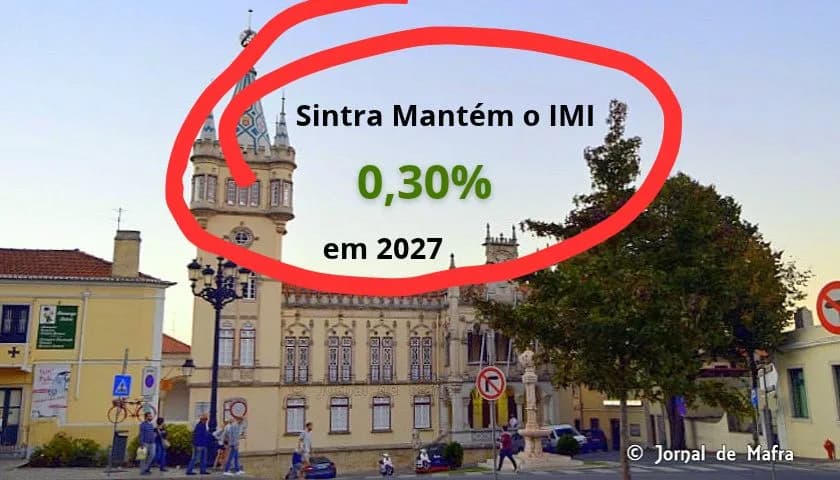
Sintra Municipality Freezes Property Taxes for 2027: A Strategic Win for Investors
By Nikola Zdraveski
Published: October 14, 2026
Category: politics
### Sintra Municipality Freezes Property Taxes for 2027: A Strategic Win for Investors
In a significant development for **Sintra**'s real estate and business sectors, the **Sintra City Council** has officially approved the maintenance of its primary municipal tax rates for the 2027 fiscal year. This decision, led by President **Marco Almeida**, underscores the municipality's commitment to fiscal stability and economic competitiveness. By holding the **IMI** (Imposto Municipal sobre Imóveis) at the legal minimum, Sintra sends a powerful signal to the international investment community regarding its long-term strategic positioning.
### Key Takeaways
• ✓ IMI (Property Tax) remains at the legal minimum of 0.30% for urban buildings
• ✓ Municipal IRS participation held at 3.5%, supporting resident disposable income
• ✓ Business tax (Derrama) maintained at 1.5% with exemptions for small firms
• ✓ Fiscal stability reinforces Sintra's position as a prime investment destination
The decision to maintain the **IMI** at 0.30% is a critical factor for property owners and potential buyers. This rate represents the lowest possible threshold permitted under Portuguese law for urban properties, positioning Sintra as one of the most tax-efficient municipalities in the **Lisbon Metropolitan Area**. For those navigating the Portuguese buying guide [https://www.realestate-lisbon.com/buying-guide], such local tax policies are essential components of any robust financial model. The geographic diversity of Sintra, ranging from the historic center to the coastal areas of **Colares** and the urban hubs of **Queluz** and **Algueirão-Mem Martins**, offers a wide array of entry points for different investor profiles.
Strategically located between the capital and the Atlantic coast, Sintra continues to attract significant interest from both domestic and international stakeholders. The municipality's ability to balance its budget while offering minimum tax rates is a strong indicator of administrative health and fiscal discipline. Investors should consult the Sintra Municipal Master Plan (PDM) [https://www.realestate-lisbon.com/sintra/pdm] to understand how this fiscal environment aligns with future urban development zones and infrastructure projects. The area's unique microclimate and UNESCO World Heritage status provide an intrinsic value that, when coupled with low taxes, creates a compelling case for capital preservation.
The maintenance of these rates is not merely a populist measure but a calculated move to ensure **Sintra** remains competitive against other high-growth regions like **Cascais** or **Oeiras**. For expats and foreign investors, the total cost of ownership is a primary metric, and Sintra's stance on IMI significantly lowers the annual carrying costs of real estate assets. This is particularly relevant for those looking at off-plan properties in Sintra [https://www.realestate-lisbon.com/off-plan/sintra], where long-term fiscal predictability is paramount.
## Market Implications for Investors
The maintenance of the minimum IMI rate provides a high degree of predictability for **real estate investors**. In an environment where interest rates and global economic conditions can be volatile, a guaranteed low property tax rate in a high-demand area like Sintra is a significant advantage. This policy directly impacts the net rental yield for those pursuing investment properties [https://www.realestate-lisbon.com/professionals/real-estate-agents-investment-properties] in the region, as lower non-recoverable costs translate directly to higher bottom-line returns.
Furthermore, the decision to keep the municipal IRS participation at 3.5%—well below the 5% maximum—leaves more capital in the hands of local residents. This supports the local rental market's resilience, as tenants maintain higher levels of disposable income to meet housing costs. For foreign buyers considering a move, understanding these financial concerns [https://www.realestate-lisbon.com/buying-guide/financial-concerns] is essential for a successful relocation strategy. Buyers can model the full acquisition cost — including IMT, stamp duty, and notary fees — using tools such as HomeOS's real cost calculator [https://www.homeos.pt/comprar/preco/custo-real/], which provides essential clarity on the total investment required.
The business tax environment also remains highly favorable. By keeping the 'derrama' at 1.5% and exempting smaller companies with turnovers under 150,000 euros, Sintra fosters a vibrant local economy and supports the growth of SMEs. This economic diversity is a key driver for property value appreciation, as the area remains a hub for both high-end tourism and professional services. Investors can monitor these shifts and their impact on property values through our market insights [https://www.realestate-lisbon.com/market-insights] platform, which tracks real-time data across the municipality.
From a strategic perspective, the 2027 tax freeze acts as a hedge against inflation. While the costs of services and construction may rise, the fixed nature of the municipal tax burden allows for more accurate long-term budgeting. This is a significant draw for institutional investors and family offices looking for stable, low-risk environments within the Portuguese real estate sector [https://www.realestate-lisbon.com/blog/market-intelligence-and-analysis].
## Sintra's Strategic Market Position
The **Sintra City Council** has consistently prioritized a "fiscal proximity" approach, aiming to keep the tax burden on citizens and businesses as low as possible. By maintaining these rates, the municipality aims to enhance its attractiveness compared to neighboring districts that may have higher overheads. This strategy is particularly effective for attracting **digital nomads** and **expats** who are sensitive to the total cost of living and property ownership.
This latest move reinforces Sintra's reputation as a stable and investor-friendly jurisdiction. The municipality's focus on "protecting the income of citizens" while "creating favorable conditions for investment" suggests a long-term vision that favors sustainable growth over short-term fiscal gains. For those looking to build or renovate, engaging with architects in Sintra [https://www.realestate-lisbon.com/sintra/architects] who understand the local regulatory and fiscal landscape is a vital step in maximizing project ROI.
## Lisbon Metropolitan Tax Context
Sintra's tax policy must be viewed within the broader context of the **Lisbon real estate market**. While some municipalities have considered increasing rates to fund infrastructure or social programs, Sintra's choice to hold steady signals a different priority: economic growth through private investment. This creates a competitive edge for the municipality, especially in the premium residential and commercial segments.
Several factors contribute to Sintra's ongoing appeal for property buyers and investors:
• **Tax Efficiency**: Minimum IMI rates (0.30%) significantly reduce the annual carrying costs of real estate assets compared to the 0.45% seen in some other regions
• **Economic Diversity**: A robust mix of tourism, light industry, and high-end residential appeal provides a balanced and resilient market
• **Connectivity**: Excellent proximity to Lisbon via rail and road makes it a primary commuter hub for the capital's workforce
• **Regulatory Certainty**: Consistent tax policies allow for accurate long-term financial modeling and risk assessment
These elements combine to make Sintra a resilient choice for those looking to diversify their portfolios. The municipality's commitment to maintaining these rates through 2027 provides a clear window of opportunity for those currently in the legal due diligence [https://www.realestate-lisbon.com/buying-guide/legal-issues] phase of an acquisition.
## Investment Considerations
For those evaluating opportunities in the region, the 2027 tax freeze is a clear green light. However, investors should still perform comprehensive due diligence to ensure their specific property meets all legal requirements. Engaging with English-speaking accountants [https://www.realestate-lisbon.com/english-speaking-accountants] is highly recommended to optimize tax structures, especially for those benefiting from the **NHR** or other specialized tax regimes that may interact with municipal levies.
Additionally, buyers should utilize tools like the IMT tax calculator [https://www.realestate-lisbon.com/calculators/imt] to understand the full acquisition costs before benefiting from the low annual IMI. Strategic planning with English-speaking real estate lawyers [https://www.realestate-lisbon.com/english-speaking-lawyers] can further ensure that all local regulations and tax benefits are fully leveraged. It is also wise to consult with property tax specialists [https://www.realestate-lisbon.com/professionals/accountants-property-tax] who can provide a detailed breakdown of the 2027 fiscal outlook for specific asset classes.
For those considering commercial ventures, the stable 'derrama' rate is a significant factor in business plan viability. Whether opening a boutique hotel in the **Sintra hills** or a tech startup in **Belas**, the fiscal environment is designed to support long-term operational success. This is further supported by the availability of specialized expatriate tax services [https://www.realestate-lisbon.com/professionals/accountants-expatriate-tax-services] that cater to the unique needs of international residents.
## Looking Ahead
The outlook for Sintra in 2027 remains exceptionally positive. The municipality's commitment to fiscal restraint and investor support is likely to drive continued demand for both residential and commercial units. As the **Lisbon market** continues to evolve, Sintra's minimum-tax policy will remain a cornerstone of its value proposition for international buyers seeking both lifestyle and financial performance.
For stakeholders monitoring the **Lisbon Metropolitan Area**, Sintra represents a unique blend of cultural heritage and modern fiscal pragmatism. The decision to maintain tax rates for 2027 provides the stability that the market craves, ensuring that Sintra remains a top-tier choice for global capital. For expert guidance on navigating the Sintra property market and identifying high-yield opportunities, contact realestate-lisbon.com [https://www.realestate-lisbon.com/].