Lisbon South Bank Municipalities Advocate for Fairer EU Funds: Implications for Regional Development and Investment
By Nikola Zdraveski
Published: October 13, 2026
Category: politics
### Lisbon South Bank: Strategic EU Funding Advocacy Signals Major Investment Opportunities and Regional Transformation
In a pivotal moment for **Portugal**'s economic future and its burgeoning real estate landscape, the **Intermunicipal Community of the Setúbal Peninsula (CIMPS)** has initiated high-level discussions in Brussels. These engagements with the European Commission and Members of the European Parliament (MEPs) are strategically aimed at securing a more equitable allocation of European Union funds, a move poised to significantly influence regional development and investment prospects across the Lisbon metropolitan area, particularly its South Bank.
### Key Takeaways
• ✓ Setúbal Peninsula municipalities actively lobby EU for enhanced Cohesion Policy funding.
• ✓ Strategic advocacy seeks to overcome historical funding disadvantages due to Lisbon region's statistical integration.
• ✓ Focus on critical infrastructure projects: new Lisbon airport, Third Tagus Crossing, and High-Speed Rail Link.
• ✓ Comprehensive regional planning (PROT LOVT, PPNR) aims to attract foreign investment and ensure sustainable growth.
The **Setúbal Peninsula**, a region of immense strategic importance, is distinguished by its robust industrial, business, and logistical capabilities. This area is increasingly recognized as a focal point for transformative national investments, including the highly anticipated new **Lisbon airport**, the crucial **Third Tagus Crossing**, and the ambitious **High-Speed Rail Link**. These projects are not merely infrastructural upgrades; they represent fundamental pillars for enhancing connectivity, stimulating economic activity, and driving long-term growth throughout the broader Lisbon region.
A historical challenge for the Setúbal Peninsula has been its statistical integration within the larger Lisbon region, which has, in practice, restricted its access to specific European funding instruments. This limitation has persisted despite clear economic and social disparities within the territory. CIMPS's current advocacy efforts are designed to rectify this imbalance, ensuring that the forthcoming European funding framework adequately supports a region with significant structural investment needs and a pivotal role in Portugal's national economic development. This proactive stance underscores a commitment to fostering balanced growth and maximizing the region's inherent potential.
## Market Implications for Foreign Investors
For foreign investors and expatriates evaluating real estate opportunities in the **Lisbon metropolitan area**, the outcomes of these discussions in Brussels are of paramount importance. Successful advocacy for a fairer distribution of EU funds could unlock substantial capital for critical infrastructure and urban development projects within the Setúbal Peninsula. This influx of investment is expected to directly impact property values, enhance regional amenities, and create new avenues for lucrative real estate ventures.
The emphasis on large-scale infrastructure projects, such as the new Lisbon airport and improved Tagus crossings, signals a clear, long-term governmental commitment to bolstering regional connectivity and economic dynamism. These developments are projected to significantly increase the attractiveness of the South Bank for both residential and commercial real estate investments, presenting compelling opportunities for capital appreciation and robust rental yields. Investors are advised to closely monitor the progression of these initiatives, as they will fundamentally reshape the region's future landscape and investment profile. Further insights into these trends can be found in our comprehensive market analysis [https://www.realestate-lisbon.com/market-insights].
Moreover, the articulation of integrated strategies focused on competitiveness, attracting foreign direct investment, and fostering qualified employment indicates a holistic and sustainable approach to regional growth. This strategic framework cultivates a more stable and predictable environment for long-term real estate investments, particularly in burgeoning sectors such as logistics, advanced manufacturing, and sustainable urban developments. Such clarity in planning reduces investment risk and enhances the potential for sustained returns.
## CIMPS's Leadership and Strategic Planning for the Setúbal Peninsula
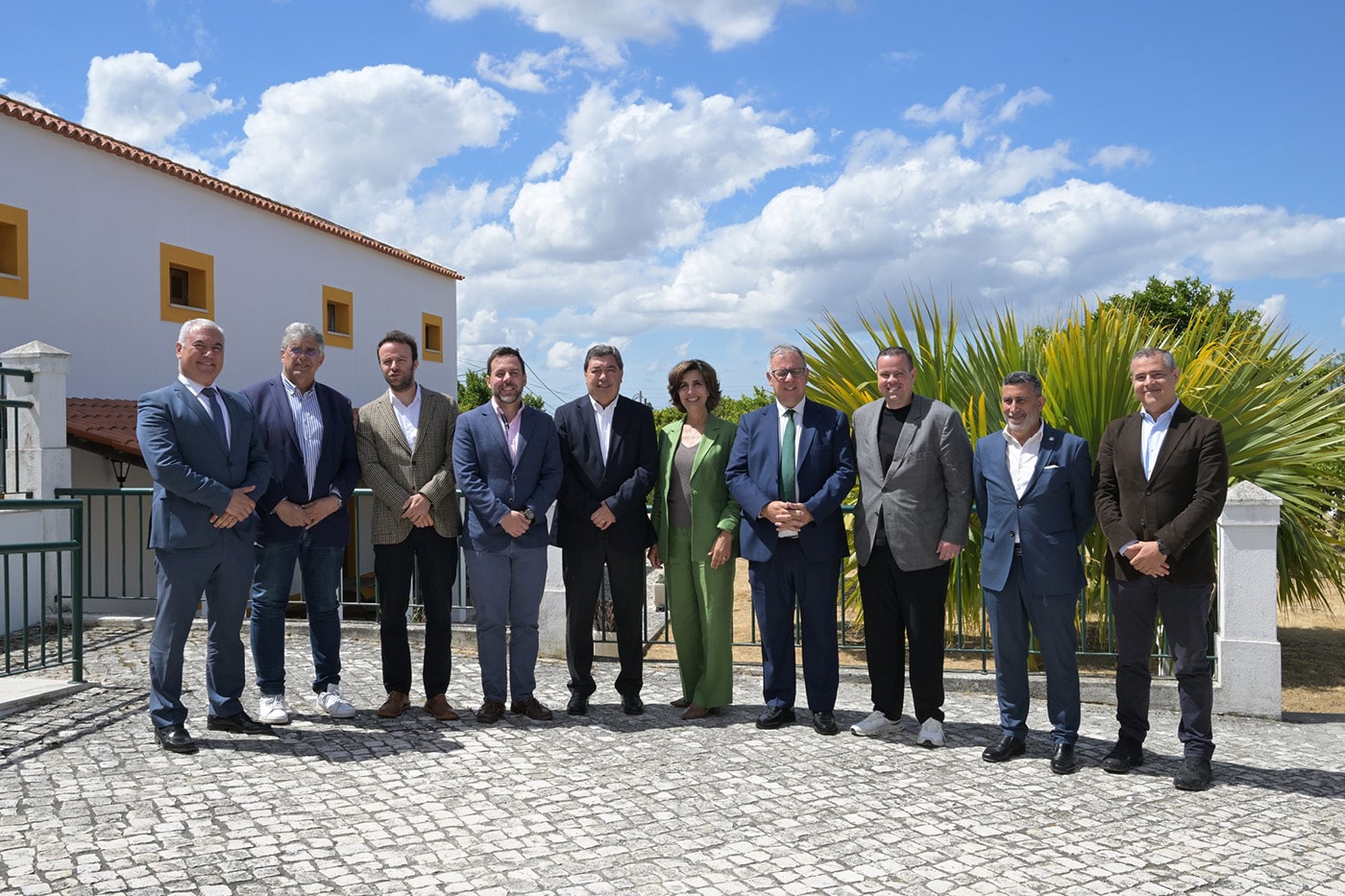
The **Intermunicipal Community of the Setúbal Peninsula (CIMPS)** is at the forefront of this critical initiative. The delegation in Brussels is led by Frederico Rosa, the president of CIMPS and mayor of Barreiro, and includes Inês de Medeiros, the mayor of Almada and a distinguished member of the Committee of the Regions, alongside other key political and technical representatives from the region. This high-level representation underscores the strategic importance placed on these negotiations.
This proactive engagement is intrinsically linked to the broader **Setúbal Peninsula Strategic Plan 2028-2034**, a meticulously crafted framework currently under development by the Strategic Center for Territorial Innovation. The plan's core objective is to define a shared, forward-looking strategic vision for the region's future. It aims to proactively anticipate the next cycle of European funding, consolidate common priorities across the nine municipalities, and significantly bolster the capacity for effective implementation of structuring investments. This long-term vision provides a clear roadmap for sustainable development and investor confidence.
## Lisbon Metropolitan Area: Economic Context and Development Imperatives
The ongoing discussions in Brussels and the strategic planning efforts for the Setúbal Peninsula are situated within a broader context of urgent economic convergence needs across the entire Lisbon and Tagus Valley Region. Recent economic indicators highlight this imperative: in 2024, the Gross Domestic Product (GDP) per inhabitant, measured in purchasing power parity, stood at a concerning 55% of the European Union average. Furthermore, 2025 saw youth unemployment reach 23.2%, underscoring the critical need for targeted interventions and accelerated development.
Several interconnected factors collectively underscore the pressing need for accelerated economic development and strategic investment in the region:
• **Economic Convergence**: The imperative to close the significant gap in GDP per capita relative to the EU average, fostering greater overall prosperity and economic resilience.
• **Youth Employment Initiatives**: A critical focus on addressing persistently high youth unemployment rates through targeted investments in advanced qualifications and emerging, high-growth economic sectors.
• **Productive Modernization**: The strategic necessity of investing in cutting-edge industries and innovative technologies to substantially enhance regional competitiveness on a global scale.
• **Strategic Infrastructure Development**: The pivotal role of leveraging major projects, such as the new Lisbon airport and the Tagus crossings, to catalyze economic activity and significantly improve regional and national connectivity.
These factors collectively emphasize the critical importance of strategic investment and robust, forward-thinking planning to ensure the region's sustained growth and its enhanced international standing. In this context, the new **Plano Regional de Ordenamento do Território de Lisboa, Oeste e Vale do Tejo (PROT LOVT)**, which is set to replace the outdated PROT AML (approved in 2002), is considered an indispensable tool for effective land-use planning, particularly in light of these transformative infrastructure projects. This updated framework will provide the necessary regulatory clarity and guidance for future development.
## Investment Considerations for the South Bank
For foreign investors, the concerted efforts by the Setúbal Peninsula municipalities to secure adequate European funding and implement comprehensive strategic development plans present a compelling investment narrative. The region's explicit commitment to attracting investment, coupled with significant planned infrastructure upgrades, positions it as an area with considerable long-term growth potential and enhanced asset value appreciation.
Investors should meticulously evaluate opportunities in sectors poised to benefit from improved connectivity and industrial expansion, including logistics, specialized commercial properties, and residential developments designed to accommodate a growing and skilled workforce. A nuanced understanding of regional planning frameworks and the mechanisms of European funding is paramount for making informed investment decisions. Engaging with English-speaking real estate lawyers [https://www.realestate-lisbon.com/english-speaking-lawyers] is highly advisable to navigate the complex regulatory landscape and ensure thorough due diligence, particularly concerning land-use planning and the acquisition of development permits. Furthermore, platforms such as HomeOS's Simplex 2024 guide [https://www.homeos.pt/simplex-2024/] offer crucial insights into the new liability frameworks, enabling buyers to conduct comprehensive documentary due diligence before signing a Contrato Promessa Compra e Venda (CPCV).
## Future Outlook for Lisbon's South Bank
The proactive and coordinated approach adopted by the Setúbal Peninsula municipalities in advocating for fairer EU funds and developing robust strategic plans signals a strong commitment to future growth and prosperity. These efforts are expected to cultivate a more dynamic, competitive, and resilient economic environment, thereby attracting further foreign investment and significantly enhancing the region's overall appeal to both businesses and residents.
The successful implementation of the **Setúbal Peninsula Strategic Plan 2028-2034** and the effective utilization of European funds will be pivotal in shaping the region's economic trajectory and its integration within the broader Lisbon metropolitan area. This strategic vision aims to transform the South Bank into a key driver of national development. For expert guidance on investment opportunities, regional development, and navigating the evolving real estate market in the Lisbon metropolitan area, contact realestate-lisbon.com [https://www.realestate-lisbon.com/].