Lisbon's Affordable Housing Push: Government Converts Public Property for Essential Workers
By Nikola Zdraveski
Published: September 30, 2026
Category: politics
### Lisbon's Affordable Housing Push: Government Converts Public Property for Essential Workers
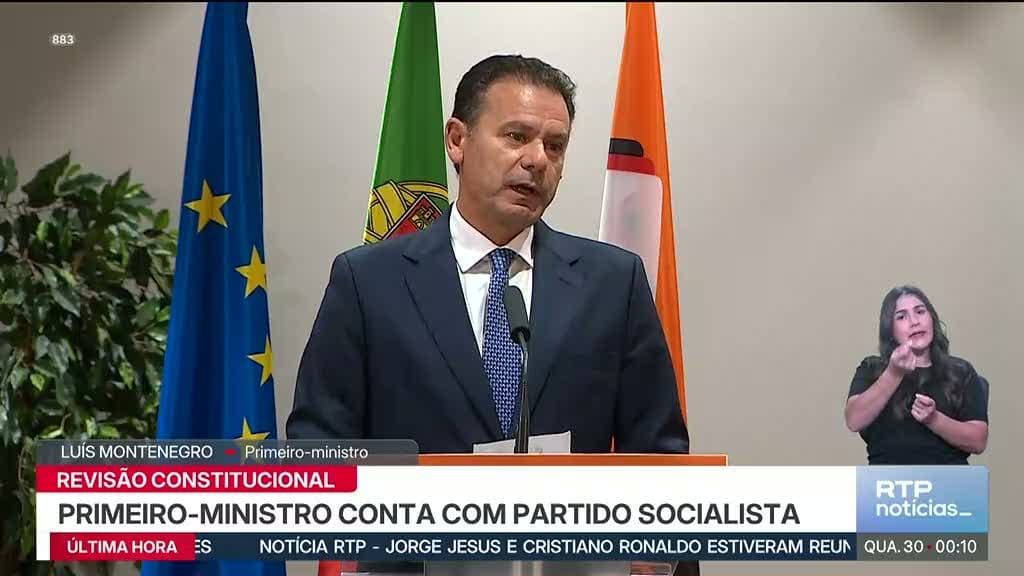
In a significant development for **Lisbon**'s urban landscape, Prime Minister **Luís Montenegro** announced the conversion of the former Presidency of the Council of Ministers building in **Campo de Ourique** into affordable housing. This initiative aims to provide homes for essential public service professionals, addressing the growing challenges of living in the capital.
### Key Takeaways
• ✓ Former government building in Campo de Ourique to become affordable housing.
• ✓ Initiative targets essential public service professionals in Lisbon.
• ✓ Lisbon City Council to invest over 20 million euros for 90 new homes.
• ✓ Government emphasizes public patrimony for social good over mere revenue.
The **Campo de Ourique** district, a well-regarded residential area in Lisbon, is set to benefit from this strategic conversion. Situated in a prime location within Lisbon, Campo de Ourique is renowned for its blend of traditional charm, vibrant local commerce, and excellent connectivity. Its strategic positioning offers residents convenient access to key services, cultural attractions, and efficient public transportation networks, making it a highly desirable neighborhood for both local and international residents. This area's appeal is further enhanced by its proximity to various amenities, contributing to a high quality of life.
This governmental initiative underscores a broader commitment to revitalizing central urban areas and ensuring that professionals vital to the city's functioning can afford to reside within its core. The project is anticipated to significantly enhance the community by enabling essential workers to live closer to their workplaces, thereby fostering a more vibrant, integrated, and economically diverse urban fabric. Such developments are crucial for maintaining the social and economic balance of a bustling capital like Lisbon, attracting further interest in Lisbon's diverse neighborhoods [https://www.realestate-lisbon.com/lisbon-real-estate-neighborhoods].
## Market Implications for Foreign Investors
The Portuguese government's decision to repurpose public patrimony for affordable housing in **Lisbon** sends a distinct signal to the international real estate investment community. This policy shift demonstrates a clear prioritization of social housing needs over the exclusive pursuit of commercial gains from state-owned properties. For foreign investors, this approach could influence future urban development strategies, potentially increasing the supply of affordable housing units and subtly recalibrating market expectations regarding property valorization in certain segments. Understanding these governmental directives is paramount for investors formulating long-term strategies in the Portuguese capital.
While this specific project primarily targets public sector workers, it inherently reflects the persistent and substantial demand for housing across all segments of the Lisbon market, particularly within the affordable category. This underlying demand could stimulate further public and private sector collaborations in Lisbon's housing development sector [https://www.realestate-lisbon.com/off-plan/lisbon]. Such initiatives, even when not directly accessible to foreign buyers, provide valuable insights into the government's commitment to market stability and social equity, factors that can indirectly impact investor confidence and the overall attractiveness of the market. Investors should meticulously monitor these policy shifts as they can have profound implications for long-term property values and rental market regulations.
The substantial investment of over **20 million euros** by the Lisbon City Council for the reconversion of the former governmental building, which is projected to create approximately **90 new homes**, signifies a robust public spending commitment aimed at alleviating acute housing pressures. This significant capital injection into urban regeneration could have indirect effects on rental market dynamics and property values in the immediate vicinity of Campo de Ourique, and potentially across broader Lisbon. Such large-scale public projects, while not direct investment opportunities for foreign capital, contribute to the overall economic vitality and infrastructure development that underpins a healthy real estate market. For a comprehensive overview of market dynamics, our market insights page [https://www.realestate-lisbon.com/market-insights] offers detailed analysis.
## Government's Strategic Housing Vision
Prime Minister Luís Montenegro's articulation of a broader vision for public patrimony underscores a fundamental shift in governmental philosophy. He explicitly stated that the utilization of state-owned assets should transcend mere revenue generation, instead serving to address critical social imperatives, most notably the provision of dignified housing for essential professionals. This strategic imperative aims to ensure that public servants, including educators, healthcare providers, and law enforcement officers, can afford to reside in **Lisbon**, where escalating housing costs have become an increasingly formidable barrier to entry and retention. This policy is designed to bolster the city's essential services by supporting its workforce.
The formal handover of the **Campo de Ourique** building, an initiative initially announced in May, is an integral component of a more expansive government strategy to strategically leverage state-owned properties for localized housing policies. The property has been exclusively designated for this purpose for a minimum period of **25 years**, unequivocally demonstrating a long-term, unwavering commitment to fostering accessible housing solutions within the capital. This long-term commitment provides a degree of predictability for future urban planning and development, which can be a crucial factor for investors assessing the stability of the market. Further analysis of such policies can be found in our Policy Analysis blog [https://www.realestate-lisbon.com/blog/policy-analysis].
## Lisbon's Evolving Housing Market Context
Lisbon's housing market has been characterized by considerable dynamism and persistent challenges, with rapidly appreciating property prices and escalating rental costs rendering it increasingly arduous for a significant portion of the population to reside within the city center. This challenging scenario disproportionately impacts essential public service professionals, whose remuneration often struggles to keep pace with the burgeoning cost of living in the capital. The government's intervention through initiatives like the Campo de Ourique conversion is a direct response to these market pressures, aiming to create a more balanced urban environment.
Several interconnected factors continue to exert influence on the high demand and constrained supply within Lisbon's real estate landscape:
• **Persistent Urbanization Trends**: Lisbon continues to experience a steady influx of new residents, both domestic and international, drawn by economic opportunities and quality of life, intensifying demand for housing.
• **Impact of Tourism and Short-Term Rentals**: The robust tourism sector and the prevalence of short-term rental accommodations significantly reduce the availability of properties for long-term residential use, exacerbating supply shortages.
• **Sustained Foreign Investment Interest**: Continuous and strong interest from international buyers and investors, particularly in prime locations, contributes to upward pressure on property values across various segments.
• **Constraints on New Construction**: The inherent limitations on new construction, especially within the historic and densely populated city center, restrict the expansion of housing stock, further tightening supply.
These complex dynamics collectively forge an environment where targeted government interventions, such as the current initiative, become indispensable for achieving a delicate equilibrium between market forces and the imperative for social housing provisions. For a deeper dive into these intricate market dynamics, our Trend Analysis and Future Forecasting blog [https://www.realestate-lisbon.com/blog/trend-analysis-future-forecasting] offers valuable perspectives.
## Strategic Investment Considerations
For foreign investors and expatriates contemplating the **Lisbon real estate market**, this governmental development provides crucial market intelligence. It signals the Portuguese government's proactive and interventionist role in shaping the housing sector, indicating a willingness to deploy public assets to address social housing deficits. While direct investment opportunities in such public housing projects may be limited, the broader policy direction can significantly influence overall market stability, future urban planning, and the regulatory landscape. Investors are therefore advised to closely monitor these policy shifts, as they can have long-term implications for property values, rental market dynamics, and the general investment climate. Consulting with English-speaking real estate lawyers [https://www.realestate-lisbon.com/english-speaking-lawyers] is highly recommended to navigate the legal nuances of such governmental initiatives and their potential impact on private investments.
The explicit focus on providing affordable housing for essential workers also underscores a demographic segment characterized by consistent and reliable demand for rental properties. While this initiative does not directly target the luxury or high-yield rental markets, the creation of a more stable, diverse, and well-supported resident base contributes positively to the overall health and resilience of Lisbon's real estate ecosystem. This can indirectly enhance the attractiveness of the city for various types of real estate investments. Furthermore, the Simplex 2024 liability framework [https://www.homeos.pt/simplex-2024/] has prompted buyers to conduct documentary due diligence before signing the CPCV, verifying whether licensed floor plans match the physical property, a critical step for any investment.
## Future Outlook for Lisbon's Housing
The conversion of the **Campo de Ourique** building represents a tangible and significant step in the government's ongoing commitment to addressing Lisbon's multifaceted housing crisis. This initiative, when viewed in conjunction with other planned interventions and policy adjustments, aims to cultivate a more equitable, accessible, and sustainable housing market for all residents, including the essential public service professionals who are vital to the city's operational integrity and social fabric. The long-term success of such comprehensive housing policies will be contingent upon sustained governmental investment, efficient administrative implementation, and adaptive responses to evolving market conditions.
For all stakeholders engaged in Lisbon's dynamic real estate market, developments of this nature provide encouraging signals regarding the sector's resilience and the government's determination to foster a balanced urban environment. These initiatives contribute to a positive, albeit complex, outlook for the city's property landscape, highlighting both challenges and opportunities. For expert guidance and in-depth analysis on Lisbon's continuously evolving real estate market, contact realestate-lisbon.com [https://www.realestate-lisbon.com/].