Portugal's Public Property Transfer Program: Sintra Secures Vacant Building for Urban Renewal
By Nikola Zdraveski
Published: December 12, 2025
Category: politics
### Sintra's Vacant Building Acquisition Signals Portugal's Strategic Urban Renewal Initiative
In a significant development for Portugal's urban renewal strategy, the Portuguese government has transferred 25 vacant public buildings to 19 municipalities, including **Sintra**, through its "Gestão do património imobiliário público sem utilização" program. This €13.5 million investment in building rehabilitation demonstrates the government's commitment to addressing urban vacancy while creating value for local communities. The program's expansion to 74 properties worth €62 million across 48 municipalities since October 2023 underscores its scale and strategic importance for Portugal's real estate landscape.
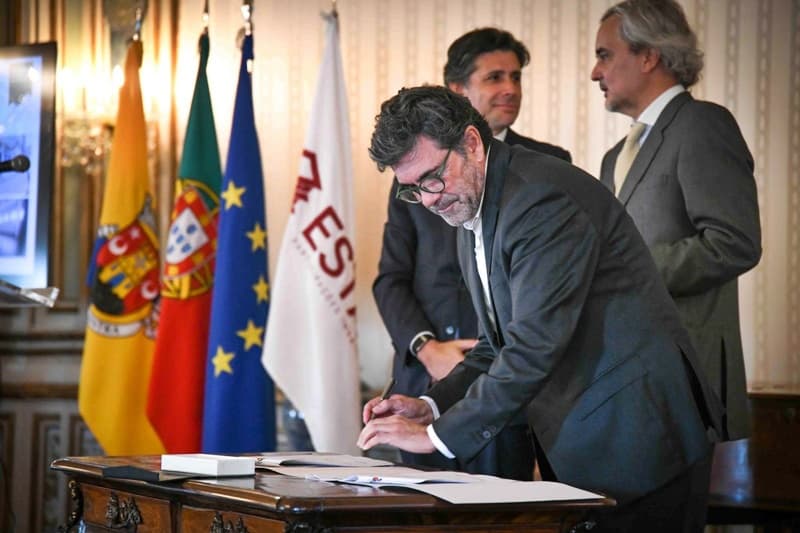
The transfer ceremony at **Palácio de Queluz**, attended by Secretary of State for Treasury João Silva Lopes and Minister of Infrastructure and Housing Miguel Pinto Luz, highlighted Sintra's acquisition of the former Finance Department 3 building in Cacém. This property conversion from administrative facility to community service center exemplifies how Portugal is repurposing underutilized public assets to address social needs while stimulating local economic development.
### Key Takeaways
• ✓ Portugal transfers 25 vacant public buildings worth €13.5 million to 19 municipalities including Sintra
• ✓ Former Sintra Finance Department in Cacém to become Community Training and Citizenship Center
• ✓ Program totals €62 million across 74 properties, demonstrating government's urban renewal commitment
• ✓ Strategic repurposing of public assets creates opportunities for social services and community development
**Sintra's Cacém** neighborhood, located 20 kilometers northwest of central Lisbon along the IC19 highway, represents one of the municipality's most densely populated areas with over 40,000 residents. The former Finance Department building sits in the heart of Cacém's administrative district, near the Cascais Shopping Center and well-served by public transportation including bus connections to Lisbon and Cascais. This strategic location makes the property ideal for community services, positioned to serve vulnerable populations across Sintra's diverse demographic landscape.
The area's transformation from purely residential to mixed-use with enhanced public services reflects broader trends in Sintra's urban planning strategy [https://www.realestate-lisbon.com/sintra/pdm]. For foreign investors monitoring Portugal's real estate market, such government-led initiatives signal proactive municipal management and commitment to neighborhood improvement. The **Cacém** district's combination of established residential communities, improving infrastructure, and expanding public services creates a compelling case for long-term property value appreciation.
## Market Implications for Investors
The government's systematic approach to vacant property rehabilitation carries significant implications for **real estate investors** evaluating Portuguese market opportunities. By converting underutilized public assets into active community facilities, municipalities like Sintra are effectively creating new demand drivers for surrounding private properties. This public investment in social infrastructure typically precedes private sector interest, making early positioning in affected neighborhoods potentially advantageous for investment returns.
The program's focus on **social services and community development** rather than commercial exploitation demonstrates Portugal's balanced approach to urban renewal. For investors analyzing Portuguese property market trends [https://www.realestate-lisbon.com/market-insights], such initiatives indicate sustainable development practices that enhance long-term neighborhood viability rather than pursuing short-term gains. The transformation of bureaucratic buildings into citizen services centers represents a fundamental shift toward community-oriented urban planning.
From an investment perspective, the concentration of public investment in specific neighborhoods creates identifiable growth corridors. Properties within walking distance of newly established community centers often experience increased demand from families and professionals seeking convenient access to public services. This phenomenon, known as **"infrastructure premium,"** typically manifests in both rental yields and capital appreciation over medium-term holding periods.
## Sintra's Strategic Urban Development
**Sintra** represents one of Portugal's most distinctive municipalities, encompassing historic mountain villages, coastal areas, and dense suburban communities within its 319 square kilometers. The municipality's diverse geography requires sophisticated urban planning to balance preservation of UNESCO World Heritage sites with modern development needs. Mayor **Marco Almeida's** proactive approach to identifying additional central government properties for transfer demonstrates strategic thinking about leveraging public assets for municipal benefit.
The municipality's request for additional building transfers reflects broader ambitions to expand social services capacity across different neighborhoods. By targeting properties for education, social services, and community protection functions, Sintra is positioning itself to address demographic challenges including aging populations and youth support needs. This comprehensive approach to public asset utilization distinguishes Sintra from municipalities focused solely on commercial development.
## Portugal's Public Property Repositioning Strategy
Portugal's systematic transfer of vacant public buildings to municipal control represents an innovative approach to **public asset optimization** that balances fiscal responsibility with social objectives. Unlike privatization programs that generate immediate revenue but surrender long-term control, this strategy enables municipalities to retain assets while adapting them to local needs. The program's expansion from initial pilot projects to nationwide implementation demonstrates its perceived success and political sustainability.
Several factors drive this strategic repositioning of public real estate:
• **Fiscal Efficiency**: Eliminates maintenance costs for vacant buildings while transferring rehabilitation expenses to municipalities equipped with local knowledge
• **Social Impact**: Creates community value through targeted services rather than generic commercial development
• **Urban Integration**: Activates underutilized spaces within existing neighborhoods rather than promoting greenfield development
• **Demographic Adaptation**: Enables municipalities to respond to specific local needs including aging populations and social services
These factors combine to create a sustainable model for public asset management that foreign investors should monitor closely. The program's success may influence similar initiatives across Europe, potentially creating new investment paradigms for public-private collaboration in urban development.
## Investment Considerations
For foreign investors evaluating Portuguese real estate opportunities, the public property transfer program provides valuable insights into **municipal development priorities** and neighborhood growth trajectories. Properties located near newly established community centers often benefit from increased foot traffic, improved public services, and enhanced neighborhood perception. These factors typically translate into stronger rental demand and potential capital appreciation over five-to-ten-year investment horizons.
Investors should consider consulting with English-speaking real estate lawyers [https://www.realestate-lisbon.com/english-speaking-lawyers] familiar with Portuguese municipal planning to identify neighborhoods benefiting from similar public investments. The concentration of social infrastructure investment often precedes private development, creating early-mover advantages for investors who understand local planning dynamics. Additionally, the program's focus on vulnerable populations may create opportunities for specialized residential developments serving elderly or social housing needs.
Understanding Portuguese legal frameworks [https://www.realestate-lisbon.com/buying-guide/legal-issues] governing public property transfers and municipal planning authority becomes crucial for investors seeking to capitalize on these trends. The interaction between public investment timing and private development cycles creates specific windows of opportunity that informed investors can strategically navigate.
## Looking Ahead
Portugal's vacant property transfer program positions municipalities like Sintra to address evolving demographic needs while creating tangible community value from underutilized public assets. The strategic repurposing of bureaucratic buildings into citizen service centers reflects a broader European trend toward community-focused urban development that prioritizes social outcomes alongside economic objectives.
As the program expands to additional municipalities, investors monitoring Portuguese real estate should track implementation outcomes and neighborhood transformation patterns. The successful conversion of public liabilities into community assets may establish Portugal as a model for innovative public asset management across Southern Europe. For expert guidance on navigating Portuguese real estate investment opportunities in areas benefiting from public infrastructure improvements, contact realestate-lisbon.com [https://www.realestate-lisbon.com/].