Lisbon Delivers 105 New Affordable Homes in Marvila Under PRR-Funded Program
By Nikola Zdraveski
Published: December 13, 2025
Category: politics
### Lisbon Delivers 105 New Affordable Homes in Marvila Under PRR-Funded Program
In a significant and highly publicized move to combat **Lisbon**'s acute housing crisis, the **Lisbon Municipal Council (CML)** has officially delivered 105 new homes under its Affordable Rent Program (Programa de Renda Acessível). The new development, strategically located in the eastern parish of **Marvila**, was substantially funded by the European Union's Recovery and Resilience Plan (PRR), a detail that Mayor **Carlos Moedas** emphasized as critical. This project not only provides immediate relief to over a hundred families but also serves as a key indicator of the city's housing policy direction, a crucial factor for foreign investors analyzing the Lisbon real estate market [https://www.realestate-lisbon.com/market-insights].
### Key Takeaways
• ✓ Lisbon's municipality has delivered 105 new-build affordable rental units in the rapidly evolving neighborhood of Marvila.
• ✓ The project, costing over €15 million, was primarily financed by the EU's Recovery and Resilience Plan (PRR), underscoring the reliance on external funding for major housing initiatives.
• ✓ This delivery is part of a broader government strategy to increase housing supply and mitigate intense price pressures in the capital, a key consideration for private market investors.
• ✓ Mayor Carlos Moedas confirmed this event marked the 3,000th housing key delivered during his tenure, signaling a strong and ongoing political commitment to resolving the housing deficit.
The new residential complex, situated on **Rua do Vale Formoso de Cima**, is a modern development comprising two blocks. It offers a range of apartment types, from studios (T0) to four-bedroom units (T4), designed to cater to diverse family structures and needs. Managed by the city's Urban Rehabilitation Society (SRU), the project goes beyond mere housing, incorporating features aimed at fostering a complete community. These include underground parking, dedicated covered bicycle storage, a multi-purpose community room, and three ground-floor commercial units. This holistic approach is indicative of a more sophisticated strategy in public housing development, aiming for urban regeneration rather than just construction.
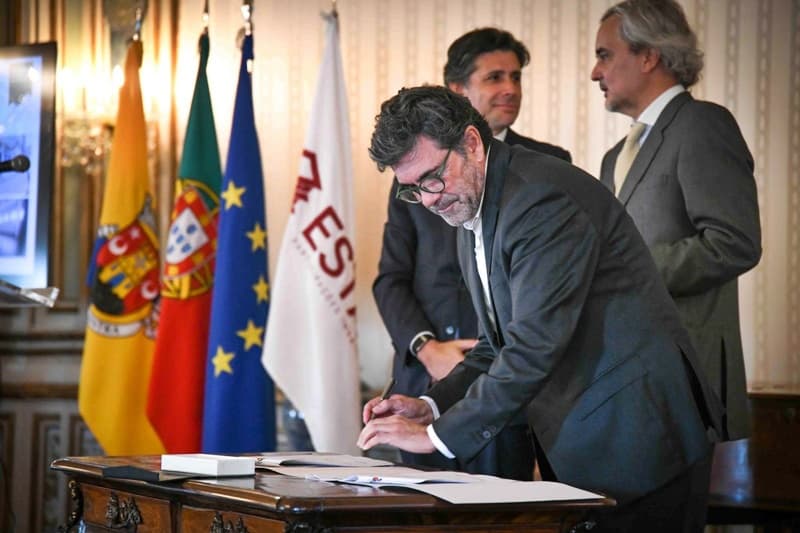
During the key handover ceremony, Mayor Moedas framed the housing issue as a fundamental right, transcending politics. “Housing is not a topic for political parties, it is a crucial issue in our lives: it is health, well-being, dignity, a right,” he stated. His explicit acknowledgment of the EU's financial muscle—with €15 million of the nearly €20 million total investment coming from the PRR—highlights the symbiotic relationship between municipal ambitions and European funding. For investors, this signals that the pipeline of large-scale public projects is heavily dependent on EU policy and financial flows, a factor to consider in long-term risk assessment [https://www.realestate-lisbon.com/buying-guide/investment-risks].
## Market Implications for Investors
The direct intervention of the state in the housing market, particularly in emerging neighborhoods like **Marvila**, has significant implications for private investors. On one hand, the injection of a substantial number of affordable rental units could create a price ceiling for comparable properties in the immediate vicinity, potentially tempering rental yield expectations for private landlords. Investors can model these scenarios using tools like our Rental Yield Calculator [https://www.realestate-lisbon.com/calculators/rental-yield].
On the other hand, such large-scale public investment often acts as a powerful catalyst for urban regeneration. The improvement of the housing stock and public spaces can enhance the neighborhood's profile, attract private commercial investment, and ultimately lead to a long-term appreciation of all assets in the area. This dual effect requires careful analysis by investors looking at opportunities in Marvila [https://www.realestate-lisbon.com/lisbon/marvila]. The key is to assess whether the regenerative impact will outweigh the potential rent suppression from subsidized competition. This is a classic economic impact analysis [https://www.realestate-lisbon.com/blog/economic-impact-analysis] scenario.
Furthermore, Mayor Moedas highlighted another municipal program that directly subsidizes rents for over 1,200 residents who spend more than a third of their income on housing. This, combined with new construction, demonstrates a multi-pronged approach that provides a safety net for tenants, which could, in turn, create a more stable, albeit regulated, rental market.
## National Housing Strategy and Political Will
The event's significance was amplified by the presence of the Minister of Infrastructure and Housing, **Miguel Pinto Luz**. He reinforced the national government's commitment, stating a goal to deliver 150,000 homes across Portugal in the coming years and confirming a €1 billion investment in housing for 2025. His declaration that the housing problem “can only be solved with more houses, by building more houses!” sends a clear message to the market: supply-side solutions are the government's priority.
This strong, unified political will from both city and state levels provides a degree of certainty for the construction sector. For investors, it signals a stable policy environment focused on increasing housing stock, which could streamline licensing for private projects that align with public goals. However, it also suggests that the regulatory landscape, particularly concerning legal and tax frameworks [https://www.realestate-lisbon.com/buying-guide/legal-issues], will remain a central focus of government. Staying abreast of these developments is critical, and consultation with specialized property tax accountants [https://www.realestate-lisbon.com/professionals/accountants-property-tax] is advisable.
## The Marvila Case Study: Regeneration in Action
The successful and rapid completion of the project by the construction company **DST** was specifically praised, offering a positive example of execution in a sector often plagued by delays. The arrival of new residents from other parts of the Lisbon metropolitan area, including Amadora and Seixal, will diversify the local community and stimulate the local economy.
This project serves as a microcosm of the broader trends shaping Lisbon's eastern parishes. Once a post-industrial area, Marvila is now a focal point for regeneration, attracting artists, tech startups, and now, new residential communities. The key attributes of this new development underscore the modern approach to urban planning:
• **Mixed-Income Potential**: While this is an affordable housing project, it sets a standard for quality that can attract further private development.
• **Community Integration**: The inclusion of commercial and multi-use spaces is designed to prevent the creation of isolated housing blocks.
• **Strategic Location**: Marvila's proximity to the city center and the riverfront makes it a prime candidate for future growth and value appreciation.
• **Public-Private Synergy**: The project's success relies on a combination of public funding (CML/EU), municipal management (SRU), and private execution (DST).
## Investment Considerations
For foreign investors, the Marvila project is a crucial case study. It demonstrates that while Lisbon's luxury market in areas like Chiado [https://www.realestate-lisbon.com/lisbon/chiado] and Príncipe Real [https://www.realestate-lisbon.com/lisbon/principe-real] captures headlines, significant activity and opportunity exist in these transitional neighborhoods. Investment here requires a different strategy—one focused on long-term growth driven by urban regeneration rather than immediate high-end rental returns. An understanding of the city's Municipal Master Plan, or PDM [https://www.realestate-lisbon.com/lisboa/pdm], is essential for identifying future development corridors.
The political dimension is also unmissable. The cross-party collaboration mentioned by Mayor Moedas, who is from the center-right PSD, with the socialist president of the Marvila parish, suggests a broad consensus on the need for such projects. This political stability can reduce risks for investors looking to partner on or develop adjacent projects. Engaging with local constructors in Lisbon [https://www.realestate-lisbon.com/lisbon/constructors] who understand this dynamic is key.
## Looking Ahead
The delivery of 105 homes in Marvila is a tangible result of a long-term strategy that is reshaping Lisbon. It is a clear signal that the city is using public and EU funds to actively manage its housing market, particularly in areas ripe for regeneration. This proactive stance will be a defining characteristic of the Lisbon real-estate scene for the foreseeable future.
While these initiatives aim to cool an overheated market, they also lay the groundwork for sustainable, long-term growth. For the astute investor, this complex interplay of public policy and private market forces creates a landscape rich with opportunity. Navigating it successfully requires deep local knowledge and strategic foresight. For expert guidance on aligning your investment strategy with Lisbon's urban development, contact realestate-lisbon.com [https://www.realestate-lisbon.com/].