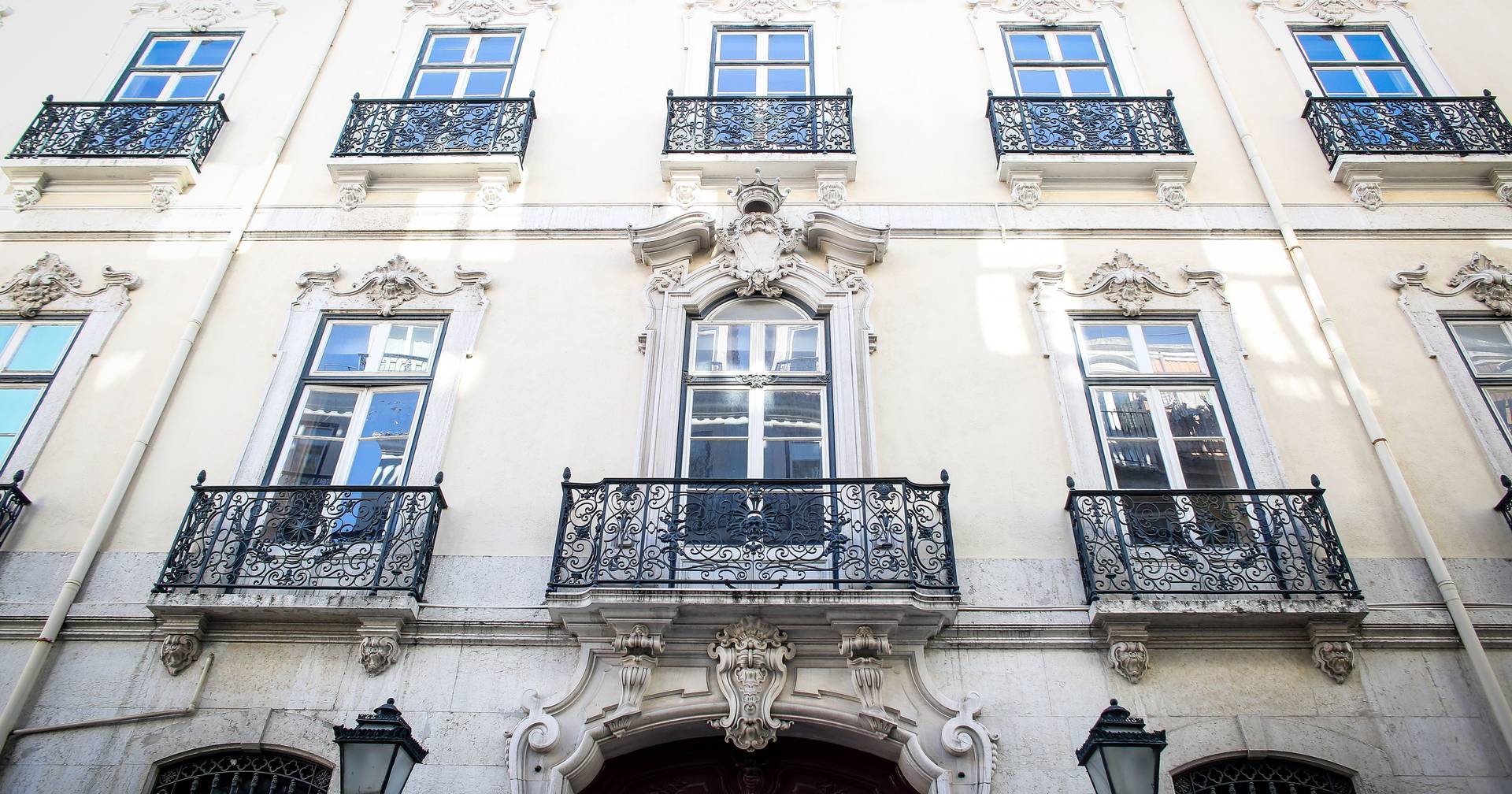
Lisbon Government Divided Over Historic Baixa Palace: A €2.2M+ Renovation Opportunity for a New Academy
By Nikola Zdraveski
Published: December 10, 2025
Category: politics
### Lisbon's Palácio do Manteigueiro: €2.2M Historic Rehabilitation Signals New Era for Baixa Real Estate
In a significant development for **Lisbon's heritage property market**, the Portuguese government's planned transfer of the historic Palácio do Manteigueiro to the Confederação Empresarial de Portugal (CIP) for professional training academy use has revealed complex investment dynamics surrounding the capital's protected historic buildings. This 17th-century palace, located in the heart of **Baixa Pombalina**, represents both opportunity and challenge for investors eyeing Portugal's heritage real estate sector.
The transaction underscores broader implications for foreign investors navigating Lisbon's **historic property rehabilitation market**. With renovation costs estimated between €500-1,000 per square meter and potential rental values reaching €28/m² post-rehabilitation, the palace exemplifies the financial calculus facing heritage property investments in Portugal's most protected districts.
### Key Takeaways
• ✓ Palácio do Manteigueiro transfer to CIP reveals €2.2M minimum rehabilitation costs for 2,200m² historic building
• ✓ Rental values could increase from €18-20/m² to €28/m² following renovation, representing 40% value appreciation
• ✓ Baixa Pombalina location offers maximum heritage protection requiring 30-year minimum lease terms for investment recovery
• ✓ Government coordination challenges between Ministries highlight bureaucratic complexities in state property transfers
The **Palácio do Manteigueiro** occupies a privileged position on Rua da Horta Seca, nestled within Lisbon's UNESCO-listed Baixa Pombalina district, 500 meters southeast of Rossio Square and accessible via the Baixa-Chiado Metro station. This 18th-century reconstruction following the devastating 1755 earthquake represents the pinnacle of Pombaline architecture, characterized by its earthquake-resistant design and ornate baroque detailing that attracts heritage investors worldwide.
The palace's location within **Baixa Pombalina**—Lisbon's historic downtown rebuilt under the Marquis of Pombal's visionary urban planning—places it at the epicenter of Portugal's tourism and cultural economy. For foreign investors, this area offers unparalleled prestige but demands specialized expertise in heritage property regulations. The district's combination of architectural significance, tourist footfall, and strict preservation requirements creates unique investment parameters that differ substantially from conventional real estate opportunities.
## Market Implications for Heritage Property Investors
The Palácio do Manteigueiro situation illuminates critical considerations for **heritage property investment** in Lisbon's most protected zones. The estimated €2.2 million rehabilitation cost for basic functionality demonstrates the substantial capital requirements facing investors in Grade A protected buildings, where maintaining original elements like staircases, ceilings, and walls is mandatory under Portuguese heritage law.
This **investment threshold** creates natural barriers to entry that simultaneously protect market values and limit participant pool. According to Lisbon property market analysis [https://www.realestate-lisbon.com/market-insights], heritage buildings command premium valuations precisely because of their scarcity and protection status, with renovated properties in Baixa achieving 25-40% higher values than equivalent space in less protected areas.
The **rental yield dynamics** revealed in this case—potential increase from €80,000-89,000 annually to €124,500 post-renovation—illustrate why investors accept higher upfront costs. However, the 30-year minimum lease terms required for investment recovery highlight the long-term commitment necessary for heritage property success, contrasting sharply with typical 5-10 year commercial lease structures elsewhere in Lisbon.
## Government Coordination Challenges
The apparent disconnect between **Ministry of Economy**, led by Manuel Castro Almeida, and the **Ministry of Infrastructure and Housing**, under Miguel Pinto Luz, regarding the palace transfer protocol reveals administrative complexities that foreign investors must navigate when dealing with Portuguese state properties. The Ministry of Infrastructure's statement acknowledging only an August 5, 2025 letter from CIP—despite public announcements months earlier—demonstrates the multi-layered approval processes inherent in state asset transactions.
This **bureaucratic landscape** requires investors to engage multiple government levels and maintain patience through extended approval timelines. The situation emphasizes why Portuguese real estate lawyers [https://www.realestate-lisbon.com/english-speaking-lawyers] with government relations experience prove invaluable for navigating state property acquisitions or long-term concessions.
## Lisbon Heritage Property Investment Context
The Palácio do Manteigueiro case emerges within Lisbon's broader **heritage rehabilitation market**, where approximately 60% of Baixa Pombalina buildings require significant structural intervention. The Portuguese government's incentives for heritage conservation—including tax benefits and simplified permitting for qualified projects—create supportive conditions despite regulatory complexity.
Several factors continue driving heritage property investment in Lisbon:
• **Tourism Growth**: Baixa visitor numbers increased 15% annually pre-pandemic, supporting commercial viability for rehabilitated heritage spaces
• **Tax Incentives**: Portuguese heritage rehabilitation benefits include IMT transfer tax reductions and IRC corporate tax advantages for qualifying projects
• **Scarcity Premium**: Grade A protected buildings represent less than 2% of Lisbon's total stock, creating natural supply constraints
• **EU Funding**: European Union cultural heritage programs provide additional financing mechanisms for qualified rehabilitation projects
These elements combine to create a supportive environment for heritage investment, provided investors understand the extended timelines and specialized requirements involved in working within Portugal's protected property framework.
## Investment Considerations for Heritage Properties
Foreign investors evaluating **Lisbon heritage opportunities** must balance significant upfront investment against long-term appreciation potential. The Palácio do Manteigueiro's €500-1,000/m² renovation range—translating to €1.1-2.2 million for the 2,200m² building—exemplifies the capital intensity required for Grade A protected properties where maintaining historical authenticity is paramount.
Successful heritage property investment [https://www.realestate-lisbon.com/buying-guide/property-quality] demands specialized professional teams including conservation architects familiar with Portuguese heritage regulations, quantity surveyors experienced in historic building costs, and project managers who understand the intersection of preservation requirements and commercial viability. Investors should also consult Portuguese tax advisors [https://www.realestate-lisbon.com/accountants] about heritage-specific fiscal benefits that can significantly impact investment returns.
The **30-year investment horizon** mentioned by B.Prime's Jorge Bota reflects realistic timelines for heritage property recovery, requiring patient capital and strategic long-term planning that differs substantially from typical real estate investment cycles. This extended commitment, however, often yields superior returns through combination of rental income, property appreciation, and potential tax advantages available to heritage conservation projects.
## Looking Ahead
The Palácio do Manteigueiro's transformation into a CIP academy represents broader trends in Lisbon's heritage property market, where institutional users increasingly drive demand for rehabilitated historic spaces. As Portugal continues attracting international businesses and organizations, well-located heritage properties offer unique branding and positioning opportunities that justify premium rehabilitation investments.
For investors willing to navigate Portugal's heritage protection framework, Lisbon's Baixa district offers compelling opportunities combining cultural significance with commercial potential. Success requires understanding regulatory requirements, engaging qualified professionals, and maintaining realistic timelines—but the rewards include ownership of irreplaceable assets in one of Europe's most historically significant urban environments. For expert guidance on heritage property investment in Lisbon, contact realestate-lisbon.com [https://www.realestate-lisbon.com/].