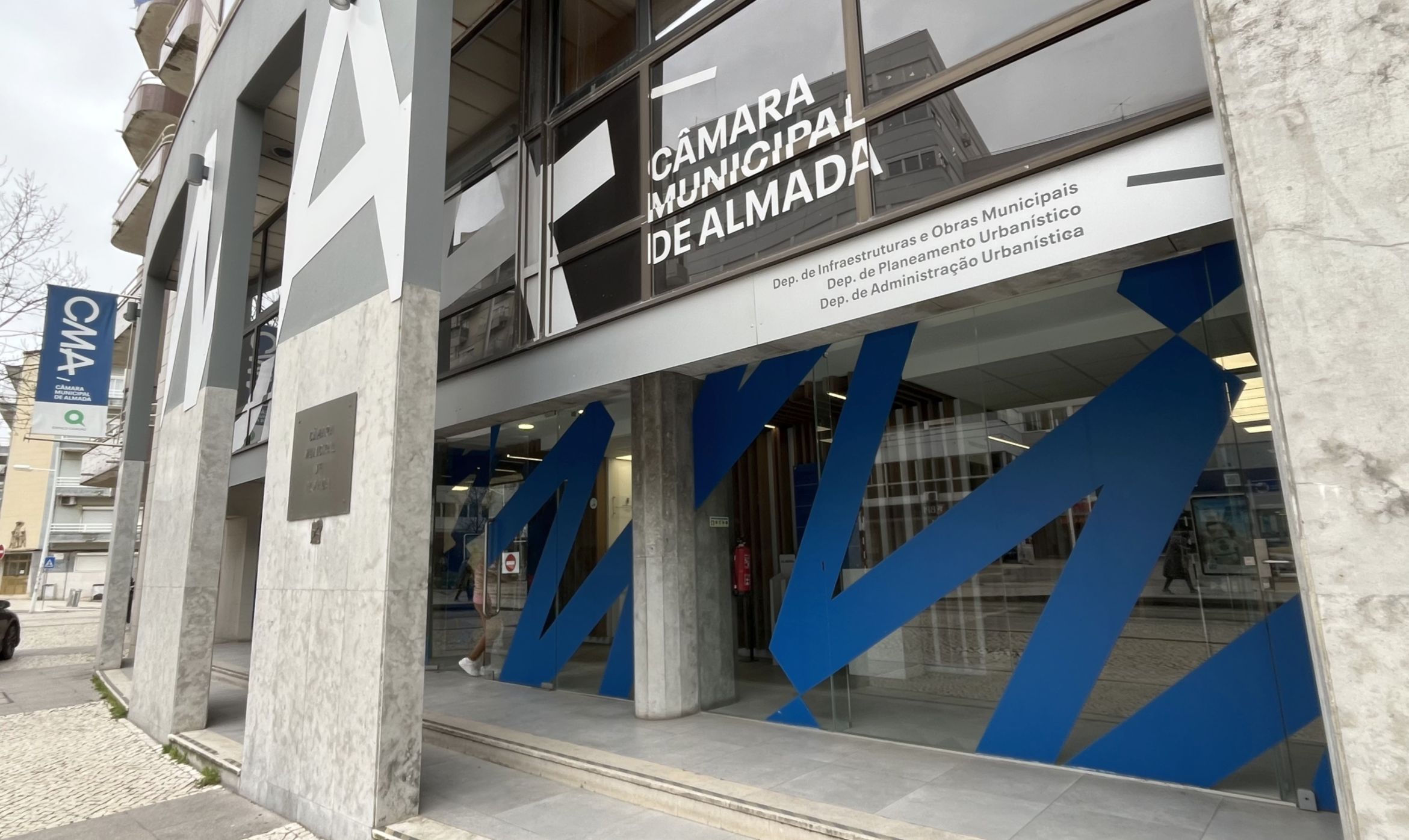
Almada's Political Crisis: Censure Motion Threatens Local Governance Amid Infrastructure and Housing Failures
By Nikola Zdraveski
Published: July 21, 2026
Category: politics
### Almada's Political Crisis: Censure Motion Threatens Local Governance Amid Infrastructure and Housing Failures
In a significant development for **Almada**'s political and administrative landscape, the **PSD** has presented a formal censure motion against the municipal executive led by **Inês de Medeiros**. This move, occurring during an extraordinary meeting of the Municipal Assembly on July 21, 2026, underscores the growing tension in the **Lisbon Metropolitan Area** regarding infrastructure management, urban planning, and the provision of essential services.
### Key Takeaways
• ✓ PSD presents censure motion against Almada's PS-CDU coalition executive
• ✓ Motion cites critical failures in water supply management and urban hygiene
• ✓ Political instability signals potential risks for local real estate development and infrastructure
• ✓ Opposition parties Chega and Iniciativa Liberal confirm support for the motion
The political crisis in **Almada**, situated directly across the Tagus River from central Lisbon, has reached a boiling point following weeks of severe water supply disruptions that have affected thousands of residents. The **PSD Almada** argues that the current administration has demonstrated a persistent pattern of delayed responses and a profound lack of accountability in essential public services. This situation has led to the declaration of a **State of Alert** in the municipality, a move that has significant implications for both residents and the local business environment.
Beyond the immediate water crisis, the censure motion highlights broader concerns that directly impact the local property market and the quality of life for **expats and investors**. These include the visible degradation of **urban hygiene** and the uncontrolled growth of **precarious construction neighborhoods**. Such developments pose significant challenges for long-term urban regeneration and could potentially stagnate property values in specific areas of the district if not addressed through robust **housing policies**.
The motion also targets the delay in revising the **Municipal Emergency and Civil Protection Plan**, which the opposition views as a failure of basic governance. For international stakeholders, these administrative hurdles represent a layer of **investment risk** that must be factored into any strategic decision-making process in the region.
## Market Implications for Investors
For **real estate investors**, political stability at the municipal level is a crucial factor in assessing the viability of long-term projects. The potential for a change in leadership or a significant shift in administrative portfolios could lead to delays in the approval of new developments or unexpected changes in the Almada Municipal Master Plan (PDM) [https://www.realestate-lisbon.com/almada/pdm]. Such uncertainty often prompts a more cautious approach from institutional investors and developers.
This **market signal** suggests that infrastructure resilience is becoming a primary concern for stakeholders in the South Bank. Investors evaluating Portugal's property market insights [https://www.realestate-lisbon.com/market-insights] should closely monitor how the local government addresses these systemic failures. A failure to restore reliable water and sanitation services could impact the desirability of Almada as a residential alternative to the increasingly expensive Lisbon city center.
The growth of unlicensed or precarious housing also underscores the importance of rigorous **due diligence**. In an environment where local authorities are struggling with enforcement and planning, the risk of acquiring a property with unresolved legal issues increases. Buyers in the area are strongly encouraged to consult with English-speaking real estate lawyers [https://www.realestate-lisbon.com/english-speaking-lawyers] to ensure that any potential acquisition is fully compliant with local zoning and habitation licenses, a risk compounded by the current Simplex 2024 liability framework [https://www.homeos.pt/simplex-2024/] which places more responsibility on the buyer for documentary verification.
Furthermore, the political pressure for an independent audit of the **SMAS** (Municipal Water and Sanitation Services) indicates a push for greater transparency. For investors, this could eventually lead to more reliable data on infrastructure capacity, which is essential for planning large-scale residential or commercial projects.
## Almada's Governance and Market Position
The current executive, a coalition between the **Socialist Party (PS)** and the **CDU**, has defended its record, accusing the opposition of political demagoguery. However, the alignment of the **PSD**, **Chega**, and **Iniciativa Liberal** against the executive suggests a significant shift in the local political balance. This friction can lead to legislative gridlock, affecting everything from local tax rates to the speed of licensing processes.
**Inês de Medeiros**, the Mayor of Almada, has faced criticism not only for the water crisis but also for the perceived lack of transparency in municipal meetings. For **foreign investors**, who often rely on clear and accessible information to navigate the Portuguese market, this perceived lack of transparency can be a significant deterrent.
The outcome of this censure motion will be a key indicator of whether the current administration can maintain its **strategic positioning** or if a new approach to municipal management will be required. This is particularly relevant for the **South Bank**, which has been positioned as a major growth hub for the next decade.
## Almada Real Estate Market Context
Almada remains a key target for **foreign investment** due to its strategic location, excellent connectivity to Lisbon via the 25 de Abril Bridge and Fertagus train, and its extensive coastline. However, the current political and infrastructure challenges create a complex environment that requires careful navigation.
Several factors continue to influence the Almada market context and should be monitored by investors:
• **Infrastructure Reliability**: The recent water crisis has highlighted the urgent need for significant investment in utility networks to support growing demand
• **Urban Regeneration**: Effective management of precarious housing and urban hygiene is essential for maintaining the long-term desirability of the district
• **Political Stability**: The stability of the municipal executive directly impacts the predictability of the regulatory environment for developers
• **Regulatory Transparency**: Clearer communication and faster response times from municipal authorities are critical for maintaining investor confidence
These dynamics suggest that while the long-term potential of Almada is strong, short-term **investment risks** related to governance and basic services must be carefully weighed. The current situation underscores the necessity of conducting a thorough investment risk analysis [https://www.realestate-lisbon.com/buying-guide/investment-risks] before committing capital to the area.
Moreover, the focus on **urban hygiene** and the growth of informal settlements suggests that certain neighborhoods may face more significant challenges than others. Investors should prioritize areas with established infrastructure and clear municipal support for regeneration.
## Investment Considerations
Strategic investors should view this political development as a prompt to deepen their **risk assessment** protocols. Understanding the local political climate is as important as analyzing price trends when considering a significant commitment in the **South Bank**. The potential for administrative shifts means that project timelines should include buffers for potential regulatory delays.
Prospective buyers should prioritize properties with verified infrastructure connections and clear legal standing. Given the reports of precarious construction, an independent pre-purchase inspection [https://www.inspectos.pt/inspecoes-residenciais/inspecao-pre-compra] is increasingly standard to verify the structural integrity and utility connections of a property. This is especially true for older buildings or those in areas identified as having "precarious" growth.
Engaging with real estate agents in Almada [https://www.realestate-lisbon.com/almada/real-estate-agents] who have deep local knowledge can provide a clearer picture of which neighborhoods are most affected by current service disruptions and political uncertainty. Furthermore, consulting with due diligence specialists [https://www.realestate-lisbon.com/professionals/real-estate-lawyers-due-diligence] can help mitigate the risks associated with the growth of unlicensed construction mentioned in the censure motion.
## Looking Ahead
The result of the extraordinary meeting of the **Municipal Assembly** will be a defining moment for Almada's current administration. Whether the executive survives the motion or is forced to restructure, the focus on infrastructure resilience and urban hygiene is unlikely to diminish. The political pressure for an independent audit of the **SMAS** could lead to a more transparent and efficient management of water resources in the future, which would be a positive long-term signal for the market.
For stakeholders in the **Almada real estate market**, these developments provide a reminder that market growth must be supported by robust infrastructure and stable governance. While the current crisis is challenging, it may also serve as a catalyst for necessary improvements in municipal services. For expert guidance on navigating the Almada real estate market and conducting thorough due diligence during this period of transition, contact realestate-lisbon.com [https://www.realestate-lisbon.com/].