Sintra Urbanism Enforcement: Illegal Housing and Licensing Crackdown in Rio de Mouro
By Nikola Zdraveski
Published: September 11, 2026
Category: legal-updates
### Sintra Urbanism Enforcement: Illegal Housing and Licensing Crackdown in Rio de Mouro
In a significant development for **Sintra**'s regulatory landscape, a joint task force led by the **PSP** and the **Sintra Municipal Police** has uncovered a series of severe urbanism and licensing violations in the Cabra Figa area of Rio de Mouro. The operation, which also involved the **Tax and Customs Authority**, underscores the increasing scrutiny on property use and commercial licensing within the Lisbon Metropolitan Area. This event serves as a critical case study for **foreign investors** navigating the complexities of Portuguese property law and municipal enforcement.
### Key Takeaways
• ✓ Joint task force detects illegal commercial activity and unauthorized residential use in Sintra
• ✓ Enforcement action signals zero tolerance for unlicensed urbanism and housing annexes
• ✓ Multiple infractions identified across environmental, fire safety, and tax regulations
• ✓ Case highlights critical importance of due diligence for property investors in Sintra
The inspection targeted a workshop in **Cabra Figa**, a strategic industrial and residential transition zone within the parish of **Rio de Mouro**. This location, situated near major transit routes connecting Sintra to Lisbon, has seen significant growth in small-scale commercial activities, making it a focal point for municipal oversight regarding Sintra's Municipal Master Plan (PDM) [https://www.realestate-lisbon.com/sintra/pdm] compliance. The area's proximity to the IC19 and A16 motorways makes it highly desirable for logistics and service-based businesses, yet this popularity has also led to a rise in informal developments.
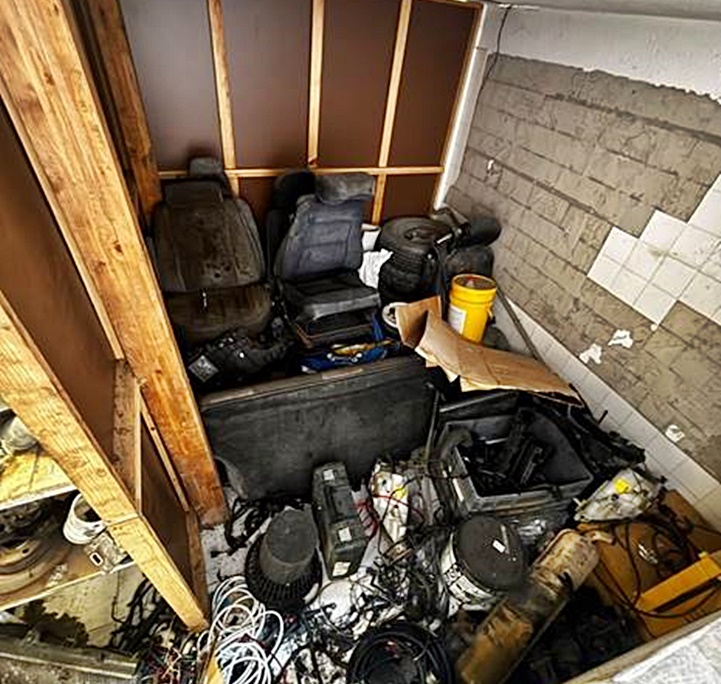
During the raid, authorities discovered that the establishment was operating without any legal documentation or prior communication to the municipality. More critically for the real estate sector, the **Municipal Police** identified that an annexed construction on the property was being used illegally as a residence. This discovery reinforces the risks associated with unlicensed structures [https://www.realestate-lisbon.com/buying-guide/location-issues] which are common in older Sintra properties, where owners often converted storage spaces into living quarters without seeking the necessary **Licença de Utilização** (Habitation License).
The presence of a foreign citizen residing in the illegal annex further complicates the legal standing of the property owner. While the resident's documentation was valid, the **illegal use of the space** constitutes a major urbanism infraction. For investors, this highlights the liability risks when purchasing properties with existing tenants in non-residential structures, a risk compounded by Simplex 2024 liability framework [https://www.homeos.pt/simplex-2024/], which transfers full legal liability for unlicensed works to the buyer at signing.
## Market Implications for Investors
This enforcement action carries heavy implications for **foreign investors** and property owners in the region. The detection of illegal residential use in an annex is a direct warning to those considering properties with "extra" living spaces that may not be reflected in the official documentation. The **market signal** here is clear: Sintra's authorities are actively cross-referencing commercial activities with urban planning permissions, and the era of "informal" conversions is coming to an end.
For those navigating Portugal's property market [https://www.realestate-lisbon.com/market-insights], this case demonstrates that administrative irregularities can lead to immediate shutdowns and significant fines. The involvement of the **Tax Authority** (Autoridade Tributária) also suggests that property use is being linked to fiscal obligations, meaning that undeclared rental income or commercial activity can trigger broader audits. This multi-agency approach significantly increases the **Investment Risks** for those who do not prioritize transparency.
Furthermore, the involvement of the **Environmental Protection Brigade (BRIPA)** highlights the growing importance of environmental compliance in the real estate sector. The lack of environmental insurance and proper waste management for wastewater are now high-priority targets for inspectors. Investors in commercial or industrial assets must now factor in the cost of sustainability and environmental compliance [https://www.realestate-lisbon.com/buying-guide/sustainability] as a core part of their operational budget, rather than an optional extra.
The lack of fire safety measures, specifically the expired fire extinguisher and absence of self-protection plans, underscores a critical area of **Property Quality** that is often overlooked during the acquisition phase. In the event of an incident, the lack of these measures would likely void insurance policies, leaving the investor with total loss and potential criminal liability. This makes independent pre-purchase inspection [https://www.inspectos.pt/inspecoes-residenciais/inspecao-pre-compra] an increasingly standard step in the acquisition process for professional buyers.
## Sintra Municipal Authority's Market Position
The **Sintra Municipal Council** has been increasingly proactive in regularizing urban activities. This operation reflects a broader strategy to ensure that the rapid development of the municipality aligns with modern safety and environmental standards. By coordinating with the **Tax Authority** and the **PSP**, the municipality is demonstrating a multi-pronged approach to enforcement that leaves little room for non-compliant property uses.
This proactive stance is also a response to the **Simplex Urbanístico** (DL 10/2024), which, while simplifying the bureaucracy of building, has also empowered municipalities to focus more on post-development enforcement. Investors should view this not as a deterrent, but as a move towards a more professional and predictable market environment where professional market developments [https://www.realestate-lisbon.com/news/professional-news] are rewarded over informal ones.
## Sintra Urbanism and Licensing Context
The Cabra Figa case occurs at a time when the Portuguese government is implementing significant changes to the housing and urbanism sectors. The push for more housing has led some owners to take shortcuts, but as this case shows, the consequences of these shortcuts are becoming more severe. Several factors are currently driving this increased enforcement in Sintra and the wider **Lisbon Metropolitan Area**:
• **Urbanism Regularization**: A push to bring all commercial and residential structures into alignment with the PDM to ensure orderly growth.
• **Safety Standards**: Strict enforcement of fire safety and self-protection measures to protect both tenants and the surrounding community.
• **Environmental Liability**: Mandatory environmental insurance and waste disposal protocols to prevent soil and water contamination.
• **Housing Legality**: Cracking down on the use of non-residential annexes to ensure that all housing meets minimum habitability and safety standards.
These factors combine to create a more regulated but also more transparent market for investors who prioritize legal compliance [https://www.realestate-lisbon.com/buying-guide/legal-issues]. The shift towards stricter enforcement actually protects the value of compliant properties by removing the unfair competition of unlicensed and unsafe operations.
Investors should also be aware of the **Simplex Safe** protocols, where buyers are encouraged to conduct documentary due diligence before signing the CPCV [https://www.realestate-lisbon.com/guides/cpcv-vs-escritura-in-lisbon-a-buyers-legal-guide], verifying whether licensed floor plans match the physical property. This is particularly relevant in Sintra, where historical additions to properties are common.
## Investment Considerations
For investors, the primary takeaway is the absolute necessity of a comprehensive due diligence [https://www.realestate-lisbon.com/professionals/real-estate-lawyers-due-diligence] process. Buying a property with an existing business or an annex requires verifying that all activities are properly licensed and that the physical structures match the registered plans. The "Simplex" era does not mean "no rules"; it means the burden of proof has shifted to the owner and the buyer.
Prospective buyers should consult with English-speaking real estate lawyers [https://www.realestate-lisbon.com/english-speaking-lawyers] to review the property's history and ensure no pending urbanism infractions exist. Furthermore, engaging structural inspectors [https://www.realestate-lisbon.com/professionals/home-inspectors-structural-inspections] to verify the integrity of annexes can prevent future legal and financial headaches. The cost of these professional services is a fraction of the potential fines and loss of use that can result from municipal enforcement.
Additionally, investors should model the full acquisition cost—including potential regularization fees—using tools such as realestate-lisbon.com's true cost calculator [https://www.realestate-lisbon.com/calculators/true-cost]. This ensures that the investment remains viable even if municipal requirements necessitate upgrades to fire safety or environmental systems.
## Looking Ahead
The crackdown in Rio de Mouro is likely a precursor to more frequent inspections across the **Lisbon Metropolitan Area**. As the market matures, the tolerance for unlicensed annexes and irregular commercial operations is diminishing, favoring professional investors who adhere to the regulatory and legal frameworks [https://www.realestate-lisbon.com/blog/regulatory-and-legal-frameworks]. This trend is expected to increase property values for fully compliant assets as they become the "gold standard" for both tenants and future buyers.
For those looking to enter the Sintra market, the focus should remain on quality assets with clean documentation and clear potential for legal use. The municipality's commitment to enforcement is a sign of a healthy, evolving market that values safety and order. For expert guidance on navigating Sintra's urbanism laws and property acquisition, contact realestate-lisbon.com [https://www.realestate-lisbon.com/].