Home Insurance and Utilities Setup in Portugal: Complete Guide for Lisbon Property Owners
By Pieter Paul Castelein
Published: December 15, 2025
Category: Real Estate Market Insights
**
# Home Insurance and Utilities Setup in Portugal: Complete Guide for Lisbon Property Owners
Updated: December 2025
Portuguese property ownership [https://www.realestate-lisbon.com/] requires understanding both insurance obligations and utility setup procedures. Fire insurance represents a mandatory legal requirement for apartment owners while comprehensive multi-risk policies provide broader protection. Utility connections involve coordinating multiple service providers with varying regional requirements. According to Portugal Investment Properties (June 2025), basic fire insurance policies start around €70 annually while multi-risk coverage ranges €120-€650 depending on property characteristics. Belion Partners (September 2025) confirms multi-risk policies typically cost €200-€650 annually for standard properties. This guide examines verified insurance requirements, coverage options, utility setup processes, and cost expectations for Lisbon property owners [https://www.realestate-lisbon.com/lisbon-real-estate-neighborhoods] based on regulatory sources and industry data.
Calculate comprehensive property ownership costs including insurance, utilities, and Portuguese property taxes [https://www.realestate-lisbon.com/professionals/accountants-property-tax] using our specialized True Cost Calculator [https://www.realestate-lisbon.com/calculators/true-cost].
[Image: Luxury villa property in Lisbon.]
## Understanding Portuguese Home Insurance Requirements
Navigating the insurance landscape is a critical step for any property owner in Portugal, involving both legal mandates and practical considerations for asset protection.
### Legal Insurance Mandates
**Mandatory Fire Insurance:** Portuguese law requires all apartment owners in condominiums [https://www.realestate-lisbon.com/buying-guide/property-quality] to maintain minimum fire insurance coverage. According to multiple verified sources including iMin Portugal (December 2025), Expatica (May 2025), and Belion Partners (September 2025), fire insurance represents a compulsory requirement for condominium property owners.
**Legislative Basis:** The fire insurance mandate applies specifically to:
• Apartment owners in multi-unit buildings (condominiums)
• Property owners with mortgage financing [https://www.realestate-lisbon.com/calculators/mortgage]
• Properties in shared-wall residential structures
**Exemptions and Clarifications:** Renters [https://www.realestate-lisbon.com/calculators/rental-yield] face no legal insurance obligation though landlords must maintain fire coverage. Standalone detached houses [https://www.realestate-lisbon.com/professionals/architects-luxury-homes] may not face the same mandatory requirements as condominium apartments depending on the municipality.
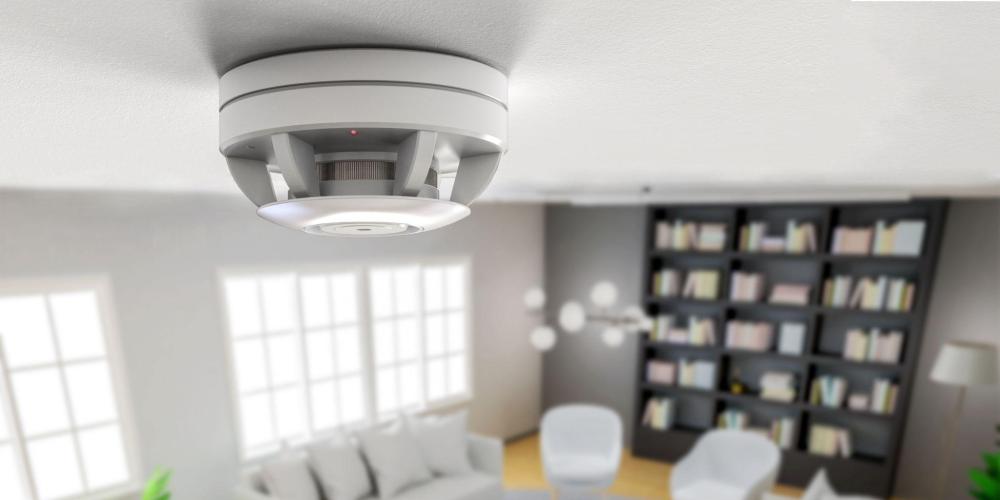
[Image: A modern home interior with a smoke detector on the ceiling, symbolizing home insurance and safety.]
### Mortgage Lender Requirements
**Bank Insurance Requirements:** Portuguese mortgage lenders typically require comprehensive insurance beyond basic fire coverage. According to insurance market sources, banks commonly mandate:
• Multi-risk insurance including fire, flood, storm coverage
• Earthquake coverage inclusion (particularly for loans)
• Coverage amount matching reconstruction value
• Bank listed as an interested party on the policy
**Market Intelligence:** Banks often offer insurance packages through affiliated insurance companies. Comparing independent insurance providers typically yields 15-30% cost savings versus bank-offered policies while maintaining equivalent coverage.
### Non-Resident Owner Considerations
**International Owner Requirements:** Non-resident property owners [https://www.realestate-lisbon.com/professionals/real-estate-agents-international-clients] face identical insurance obligations as Portuguese residents. According to Belion Partners: "Yes, both residents and non-residents can take out home insurance, whether they live in the country or own property as an investment [https://www.realestate-lisbon.com/buying-guide/investment-risks]."
**Special Considerations for Absent Owners:**
• Holiday home insurance required for seasonal occupancy
• Unoccupied property coverage for extended absences
• Higher premiums for properties vacant over 60 consecutive days
• Specific vacancy exclusions in standard policies
## Mandatory Fire Insurance Coverage
### Basic Fire Insurance (Seguro de Incêndio)
**Core Coverage Components:** Fire insurance provides the minimum legal protection required for property ownership. According to Expatica (May 2025) and iMin Portugal (December 2025), fire insurance covers:
• Direct fire damage to the building structure
• Smoke and soot damage from fires
• Lightning strike damage
• Explosion damage related to fire events
• Most policies include flood coverage
• Storm damage coverage typically included
• Electrical fire damage protection
**Annual Premium Costs:** Multiple verified sources confirm basic fire insurance pricing:
• Portugal Investment Properties (June 2025): Starting €70 annually
• iMin Portugal (December 2025): €80-€100 per year
• Expatica (May 2025): Approximately €70 annually
• Portugal Residency Advisors (October 2023): Starting €70 per year
**Coverage Limitations:** Basic fire insurance covers the building structure only, excluding:
• Personal belongings and furniture
• Temporary accommodation if uninhabitable
• Liability for damage to neighbor properties
• Theft or vandalism
• Water damage unrelated to storms
### Fire Insurance Policy Structure
**Reconstruction Value Basis:** According to beGlobal Properties (December 2024), insurance value typically bases on property reconstruction value [https://www.realestate-lisbon.com/calculators/true-cost] rather than market value.
**Reconstruction Value Calculation:**
• Construction cost per square meter in the region
• Property size and characteristics
• Building materials and quality
• Special architectural features
• Excludes land value component
**Example Calculations:**
• 100m² apartment, standard construction: €100,000-€150,000 reconstruction value
• Coverage calculation: €150,000 × 0.05-0.07% = €75-€105 annual premium
• Luxury 150m² apartment: €225,000-€300,000 reconstruction value
• Premium range: €112-€210 annually
**Due Diligence:** Underinsuring property [https://www.realestate-lisbon.com/buying-guide/financial-concerns] reconstruction value risks proportional payment in claims. If insured for €100,000 but actual reconstruction costs €150,000, the insurer pays only 67% of the claim amount (€100K/€150K).
## Multi-Risk Insurance Options
### Comprehensive Multi-Risk Coverage (Seguro Multirriscos)
**Enhanced Protection:** Multi-risk insurance extends coverage beyond basic fire insurance, providing comprehensive property protection. According to Expatica (May 2025), multi-risk insurance typically includes:
• All fire insurance coverages
• Public liability protection [https://www.realestate-lisbon.com/buying-guide/legal-issues]
• Contents coverage for belongings
• Legal protection and representation
• Earthquake and seismic damage
• Alternative accommodation costs
• Water damage and leaks
• Theft and vandalism coverage
**Annual Premium Range:** Verified multi-risk insurance costs (2025):
• Portugal Investment Properties: Starting €120 annually
• Belion Partners (September 2025): €200-€650 per year depending on property value
• iMin Portugal: €100+ annually for extended coverage
• Your Overseas Home: Basic policies €100-€150, multi-risk starting €120
**Cost Variables Affecting Premiums:** Property value and reconstruction cost, location and regional risk factors, security features (alarms, secure doors), claim history of the owner, deductible amount selected, coverage limits chosen, and additional optional coverages.
### Optional Coverage Extensions
**Additional Protection Options:** Property owners can enhance multi-risk policies with specialized coverage. Available Extensions:
• Jewelry and valuable items coverage (limits typically €5,000-€10,000)
• Art and antiques protection
• Computer data recovery
• Garden and outdoor furniture
• Swimming pool coverage
• Walls and fences
• Solar panel and renewable equipment
• Home office business equipment
**Luxury Property Considerations:** According to C1 Broker (September 2025), properties exceeding €750,000 reconstruction value or €150,000 contents require specialized high-value insurance with higher coverage limits appropriate for luxury properties [https://www.realestate-lisbon.com/professionals/constructors-luxury-construction], special valuables scheduling, enhanced security requirements, and professional appraisal documentation.
## Contents and Liability Coverage
### Home Contents Insurance (Seguro de Conteúdo)
**Personal Property Protection:** Contents insurance [https://www.realestate-lisbon.com/buying-guide/maintenance-costs] covers movable possessions within the property against damage, theft, and loss. According to iMin Portugal (December 2025), contents insurance commonly covers:
• Furniture and furnishings
• Electronic devices (computers, TVs, appliances)
• Clothing and personal items
• Kitchen equipment
• Electrical damage to contents
• Theft of belongings
• Accidental damage
**Annual Premium Costs:** Verified contents insurance pricing:
• iMin Portugal: Starting €80 annually
• Expatica (May 2025): €25-€30 per year for €50,000 coverage, €50+ annually for €250,000 coverage
**Coverage Amount Determination:** Property owners should inventory all movable possessions calculating replacement cost:
• Document all furniture with purchase prices
• List electronics with current replacement values
• Photograph valuable items for proof
• Store inventory digitally off-premises
• Update annually as possessions change
**Due Diligence:** Standard contents policies limit valuable items coverage to €1,000-€5,000 total. Jewelry, art, collectibles, or luxury items exceeding limits require scheduled endorsements with professional appraisals.
### Public Liability Coverage
**Third-Party Damage Protection:** Liability coverage protects property owners against claims for damage or injury to others.
**Liability Scenarios Covered:**
• Water leaks damaging a neighbor's apartment below
• Fire spreading to adjacent properties
• Injury to visitors on the property
• Damage to condominium common areas
• Guest injury in rental properties
• Tenant disputes in landlord liability
**Coverage Limits:** According to Expatica: Liability coverage typically ranges €50,000-€250,000 with corresponding annual premiums of €25-€50.
**Lisbon Condominium Context:** Belion Partners (September 2025) emphasizes liability importance in Lisbon: "Lisbon has one of the highest concentrations of apartment buildings in Portugal, which means risks are often shared between neighbours. Multi-risk house insurance in Lisbon usually includes liability coverage for water leaks, fire damage, or accidents that could impact other apartments or condominium areas."
## Home Insurance Costs Breakdown
### Standard Property Insurance Costs (2025)
**Basic Fire Insurance Annual Premiums:** Verified cost range from multiple sources:
• Minimum coverage: €70-€80 per year
• Standard apartment: €80-€100 per year
• Larger properties: €100-€150 per year
**Multi-Risk Insurance Annual Premiums:** Comprehensive coverage costs:
• Basic multi-risk: €120-€200 per year
• Standard coverage: €200-€400 per year
• Comprehensive coverage: €400-€650 per year
**Contents Insurance Annual Premiums:** Personal belongings protection:
• €50,000 coverage: €80-€100 per year
• €100,000 coverage: €120-€150 per year
• €150,000+ coverage: €150-€200+ per year
### Cost Factors and Variables
**Location Impact:** Property location significantly influences insurance premiums.
**High-Risk Areas (Higher Premiums):** Coastal regions (storm, flood risk), historic city centers [https://www.realestate-lisbon.com/lisbon/alfama] (fire risk, limited access), high crime neighborhoods (theft risk), and earthquake-prone zones.
**Lower-Risk Areas (Lower Premiums):** Modern suburban developments, gated communities with security, low-density residential zones, and properties with fire stations nearby.
**Property Characteristics:** Age of building (older = higher premiums), construction materials (stone vs wood), security features installed, fire prevention systems, distance to fire station, and access for emergency services.
**Claim History:** A no-claims bonus can lead to 5-15% discounts after claim-free years. Recent claims can increase premiums by 20-40%, and multiple claims may lead to potential coverage denial.
### Holiday Home and Vacant Property Premiums
**Unoccupied Property Surcharges:** According to multiple sources, holiday homes and seasonally occupied properties cost 30-50% more than primary residence insurance.
**Vacancy Premium Factors:** Extended unoccupied periods increase theft risk, delayed damage discovery (water leaks, storms), lack of regular maintenance oversight, seasonal occupancy patterns, and remote property locations.
**Holiday Home Coverage:** Portugal Investment Properties notes holiday home insurance typically starts at €100 annually with extended coverage compared to basic fire insurance.
## Major Insurance Providers in Portugal
### Leading Portuguese Insurance Companies
**Primary National Insurers:** The Portugal insurance market includes 76 licensed insurance companies according to regulatory sources from the Portuguese government [https://www.portugal.gov.pt]. Major Providers:
• Allianz Portugal
• Fidelidade (largest domestic insurer)
• Tranquilidade
• Liberty Seguros
• Ageas Seguros
• GNB Seguros
• MAPFRE
• AXA Portugal
**Bank-Affiliated Insurance:** Portuguese banks sell insurance products through affiliated companies: Caixa Seguros (Caixa Geral de Depósitos), Millennium bcp Ageas, Santander Seguros, and BPI Vida e Pensões.
### English-Speaking Insurance Brokers
**Expat-Focused Providers:** According to Expatica (May 2025), several brokers specialize in services for international clients, similar to the support provided by English-speaking agents [https://www.realestate-lisbon.com/english-speaking-agents].
• **C1 Broker:** Lisbon and Algarve offices, English-speaking service confirmed, 14+ years expat insurance experience, multi-risk and luxury property specialists, works with Hiscox, Allianz, Zurich, Liberty.
**Insurance Selection Criteria:** ASF (Autoridade de Supervisão de Seguros e Fundos de Pensões) regulation, English language capability, claims management reputation, premium competitiveness, coverage comprehensiveness, and customer service quality.
**Due Diligence:** Request quotes from 3-5 providers comparing coverage details, not just premiums. The cheapest policy often excludes critical coverages discovered only during claims. A thorough pre-purchase inspection [https://www.realestate-lisbon.com/professionals/home-inspectors-pre-purchase-inspections] can also reveal risks that need to be insured.
[Image: A classic yellow tram on a street in Lisbon, illustrating city life and utilities.]
## Setting Up Electricity Service
### Portuguese Electricity Market Overview
**Liberalized Market:** According to Expatica (June 2025) and Portugal Residency Advisors (October 2025), the Portuguese electricity market was fully liberalized in 2006, enabling consumer choice among providers.
**Major Electricity Suppliers:** EDP (Energias de Portugal) - largest provider, Iberdrola Portugal, Endesa Portugal, Galp Power, and Goldenergy.
**Service Flexibility:** Consumers can switch electricity providers anytime without penalties or disconnection fees according to market regulations.
### Electricity Connection Process
**Required Documents:** According to Pearls of Portugal (September 2025) and multiple utility sources:
• Passport or identification document
• NIF (Portuguese tax number) [https://www.realestate-lisbon.com/professionals/accountants-expatriate-tax-services]
• Portuguese bank account with IBAN
• Proof of address (deed, rental contract)
• Previous occupant electricity bill (if available with CPE code)
**Connection Timeline:** Verified electricity setup timeframes:
• Already connected property: 48 hours for ownership transfer (Portugal Buyers Agent May 2025)
• Previously connected: 1-3 business days (Pearls of Portugal)
• Disconnected service: 3-5 business days for reconnection
• New construction: 2-4 weeks for initial connection
**Connection Costs:** Ownership transfer is usually free. Reconnection after disconnection is €30-€50 (Portugal Buyers Agent). New meter installation is variable, typically €100-€200.
### Power Capacity Selection
**Contracted Power (Potência Contratada):** Portuguese electricity contracts require selecting appropriate power capacity measured in kilowatts (kVA).
**Standard Capacity Options (Source: Pearls of Portugal):**
• 3.45 kVA: One person in a 1-2 bedroom apartment (€35-€45 monthly standing charge)
• 4.6 kVA: Multiple people in a 1-2 bedroom apartment (€42-€52 monthly)
• 5.75 kVA: Multiple people in a 2-3 bedroom apartment with AC (€50-€62 monthly)
• 6.9 kVA: 2-3 bedroom apartment, five people, full appliances (€58-€72 monthly)
• 10.35 kVA: Large homes with electric heating (€85-€105 monthly)
**Selection Considerations:** Simultaneous appliance usage patterns, air conditioning usage, electric heating or water heating, electric vehicle charging, and home office equipment.
**Due Diligence:** Under-sizing contracted power causes circuit breaker trips when exceeding capacity. Oversizing wastes money on unnecessary standing charges. Start conservative; upgrading capacity takes 24-48 hours.
### Electricity Pricing Structure
**Rate Components:** Fixed standing charge (based on contracted kVA), variable consumption charge (per kWh used), network access charges, and VAT at 23% (reduced 6% rate for the first 100 kWh monthly).
**Average Electricity Costs:** According to multiple sources, including Eurostat data [https://www.oecd.org] cited by Be Portugal, Portugal's electricity rates are among Europe's highest: €0.2246 per kWh average, 22% higher than UK rates, and the third most expensive EU electricity.
**Monthly Cost Examples (Source: Pearls of Portugal):**
• Two-bedroom apartment, two people (3.45 kVA): €60-€70 summer, €90-€100 winter
• Larger apartment with heating: €100-€150 winter months
## Water Connection Process
### Municipal Water Management
**Regional Water Companies:** Unlike the liberalized electricity market, water services are managed by municipal entities without consumer choice. According to Expatica (June 2025) and Your Overseas Home (September 2025), water supply is handled at the municipal level through regional providers.
**Lisbon Water Provider:** EPAL (Empresa Portuguesa das Águas Livres) serves the Lisbon municipality [https://www.realestate-lisbon.com/lisbon/pdm], is managed by the municipal authority, and charges €1.63 per cubic meter (Water News Europe data).
**Other Regional Providers:** Águas do Norte (northern Portugal), Águas do Tejo (Tagus region), Águas do Algarve (Algarve region), and Municipal câmaras (local councils).
### Water Connection Requirements
**Setup Documentation:** Similar to electricity, water connections require:
• NIF (tax identification number)
• Proof of address
• Identification documents
• Bank account for direct debit
• Previous occupant information if transferring
**Connection Timeline:** According to Portugal Buyers Agent (May 2025):
• Service already active: 1-3 business days for transfer
• Disconnected service: 3-5 business days
• New meter installation: 5-10 business days
**Connection Costs:** Ownership transfer is usually free. Meter installation averages €50 (Be Portugal data). Reconnection fees are typically €20-€40.
### Water Costs and Pricing
**Regional Price Variations:** Water pricing varies significantly by municipality and provider. For official statistics, one can refer to the Instituto Nacional de Estatística (INE) [https://www.ine.pt].
**Comparative European Pricing (Portugal Residency Advisors):**
• Lisbon: €1.63 per cubic meter
• Rome, Italy: €1.05 per cubic meter
• Athens, Greece: €1.16 per cubic meter
• Madrid, Spain: €1.65 per cubic meter
**Average Monthly Water Costs:** According to Your Overseas Home (September 2025), a standard household spends €20-€40 per month. Be Portugal estimates water costs as a component of a €110-€120 monthly utility bill for an 85m² apartment.
**Consumption Patterns:** A single person uses 3-5 cubic meters monthly (€5-€8), two people use 6-8 cubic meters monthly (€10-€13), and a family of four uses 12-16 cubic meters monthly (€20-€26). Additional fixed charges and taxes apply.
## Gas Installation and Safety
### Gas Service Options
**Natural Gas vs Bottled Gas:** Portuguese properties use either mains natural gas or bottled LPG depending on location and infrastructure.
**Mains Natural Gas:** Available in most Lisbon urban areas, major cities, and towns. It requires a connection to the municipal gas network. Major suppliers include Galp, EDP Gás, and Endesa.
**Bottled Gas (Gás Botija/Garrafa):** Common in rural areas and properties without mains gas access. Gas bottles are available at supermarkets, petrol stations, hardware stores, and through home delivery services.
### Mains Gas Connection Process
**Setup Requirements:** According to Portugal Buyers Agent and utility sources, you'll need a Passport/identification, NIF (tax number), proof of address, bank account details, and the CPE code from a previous bill (if available), along with a mandatory safety inspection certificate.
**Mandatory Gas Safety Inspection:** Portuguese regulations require a gas safety inspection [https://www.realestate-lisbon.com/home-inspectors] before connection activation. The inspection is valid for 5 years, required when transferring contracts, costs €60-€100, and must be performed by a certified technician.
**Connection Timeline:** An ownership transfer for an active service takes 48 hours. A disconnected service takes 5-10 business days (including inspection). A new installation can take 2-3 weeks.
**Connection Costs:** Ownership transfer is free. Reconnection is €30-€50. The mandatory inspection is €60-€100. A new installation can cost €200-€500 depending on the work required.
### Gas Pricing and Costs
**Natural Gas Pricing:** According to Be Portugal (December 2024), Portugal ranks as the third most expensive for natural gas in the European Union, at an average of €0.08 per kWh, 33% above the EU average of €0.06 per kWh.
**Monthly Gas Costs:**
• Small apartment (1-2 people): €30-€50 monthly
• Standard apartment (2-4 people): €50-€80 monthly
• Large property with heating: €80-€150 monthly in winter
**Bottled Gas Costs:** A standard 13kg butane bottle costs €25-€35 and lasts 4-6 weeks for cooking only. Delivery services are available in many areas.
## Internet, Phone, and TV Packages
### Telecommunications Providers
**Major Telecom Companies:** Portugal's telecommunications market features competitive providers offering bundled services. Leading providers are MEO (Portugal Telecom), Vodafone Portugal, NOS, and NOWO.
**Bundle Packages:** Most Portuguese households subscribe to triple-play packages combining Internet (fiber optic or cable), Landline phone, and Television (cable/satellite channels).
**Package Costs and Options (2025):**
• Basic packages: €29.49 per month (24-month contract)
• Standard bundles: €40-€60 per month
• Premium packages: €60-€75 per month
**Package Components:** Internet speeds range from 100 Mbps to 1 Gbps fiber. Phone plans offer unlimited national calls and often include mobile minutes. TV packages include 50-200+ channels.
**Mobile Phone Services:** Separate mobile contracts or bundled options are available, with plans ranging from €15 to €50 per month.
### Installation Process and Timeline
**Setup Requirements:** NIF (tax number), identification documents, proof of address, and a bank account for direct debit.
**Installation Timeline:** According to EDPROPT (July 2025) and Portugal Buyers Agent (May 2025), Internet/TV installation takes 3-10 business days. A fiber installation with a technician visit takes 5-10 days. Mobile-only setup is immediate with a SIM card.
**Installation Costs:** Often included in promotional packages. Standalone installation is €30-€60. Fiber installation can be €50-€100 if not part of a promotion.
[Image: Luxury apartment penthouse in Lisbon with an amazing view.]
## Required Documents for Utilities
### Essential Documentation Checklist
**Universal Requirements:** All Portuguese utility connections require the same core documents regardless of the service provider.
**Mandatory Documents (Source: Multiple Verified Utility Guides):**
• **NIF (Número de Identificação Fiscal)** - Portuguese tax identification number, mandatory for all contracts.
• **Valid Identification** - Passport for non-residents, ID card for residents.
• **Proof of Address** - Property deed (escritura [https://www.realestate-lisbon.com/professionals/real-estate-lawyers-property-acquisition]), rental contract [https://www.realestate-lisbon.com/law-firms] (contrato de arrendamento), or municipal registration.
• **Portuguese Bank Account** - IBAN for direct debit payments (Multibanco system).
• **Property Documentation** - Cadastral information, meter location details.
**Optional But Helpful Documents:** Previous occupant utility bills (contain CPE codes, meter numbers), property insurance documents, power of attorney if setting up remotely, and rental agreement if you are a tenant.
### Portuguese Bank Account Necessity
**Why a Portuguese Account is Required:** According to Expatica (June 2025) and Portugalist (June 2024), Portuguese utilities prefer the Multibanco direct debit system for automatic payment collection, which necessitates a local bank account to avoid any financial concerns [https://www.realestate-lisbon.com/buying-guide/financial-concerns].
**Foreign Account Limitations:** Some providers accept European IBAN accounts from services like Wise, Revolut, N26, and other digital banks.
**Due Diligence:** While some utilities accept foreign IBANs, Portuguese bank accounts eliminate payment complications. Most long-term property owners open Portuguese accounts for utilities, insurance, and local financial management.
## Monthly Utility Cost Expectations
### Comprehensive Cost Breakdown (2025)
**Total Monthly Utilities:** According to Your Overseas Home (September 2025), average monthly costs are:
• Electricity and gas: €75-€150
• Water: €20-€40
• Internet/TV/phone: €40-€75
• **Total utilities: €135-€265 per month**
**Portugal Residency Advisors (October 2025) Estimates:** For an 85m² apartment, utilities (electric, heating, water) are €110-€120, and home communications start at €29.49, totaling €140-€150 per month.
### Property Size and Occupancy Impact
**Studio Apartment (45m², one person):** According to Be Portugal (December 2024), heating, electricity, and water cost €80-€90 per month.
**Two-Bedroom Apartment (85m², two people):** Summer months: €100-€130 per month. Winter months: €150-€180 per month (with heating).
**Three-Bedroom House (120m², family of four):** Summer months: €150-€200 per month. Winter months: €220-€300 per month (with heating).
### Seasonal Variations
**Summer Months (June-September):** Lower electricity for heating, increased air conditioning usage, and stable water consumption result in totals 20-30% lower than in winter.
**Winter Months (December-February):** According to Pearls of Portugal, a two-bedroom apartment's electricity bill can increase by 30-50% for heating, from €60-€70 monthly in summer to €90-€100 monthly in winter.
**Portuguese Housing Challenge:** Multiple sources note that Portuguese homes often lack proper insulation, creating uncomfortable winter conditions and higher heating costs despite the mild climate. This is a key factor to consider when evaluating property quality [https://www.realestate-lisbon.com/buying-guide/property-quality].
Calculate total Portuguese property ownership costs including mandatory insurance and monthly utility expenses with our Investment Analyzer tool [https://www.realestate-lisbon.com/calculators/investment-analyzer].
[Image: Lisbon viewpoint from Alfama.]
## Frequently Asked Questions
How much is homeowners insurance in Portugal?
Portuguese homeowners insurance costs vary by coverage type. Basic mandatory fire insurance (seguro de incêndio) costs €70-€100 annually according to multiple 2025 sources including Portugal Investment Properties (€70 starting), iMin Portugal (€80-€100), and Expatica (€70). Comprehensive multi-risk insurance (seguro multirriscos) costs €200-€650 annually depending on property value and coverage extent per Belion Partners (September 2025). Contents insurance protecting furniture and belongings starts €80 annually per iMin Portugal. Holiday home and vacant property insurance costs 30-50% more than primary residence coverage. Luxury properties exceeding €750,000 reconstruction value require specialized high-value policies with higher premiums. Location, security features, claim history, and deductible selection significantly affect final premium costs. Budget €100-€400 annually for a standard Lisbon apartment combining fire and contents coverage.
Do you need homeowners insurance in Portugal?
Yes, Portuguese law mandates fire insurance for apartment owners in condominiums according to Expatica (May 2025), iMin Portugal (December 2025), and Belion Partners (September 2025). This legal requirement applies to all condominium property owners regardless of mortgage status. Mortgage lenders additionally require comprehensive multi-risk insurance including earthquake coverage per industry standards. Renters face no legal insurance obligation, though landlords must maintain fire coverage on rental properties. Standalone detached houses may not face identical mandatory requirements depending on municipality though mortgage lenders require coverage. Multi-risk insurance (seguro multirriscos), while not legally mandatory, provides essential protection against liability claims, especially in Lisbon's high-density apartment buildings where water leaks or fire can damage neighbors' properties. Non-resident property owners face the same insurance obligations as Portuguese residents with no exemptions for foreign ownership.
Does home insurance cover you abroad?
Portuguese home insurance policies cover properties located in Portugal only, not international coverage. According to Expatica (May 2025), using home insurance from abroad in Portugal requires a policy that explicitly specifies coverage in Portugal among covered countries—typically specialized expat or global coverage policies. Standard UK, US, or other country homeowners policies do not extend to Portuguese properties. Conversely, Portuguese home insurance purchased for a Lisbon property does not protect your home country residence. Property owners residing abroad while owning Portuguese property need Portugal-specific insurance from Portuguese-regulated insurers or international providers offering Portuguese coverage. English-speaking insurance brokers [https://www.realestate-lisbon.com/english-speaking-insurance-brokers] like C1 Broker specialize in expat property insurance, ensuring proper coverage under Portuguese regulations. When financing a Portuguese property with a mortgage, banks require insurance from ASF-regulated Portuguese insurance companies specifically covering the financed property. Maintain separate insurance policies for properties in different countries with location-specific coverage.
What's covered on home insurance?
Portuguese home insurance coverage depends on the policy type. Basic mandatory fire insurance (seguro de incêndio) covers the building structure against fire, lightning, explosions, and typically includes floods, storms, and electrical damage according to multiple sources. Multi-risk insurance (seguro multirriscos) provides comprehensive coverage including: fire/storm/flood damage, theft and vandalism, water damage and leaks, public liability for third-party damage, legal protection, earthquake coverage, alternative accommodation if uninhabitable, and glass breakage per Expatica (May 2025). Contents insurance (seguro de conteúdo) covers furniture, electronics, personal belongings, and valuables against theft, fire, and electrical damage, starting at €80 annually. Standard policies exclude: damage from poor maintenance, wear and tear, owner negligence (leaving taps running), unoccupied property over 60 days (requires special vacancy coverage), and high-value items above €5,000-€10,000 limits without scheduled endorsements. Holiday home insurance covers seasonal vacancy risks. Review policy exclusions carefully—the cheapest policies often exclude critical coverages like earthquake or water damage, discovered only during claims.
How long does it take to set up utilities in Portugal?
Portuguese utility setup timelines vary by service type and property status. Electricity connections take 48 hours for an ownership transfer if already active, or 3-5 business days for reconnection after disconnection, according to Portugal Buyers Agent (May 2025). Water service transfers complete in 1-3 business days per the same source. Gas installation requires 5-10 business days, including a mandatory safety inspection costing €60-€100. Internet, TV, and phone installation needs 3-10 business days depending on fiber availability and technician scheduling per EDPROPT (July 2025). New construction properties without existing meters require 2-4 weeks for electricity, 5-10 days for water, and 2-3 weeks for gas. The total setup timeframe for purchasing an existing Lisbon apartment with active utilities is 3-5 business days to transfer all services. For a disconnected property, allow 7-10 business days for complete utility activation. Contact providers immediately after the escritura to minimize service gaps. A knowledgeable real estate agent [https://www.realestate-lisbon.com/buying-guide/agent-seller-issues] can help coordinate this process.
What documents do I need to set up utilities in Portugal?
All Portuguese utility providers require identical documentation according to Pearls of Portugal (September 2025), Expatica (June 2025), and other sources: (1) NIF (Número de Identificação Fiscal)—Portuguese tax identification number, mandatory for all contracts. (2) Valid identification—passport for non-residents or Portuguese ID card. (3) Proof of address—property deed (escritura), rental contract, or municipal registration. (4) Portuguese bank account with IBAN—for the Multibanco direct debit payment system. (5) Property information—cadastral details, meter numbers, previous occupant information if available. Previous tenant utility bills are helpful but not mandatory as they contain CPE codes and meter numbers that simplify transfers. A power of attorney is required if setting up utilities remotely without being personally present. While some providers accept European bank IBANs (Wise, Revolut), Portuguese accounts eliminate payment complications and provider restrictions. Obtain your NIF and open a Portuguese bank account before starting the utility setup—these prerequisites apply to electricity, water, gas, and telecommunications identically.
Can I set up Portuguese utilities before moving into the property?
Yes, utilities can be arranged before the move-in date with proper documentation and occasionally without physical presence, according to utility sources. Electricity and water transfers can be processed remotely through provider websites, phone calls, or in-person office visits. If meters are already installed and the service was previously active, technical visits are usually unnecessary—the ownership transfer completes administratively. Gas connections typically require a technician to access the property for a mandatory safety inspection (€60-€100), necessitating someone to be present during the appointment. Internet, TV, and phone installations always require technician property access and appointment scheduling. A power of attorney enables lawyers [https://www.realestate-lisbon.com/real-estate-lawyers] or property managers to coordinate utility setups on the owner's behalf for remote buyers. Some landlords arrange utility connections before a tenant moves in as a service. The optimal approach is to initiate utility transfers 1-2 weeks before completion/move-in date, schedule technician appointments for the first week of occupancy, and confirm activation dates before the final property handover. Contact providers immediately after the escritura signing with the property deed documents—48-hour transfers are possible for electricity and water if the service is active.
Are Portuguese utility costs expensive compared to other European countries?
Portuguese electricity rates rank among Europe's highest despite lower living costs overall. Portugal charges €0.2246 per kWh on average, according to Eurostat data cited by Be Portugal (December 2024)—22% higher than UK rates and significantly above the EU average. Natural gas costs €0.08 per kWh versus the €0.06 EU average, ranking Portugal third most expensive in the European Union per Be Portugal. Water pricing varies by municipality, with Lisbon's EPAL at €1.63 per cubic meter—higher than Rome (€1.05) and Athens (€1.16) but similar to Madrid (€1.65) according to Portugal Residency Advisors. However, total utility costs remain reasonable relative to income and living expenses. Average monthly utilities (electricity, gas, water, internet/TV/phone) cost €135-€265 for a standard apartment, per Your Overseas Home (September 2025). The deficiency in Portuguese housing insulation increases heating costs during winter despite the mild climate—homes can feel colder inside than the thermometer indicates. Internet and telecommunications costs are competitive, with €40-€75 monthly for quality fiber bundles. The overall utility burden is manageable within the Portuguese cost of living context. For more market insights [https://www.realestate-lisbon.com/market-insights], visit our dedicated section.
Do I need separate insurance for holiday homes or rental properties in Portugal?
Yes, holiday homes and rental properties require specialized insurance beyond standard owner-occupied coverage. Standard home insurance policies typically exclude unoccupied properties vacant for over 60 consecutive days, according to multiple insurance sources. Holiday home insurance covers seasonal vacancy risks including theft, damage going undiscovered, and reduced maintenance oversight. According to iMin Portugal (December 2025), holiday home insurance costs more than primary residence policies—typically a 30-50% premium surcharge—due to increased risks from extended vacancy periods and delayed damage discovery. Rental property insurance (landlord insurance) provides building coverage, landlord liability protection, loss of rental income following damage, tenant-caused damage coverage, and legal expenses for tenant disputes. Short-term rental properties (Airbnb, AL license) require additional specialized coverage for frequent tenant turnover and higher liability exposure per Belion Partners (September 2025). Standard contents insurance may not cover a furnished rental property's belongings—verify the coverage explicitly includes rental use. Inform insurers of the property usage pattern; failing to disclose rental or holiday home use can void coverage claims.