Find Your Luxury Property in Lisbon Now: Expert Reveals Why Supply Shortage is Driving Prices Up
By Pieter Paul Castelein
Published: January 7, 2026
Category: Real Estate Market Insights
**
# Find Your Luxury Property in Lisbon Now: Expert Reveals Why Supply Shortage is Driving Prices Up
An exclusive analysis of the forces shaping Portugal's high-end real estate market, where intense demand and scarce supply create a climate of urgency for buyers.
Portugal's luxury residential market is in a state of 'growing pressure,' defined by a powerful imbalance between intense, sophisticated demand and a structural shortage of available properties. This is the expert assessment of João Cília, CEO of the prestigious real estate agency Porta da Frente Christie’s, in a market analysis from early January 2026. For high-net-worth individuals and savvy investors looking to find luxury property in Lisbon [https://www.realestate-lisbon.com/professionals/real-estate-agents-luxury-properties], this dynamic creates a clear sense of urgency. The market is not waiting; competition is fierce, and prices are on a steady upward climb.
The core of the issue is a classic supply and demand squeeze, but on a premium scale. Demand is increasingly concentrated in the 'Affluent' and 'Premium' segments—the top 2% to 10% of the market. At the same time, overall housing supply fell by 11% in 2025 compared to 2024, according to data from the Portugal Realty Premium Forum. This scarcity, coupled with rising construction costs (+30% since 2021), has fueled an average price appreciation of 7.3% in 2025. Our own database of over 200 verified professionals confirms this trend, with architects [https://www.realestate-lisbon.com/architects] and constructors [https://www.realestate-lisbon.com/constructors] citing licensing delays as the primary bottleneck to new supply.
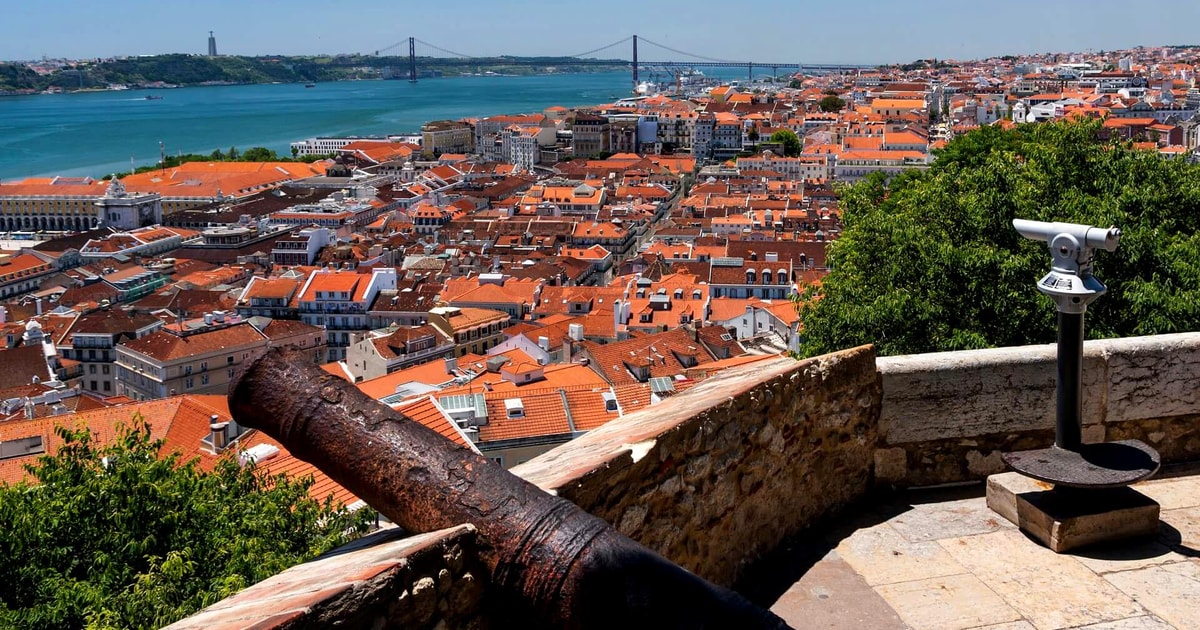
[Image: A stunning rooftop view of Lisbon's historic center, with the São Jorge Castle and Tagus River in the background, bathed in golden sunset light.]
## The Anatomy of a High-Pressure Market
The current market pressure is not a simple trend but a convergence of powerful structural forces. Understanding these drivers is essential for any buyer looking to navigate the landscape successfully. The demand is not just high; it's highly focused and increasingly international, a fact supported by reports from government bodies like Portugal.gov.pt [https://www.portugal.gov.pt/] on foreign investment.
### Key Facts: The Luxury Squeeze
• Luxury property supply fell by 11% in 2025.
• Construction costs have risen by 30% since 2021.
• Average price appreciation in the luxury segment was 7.3% in 2025.
• North American buyers now represent over 10% of luxury transactions.
• Porta da Frente Christie's saw a 30% growth in transaction volume in 2025, totaling over €600 million.
The buyer profile is also evolving. North Americans have emerged as the fastest-growing international group, now accounting for over 10% of high-end transactions at leading agencies. They are particularly active in the Cascais [https://www.realestate-lisbon.com/cascais] market, second only to Brazilian buyers. More recently, a new wave of investment-focused buyers from Israel has entered the scene. This is complemented by a resurgence in demand from Portuguese buyers, who are leveraging lower interest rates and the appreciated value of their existing homes to upgrade into the luxury segment. This diverse buyer pool creates a highly competitive environment, a topic we cover in our comparative market studies [https://www.realestate-lisbon.com/blog/comparative-market-studies].
On the supply side, the challenges are deep-seated. Slow and complex municipal licensing processes are universally cited as the single biggest impediment to bringing new projects to market. This affects everything from large-scale off-plan developments [https://www.realestate-lisbon.com/off-plan] to individual villa constructions. Until this bottleneck is addressed, the scarcity that defines the market is set to continue. For a detailed look at municipal regulations, our guides to the Lisbon PDM [https://www.realestate-lisbon.com/lisbon/pdm] are an essential resource.
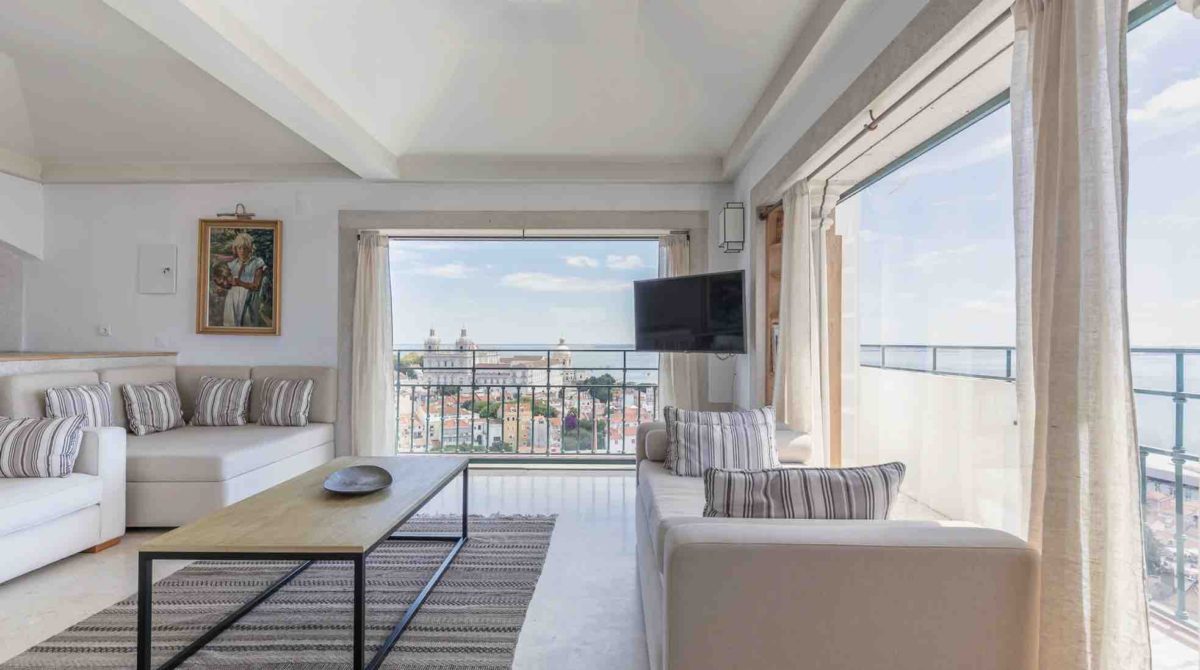
[Image: An elegant, modern kitchen and living area in a luxury apartment in Príncipe Real, Lisbon, with high-end finishes and designer furniture.]
## Expanding Horizons: The New Frontiers of Portuguese Luxury
The intense pressure in core markets like Lisbon's Príncipe Real [https://www.realestate-lisbon.com/lisbon/principe-real] and the 'golden triangle' of Cascais and Estoril is pushing the boundaries of luxury real estate. As João Cília notes, 'high-end real estate has been expanding its horizons and territory.' Discerning buyers are now exploring new frontiers, seeking space, authenticity, and value.
### Comporta & Alentejo: The Rise of Barefoot Luxury
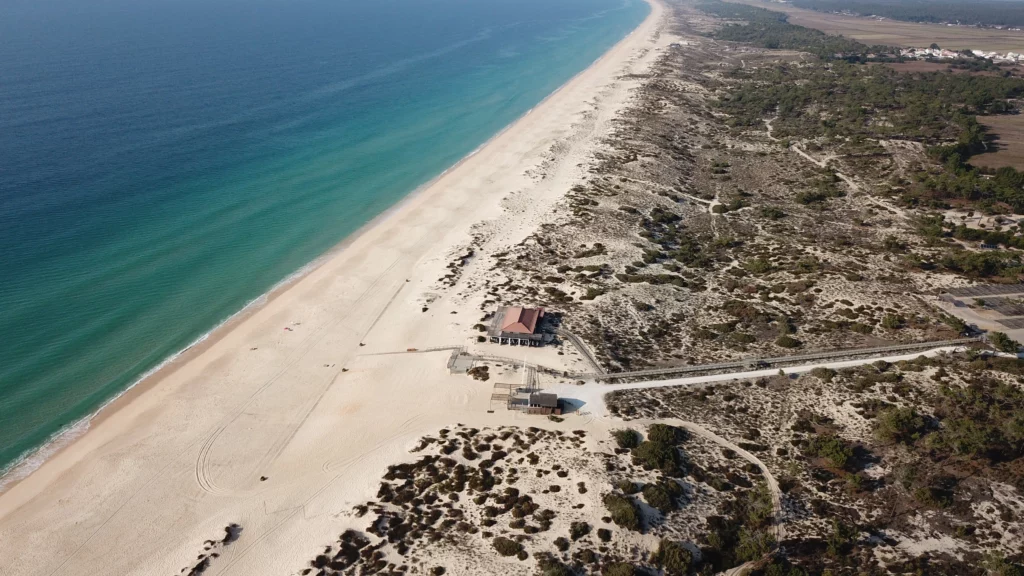
The coastal Alentejo, particularly the area around **Comporta** and **Melides**, is one of the fastest-growing luxury zones. Known for its pristine beaches, pine forests, and understated, 'barefoot luxury' aesthetic, this region is attracting significant international attention. Here, buyers are seeking large plots and architecturally significant homes that blend with nature. This trend is creating opportunities for specialized architects in Comporta [https://www.realestate-lisbon.com/comporta/architects] and developers who understand the unique ethos of the region.
### Setúbal and Madeira: Emerging Alternatives
Municipalities like **Setúbal**, with its stunning Arrábida Natural Park, and the island of **Madeira**, with its lush landscapes and favorable climate, are also emerging as credible alternatives. These locations offer a different value proposition—often more space and a closer connection to nature—while still providing a high quality of life. As a leading real estate publication, Expresso Imobiliário [https://expresso.pt/economia/imobiliario] has also noted this geographic diversification trend.
**Investor Strategy:** The expansion of the luxury map presents a strategic choice. Investors can either compete for scarce assets in established prime locations like Lapa [https://www.realestate-lisbon.com/lisbon/lapa] or Chiado [https://www.realestate-lisbon.com/lisbon/chiado], or they can seek early-mover advantage in these emerging luxury frontiers. Both strategies require deep market knowledge and expert guidance from investment property specialists [https://www.realestate-lisbon.com/professionals/real-estate-agents-investment-properties].
[Image: A breathtaking aerial shot of the coastline in Comporta, showing pristine sandy beaches, turquoise water, and pine forests.]
## Navigating Your Property Search in a High-Demand Market
In a market defined by scarcity, a passive property search is destined to fail. Success requires a proactive, strategic, and well-advised approach. The most desirable properties are often sold before they ever reach public listings. Therefore, access to a network of well-connected professionals is not just an advantage; it's a necessity.
### The Role of the Modern Luxury Consultant
As João Cília explains, the role of the luxury real estate consultant has evolved. While building trust remains fundamental, today's agent must be a data-driven advisor. They leverage technology and deep market analysis to identify opportunities, validate pricing, and guide clients through complex transactions. This is why working with top-tier English-speaking agents [https://www.realestate-lisbon.com/english-speaking-agents] who combine market intelligence with a robust network is critical.
### A Two-Pronged Investor Approach
The market currently caters to two primary investor profiles:
• **The Capital Investor:** This profile focuses on capital appreciation, often by purchasing off-plan properties in new developments with the intent to resell within 2-3 years. They typically target projects on the outskirts of Lisbon with prices up to €7,000 per square meter, a segment where significant uplift can be realized upon completion. Our Off-Plan Payment Calculator [https://www.realestate-lisbon.com/calculators/off-plan] is a useful tool for this strategy.
• **The Yield Investor:** This investor seeks rental income. With Portugal's booming tourism sector, properties with a tourist rental license (Alojamento Local) are increasingly popular. However, with evolving regulations, many are also focusing on the stability of long-term rentals in high-demand residential areas. A consultation with English-speaking accountants [https://www.realestate-lisbon.com/english-speaking-accountants] is vital to understand the tax implications of each rental model.
Ultimately, the key to success in this high-pressure environment is preparation and expert guidance. The supply shortage is a structural reality that will not change overnight. Buyers who are well-informed, well-financed, and well-represented are the ones who will succeed in securing the most desirable assets. To begin your strategic property hunt, connect with our network of vetted real estate lawyers [https://www.realestate-lisbon.com/real-estate-lawyers] and agents today.
## Frequently Asked Questions on Lisbon's Luxury Market
What is the main challenge in Lisbon's luxury property market?
The main challenge is a structural shortage of properties. According to João Cília, CEO of Porta da Frente Christie’s, demand is intense and highly concentrated in the premium segment, while supply has fallen by 11% compared to 2024. This imbalance is the primary driver of rising prices. This is a key investment risk [https://www.realestate-lisbon.com/buying-guide/investment-risks] to be aware of.
How much have luxury property prices increased?
The systematic imbalance between supply and demand drove an average price appreciation of about 7.3% in 2025. In our experience, prime zones like the Cascais seafront have seen appreciation closer to 10% in the same period. You can track these trends on our market insights [https://www.realestate-lisbon.com/market-insights] page.
Which international buyers are most active in Portugal?
North Americans are the fastest-growing international group, accounting for over 10% of transactions at top agencies like Porta da Frente Christie’s. They are followed by Brazilians, particularly in Cascais [https://www.realestate-lisbon.com/cascais]. A new wave of investment-focused buyers from Israel has also emerged recently.
Are luxury properties only found in Lisbon and Cascais?
No, the luxury market is expanding geographically. While Lisbon and Cascais remain core hubs, areas like Comporta, the Alentejo coast, Setúbal, and even the island of Madeira are emerging as new luxury frontiers. Our geographic deep dives [https://www.realestate-lisbon.com/blog/geographic-sector-deep-dives] cover these expanding markets.
What is the biggest obstacle to increasing housing supply?
The single biggest obstacle is the slow and complex process for project licensing. Experts across the industry, including top constructors [https://www.realestate-lisbon.com/constructors] and developers, agree that streamlining approvals is critical to addressing the housing shortage across all market segments.
What are property investors looking for in Lisbon?
There are two main types. 'Capital investors' seek off-plan properties [https://www.realestate-lisbon.com/off-plan] to resell, often targeting new developments near Lisbon with prices up to €7,000/sqm. 'Yield investors' focus on properties for rental income, with tourist-licensed apartments gaining popularity. Our Rental Yield Calculator [https://www.realestate-lisbon.com/calculators/rental-yield] helps analyze these opportunities.
How has technology changed the role of a luxury real estate agent?
Technology and AI have enhanced, not replaced, the luxury consultant. While trust and relationships remain key, today's luxury property agents [https://www.realestate-lisbon.com/professionals/real-estate-agents-luxury-properties] must also be data-savvy analysts who use technology to provide deeper market insights and more efficient service.
Is Portugal's luxury market resilient to economic crises?
While not immune, the luxury segment shows strong resilience. Geopolitical instability in other regions often leads to capital flight towards safe and stable markets like Portugal. This has been observed in reports from institutions like the IMF [https://www.imf.org/en/Countries/PRT], reinforcing Portugal's safe-haven status.