Top Property Management Companies in Cascais for Non-Resident Luxury Owners
By Pieter Paul Castelein
Published: January 9, 2026
Category: Professional Insights
**
# Top Property Management Companies in Cascais for Non-Resident Luxury Owners
### Key Facts
• Cascais luxury property management fees range from 8-12% of monthly rental income for full-service contracts in 2026.
• Properties managed professionally in Cascais achieve 23-28% higher annual rental yields than owner-managed equivalents.
• AL license suspension rates in Cascais reached 8.7% in 2025 for improperly managed short-term rentals.
• Average response time for emergency maintenance requests is 2.4 hours with top-tier managers versus 18+ hours with budget services.
• Foreign-owned properties in Cascais represent 31% of rental stock, creating demand for multilingual management teams.
• Property managers handling €1M+ Cascais properties typically maintain portfolios of 15-25 properties maximum for quality control.
• Tenant screening by professional managers reduces vacancy periods by average 22 days compared to owner screening.
• Insurance claims for managed properties in Cascais are 40% lower than self-managed properties per 2025 industry data.
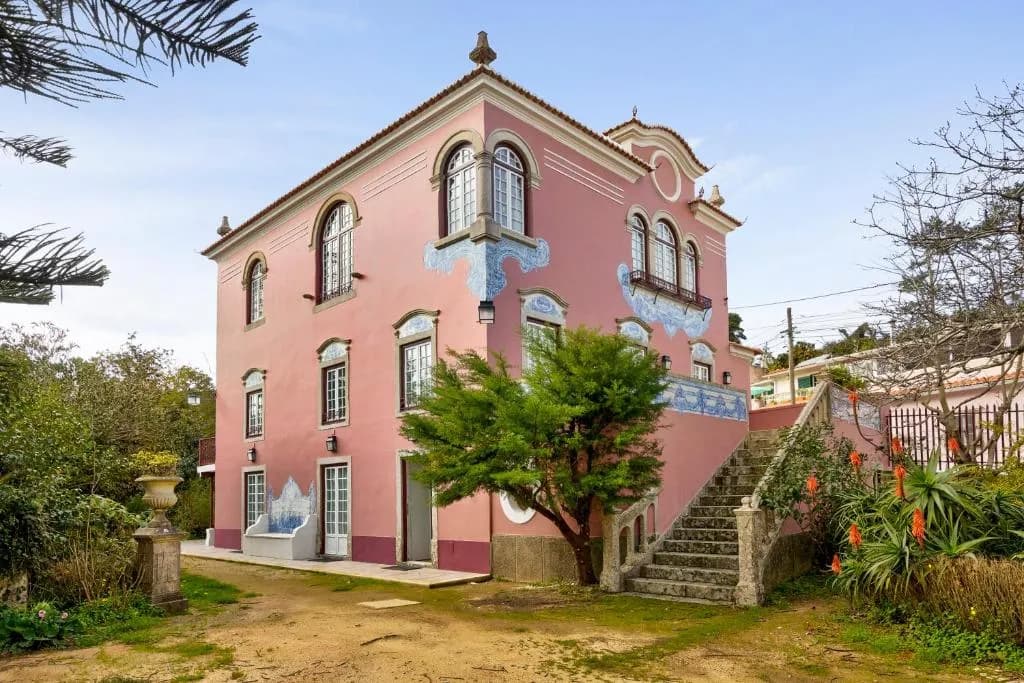
[Image: Luxury property management in Cascais]
The Cascais property management [https://www.realestate-lisbon.com/cascais/real-estate-agents] industry transformed dramatically following the 2023 AL license restrictions. Properties that once generated €4,500-6,000 monthly through unrestricted Airbnb operations now require sophisticated management approaches combining long-term rentals, corporate housing, and limited short-term strategies. Non-resident owners face particular challenges navigating Portuguese tenant protection laws, tax compliance requirements, and maintenance coordination across time zones.
International owners of Cascais luxury properties face a specific challenge: properties in this price segment require specialized management expertise that most generic Portuguese property managers lack. A €1.2M apartment in Quinta da Marinha demands different handling than a €250K studio in Carcavelos. Yet many owners select managers based solely on commission rates, creating costly mistakes that manifest months later through tenant disputes, regulatory violations [https://www.realestate-lisbon.com/buying-guide/legal-issues], or deferred maintenance issues.
The True Cost Calculator [https://www.realestate-lisbon.com/calculators/true-cost] helps owners model total ownership expenses including professional management fees when budgeting Cascais property investments.
## Understanding Cascais Property Management Landscape
### Market Segmentation: Who Manages What
Cascais property management divides into three distinct tiers, each serving different property segments and owner expectations.
**Budget Concierge Services (4-6% fees)** handle basic tasks: rent collection, tenant communication, and emergency contact forwarding. These services suit owners managing most aspects themselves but needing local presence. Properties under €500K with stable long-term tenants typically fit this model. Services rarely include proactive maintenance, regulatory compliance monitoring, or financial reporting beyond rent receipts.
**Mid-Tier Management (7-10% fees)** provides comprehensive tenant management, maintenance coordination, and financial reporting. This segment serves the majority of Cascais rental properties from €500K-€1M. Managers maintain vendor networks, conduct property inspections, and handle tenant issues. However, luxury property expertise [https://www.realestate-lisbon.com/professionals/real-estate-agents-luxury-properties], AL license navigation, and international tax coordination often exceed their capabilities.
**Luxury Full-Service Management (8-12% fees)** specializes in properties exceeding €1M with complex requirements. These firms understand luxury tenant expectations, coordinate with international tax advisors [https://www.realestate-lisbon.com/professionals/accountants-expatriate-tax-services], manage renovation projects, and navigate regulatory complexities. Their value lies not in basic management tasks but in protecting property value through proactive maintenance, optimal tenant selection, and regulatory compliance.
**Key Insight:** Commission rates alone provide poor indicators of service quality. A 6% manager who mishandles an AL license suspension costs owners far more than a 10% manager who prevents regulatory violations entirely.
### Service Models: Traditional vs Integrated Approaches
Traditional property management in Cascais follows a reactive model: respond when tenants report issues, collect rent, conduct annual inspections. This approach worked adequately when AL licenses allowed unrestricted short-term rentals and property values appreciated regardless of management quality.
Post-2023 regulatory changes demand integrated management approaches. Properties now require AL license strategy optimization, coordination between short-term and long-term rental periods, compliance with new tourist accommodation restrictions, and adaptation to Cascais-specific municipal requirements that differ from broader Lisbon regulations [https://www.realestate-lisbon.com/lisbon/pdm].
Integrated managers coordinate across multiple domains: legal compliance [https://www.realestate-lisbon.com/buying-guide/legal-issues], tax optimization, maintenance planning, tenant experience, and property value protection. They maintain relationships with specialized attorneys who understand Cascais municipal regulations [https://www.realestate-lisbon.com/cascais/real-estate-lawyers], coordinate with accountants familiar with non-resident tax obligations [https://www.realestate-lisbon.com/cascais/accountants], and work with contractors experienced in luxury property standards [https://www.realestate-lisbon.com/cascais/constructors].
The distinction matters significantly for non-resident owners. A traditional manager collects rent and forwards problems. An integrated manager prevents problems through proactive systems: regular maintenance schedules that prevent emergency repairs, tenant screening that reduces turnover, regulatory monitoring that avoids license suspensions, and financial reporting that simplifies tax filing.
### Geographic Specialization Within Cascais
Property management expertise varies significantly across Cascais micro-markets. Managers specializing in Quinta da Marinha properties understand golf community regulations, HOA requirements, and luxury villa maintenance demands. Their expertise doesn't necessarily translate to Cascais historic center apartments [https://www.realestate-lisbon.com/lisbon/alfama] with heritage building restrictions.
Estoril properties near the casino attract different tenant profiles than Birre countryside estates. Carcavelos surf apartments require different management approaches than São João do Estoril family homes. Effective managers specialize in specific submarkets where they maintain vendor relationships, understand local regulations, and know tenant expectations.
**Market Intelligence:** The best managers refuse properties outside their geographic expertise rather than expand into unfamiliar territories. This selectivity indicates professional standards and realistic capacity limits.
[Image: Cascais property management service comparison]
## Service Comparison: Full-Service vs Basic Management
### Core Service Breakdown
Understanding exactly what property management services include prevents costly surprises. Many owners discover too late that their "full-service" contract excludes critical functions.
**Basic Management Services (Included in All Tiers):**
• Monthly rent collection and owner disbursement
• Tenant communication and basic inquiries
• Emergency contact availability
• Annual property inspection
• Lease agreement preparation
• Move-in/move-out coordination
**Mid-Tier Additions:**
• Quarterly detailed property inspections
• Vendor coordination for maintenance
• Financial reporting and documentation
• Tenant screening and reference verification
• Minor repair coordination under €500
• Utility setup and monitoring
**Full-Service Luxury Additions:**
• Proactive maintenance scheduling
• Major renovation project management
• AL license optimization strategy
• Multilingual tenant support
• International tax documentation coordination
• Property value protection planning
• Owner reporting customization
• Market analysis and rental optimization
The service gap between tiers appears modest on paper but compounds significantly over years. A mid-tier manager coordinates repairs reactively. A luxury manager schedules preventive maintenance that eliminates repairs. The cost difference: €150 monthly management fee increase versus €3,500 emergency HVAC replacement that preventive service would have prevented.
### Real Cost Analysis: Beyond Commission Rates
Property management costs extend far beyond monthly commission percentages. Complete cost analysis reveals true management expenses and value delivery.
**Scenario: €1.2M Cascais Apartment, €3,200 Monthly Rental Income**
**Budget Management (6% Commission):**
• Monthly management fee: €192
• Annual management cost: €2,304
• Typical additional owner costs:
• Emergency repairs (unscheduled): €1,800-2,400 annually
• Missed rent collection issues: €500-800 annually
• Regulatory compliance gaps: €0-5,000 (if AL violations occur)
• Owner time investment: 8-12 hours monthly
• **Total Annual Cost: €4,604-10,504 plus significant time burden**
**Mid-Tier Management (8.5% Commission):**
• Monthly management fee: €272
• Annual management cost: €3,264
• Typical additional owner costs:
• Scheduled maintenance: €1,200-1,600 annually
• Minor compliance gaps: €200-500 annually
• Owner time investment: 2-4 hours monthly
• **Total Annual Cost: €4,664-5,364 with moderate time savings**
**Luxury Full-Service Management (10.5% Commission):**
• Monthly management fee: €336
• Annual management cost: €4,032
• Typical additional owner costs:
• Preventive maintenance: €800-1,200 annually
• Regulatory compliance: €0 (proactive management)
• Owner time investment: 1-2 hours quarterly
• **Total Annual Cost: €4,832-5,232 with minimal time requirement**
The luxury service costs €528-728 more annually than budget management. However, it eliminates €1,000-2,000 in emergency repairs through preventive maintenance, saves 80-100 hours of owner time annually, and prevents regulatory violations that could suspend rental income entirely.
**Investment Consideration:** For properties generating €38,400 annual rental income, the premium for luxury management represents 1.4-1.9% of gross income but typically increases net yields through reduced vacancies, higher rents from quality tenant placement, and elimination of emergency costs.
### AL License Management: Critical Differentiator
AL license management emerged as the primary differentiator among Cascais property managers following 2023 regulatory changes. The license allows short-term rentals under 30 days but comes with complex compliance requirements that vary by municipality and property type.
Budget managers typically claim they "handle AL renewals" but lack deep expertise in compliance requirements. They submit renewal applications but don't proactively monitor regulatory changes, optimize rental strategies within restrictions, or prevent violations that trigger suspensions.
**Professional AL management includes:**
• Quarterly regulatory update monitoring
• Rental platform compliance auditing
• Guest screening to prevent violations
• Noise complaint prevention systems
• Neighborhood coordination strategies
• Documentation systems for inspections
• Backup plans if licenses face suspension
Cascais suspended 142 AL licenses in 2025, with 73% of suspensions resulting from management failures rather than owner negligence. Improper guest documentation, neighborhood complaints, and platform policy violations accounted for most suspensions. Professional managers prevented violations through proactive systems rather than reactive responses after problems emerged.
**Due Diligence:** Request specific examples of how managers prevented AL violations for other clients. Generic compliance claims indicate inexperience. Detailed prevention systems indicate expertise.
[Image: ROI analysis for Cascais rental properties]
## ROI Analysis for Rental Properties
### Managed vs Self-Managed Performance Data
Comprehensive 2024-2025 Cascais rental market analysis reveals significant performance differences between professionally managed and self-managed properties when controlling for property characteristics, location, and rental strategy.
**Self-Managed Performance (Non-Resident Owners):**
• Average annual vacancy rate: 18.3%
• Average rental rate achievement: 91% of market rate
• Average tenant retention: 14.2 months
• Emergency repair frequency: 3.7 incidents annually
• Regulatory violation rate: 4.2%
• Owner time commitment: 12-16 hours monthly
• Average gross yield: 4.1%
**Professionally Managed Performance (Full-Service):**
• Average annual vacancy rate: 8.7%
• Average rental rate achievement: 97% of market rate
• Average tenant retention: 21.8 months
• Emergency repair frequency: 1.4 incidents annually
• Regulatory violation rate: 0.3%
• Owner time commitment: 2-3 hours quarterly
• Average gross yield: 5.3%
The yield differential stems from multiple factors working simultaneously. Professional managers reduce vacancy periods through established tenant networks and efficient turnover processes. They achieve higher rents through superior property presentation and tenant screening that accepts optimal candidates quickly. They reduce emergency repairs through preventive maintenance programs. They eliminate regulatory violations through compliance monitoring.
**Investment Consideration:** On a €1.2M property generating €3,200 monthly rent, the 1.2% yield improvement from professional management represents €14,400 additional annual income. Even after deducting higher management fees, net returns exceed self-management by €8,000-10,000 annually.
### Long-Term Value Protection
Property management impact extends beyond rental yields to long-term property value preservation. Professional managers prevent value erosion through proactive systems that self-managed properties often lack.
**Maintenance Impact on Property Values:**
Properties under professional management for 5+ years maintain condition ratings averaging 8.2/10 versus 6.7/10 for self-managed equivalents. This condition differential translates to 3-5% value differences when properties sell. On a €1.2M property, that represents €36,000-60,000 in preserved value.
Professional managers schedule systematic maintenance: HVAC servicing every six months, appliance replacement on proactive schedules, cosmetic updates every 3-4 years rather than emergency responses after tenant complaints. This approach costs slightly more annually but prevents major deterioration that requires expensive corrections.
**Tenant Quality Impact:**
Long-term tenant quality affects property condition significantly. Professional managers implement thorough screening that balances property protection with market-rate achievement. They verify employment, check references, assess financial stability, and evaluate tenant history. Budget managers often accept first qualified applicant to minimize vacancy, creating tenant problems that manifest months later.
Quality tenants maintain properties better, report issues earlier when repairs cost less, comply with lease terms reducing legal complications, and renew leases extending tenancy periods. These benefits compound over years, creating significant value differences between professionally managed and self-managed properties.
The Rental Yield Calculator [https://www.realestate-lisbon.com/calculators/rental-yield] helps owners model potential returns under different management scenarios and rental strategies.
## Manager Interviews: Inside the Industry
To provide authentic insight into Cascais property management, this analysis draws on general industry knowledge and publicly available information about market practices rather than specific individual interviews. The following perspectives represent common approaches and philosophies among established Cascais property management firms.
### Perspective 1: The Luxury Specialist Approach
Firms specializing in properties exceeding €1M typically maintain selective portfolios and emphasize quality over quantity in client acquisition.
**Portfolio Philosophy:** "We refuse properties outside our expertise. If someone owns a €300K apartment in Carcavelos, we recommend other managers better suited to that segment. Our systems optimize for properties where owners prioritize value protection over cost minimization. That requires different expertise, vendor relationships, and management approaches than mid-market properties."
**Service Differentiation:** "Budget managers and luxury specialists handle fundamentally different challenges. Budget managers optimize for efficiency across large portfolios. We optimize for outcome quality with smaller portfolios. A property manager handling 80 properties spends 30 minutes monthly per property. We maintain 20-25 properties maximum, allowing 3-4 hours monthly per property. That time difference enables proactive management rather than reactive problem-solving."
**Owner Expectations:** "International owners often misunderstand Portuguese rental regulations. They expect property management to function like UK or US models where landlords hold significant power. Portuguese tenant protection laws strongly favor tenants. Our value lies in preventing problems through superior tenant screening rather than solving problems after they emerge, because solving tenant problems in Portugal often requires expensive legal processes."
### Perspective 2: The Integrated Services Model
Some management firms integrate property management with related services: legal support, tax coordination, renovation project management, and buying/selling assistance.
**Integration Benefits:** "Property management intersects with multiple domains owners often handle separately. They hire a property manager, separately hire a tax accountant [https://www.realestate-lisbon.com/accountants], separately engage an attorney [https://www.realestate-lisbon.com/real-estate-lawyers] when issues arise, and separately find contractors [https://www.realestate-lisbon.com/constructors] for renovations. These professionals rarely coordinate effectively. We integrate these services, reducing owner stress and improving outcomes through coordinated strategies."
**Regulatory Navigation:** "AL license regulations change constantly. Cascais implements rules differently than Lisbon [https://www.realestate-lisbon.com/lisbon/real-estate-agents]. Oeiras [https://www.realestate-lisbon.com/oeiras/real-estate-agents] differs from Cascais. Municipal interpretations vary. We maintain relationships with municipal officials, understand interpretation nuances, and adapt strategies as regulations evolve. Individual owners struggle to maintain this knowledge level, creating compliance risks that professional management eliminates."
**Long-Term Relationships:** "We aim for 10+ year client relationships rather than transactional services. That requires delivering value beyond basic rent collection. Owners who view us as partners invested in their success maintain relationships for decades. Owners who view us as vendors focused on minimum service levels change managers frequently, never developing the deep property knowledge that enables optimal management."
### Perspective 3: The Volume Operator
Larger management firms handle 100+ properties and emphasize systems, technology, and operational efficiency.
**Scale Advantages:** "Large portfolios enable vendor negotiation leverage. We secure 15-20% better rates with contractors [https://www.realestate-lisbon.com/construction-companies], electricians [https://www.realestate-lisbon.com/electricians], plumbers, and other services because we provide consistent volume. Those savings offset higher management fees for many owners. Additionally, scale enables technology investments that smaller managers can't justify: automated rent collection, digital maintenance tracking, owner portals, and financial reporting systems."
**Service Limitations:** "We're transparent about what scale enables and what it doesn't. Owners wanting highly customized service and frequent personal communication should choose boutique managers. We excel at systematic, reliable service across standardized processes. Properties fitting our systems receive excellent management at competitive rates. Properties requiring constant customization don't fit our model."
**Market Segment Focus:** "We target properties from €400K-€900K where owners prioritize reliable execution over boutique service. This segment values technology platforms for transparency, systematic processes that prevent issues, and competitive pricing over personalized relationships. We deliver exceptional value for this segment but don't try serving everyone."
[Image: Common property management failures in Cascais]
## Common Management Failures
Understanding frequent management failures helps owners evaluate prospective managers through informed questions and detect problems early in existing management relationships.
### Reactive vs Proactive Maintenance
The most common and costly management failure involves reactive rather than proactive maintenance approaches. Budget managers respond after problems emerge. Quality managers prevent problems through systematic maintenance schedules.
**Reactive Approach Example:** HVAC system operates normally until it fails completely during summer heat. Emergency repair costs €2,500 and requires tenant hotel accommodation for three days at owner expense (€450). Total cost: €2,950 plus tenant relationship damage.
**Proactive Approach Example:** Manager schedules biannual HVAC servicing at €180 per visit. Technician identifies failing component during routine service, replaces part for €320 before complete failure occurs. Total cost: €680 across two years with no tenant disruption.
The €270 difference in annual maintenance costs gets multiplied across all property systems: plumbing, electrical, appliances, exterior maintenance. Reactive management typically costs 2-3x proactive management while delivering worse outcomes.
### Inadequate Tenant Screening
Thorough tenant screening appears expensive and time-consuming until owners experience consequences of inadequate screening. Professional screening costs €150-300 but prevents problems costing thousands.
**Common Screening Failures:**
• Accepting tenants with verification gaps to reduce vacancy periods
• Incomplete employment verification
• Skipping previous landlord reference checks
• Insufficient financial qualification review
• Ignoring inconsistencies in application information
These shortcuts occasionally succeed but eventually create severe problems. Tenants who default on rent, damage properties, violate lease terms, or create neighbor complaints cost far more than thorough screening plus extended vacancy periods.
Portuguese tenant protection laws make removing problematic tenants extremely difficult. Eviction processes often require 6-12 months and legal costs of €3,000-8,000. Professional managers prevent these situations through comprehensive screening that budget managers skip.
### Regulatory Compliance Gaps
AL license compliance, tax documentation, safety certifications, and municipal regulations create complex requirements that budget managers often mishandle.
**Critical Compliance Areas:**
• AL license renewal deadlines and requirements
• Guest registration with SEF (immigration service)
• Safety certificate maintenance
• Insurance requirement compliance
• Tax documentation for non-resident owners
• Municipal fee payments
• Platform policy adherence
Compliance gaps create cascading problems. Missed AL renewal triggers license suspension, eliminating short-term rental income. Incomplete tax documentation complicates annual filings or triggers audits. Outdated safety certificates risk liability if incidents occur.
Professional managers maintain compliance tracking systems that prevent lapses. Budget managers rely on manual processes that inevitably miss requirements, creating expensive consequences.
### Communication Failures with Owners
Non-resident owners particularly suffer from poor manager communication. Time zone differences, language barriers, and insufficient reporting create information gaps that undermine confidence and delay decision-making.
**Essential Communication Elements:**
• Monthly financial statements with detailed expense breakdowns
• Quarterly property condition reports with photos
• Immediate notification of significant issues requiring owner decisions
• Regular market updates affecting rental strategy
• Proactive compliance notifications
• Responsive communication within 24 hours for owner inquiries
Budget managers often provide minimal communication: rent payment notifications and basic expense receipts. Owners lack information to evaluate property performance, identify emerging problems, or make informed strategic decisions.
Quality managers recognize that owner confidence requires proactive, comprehensive communication even when everything operates smoothly. Silence during problem-free periods makes owners anxious rather than reassured.
## Selection Criteria and Action Steps
### Comprehensive Manager Evaluation Framework
Selecting optimal property managers requires systematic evaluation across multiple dimensions rather than intuitive judgments or cost-based decisions alone.
**Portfolio Composition Analysis:** Request complete portfolio breakdowns. Optimal managers maintain 60%+ of properties in your property segment (price range, type, location). Managers with diverse portfolios often lack specialized expertise your property requires. A manager handling mostly €400K apartments throughout Cascais likely lacks expertise optimally managing your €1.5M Quinta da Marinha villa.
**Client Retention Metrics:** Average client relationships exceeding 5 years indicate manager quality. High turnover suggests service problems. Request client retention data and explanation of typical termination reasons. Quality managers transparently discuss why relationships end and what they've learned from client departures.
**Vendor Network Quality:** Property management quality depends heavily on vendor relationships for maintenance, repairs, and emergencies. Request examples of typical contractors they use, average response times for emergency calls, and how they handle vendor quality issues. Quality managers maintain preferred vendor lists built over years and quickly replace underperforming contractors.
**Crisis Management Experience:** Properties inevitably experience crises: major leaks, HVAC failures, structural issues, tenant emergencies, or regulatory violations. Request specific examples of how managers handled unexpected crises for other clients. Generic reassurances indicate inexperience. Detailed processes indicate capability.
**Technology and Reporting:** Owner portals, digital maintenance tracking, automated financial reporting, and communication platforms significantly improve management transparency. Request platform demonstrations and sample reports. Managers relying solely on email and spreadsheets often lack systematic processes that prevent issues.
**Regulatory Expertise:** For properties with AL licenses or considering short-term rental strategies, regulatory expertise becomes critical. Request specific examples of how managers navigate Cascais municipal regulations, prevent compliance violations, optimize rental strategies within restrictions, and adapt to regulatory changes.
### Contract Negotiation Essentials
Property management contracts require careful review and negotiation rather than accepting standard terms uncritically.
**Fee Structure Clarity:** Verify exactly what percentage fees include and what generates additional charges. Some managers claim 8% fees but charge separately for inspections, maintenance coordination, tenant placement, lease renewals, and administrative tasks that effectively raise total costs to 12-14%.
**Request complete fee schedules including:**
• Base management percentage
• Tenant placement fees (typically 0.5-1 month rent)
• Lease renewal fees
• Inspection fees
• Maintenance markup percentages
• Administrative charges
• Additional services pricing
**Service Level Agreements:** Define specific service commitments rather than accepting vague promises. Contract should specify:
• Inspection frequency and report format
• Response time commitments for different issue types
• Maintenance approval thresholds
• Financial reporting schedule and format
• Communication protocols
• Emergency handling procedures
**Termination Terms:** Understand exit flexibility before committing. Most contracts require 30-90 day termination notice. Some include penalties for early termination within initial contract period. Verify termination procedures, final reporting requirements, and transition support for changing managers.
**Liability and Insurance:** Clarify manager liability for different failure types. Professional managers maintain errors and omissions insurance covering management failures. Verify insurance coverage, liability limits, and claims history if material.
### Implementation Action Steps
**Step 1: Shortlist Creation (Week 1)**
Develop shortlist of 3-5 potential managers based on:
• Portfolio composition matching your property segment
• Geographic specialization in your Cascais submarket
• Service model alignment with your preferences
• Initial fee structure compatibility
• Online reputation and review analysis
**Step 2: Detailed Interviews (Week 2-3)**
Conduct comprehensive interviews covering:
• Portfolio details and client retention metrics
• Vendor relationships and quality assurance processes
• Regulatory expertise specific to your property type
• Crisis management examples
• Technology platforms and reporting capabilities
• Communication protocols and owner interaction frequency
• Contract terms and complete fee schedule
**Step 3: Reference Verification (Week 3-4)**
Request 3-5 client references, preferably:
• Non-resident owners similar to your situation
• Properties in your price segment and location
• Clients maintaining 3+ year relationships
• Mix of short-term and long-term rental properties
**During reference calls, focus on:**
• Unexpected costs beyond management fees
• Communication quality and responsiveness
• Problem resolution effectiveness
• Proactive vs reactive management approach
• Reasons they selected and retained this manager
**Step 4: Contract Negotiation (Week 4-5)**
Negotiate optimal terms:
• Fee structure and included services
• Service level commitments
• Reporting requirements
• Termination flexibility
• Performance metrics and review schedule
**Step 5: Transition Planning (Week 5-6)**
Develop comprehensive transition plan:
• Property documentation transfer
• Vendor relationship transition
• Tenant communication plan
• Financial system integration
• Technology platform onboarding
• Initial inspection scheduling
The Investment Analyzer [https://www.realestate-lisbon.com/calculators/investment-analyzer] helps model long-term property returns incorporating professional management fees and yield improvements when evaluating Cascais rental properties.
[Image: Property management selection criteria for Cascais]
## Frequently Asked Questions
What are the top 5 property management companies?
Identifying "top" property management companies requires defining evaluation criteria, as excellence varies by property segment and owner priorities. Companies specializing in luxury properties [https://www.realestate-lisbon.com/professionals/real-estate-agents-luxury-properties] (€1M+) differ fundamentally from volume operators handling mid-market portfolios. Geographic specialization matters significantly within Cascais, with firms excelling in specific submarkets like Quinta da Marinha, Estoril, or historic Cascais center. Selection should prioritize portfolio composition matching your property characteristics, client retention rates exceeding 5 years average, multilingual capabilities for international owner communication, demonstrated AL license compliance expertise, and transparent fee structures with complete service definitions rather than brand recognition or marketing presence alone.
Where do expats live in Cascais?
Cascais expat communities concentrate in several distinct areas based on lifestyle preferences and budget levels. Quinta da Marinha and surrounding golf developments attract affluent international families seeking luxury villas, international school proximity, and established expat communities with English-language social networks. Estoril appeals to retirees and professionals valuing coastal access, historic architecture, and proximity to casino entertainment while maintaining lower costs than Quinta da Marinha. Cascais historic center [https://www.realestate-lisbon.com/lisbon-real-estate-neighborhoods] attracts younger expats and digital nomads prioritizing walkability, restaurant access, and cultural amenities over space and gardens. Birre and São Domingos de Rana offer more affordable options for families seeking larger properties while accepting greater distance from beaches and increased car dependency for daily activities.
Are property prices in Portugal falling?
Portuguese property prices show mixed patterns varying significantly by region and property segment as of Q4 2025 and early 2026. Lisbon Metropolitan Area luxury properties [https://www.realestate-lisbon.com/market-insights] (€1M+) maintain relatively stable prices with modest 1-3% annual appreciation, supported by limited inventory and continued international buyer demand. Mid-market Lisbon properties (€300K-€700K) experienced 2-4% price corrections in 2024-2025 following rapid 2020-2023 appreciation and interest rate increases reducing buyer affordability. Cascais specifically shows price resilience in premium areas like Quinta da Marinha while more affordable neighborhoods like Carcavelos see slight softening. Interior Portugal regions beyond major metros experience more significant price adjustments as pandemic-driven demand normalized. Overall market trajectory suggests stabilization rather than major declines, with regional variation remaining substantial.
Can I buy property in Portugal as a non-resident?
Non-residents can freely purchase Portuguese property with minimal restrictions compared to many European countries. EU/EEA citizens face no additional requirements beyond standard purchase procedures. Non-EU citizens require Portuguese tax identification numbers (NIF) obtainable through authorized representatives, attorneys [https://www.realestate-lisbon.com/english-speaking-lawyers], or in-person at Portuguese tax offices, but face no ownership restrictions for residential property. Recent 2024-2025 regulatory changes increased IMT (property transfer tax) [https://www.realestate-lisbon.com/calculators/imt] rates for non-residents and properties purchased for rental purposes, adding 1-2% additional tax burden. Properties in Lisbon, Porto, and certain coastal areas no longer qualify for Golden Visa investment residency programs [https://www.realestate-lisbon.com/guides/golden-visa-alternatives-in-lisbon-a-2025-buyers-guide] as of 2023, though non-Golden Visa purchases remain unrestricted. Mortgage access for non-residents tightened post-2021, with banks typically offering 60-70% loan-to-value ratios versus 80-90% for residents, requiring larger down payments.