Portugal's Luxury Real Estate: An Institutional Approach
By Kellogg Fairbank
Published: November 7, 2025
Category: Professional Insights
**
# Why Portugal's Luxury Real Estate Market Rewards Institutional Thinking Over Market Timing
Last Updated: November 2025
When sophisticated investors evaluate Portuguese property opportunities [https://www.realestate-lisbon.com/market-insights], they increasingly encounter a paradox: headline narratives about foreign buyer frenzies and visa-driven speculation conflict sharply with the transaction data and structural dynamics that actually govern market behavior.
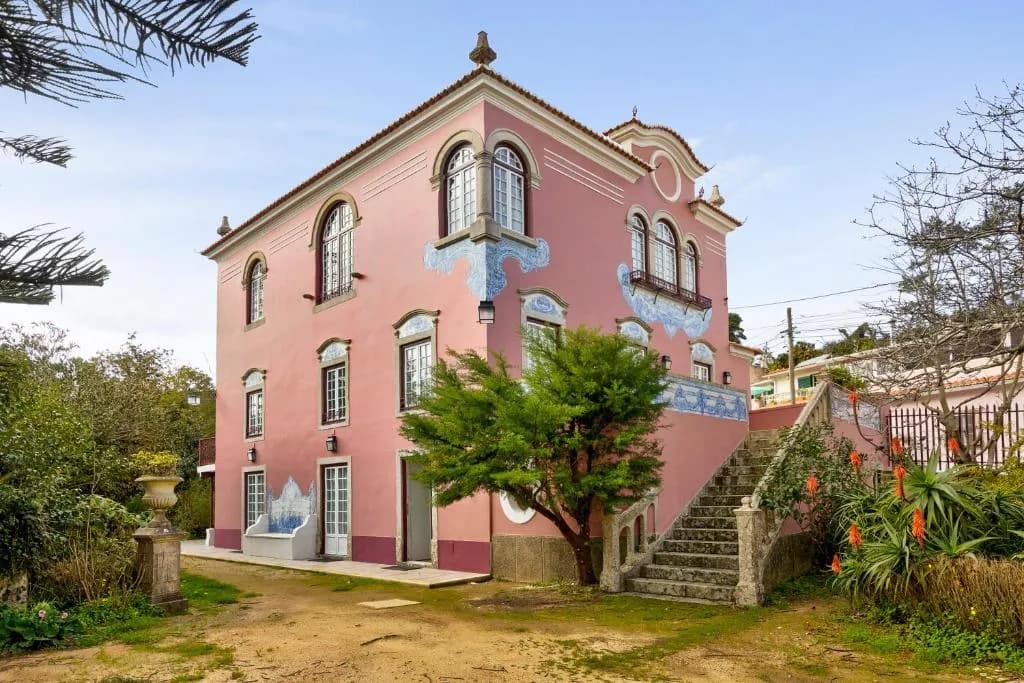
[Image: A sophisticated luxurious villa in Portugal]
This disconnect isn't academic—it directly affects investment outcomes. Buyers who entered Portugal's market based on simplified media narratives often discovered execution risks, regulatory complexities, and valuation challenges that weren't visible in the hype. Meanwhile, investors who approached Portuguese real estate with the analytical frameworks typically reserved for institutional asset classes have consistently achieved superior risk-adjusted returns.
The difference isn't luck. It's methodology.
## The Banking Lens: Structural Analysis Over Sentiment
Maria Bravo [https://www.realestate-lisbon.com/real-estate-agents/maria-bravo-agent-830 ]'s career trajectory illustrates why cross-disciplinary expertise matters in real estate. After nearly 15 years in senior banking roles at Barclays and BPI—structuring mortgages, analyzing portfolio risk, managing branch P&L—she founded Maria Bravo Consulting specifically to bring institutional rigor to luxury property advisory [https://www.realestate-lisbon.com/professionals/real-estate-agents-luxury-properties]. Her firm has won the Luxury Lifestyle Awards for Best Luxury Boutique Real Estate Brokerage in Portugal three consecutive years (2022, 2023, 2024).
What distinguishes Bravo's [https://www.realestate-lisbon.com/real-estate-agents/maria-bravo-agent-830 ] approach isn't marketing sophistication. It's the application of risk assessment methodologies [https://www.realestate-lisbon.com/buying-guide/investment-risks] and due diligence frameworks that banking professionals use to evaluate multi-million-euro credit facilities—now applied to residential transactions that often involve comparable capital deployment.
"Before viewing properties, I need the complete strategic picture," Bravo [https://www.realestate-lisbon.com/real-estate-agents/maria-bravo-agent-830 ] explains. "Investment objectives, tax positioning across jurisdictions, residency intentions, estate planning considerations, timeline flexibility, portfolio context. This discovery process often reveals opportunities clients hadn't considered or risks they hadn't anticipated."
This isn't the typical agent questionnaire. It's institutional client onboarding adapted to individual investors.
## Understanding Portugal's Supply Crisis: The 2011 Inflection Point
Popular explanations for Portugal's property price appreciation typically center on Golden Visa demand or digital nomad influx. These narratives satisfy journalistic simplicity but obscure the fundamental driver: a decade-long supply collapse that began with the 2011 sovereign debt crisis [https://www.realestate-lisbon.com/blog/market-intelligence-and-analysis].
When Portugal required international bailout in April 2011, construction financing essentially ceased. Between 2011 and 2021, Portugal
built approximately 10,000 housing units annually—compared to close to 90,000 units (on average) per year in the prior decade. That 90% reduction in supply, sustained over ten years while population and foreign interest both grew, created the supply constraints we see today. That supply deficit persisted partly because the skilled construction workforce emigrated during the crisis, relocating to Angola, Mozambique, and Brazil to find work.
"When demand returned following the Golden Visa introduction [https://www.realestate-lisbon.com/professionals/real-estate-agents-golden-visa-properties] in 2012 and NHR tax regime [https://www.realestate-lisbon.com/professionals/accountants-nhr-tax-regime] changes, both labor and materials supply chains needed complete rebuilding," Bravo [https://www.realestate-lisbon.com/real-estate-agents/maria-bravo-agent-830 ] notes. "That reconstruction process continues today. The housing shortage people discuss has structural roots that won't resolve quickly."
The transaction data supports this structural interpretation. Golden Visa acquisitions represented approximately 3% of total property acquisitions, while foreign buyers overall account for roughly 10% of Portugal's residential market. The pricing pressure stems primarily from the supply deficit, not foreign demand.
For investors, this distinction matters enormously. Supply-driven appreciation in constrained markets behaves differently than demand-driven bubbles. When scarcity reflects permanent constraints—historical preservation zoning, geographic limitations, regulatory barriers—price resilience typically exceeds markets where appreciation relied purely on temporary demand surges.
## Geographic Specificity: Where Structural Scarcity Creates Durable Value
Cascais city center [https://www.realestate-lisbon.com/cascais] properties commanding €5,000-€7,000 per square meter aren't just reflecting demand—they're reflecting permanent supply limitations. Strict historical preservation zoning in neighborhoods like Estoril and central Cascais effectively caps inventory.
This creates what institutional investors call "supply-inelastic markets [https://www.realestate-lisbon.com/buying-guide/investment-risks]"—locations where increased demand cannot meaningfully increase supply. The risk-return characteristics differ fundamentally from typical emerging markets where supply can theoretically expand to meet demand.
Bravo [https://www.realestate-lisbon.com/real-estate-agents/maria-bravo-agent-830 ] identifies emerging value in areas positioned to benefit from infrastructure development without current premium pricing. "Properties in Oeiras [https://www.realestate-lisbon.com/oeiras], Miraflores, and Paço de Arcos offer compelling value propositions," she observes. "The planned airport development will significantly enhance connectivity. Meanwhile, these areas already have business park infrastructure attracting international companies, international schools for families, and proximity to Cascais without the premium pricing."
The quantitative comparison clarifies the opportunity: central Cascais commands €2-3 million for properties suited to international buyers, while well-designed new construction in São Domingos de Rana, strategically positioned near business centers, delivers comparable quality of life at €600,000-€800,000.
For sophisticated investors, this isn't about compromising on quality—it's about not paying for established reputation when fundamentals remain strong.
[Image: An elegant photo of the Cascais coastline, showing the blend of historic architecture and seaside luxury that creates a supply-inelastic market.]
## The Hidden Opportunity: Judicial Acquisitions and Distressed Assets
Bravo's [https://www.realestate-lisbon.com/real-estate-agents/maria-bravo-agent-830 ] specialized knowledge of judicial acquisitions [https://www.realestate-lisbon.com/buying-guide/legal-issues] adds unique dimension to her practice. After completing coursework specifically on acquiring distressed assets, she navigates the complex distinction between properties sold free of occupants versus those requiring eviction proceedings—a critical difference that can mean months of delay and substantial legal costs.
Her recent project renovating an 80-square-meter apartment in downtown Cascais—purchased through judicial auction at €260,000 below bank valuation—illustrates both opportunity and execution risk. "What I learned managing that project reinforces what I tell clients: success requires being present throughout execution. Materials must be ordered before construction begins. Project managers need daily site visits. Illegal building elements invisible in documents but visible in photos must be caught during due diligence."
The due diligence for distressed acquisitions extends well beyond typical transactions. "Buying property from borrowers in personal default versus corporate bankruptcy involves completely different occupancy risk," Bravo [https://www.realestate-lisbon.com/real-estate-agents/maria-bravo-agent-830 ] explains. "The process requires checking every debt registered against the property, including condominium arrears that may not appear in preliminary searches. Missing a single unregistered claim can create legal exposure even after purchase."
This isn't expertise found with agents focused on conventional transactions. It requires understanding Portuguese insolvency law [https://www.realestate-lisbon.com/real-estate-lawyers], creditor hierarchy, and judicial sale procedures—knowledge more common in restructuring practices than residential real estate.
## Tax Structuring: Where Cross-Border Complexity Meets Opportunity
Portuguese property acquisition involves multiple jurisdictions' tax implications. How investors structure ownership—personal name, Portuguese entity, foreign holding company—significantly impacts ongoing tax efficiency [https://www.realestate-lisbon.com/buying-guide/financial-concerns] and eventual disposition taxation.
Bravo [https://www.realestate-lisbon.com/real-estate-agents/maria-bravo-agent-830 ] coordinates with tax advisors across three jurisdictions regularly to optimize structures for clients' specific situations. "This isn't generic advice—it's detailed modeling showing exactly how different approaches affect after-tax returns over hold periods," she notes.
The Golden Visa program's termination for property-based applications illustrates why fundamental analysis matters more than program dependence. "The government's decision was politically driven but doesn't address actual market dynamics," Bravo [https://www.realestate-lisbon.com/real-estate-agents/maria-bravo-agent-830 ] observes. "Investment-grade properties above €500,000 in prime locations were never the housing supply issue."
For investors concerned about regulatory risk, the implication is clear: focus on properties with fundamental appeal regardless of visa incentives. Assets suitable for long-term rental or personal use, with classic real estate economics, maintain value independent of specific programs.
Portugal's competitive positioning relative to other Western European markets remains compelling. Compared to Paris, London, or Geneva, Portuguese property prices stand 40-60% lower while quality of life metrics—climate, safety, culture, international connectivity—rank comparably or higher. That fundamental value proposition persists independent of visa programs.
## The Atlantic Coast Shift: Demographic Trends Creating New Demand Centers
Atlantic coast communities like Ericeira [https://www.realestate-lisbon.com/lisbon-real-estate-neighborhoods] represent different opportunity profiles. Bravo [https://www.realestate-lisbon.com/real-estate-agents/maria-bravo-agent-830 ] observes influx of younger professionals, thirties to mid-forties, relocating from Lisbon city center. "They prioritize ocean access, outdoor lifestyle, and authentic community over urban proximity. For investors, this creates rental demand [https://www.realestate-lisbon.com/calculators/rental-yield] from quality tenants in markets with lower entry points than traditional luxury areas."
This demographic shift reflects broader trends across European real estate: quality-of-life optimization increasingly trumps pure urban density for remote-capable professionals. Markets positioned to serve this demand—authentic coastal communities with reasonable connectivity—may outperform traditional luxury neighborhoods as remote work normalizes.
[Image: A vibrant lifestyle shot of Ericeira, with surfers and a lively cafe scene, representing the demographic shift towards quality-of-life coastal towns.]
## Current Market Conditions: Opportunity in Rational Repricing
European economic uncertainty [https://www.realestate-lisbon.com/news/market-trends] and geopolitical instability are affecting investor confidence across real estate markets. Bravo [https://www.realestate-lisbon.com/real-estate-agents/maria-bravo-agent-830 ] sees this reflected in transaction dynamics: "Properties sell, but at more rational valuations than the 2021-2022 peak. For well-positioned investors with medium-term horizons, this represents entry opportunity, not market risk."
The banking perspective matters here. Panic often creates optimal conditions for patient capital. When sentiment-driven buyers exit markets, investors who can analyze fundamental value independently find opportunities that didn't exist during euphoric phases.
Bravo's [https://www.realestate-lisbon.com/real-estate-agents/maria-bravo-agent-830 ] most successful clients approached Portugal with 10-year perspectives. "They weren't trying to catch market bottoms—they were establishing positions in supply-constrained areas with fundamental appeal. That mindset has served them well and will continue to do so."
## Looking Toward 2030: Strategic Positioning Over Market Timing
Portugal's real estate market continues evolving from the 2012-2022 discovery phase toward more mature dynamics. "We're transitioning from broad appreciation driven by market discovery to more strategic positioning," Bravo [https://www.realestate-lisbon.com/real-estate-agents/maria-bravo-agent-830 ] observes. "Successful investors now demonstrate specific neighborhood knowledge, recognize architectural value, and can execute complex renovations. The quick appreciation period has matured."
This maturation favors sophisticated investors over opportunistic speculators. Markets rewarding detailed due diligence, cross-border structuring expertise, and execution capability differ fundamentally from markets driven purely by momentum.
As a safe haven jurisdiction, Portugal offers something increasingly rare: Western European institutional stability, genuine quality of life, and relative value. Between geopolitical uncertainty elsewhere and Portugal's consistent rankings among the world's safest countries, the long-term investment case remains compelling.
The question for international investors isn't whether Portugal belongs in diversified portfolios—it's how to position intelligently within the market.
## Execution Reality: Why Advisory Quality Determines Outcomes
The gap between opportunity identification and successful execution explains why institutional investors increasingly seek specialized advisory rather than traditional brokerage. Transaction success in Portugal requires coordinating across multiple domains: tax optimization, legal due diligence, architectural feasibility, construction management, property management, and eventual disposition strategy.
Bravo's [https://www.realestate-lisbon.com/real-estate-agents/maria-bravo-agent-830 ] practice reflects this reality. Her network includes top-tier tax advisors, immigration attorneys, architects [https://www.realestate-lisbon.com/architecture-firms], and engineers [https://www.realestate-lisbon.com/civil-engineering-firms] capable of assembling detailed feasibility assessments before serious capital commitment. Recent work for a Dubai-based investor involved modeling three ownership structures, projecting renovation costs across multiple scenarios, and mapping rental yield assumptions against comparable properties—all before submitting an offer.
This thoroughness stems directly from banking discipline: understand the complete risk profile before capital deployment. The methodology applies regardless of asset class.
## Actionable Framework: Evaluating Portugal Investment Opportunities
For international investors considering Portuguese property, several analytical principles emerge from institutional practice:
• **Supply constraint analysis: [https://www.realestate-lisbon.com/buying-guide/investment-risks]** Evaluate whether target neighborhoods face permanent supply limitations (zoning, geography, preservation) versus temporary constraints. Supply-inelastic markets justify premium pricing; supply-responsive markets require more cautious valuation.
• **Infrastructure positioning: [https://www.realestate-lisbon.com/buying-guide/location-issues]** Properties positioned near planned infrastructure improvements (airport development, metro extensions, business park expansions) offer asymmetric upside if improvements materialize while maintaining utility if they don't.
• **Demographic trend alignment: [https://www.realestate-lisbon.com/lisbon-real-estate-neighborhoods]** Markets serving emerging demographic preferences (remote work enabling coastal living, family relocation to international school corridors) may outperform traditional luxury positioning.
• **Cross-border structuring: [https://www.realestate-lisbon.com/buying-guide/financial-concerns]** Engage tax advisors across relevant jurisdictions before acquisition to optimize ownership structure. Post-acquisition restructuring proves significantly more complex and costly.
• **Execution capability: [https://www.realestate-lisbon.com/buying-guide/new-builds-risks]** Assess whether you possess or can hire necessary expertise for renovation, permitting, and construction management. Underestimating execution complexity represents the primary wealth destruction mechanism in Portuguese real estate.
• **Hold period discipline: [https://www.realestate-lisbon.com/blog/investment-and-strategy-guides]** Portugal rewards patient capital. Investors with minimum 10-year horizons navigate short-term volatility more successfully than those requiring near-term liquidity.
## The Long View: Portugal in Global Context
Portugal's competitive position reflects multiple converging factors: political stability, safety rankings [https://www.realestate-lisbon.com/market-insights], climate advantages, Western European institutional frameworks, and relative valuation compared to peer markets. These factors won't disappear with program changes or political cycles.
For institutional-quality investors, Portugal offers Western European stability and lifestyle at relative value—a rare combination in 2025's global landscape. That fundamental proposition supports long-term positioning independent of short-term market timing.
The market has matured from discovery phase to strategic positioning phase. Success now requires the analytical rigor, cross-border expertise, and execution capability that characterized successful investing in more mature markets all along.
## Related Resources
Explore comprehensive guides and vetted professionals:
• Portugal Property Purchase Calculator [https://www.realestate-lisbon.com/calculators/true-cost ] — Model acquisition costs, taxes, and structuring scenarios
• Vetted Legal & Tax Professionals Directory [https://www.realestate-lisbon.com/professionals ] — Cross-border specialists for Portuguese transactions
• Rental Yield Analysis Tool [https://www.realestate-lisbon.com/calculators/rental-yield ] — Compare income potential across neighborhoods
• Complete Due Diligence Checklist [https://www.realestate-lisbon.com/buying-guide/legal-issues ] — Institutional-grade verification framework
Looking for institutional-grade advisory? Maria Bravo Consulting brings banking rigor to luxury property investment. View vetted professional profile [https://www.realestate-lisbon.com/real-estate-agents/maria-bravo-agent-830 ]
## External Sources
• 5 Steps Real Estate [https://www.5stepsrealestate.com/]: Proptech Platform for Real Estate Professionals
• Instituto Nacional de Estatística (INE) [https://www.ine.pt ]: Portuguese housing construction data
• Banco de Portugal [https://www.bportugal.pt ]: Sovereign debt crisis timeline and economic impacts
• Autoridade Tributária e Aduaneira [https://info.portaldasfinancas.gov.pt ]: Golden Visa statistical reporting
• Knight Frank [https://www.knightfrank.pt ]: Comparative European luxury property pricing analysis
*This analysis represents educational content based on verified market data and professional experience. It does not constitute investment advice. Consult qualified legal and tax professionals before making investment decisions.*