Palacete das Laranjeiras: €4M Heritage Office Investment
By Pieter Paul Castelein
Published: February 27, 2026
Category: Geographic & Sector Deep Dives
**
# Palacete das Laranjeiras: €4M Heritage Office Investment
## Value Box
**Capital Preservation Intelligence:** Palacete das Laranjeiras €4M heritage office rehabilitation analysis [https://www.realestate-lisbon.com/blog/investment-strategy-guides] for institutional and family office European real estate allocation [https://www.realestate-lisbon.com/buying-guide/investment-risks].
• Grade A heritage office rehabilitation qualifies for 6% VAT rate (versus 23% standard) plus full IMI exemption, generating €680,000 direct CapEx savings and permanent NOI enhancement
• Zone 4 Laranjeiras prime office rents reached €24/sqm monthly (Q3 2025 data) with projected 14-17% leveraged IRR at 5.5% exit cap rate through 2037 hold period
• Imóvel de Interesse Público classification provides structural fiscal shields while Lisbon Grade A vacancy remains 7.2% with only 15-20% of stock meeting international institutional standards [https://www.realestate-lisbon.com/professionals/real-estate-agents-international-clients]
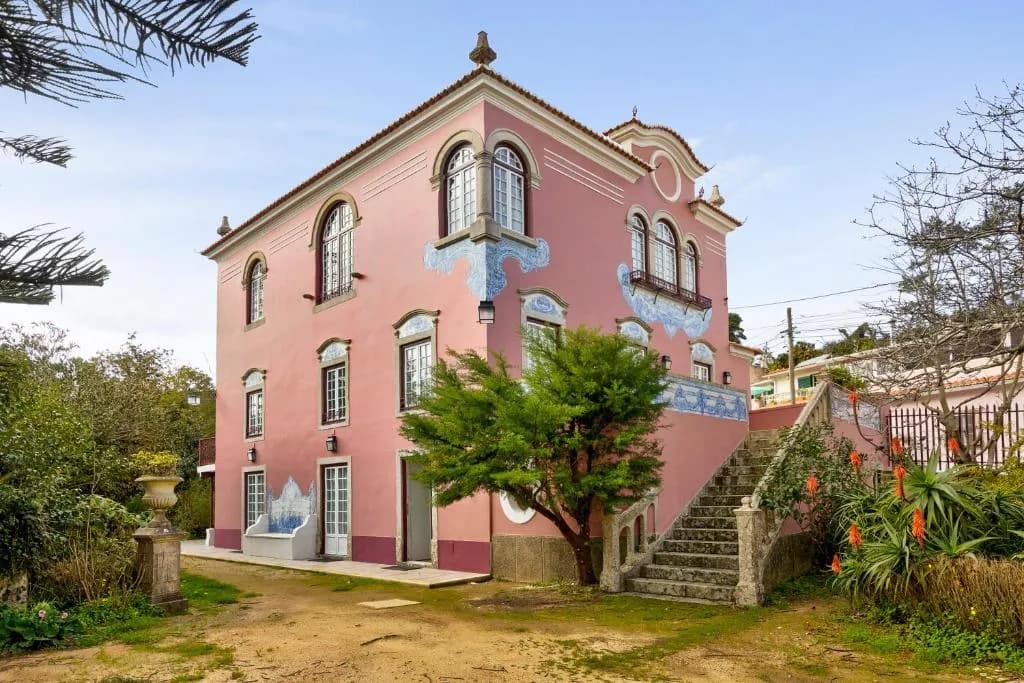
[Image: Palacete das Laranjeiras heritage facade]
## Key Facts: Investment Fundamentals
### Asset Profile:
• Historic Property: Palacete do Conde de Farrobo (constructed 1779, Bartolomeu Quintela architect)
• Classification: Imóvel de Interesse Público (Property of Public Interest legal status)
• Investment Scale: €4 million rehabilitation budget (2025-2027 construction phase)
• Location: Estrada das Laranjeiras, São Domingos de Benfica parish, Lisbon Zone 4 [https://www.realestate-lisbon.com/lisbon-real-estate-neighborhoods]
• Site Context: 19-hectare landscaped ensemble adjacent to Lisbon Zoo
### Financial Engineering:
• VAT Differential: 6% reduced rate on construction versus 23% standard (€680,000 savings on €4M budget)
• IMI Exemption: 100% Municipal Property Tax exemption (0.3-0.45% annual savings in perpetuity)
• IMT Treatment: Potential Municipal Transfer Tax exemption under RE9/PIPARU programs
• Target Rent: €25/sqm monthly upon 2027 completion (versus €24/sqm Zone 4 market rate Q3 2025)
• Projected IRR: 14-17% leveraged internal rate of return (60% LTV at 4.5% interest)
• Exit Cap Rate: 5.5% terminal capitalization rate (conservative versus 4.75-5.25% prime market)
### Market Context (Q3 2025 Lisbon Office):
• Total Take-Up: 131,210 sqm (22% decrease from exceptional 2024 levels)
• Prime CBD Rents: €29-32/sqm monthly (Zone 1 Avenida da Liberdade)
• Secondary Zone Rents: €19.50-24/sqm monthly (Zone 4 including Laranjeiras)
• City-Wide Vacancy: 7.2% overall (4.2% in Prime CBD, 6.8% in Zone 4)
• Grade A Supply: Only 15-20% of total Lisbon office stock meets Grade A institutional standards
• Sector Concentration: Company Services 59%, Financial Services [https://www.realestate-lisbon.com/buying-guide/financial-concerns] 21% of recent absorption
### Accessibility Infrastructure:
• Lisbon Airport: 17 minutes via A1 motorway access
• Lisbon CBD (Baixa): 20 minutes via metro or automobile
• Sete Rios Transit Hub: 5-10 minutes (train/bus/metro regional talent access)
• University of Lisbon: 10 minutes (specialized professional talent pipeline)
• North-South Axis Highway: 3 minutes (regional logistical connectivity)
### Development Team:
• General Contractor: Cari (Huitre Group civil construction, specialized heritage interventions [https://www.realestate-lisbon.com/professionals/constructors-historic-restoration])
• Architect: Atelier Falanstério (ecological architecture philosophy, heritage integration expertise)
• Delivery Timeline: Mid-2027 completion with pre-leasing phase commencing Q4 2026
• Technical Standards: Bioclimatic design, seismic resilience upgrades (RSCCS codes), AI-managed HVAC systems
### Macroeconomic Fundamentals (Portugal 2025-2027):
• GDP Growth: 2.4% (2025), 1.9% (2026), 2.1% (2027 projection)
• Inflation (HICP): 2.4% (2025), 2.0% (2026-2027)
• ECB Deposit Rate: Expected decline to 1.75% by end-2025 (financing cost stabilization)
• Unemployment Rate: 6.1-6.2% (historic lows supporting corporate office demand)
• 10-Year Bond Yield: 2.8-3.1% (2025), stable 2.7-2.9% trajectory through 2027
[Image: Lisbon Zone 4 office market overview]
## Understanding the Palacete das Laranjeiras Asset Class
The transformation of the nineteenth-century Palacete do Conde de Farrobo represents a specialized investment category within European commercial real estate. This €4 million rehabilitation project targets the acute scarcity of Grade A heritage office space in Lisbon's secondary office markets.
### Historical Asset Foundation:
The Palacete forms part of the classified Palácio e Jardins do Conde de Farrobo ensemble, originally constructed in 1779 during Portugal's late Baroque to Neoclassical architectural transition. The building's distinctive E-shaped floor plan comprises a central body with three projecting wings oriented toward the historic gardens. The primary facade facing Estrada das Laranjeiras features symmetrical stone pilasters and a triangular pediment reflecting eighteenth-century aristocratic design principles.
The building's classification as Imóvel de Interesse Público provides dual investment advantages. The legal status triggers comprehensive tax exemptions including 6% VAT on construction works (versus 23% standard rate) and permanent IMI municipal property tax exemption. Simultaneously, the classification creates a high barrier to entry for competing developments, as the technical expertise and regulatory coordination required for heritage rehabilitation limits market supply.
### Architectural Intervention Philosophy:
Atelier Falanstério's approach emphasizes reversible contemporary additions that maintain historical legibility. The construction includes a distinct metal and glass tower for elevator and stair circulation, intentionally differentiated from the nineteenth-century masonry to satisfy heritage preservation principles. This "additive rather than transformative" methodology accelerates licensing approval from the Direção-Geral do Património Cultural (DGPC) while ensuring future adaptation flexibility.
The 19-hectare landscaped site provides a biophilic amenity increasingly prioritized by corporate tenants focused on employee wellness and talent retention. The adjacency to Lisbon Zoo creates an irreplicable environmental context that differentiates the asset from conventional office towers in Parque das Nações or the Western Corridor.
## Why International Capital Allocators Target Laranjeiras Zone 4
Laranjeiras functions as Lisbon's critical secondary office hub (Zone 4), bridging the Prime CBD and northern residential-commercial suburbs. The district's evolution from late nineteenth-century bourgeois expansion to contemporary corporate infrastructure creates a mature rental market with defensive demand characteristics.
### Tenant Profile and Demand Drivers:
Q3 2025 market data confirms Company Services (59% of absorption) and Financial Services (21% of absorption) dominate Zone 4 leasing activity. These sectors prioritize boutique heritage environments over generic high-density floor plates. The nearby Bank of Portugal headquarters acquisition (32,000 sqm at EntreCampos project) validates institutional finance sector concentration in the northern Lisbon corridor.
Accessibility metrics position Laranjeiras favorably for international corporate occupiers. The 17-minute proximity to Lisbon Airport supports executive travel requirements, while 20-minute CBD connectivity via Laranjeiras and Sete Rios metro stations ensures talent access. The University of Lisbon's 10-minute proximity provides specialized professional recruitment pipelines for technology and financial services tenants.
### Competitive Positioning Analysis:
Traditional competitors include Torres de Lisboa (Towers E/G) offering standard Grade A space at €16.50-17/sqm monthly with 85-90% occupancy. However, these assets serve large-scale occupiers requiring 2,000+ sqm contiguous floor plates rather than boutique tenants seeking 300-800 sqm heritage environments with architectural distinction.
The existing Regus Laranjeiras Palace serviced office center at Estrada das Laranjeiras 1 demonstrates proven demand for flexible workspace in heritage buildings within this specific micro-market. International developments including DNA Campo Grande (14,500 sqm targeting €20-22/sqm) and República 5 (Huitre Group's own headquarters at €30/sqm) confirm capital allocation trends toward the €20-26/sqm premium segment.
The Palacete's competitive advantage derives from the convergence of heritage classification (limiting supply), fiscal efficiency (enhancing returns), and ESG positioning (attracting institutional capital with sustainability mandates). The 2027 delivery timeline aligns with projected Grade A supply constraints as 39% of the 323,290 sqm development pipeline reaches completion with pre-committed anchor tenants.
[Image: Heritage office tax benefits diagram]
## The Fiscal Engineering: How Tax Shields Drive Superior Returns
Portuguese urban rehabilitation incentives create a structural arbitrage opportunity for heritage office investments. The fiscal framework reduces capital expenditure, eliminates ongoing operating taxes, and enhances net operating income relative to conventional developments.
### VAT Differential (6% versus 23%):
The reduced 6% VAT rate on qualifying rehabilitation construction represents a 17-percentage-point differential from the standard 23% rate. For the €4 million Palacete budget, this generates approximately €680,000 in direct capital expenditure savings. This reduction flows immediately to equity returns and improves cash-on-cash yields for leveraged acquisition structures.
The 6% rate applies specifically to construction and rehabilitation works on urban renewal projects within designated rehabilitation zones. The Palacete's Imóvel de Interesse Público classification ensures automatic qualification without complex municipal application processes.
### IMI Exemption (Permanent Tax Shield):
The Municipal Property Tax (Imposto Municipal sobre Imóveis) typically ranges from 0.3% to 0.45% of a property's Tax Registration Value (Valor Patrimonial Tributário). For a €4 million rehabilitation plus land value, the exemption generates annual savings flowing directly to Net Operating Income.
Unlike temporary tax holidays common in other European jurisdictions, the IMI exemption for classified heritage buildings remains in effect indefinitely subject to maintenance of the heritage classification. This permanent tax shield creates a structural yield advantage versus conventional office assets in comparable locations.
### IMT Treatment (Municipal Transfer Tax):
Municipal Property Transfer Tax (Imposto Municipal sobre as Transmissões Onerosas de Imóveis) for commercial properties applies at 6.5% of transaction value. However, properties acquired for urban rehabilitation under RE9 and PIPARU municipal programs may qualify for exemption or substantial reduction provided rehabilitation commences within specified timeframes.
The combination of reduced acquisition costs (via IMT relief), lower construction costs (via 6% VAT), and permanent operating expense reduction (via IMI exemption) creates a multi-layered fiscal efficiency driving the projected 14-17% leveraged IRR versus 7-9% typical for core Grade A CBD assets.
[Image: 10-year financial projection model]
## Financial Projection Framework: 10-Year Hold Analysis
The investment model assumes a sophisticated institutional hold strategy with 60% loan-to-value financing at 4.5% interest rate, 3% annual rent escalation, and conservative 5.5% exit capitalization rate.
### Net Operating Income Development:
**Year 2027 (Completion):** Following mid-2027 delivery and Q4 2026 pre-leasing campaign, stabilized occupancy generates projected €350,000 NOI. Debt service on 60% LTV financing equals €120,000 annually, producing €230,000 pre-tax cash flow.
**Year 2030 (Stabilized):** With 3% annual rent escalation and minimal vacancy due to Grade A scarcity, NOI reaches €420,000. Continued debt service of €120,000 yields €300,000 annual cash flow representing improved cash-on-cash returns as rents appreciate.
**Year 2037 (Exit):** Terminal year NOI approaches €550,000 based on compounded rent growth and market rent reversion. At 5.5% exit cap rate, this generates approximately €10 million asset valuation representing significant capital appreciation from €4 million construction cost plus land basis.
### Leveraged IRR Calculation:
The 14-17% projected internal rate of return incorporates initial equity investment, annual cash flows, and terminal sale proceeds. This return profile exceeds typical 7-9% core office returns due to value creation through rehabilitation (transforming underutilized heritage asset to Grade A standard), fiscal efficiency (permanent tax shields), and scarcity premium (limited Grade A heritage supply).
Sensitivity analysis indicates the investment remains attractive across reasonable variance scenarios. A 100-basis-point increase in exit cap rate to 6.5% reduces IRR to approximately 12%, while 50-basis-point compression to 5.0% enhances returns toward 19%. Rent growth assumptions ranging from 2% to 4% annually produce IRR outcomes between 12% and 18%.
### Capital Appreciation Dynamics:
Lisbon prime office yields currently range 4.75-5.25% for institutional-grade assets. The Palacete's 5.5% underwriting cap rate incorporates a 25-75 basis point scarcity premium for boutique heritage positioning. However, as the asset establishes operational track record and corporate tenants validate the heritage-ESG positioning, compression toward prime yields becomes feasible.
A terminal cap rate compression scenario from 5.5% to 5.0% would generate approximately €11 million exit valuation on €550,000 NOI, representing 175% total return over the 10-year hold period. This appreciation potential derives from Lisbon's structural undersupply of Grade A space (only 15-20% of total stock) and the building's unique combination of heritage prestige and modern environmental performance.
## Macroeconomic Tailwinds: Portugal's Defensive Growth Profile (2025-2027)
The Portuguese economy provides a stable foundation for commercial real estate investment [https://www.realestate-lisbon.com/market-insights] through the 2025-2027 period. GDP growth projections of 2.4% (2025), 1.9% (2026), and 2.1% (2027) outpace Eurozone averages while maintaining sustainable expansion rates.
### Interest Rate Environment:
The European Central Bank's deposit rate trajectory from current levels toward 1.75% by end-2025 marks the conclusion of the 2022-2024 repricing cycle that affected European property markets. This financing cost stabilization enables transparent long-term capital allocation decisions without the uncertainty of rapidly shifting borrowing costs.
For leveraged commercial real estate investments, the decline in policy rates translates to improved debt service coverage ratios and enhanced cash flow stability. The 4.5% financing rate assumption for the Palacete model reflects conservative mid-cycle expectations, providing downside protection if rates stabilize higher while offering upside if further monetary easing occurs.
### Labor Market Dynamics:
Portugal's unemployment rate of 6.1-6.2% represents historic lows approaching structural minimums. This tight labor market drives corporate demand for high-quality office environments designed for talent retention. Companies increasingly prioritize wellness amenities, heritage value, and environmental certifications as recruitment and retention tools.
The concentration of Technology, Media, Telecommunications (TMT) and Financial Services sectors in Lisbon office absorption reflects the city's emergence as a Southern European tech and finance hub. These knowledge economy sectors demonstrate willingness to pay premium rents for buildings offering both functional efficiency and architectural distinction that supports corporate branding.
### Inflation and Operating Cost Stability:
Inflation projections of 2.4% (2025) and 2.0% (2026-2027) align with European Central Bank targets, providing operating cost predictability. For commercial property owners, stable inflation enables accurate budgeting for maintenance, utilities, and property management while supporting gradual rent escalation in lease contracts.
The combination of moderate inflation, declining interest rates, and tight labor markets creates an optimal environment for Grade A office assets. Tenant demand remains robust as companies compete for limited talent, while financing conditions improve and operating costs stabilize.
## Risk Assessment: Technical, Regulatory, and Market Considerations
Every heritage rehabilitation investment carries specific risk factors requiring mitigation strategies. The Palacete project addresses these through developer expertise, regulatory coordination, and defensive market positioning.
### Technical and Heritage Discovery Risks:
Archaeological findings or previously unknown structural damage represent the primary technical risk during nineteenth-century building renovation. Lisbon's seismic history (1755 earthquake) creates potential for undocumented foundation issues or historical retrofits requiring specialized intervention.
The Palacete project mitigates this through permanent coordination with the Direção-Geral do Património Cultural (DGPC) and specialized archaeology teams deployed from project inception. The 10% contingency budget incorporated in the €4 million capital plan provides financial buffer for unforeseen heritage requirements.
The reversible metal and glass tower for vertical circulation follows international heritage preservation principles of distinguishable contemporary additions. This approach accelerates regulatory approval by avoiding controversial integration attempts that blur historical and modern elements.
### Regulatory Evolution and Policy Risk:
Portugal's Golden Visa program [https://www.realestate-lisbon.com/guides/golden-visa-alternatives-in-lisbon-a-2025-buyers-guide], Non-Habitual Resident (NHR) tax regime [https://www.realestate-lisbon.com/guides/nhr-vs-ifici-in-lisbon-a-2025-tax-guide-for-buyers], and Alojamento Local (AL) licensing underwent significant modifications during 2023-2025. Future policy shifts affecting foreign investment or urban rehabilitation incentives remain possible as government balances international capital attraction against housing affordability concerns.
However, commercial office assets face substantially lower political risk than residential properties. The Palacete's office designation insulates it from housing policy debates, while the heritage classification provides additional protection through cultural preservation mandates. The fiscal incentives (6% VAT, IMI exemption) derive from urban rehabilitation objectives rather than foreign investment attraction, suggesting greater policy durability.
### Market Liquidity and Exit Considerations:
High-value commercial assets (€8-10+ million projected exit valuation) require institutional or family office buyers, limiting the potential purchaser pool compared to mid-market office buildings. Average marketing periods for premium commercial assets in Lisbon range 120-180 days versus 60-90 days for standard office buildings.
However, the Palacete's unique positioning as a Grade A heritage asset with established cash flow and institutional-quality tenants should attract international capital seeking Portuguese real estate exposure. The building's ESG credentials (bioclimatic design, heritage preservation, landscape integration) align with institutional investor mandates increasingly requiring environmental and social governance standards.
European cross-border capital flow data confirms sustained institutional interest in Southern European office assets, particularly in markets like Lisbon offering prime yields 50-100 basis points higher than Paris, London, or Frankfurt while maintaining stable political and economic fundamentals.
### Occupancy and Tenant Credit Risk:
The 2027 delivery timeline faces potential demand uncertainty if macroeconomic conditions deteriorate. However, Lisbon's structural undersupply of Grade A space (representing only 15-20% of total stock) provides defensive positioning. Corporate occupiers demonstrate persistent flight-to-quality behavior, abandoning Grade B/C assets for superior buildings even during economic uncertainty.
The pre-leasing strategy commencing Q4 2026 allows 6-9 months for tenant negotiations before completion. The target tenant profile (boutique financial services, corporate headquarters, professional services requiring 300-800 sqm) differs from large-scale requirements, enabling flexible leasing approaches including multi-tenant configurations if single-tenant absorption faces delays.
[Image: Cross-border investment structuring]
## Market Outlook: Lisbon Office Fundamentals Through 2030
The Lisbon office market trajectory through 2030 points toward sustainable quality-focused growth rather than speculative expansion. The 323,290 sqm development pipeline scheduled for 2025-2027 delivery includes 39% pre-committed space to anchor tenants including Fidelidade and government agencies.
### Supply-Demand Imbalance Persistence:
Despite the substantial pipeline, most new completions target large-scale developments in EntreCampos and Parque das Nações serving different tenant requirements than boutique heritage assets. The Grade A heritage office segment remains structurally constrained by the limited inventory of classified buildings suitable for modern corporate use.
Lisbon's historic center and established neighborhoods contain numerous nineteenth and early twentieth-century buildings, but few possess the necessary scale, structural integrity, and heritage classification enabling economic conversion to Grade A office standard. The Palacete's 19-hectare landscaped setting and Imóvel de Interesse Público status create a supply moat difficult for competitors to replicate.
### Technology Integration and Smart Building Evolution:
The 2027-2030 period will likely witness accelerated adoption of AI-integrated building management systems, advanced HVAC optimization, and workplace experience platforms. The Palacete's technical infrastructure includes fiber connectivity, AI-managed environmental controls, and integrated security systems designed for continuous technology evolution.
Corporate tenants increasingly evaluate office buildings as talent retention tools rather than mere workspace. The combination of heritage architectural distinction, bioclimatic environmental design, and cutting-edge technology positions the asset for sustained relevance through the 2030s as workplace preferences continue evolving.
### ESG Capital Allocation Mandates:
Institutional investors face mounting pressure to demonstrate environmental, social, and governance compliance in real estate portfolios. The Palacete's heritage preservation mission, landscape restoration, and sustainable recapacitation directly address ESG requirements while generating financial returns.
European Union taxonomy requirements and increasing disclosure mandates favor assets with demonstrable environmental performance and social benefit. The building's reduced energy footprint (bioclimatic design, natural light maximization), cultural preservation contribution (heritage restoration), and urban greening (19-hectare landscape requalification) align with institutional ESG criteria.
## Cross-Border Investment Structuring for International Allocators
International high-net-worth individuals and family offices require specific legal and tax structuring for Portuguese commercial real estate acquisition. Optimal structure depends on investor domicile, existing corporate entities, and estate planning objectives.
### Portugal-Based SPV (Sociedade Por Quotas):
Many international investors establish Portuguese limited liability companies (Sociedade por Quotas) for commercial property ownership. This structure provides liability separation, facilitates financing arrangements, and simplifies eventual exit through company share transfer rather than direct property conveyance.
Corporate income tax on rental income applies at 21% standard rate (potentially reduced to 17% for small and medium enterprises). However, commercial property depreciation, interest expense deductions, and operating cost pass-throughs significantly reduce effective tax rates.
### Luxembourg Holding Company:
Sophisticated institutional investors often interpose Luxembourg holding companies between ultimate beneficial owners and Portuguese property-owning entities. Luxembourg's extensive treaty network, favorable withholding tax treatment, and corporate governance infrastructure support multi-jurisdictional portfolio management.
The Portugal-Luxembourg double taxation treaty provides favorable treatment for rental income and capital gains repatriation. However, substance requirements and beneficial ownership disclosure obligations require genuine Luxembourg operational presence beyond pure conduit structures.
### REIT-Equivalent Structures:
Portugal's SIGI (Sociedades de Investimento e Gestão Imobiliária) regime provides REIT-like tax treatment for qualifying real estate investment vehicles. SIGIs benefit from corporate income tax exemption on rental income and capital gains, though strict distribution requirements and operational constraints limit applicability for single-asset investments like the Palacete.
International investors should coordinate Portuguese legal counsel [https://www.realestate-lisbon.com/real-estate-lawyers], tax advisors [https://www.realestate-lisbon.com/professionals/accountants-expatriate-tax-services] in their domicile jurisdiction, and financing institutions before structuring acquisition. Pre-cleared Número de Identificação Fiscal (NIF) applications and entity formation reduce transaction timelines from typical 120-day periods to 75-85 days for well-coordinated processes.
## Insider Perspective: Laranjeiras Micro-Market Dynamics and Professional Coordination
Laranjeiras office properties within 300 meters of the Sete Rios metro station command 18-25% rental premiums over comparable buildings beyond immediate walkability radius. This premium widened from 12-15% during 2022-2024 as corporate tenants prioritized post-pandemic public transit access for employee commuting patterns.
### Market Intelligence:
The Bank of Portugal's 32,000 sqm headquarters commitment at the EntreCampos project (announced 2024) triggered secondary effects in surrounding Laranjeiras micro-markets. Professional services firms seeking proximity to central bank operations increased inquiry volume for 500-1,000 sqm office spaces in heritage buildings during Q3-Q4 2025. This institutional anchor effect validates Laranjeiras positioning as a financial services cluster distinct from traditional Avenida da Liberdade CBD concentration.
Competitive intelligence indicates two additional heritage rehabilitation projects in early planning phases within 1 kilometer of the Palacete site. However, neither possesses Imóvel de Interesse Público classification or comparable 19-hectare landscaped settings, suggesting limited direct competition for the premium heritage-ESG tenant segment.
### Professional Coordination:
For €4+ million commercial property acquisitions in Portugal, optimal professional team assembly occurs before offer submission rather than post-acceptance. Pre-coordinated Portuguese legal counsel [https://www.realestate-lisbon.com/professionals/real-estate-lawyers-property-acquisition], fiscal representatives, and financing institutions reduce escritura (title deed) execution timelines by 30-40% compared to sequential professional engagement.
Specific due diligence priorities for heritage office acquisitions include verification of DGPC coordination protocols, confirmation of rehabilitation program compliance with heritage classification requirements, and validation of fiscal incentive eligibility documentation. Portuguese lawyers with specialized heritage property experience (not merely general commercial real estate practices [https://www.realestate-lisbon.com/buying-guide/legal-issues]) provide superior risk mitigation for these technical aspects.
Banking relationships established before property identification accelerate financing approval processes. Portuguese commercial banks and international private banking institutions serving high-net-worth clients require 45-60 days for credit committee review and term sheet production. Pre-qualification discussions initiated 60-90 days before expected acquisition reduce transaction execution risk.
### Regulatory Nuance:
Lisbon municipal building permits approved during 2024-2025 increasingly incorporate mandatory sustainability requirements [https://www.realestate-lisbon.com/buying-guide/sustainability] beyond national building code minimums. These include solar installation provisions, rainwater management systems, and urban greening ratios. While these requirements add €15,000-35,000 to construction budgets for typical projects, they enhance ESG positioning for institutional tenant marketing.
The Palacete's heritage classification requires specialized permitting through DGPC coordination, which typically adds 30-45 days to standard municipal licensing timelines but provides greater certainty once approved due to reduced discretionary interpretation compared to standard commercial developments. Heritage licensing approvals face lower probability of third-party appeals (neighbors, civic organizations) because cultural preservation objectives generally enjoy broad public support.
## Investment Considerations & Risk Factors
**Market Volatility:** Lisbon commercial office properties (€4+ million segment) experience quarterly valuation fluctuations of 4-8% driven by interest rate changes, international capital flows, and corporate leasing sentiment. Q3 2025 data showed 3.7% adjustment in Zone 4 prime listings as European Central Bank rate expectations stabilized. Long-term hold strategies (8-12 years) typically absorb this volatility through cash flow generation and eventual appreciation.
**Holding Cost Reality:** Annual commercial property ownership expenses (IMI if applicable, property management, insurance, maintenance [https://www.realestate-lisbon.com/buying-guide/maintenance-costs], utilities for common areas) typically range €35,000-55,000 for €4 million rehabilitation projects, representing 0.9-1.4% of capital annually. The Palacete benefits from IMI exemption but requires specialized heritage maintenance (ornate architectural elements, historic gardens) potentially exceeding standard commercial buildings. Careful lease structuring to pass operating expenses to tenants (triple net lease arrangements) mitigates this exposure.
**Regulatory Evolution:** Portugal's urban rehabilitation incentive programs, heritage preservation frameworks, and commercial property taxation have remained relatively stable during 2020-2025 compared to residential real estate policy volatility. However, future governments may modify fiscal incentives as urban rehabilitation objectives evolve. The permanent nature of heritage classification and IMI exemption (rather than temporary tax holidays) provides greater policy durability than new construction incentives.
**Exit Liquidity:** Commercial office buildings valued €8-10+ million target institutional investors, family offices, or REITs as likely purchasers. Average marketing periods of 120-180 days exceed mid-market commercial assets (60-90 days) and substantially exceed residential properties (30-60 days for prime listings). International investor reliance (estimated 25-30% of high-value commercial transactions) creates sensitivity to global economic conditions and cross-border capital flow restrictions.
**Currency Exposure:** Non-European Union investors face EUR/USD, EUR/GBP, or EUR/CHF exchange rate volatility. A 10% currency movement impacts acquisition costs by €400,000 on a €4 million investment and affects rental income repatriation throughout the hold period. Long-term Euro exposure can be partially hedged through currency forwards or options, though hedging costs reduce net returns. Alternatively, some investors view Euro real estate allocation as portfolio diversification benefit rather than pure currency risk.
**Construction and Completion Risk:** Heritage rehabilitation projects face higher probability of cost overruns and timeline extensions compared to new construction due to unforeseen structural issues, archaeological discoveries, or heritage compliance requirements. The 10% contingency allocation in the €4 million budget and Cari's specialized heritage experience mitigate but do not eliminate this risk. Delay in 2027 completion target impacts pre-leasing momentum and initial cash flow generation.
## Privacy & Transaction Security
All client consultations and commercial real estate transactions maintain strict confidentiality protocols essential for high-net-worth international investors:
### Discretion Standards:
• Off-market property access via institutional network (no public listing exposure for pre-acquisition due diligence)
• Encrypted communication channels for all financial documentation and cross-border coordination
• NDA-protected seller negotiations, due diligence processes, and financing arrangements
• Secure title verification through vetted Portuguese legal counsel with heritage property specialization
• No client information, transaction structure details, or beneficial ownership data shared with third parties without explicit written consent
**GDPR Compliance:** All data handling follows Portuguese DPO-certified protocols with European Union data residency guarantees and cross-border transfer safeguards.
**International Coordination:** Secure communication infrastructure supports coordination between Portuguese legal counsel, domicile jurisdiction tax advisors, financing institutions, and trust/estate planning professionals across multiple time zones.
## Common Questions: Palacete das Laranjeiras Investment
How does the 6% VAT rate on heritage rehabilitation compare to standard construction taxation?
The reduced 6% VAT rate on qualifying urban rehabilitation construction provides a 17-percentage-point advantage versus the standard 23% VAT rate applicable to standard commercial construction. For the Palacete's €4 million rehabilitation budget, this differential generates approximately €680,000 in direct capital expenditure savings. This fiscal benefit applies automatically to properties with Imóvel de Interesse Público classification undergoing approved rehabilitation works, requiring no complex municipal application beyond standard heritage licensing processes.
What specific advantages does Imóvel de Interesse Público classification provide beyond tax exemptions?
Beyond fiscal benefits (6% VAT, IMI exemption), the Imóvel de Interesse Público classification creates structural competitive advantages through supply constraints and prestige positioning. The classification limits the number of comparable properties available for conversion to Grade A office standard, as buildings must meet specific historical, architectural, or cultural significance criteria. This scarcity premium supports higher rental rates and lower capitalization rates at exit. Additionally, the heritage status provides marketing distinction for corporate tenants seeking architectural character and environmental, social, and governance (ESG) credentials through historic preservation.
How does the Laranjeiras Zone 4 location compare to Prime CBD or Parque das Nações for institutional tenants?
Laranjeiras Zone 4 offers different value proposition than Prime CBD (Avenida da Liberdade) or Parque das Nações waterfront district. Prime CBD delivers maximum prestige and €29-32/sqm rents but faces 4.2% vacancy and limited expansion opportunities. Parque das Nações provides modern large-scale developments (5,000-15,000 sqm buildings) at €19-21/sqm targeting technology sector tenants requiring high-density floor plates. Laranjeiras serves boutique institutional tenants (300-800 sqm requirements) seeking heritage environments, biophilic settings, and operational efficiency at €24-26/sqm. The micro-market benefits from proximity to Bank of Portugal headquarters, University of Lisbon talent pipeline, and Sete Rios transit hub while avoiding CBD premium and Parque das Nações standardization.
What is the typical timeline from acquisition to stabilized operations for heritage office rehabilitation?
Heritage office rehabilitation projects in Lisbon typically require 24-36 months from acquisition to stabilized occupancy. The Palacete's 2025-2027 construction timeline reflects this standard duration. Key milestones include: heritage licensing approval (4-6 months with DGPC coordination), construction execution (18-24 months for comprehensive rehabilitation), and tenant pre-leasing and fit-out (6-9 months overlapping with final construction phases). Investors should plan for 30-36 months from capital deployment to meaningful cash flow generation, with financing structures accommodating this stabilization period through interest reserves or sponsor equity contributions.
How do Portuguese commercial property financing terms compare to other Western European markets?
Portuguese commercial real estate financing for institutional-quality assets typically offers 55-65% loan-to-value ratios at current market rates of 4.0-5.5% depending on property quality, tenant credit, and borrower strength. These terms align broadly with Spanish and Italian markets while offering modest spread advantage versus France or Germany where rates may be 50-75 basis points lower but LTV ratios more conservative. Portuguese banks demonstrate increasing appetite for heritage rehabilitation financing given supportive fiscal framework and demonstrated market fundamentals. International private banks serving high-net-worth clients provide alternative financing often with more flexible structures but potentially higher rates reflecting cross-border transaction complexity.
What exit strategies work best for commercial heritage office assets in the €8-10 million valuation range?
Optimal exit strategies for this asset class include: (1) direct sale to institutional investors or family offices seeking Portuguese real estate exposure with heritage and ESG characteristics, (2) contribution to Portuguese REIT (SIGI) structures seeking quality assets for portfolio expansion, (3) sale to specialized heritage property investment funds emerging in Southern European markets, or (4) refinancing for long-term hold if stabilized cash flows and appreciation justify portfolio retention. Average marketing periods of 120-180 days require advance planning, with Q4-Q1 timing often optimal given institutional capital allocation cycles. Engaging commercial real estate advisory firms [https://www.realestate-lisbon.com/professionals/real-estate-agents-investment-properties] with international investor networks 9-12 months before target exit date maximizes purchaser reach and competitive tension.
How does the Palacete investment compare to residential Golden Visa fund allocation for international investors?
The Palacete represents commercial real estate investment focused on financial returns (14-17% projected IRR) rather than residency visa facilitation. Portugal's Golden Visa program requires €500,000 minimum investment in qualifying funds rather than direct property ownership following 2023 regulatory changes. Investors seeking both financial returns and Portuguese residency should consider Golden Visa fund allocation separately from direct commercial property investment. However, some international investors pursue parallel strategies: Golden Visa fund investment for residency qualification combined with separate commercial property allocation for superior return potential and portfolio diversification. These strategies require coordination between immigration advisors and investment professionals to optimize both residency and financial objectives.
What specific due diligence items are critical for heritage office property acquisition in Lisbon?
Priority due diligence items include: (1) verification of heritage classification status and DGPC coordination requirements, (2) confirmation of structural and seismic compliance with current building codes, (3) validation of fiscal incentive eligibility documentation (6% VAT approval, IMI exemption certification), (4) title search confirming clear ownership and absence of liens or encumbrances, (5) environmental site assessment addressing potential contamination from historical uses, (6) zoning verification confirming commercial office use rights, (7) existing lease review if applicable property contains tenants, (8) property tax valuation (Valor Patrimonial Tributário) assessment for ongoing tax calculations, and (9) financing pre-qualification confirming lender appetite and preliminary terms. Portuguese legal counsel with heritage property specialization [https://www.realestate-lisbon.com/professionals/real-estate-lawyers-due-diligence] should manage this process, typically requiring 45-60 days for comprehensive completion.
Market data compiled from Knight Frank [https://knightfrank.com], OECD [https://www.oecd.org], and INE (Instituto Nacional de Estatística) [https://www.ine.pt] institutional real estate research. Fiscal information based on Portuguese Tax Authority regulations current as of February 2026. Investment projections represent illustrative scenarios and do not constitute guaranteed returns or investment recommendations.
Real Estate Lisbon provides institutional-grade market intelligence and professional coordination for international investors in Portuguese commercial and residential property markets. All content reflects current market conditions and regulatory frameworks subject to change.