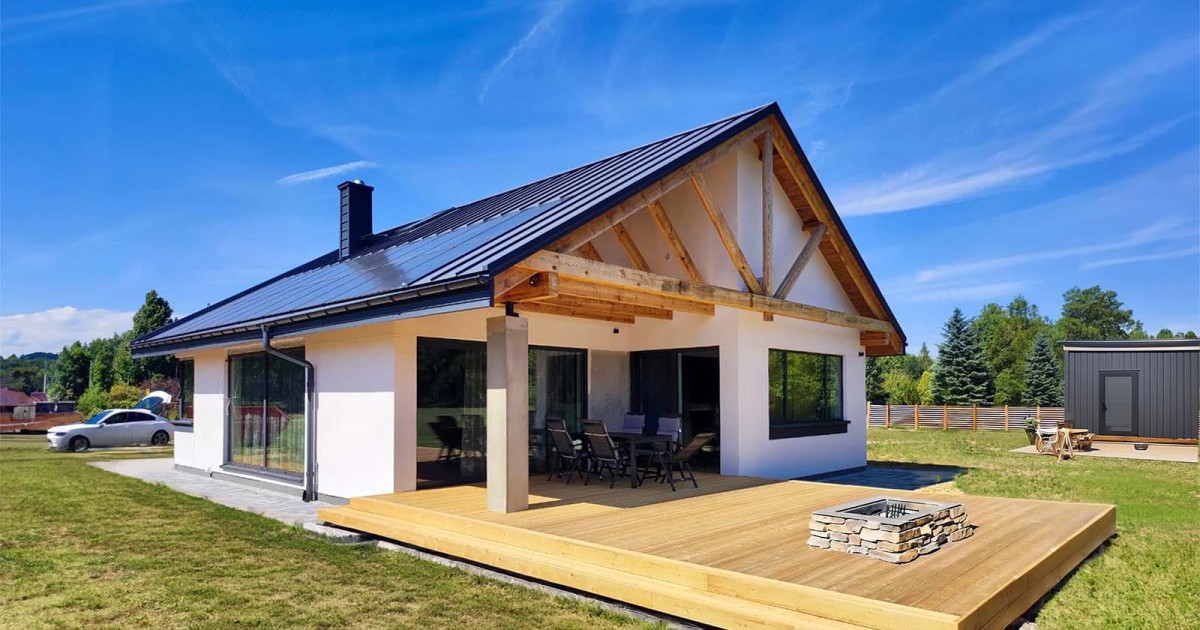
The Future of Construction: Prefabricated Homes That Fit Together Like LEGO Bricks Arrive in Portugal
By Kellogg Fairbank
Published: January 13, 2026
Category: technology
### Portugal Welcomes Revolutionary LEGO-Style Prefabricated Homes—SYSTEM 3E Redefines Construction Economics
In a landmark development for Portugal's construction sector, **SYSTEM 3E**—an international modular construction company specializing in perlite-based prefabricated systems—has introduced revolutionary "dry-stack" building technology that enables home construction without traditional mortar, water, adhesives, or additional insulation. The system employs interlocking blocks that connect via a simple "click-click" mechanism, potentially addressing Portugal's critical housing supply shortage while dramatically reducing construction timelines and costs for both developers and individual investors.
The technology represents a significant departure from conventional Portuguese construction methods, utilizing **perlite**—a natural volcanic glass widely used in Spain as wall mass—for structural and insulating properties. According to company specifications available on SYSTEM 3E's website, the system can erect up to 150 square meters of wall per day, with entire homes becoming weatherproof within one month. For foreign investors evaluating Portuguese real estate opportunities, this innovation arrives as the country grapples with housing shortages in key markets like **Greater Lisbon**, where property valuations reached €2,711/m² for houses according to November 2025 INE data.
This construction methodology's arrival in Portugal coincides with intensified policy focus on housing supply expansion, including the government's **Mais Habitação program**—a comprehensive 2023 housing initiative offering tax incentives for long-term rentals while increasing regulatory burdens on vacant properties and short-term accommodations in designated high-pressure zones. For international investors seeking exposure to Portugal's construction technology sector or evaluating development opportunities, SYSTEM 3E's entry signals potential disruption in a market where traditional building methods face skilled labor shortages and rising material costs.
### Key Takeaways
• ✓ SYSTEM 3E introduces "dry-stack" prefabricated construction technology using perlite blocks that interlock without mortar, water, or adhesives
• ✓ System enables 150m² of wall construction daily with weatherproof completion in one month, dramatically reducing labor costs and construction timelines
• ✓ Technology arrives as Portugal faces housing supply constraints with Greater Lisbon commanding €2,711/m² for houses (INE November 2025)
• ✓ Construction method offers superior fire resistance and thermal performance while reducing carbon footprint through elimination of traditional materials
The SYSTEM 3E technology centers on perlite blocks that serve as both structural elements and insulation, eliminating need for wooden or steel frameworks, additional insulation materials, or plasterboard. This **monolithic wall system**—where walls consist of single, solid construction rather than multiple layered components—represents a fundamental shift from Portugal's traditional masonry construction methods. The blocks' composition provides natural moisture regulation and creates healthy interior microclimates, particularly valuable in Portugal's varied climate zones from Atlantic coastal regions to interior areas with temperature extremes.
From an investment perspective, the technology's introduction addresses critical pain points in Portuguese construction economics. Traditional 145m² home wall construction requires up to two weeks using conventional methods; SYSTEM 3E completes equivalent work in two days—one day for initial mortar-set course and one day for remaining dry-stack assembly. This acceleration reduces not only direct labor costs but also indirect project expenses including equipment rental, technical supervision duration, and worker accommodation logistics, particularly significant for off-plan developments [https://www.realestate-lisbon.com/off-plan] across Greater Lisbon's constrained construction markets.
For foreign investors evaluating Portuguese development opportunities, the technology's performance credentials carry substantial weight. The system achieved unprecedented certification from Australia's Building Research Institute, becoming the only wall system to simultaneously pass both fire resistance tests and direct impact from a 200-kilogram demolition ball using just 35-centimeter thickness—the thinnest monolithic wall achieving this structural performance level. This certification, combined with superior thermal insulation properties reducing long-term heating and cooling requirements, positions the technology favorably for investors seeking sustainable construction solutions [https://www.realestate-lisbon.com/professionals/constructors-green-building] aligned with EU environmental regulations.
## Market Implications for Construction Sector Investors
SYSTEM 3E's Portuguese market entry signals potential disruption across multiple real estate investment verticals. For developers, the technology addresses critical skilled labor shortages that have constrained Portugal's construction sector, enabling projects with reduced dependence on specialized tradespeople whose availability remains limited and salaries elevated. The system's training requirements—brief instruction periods enabling general workers to execute projects—transform labor economics particularly relevant for luxury construction projects [https://www.realestate-lisbon.com/professionals/constructors-luxury-construction] where specialized craftsmanship commands premium pricing.
The construction acceleration creates compound economic benefits beyond direct labor savings. Reduced project timelines minimize equipment operation costs, technical supervision requirements, and logistical expenses including worker transportation and accommodation. For investors evaluating development project economics [https://www.realestate-lisbon.com/calculators/investment-analyzer], these efficiency gains translate to improved internal rates of return through faster revenue generation and reduced carrying costs, particularly valuable in Portugal's appreciating market where timing significantly impacts profitability.
Environmental performance increasingly influences investment decisions as EU regulations tighten and buyer preferences evolve toward sustainable properties. SYSTEM 3E's carbon footprint reduction through elimination of traditional materials—including Portland cement mortar, steel framing, and synthetic insulation—positions developments using this technology to command premiums among environmentally conscious buyers. The superior thermal performance reduces long-term energy costs, creating value propositions particularly attractive in Portugal's sustainability-focused market segments [https://www.realestate-lisbon.com/buying-guide/sustainability] where energy efficiency ratings influence both resale values and rental appeal.
For foreign investors pursuing Portuguese Golden Visa opportunities through investment funds (the current pathway following 2023's real estate investment elimination), construction technology companies like SYSTEM 3E represent alternative exposure to Portugal's real estate value chain. The technology's potential to address housing supply constraints while reducing construction costs aligns with policy objectives under the **Mais Habitação program**, potentially qualifying for government incentives while capitalizing on market demand for affordable, rapidly deployable housing solutions.
## SYSTEM 3E's Competitive Positioning
SYSTEM 3E operates as a modular construction technology company with international presence, specializing in perlite-based prefabricated building systems. The company's unique positioning stems from proprietary manufacturing processes that create structural-insulating blocks from expanded perlite, a naturally occurring volcanic glass with exceptional thermal properties. Unlike traditional prefabricated construction companies that assemble components in factories, SYSTEM 3E manufactures modular blocks that enable on-site dry construction, eliminating weather dependencies that often delay Portuguese building projects during winter months.
The technology's market differentiation extends beyond speed and simplicity. The perlite blocks' fire resistance and structural integrity exceed most conventional building materials, providing insurance advantages and safety premiums valuable for commercial developments and high-end residential projects. For investors evaluating construction technology investments [https://www.realestate-lisbon.com/buying-guide/investment-risks], these performance characteristics create competitive moats difficult for traditional builders to replicate without significant capital investment in new manufacturing capabilities and worker retraining.
## Portugal Construction Technology Market Context
Portugal's construction sector currently operates under significant transformation pressure as the country addresses dual challenges: housing supply shortages driving property price appreciation, and environmental commitments requiring carbon footprint reduction across all industries. Traditional construction methods, while culturally embedded, face mounting constraints from skilled labor shortages, material cost inflation, and regulatory requirements for energy efficiency improvements in new developments.
Several factors create favorable conditions for construction technology adoption:
• **Housing Supply Gap**: Portugal requires approximately 75,000 new homes annually to meet demand, yet traditional construction delivers roughly 45,000 units, creating persistent undersupply that drives price appreciation and rental market pressures particularly acute in **Greater Lisbon** and **Porto Metropolitan Area**
• **Skilled Labor Constraints**: Portugal's construction sector faces aging workforce demographics and emigration of skilled tradespeople, creating bottlenecks that extend project timelines and increase costs, particularly for specialized work requiring experienced masons and carpenters
• **Environmental Regulations**: EU directives requiring near-zero energy buildings by 2030 create demand for construction methods offering superior thermal performance and reduced embodied carbon, positioning technologies like SYSTEM 3E favorably versus conventional approaches
• **Foreign Investment Appetite**: International capital increasingly seeks exposure to Portuguese real estate through development activities, creating demand for scalable, efficient construction methods that can deliver consistent quality across multiple projects while maintaining attractive economics
These dynamics interact to create what market analysts term a "technology adoption inflection point" where traditional construction economics become unsustainable, forcing industry transformation. Success stories from other European markets—including Germany's prefabricated housing sector achieving 25% market share and Scandinavian countries reaching 40% modular construction adoption—provide templates for Portugal's potential trajectory, suggesting significant runway for companies like SYSTEM 3E to capture market share as conditions mature.
The investment implications extend beyond direct technology adoption. Construction efficiency gains create value throughout the real estate development chain, from reduced land holding costs during construction to faster revenue recognition for completed projects. For foreign investors evaluating Portuguese development opportunities, partnerships with technology-forward constructors offer competitive advantages in markets where speed-to-market increasingly determines project profitability, particularly relevant for large-scale developments [https://www.realestate-lisbon.com/off-plan/lisbon/parque-das-nacoes] in supply-constrained areas like Parque das Nações or emerging districts such as Marvila.
## Investment Considerations for Technology Adoption
For international investors evaluating Portuguese real estate opportunities, SYSTEM 3E's market entry creates multiple strategic considerations. Direct investment in construction technology represents exposure to Portugal's housing supply solution, potentially offering returns through technology licensing, joint venture developments, or equity participation in scaling operations. The technology's addressable market encompasses both residential and commercial segments, with particular relevance for investment property developers [https://www.realestate-lisbon.com/professionals/real-estate-agents-investment-properties] seeking to optimize project economics while delivering environmentally sustainable buildings.
Due diligence for technology-based construction investments requires specialized expertise beyond traditional real estate analysis. Investors should evaluate manufacturing scalability, quality control systems, and regulatory approval status across different Portuguese municipalities. While SYSTEM 3E's Australian certification provides credibility, local adaptation for Portuguese building codes, seismic requirements, and climate conditions warrants verification through structural engineering consultants [https://www.realestate-lisbon.com/professionals/civil-engineers-structural-engineering] familiar with both the technology and local construction standards.
Financial modeling for projects utilizing prefabricated construction must account for different cost structures compared to traditional methods. While material costs may exceed conventional approaches, the reduction in labor requirements, project duration, and indirect expenses typically generates superior overall economics. Investors should model scenarios including potential cost savings of 20-30% on total construction budgets for appropriate project types, alongside timeline compression enabling earlier revenue generation and reduced carrying costs.
Success stories from early technology adopters provide validation for investment thesis development. A German development fund that partnered with modular construction companies in similar European markets reported IRR improvements of 300-500 basis points through reduced construction timelines and lower cost overruns, while simultaneously achieving sustainability certifications that commanded rental premiums of 8-12% over conventionally-built comparable properties. These performance metrics, while requiring adaptation for Portuguese market conditions, illustrate the potential value creation available through strategic technology adoption in appropriate market segments.
## Looking Ahead: Construction Technology Market Evolution
Portugal's construction technology adoption trajectory appears positioned for acceleration as market conditions align favorably for innovative building methods. The convergence of housing supply shortages, skilled labor constraints, environmental regulations, and foreign investment appetite creates multi-year demand visibility for technologies offering speed, cost efficiency, and sustainability advantages. Market analysts project modular and prefabricated construction could capture 15-25% of Portugal's new housing market by 2030, representing annual addressable markets exceeding €2-3 billion based on current construction values.
For high-net-worth foreign investors, this evolution creates opportunities to participate in Portugal's construction value chain beyond traditional property acquisition. Investment vehicles including specialized real estate funds focusing on technology-enabled development, direct equity participation in construction technology companies, or joint ventures with established Portuguese developers seeking competitive advantages offer exposure to market expansion while potentially qualifying for Portuguese residency pathways through qualifying investment funds. The sector's alignment with EU environmental objectives and Portugal's housing policy goals provides additional tailwinds supporting long-term growth potential.
The market's maturation will likely accelerate through demonstration projects that validate performance claims and build local ecosystem capabilities. Early adopters who successfully implement SYSTEM 3E or similar technologies will establish competitive positions as scale advantages compound, potentially creating attractive exit opportunities through acquisition by larger construction groups or public market listings as the sector consolidates. For investors seeking exposure to Portugal's real estate market evolution while diversifying beyond direct property ownership, construction technology represents an emerging segment offering both financial returns and portfolio diversification benefits within the broader European proptech landscape. For expert guidance on evaluating construction technology investment opportunities within Portugal's evolving real estate sector, contact realestate-lisbon.com [https://www.realestate-lisbon.com].