Lisbon & Barreiro: The 'Smart City' Paradox – Is Urban Development Serving Foreign Investors or Local Residents?
By Nikola Zdraveski
Published: August 31, 2026
Category: politics
### Lisbon & Barreiro: The 'Smart City' Paradox – Is Urban Development Serving Foreign Investors or Local Residents?
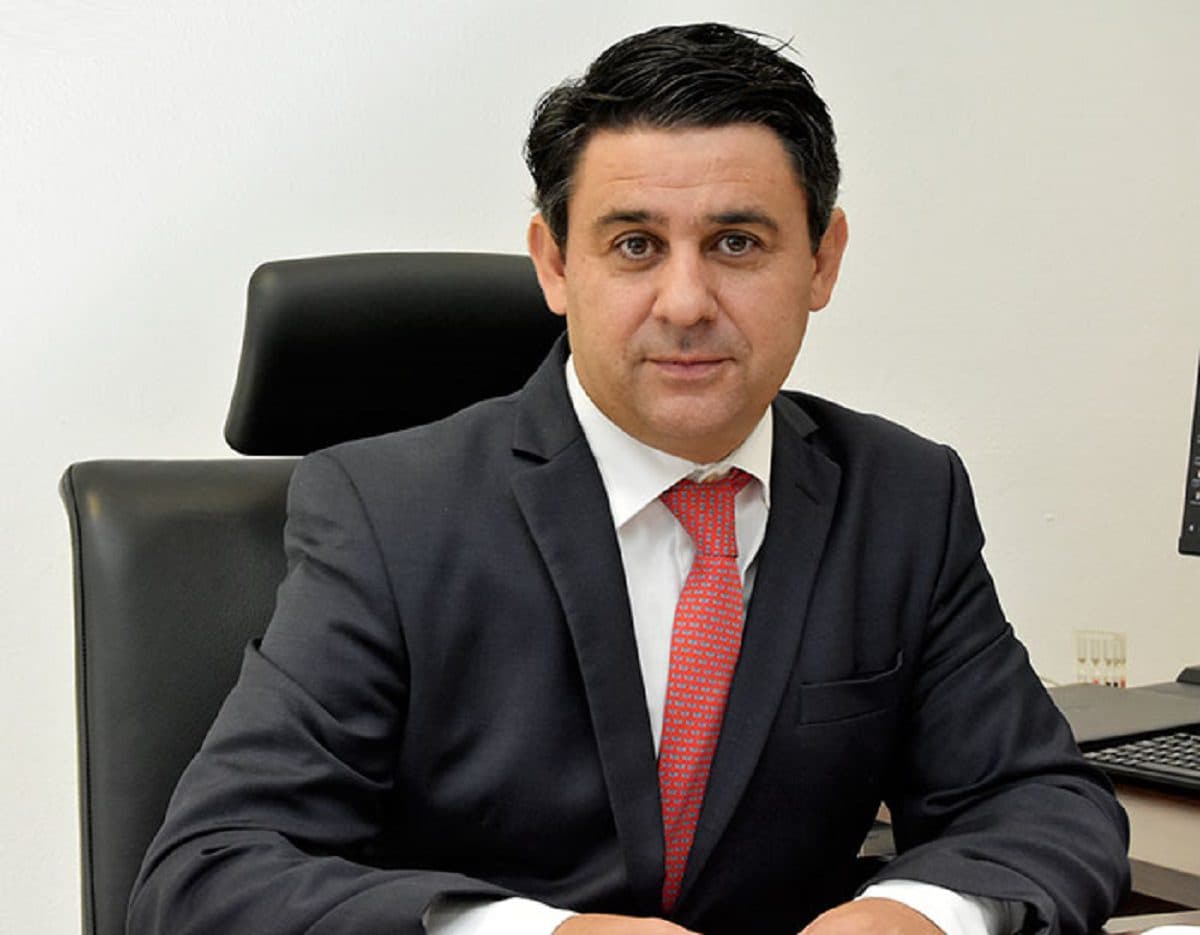
In a profound analysis of contemporary urban dynamics, António Matias Lopes, a distinguished urban researcher, critically examines the prevailing 'smart city' paradigm, particularly its implications for foreign investors and local residents in **Lisbon** and the **Barreiro** municipality. His extensive doctoral research reveals a growing asymmetry where urban sophistication, fueled by international capital, increasingly contributes to the displacement of native populations, raising fundamental questions about the true beneficiaries of urban development.
### Key Takeaways
• ✓ International investment in urban real estate drives up housing costs, creating affordability challenges for local residents.
• ✓ Lisbon and Barreiro exemplify the tension between economic attractiveness and the imperative of urban livability.
• ✓ The 'Smart City' model, focused on infrastructure and efficiency, often overlooks the daily experience and needs of inhabitants.
• ✓ Deliberate political intervention in land and housing markets is essential to ensure equitable and sustainable urban growth.
The article meticulously details the strategic allure of cities such as **Lisbon**, which have emerged as prominent hubs for international investment, tourism, and advanced services. This heightened attractiveness, however, frequently precipitates a significant challenge for long-term residents, who confront escalating property prices and rental costs, thereby diminishing their capacity to maintain a foothold in their ancestral urban environments. Lopes, leveraging three decades of professional engagement in large-scale urban development across diverse global markets, underscores that the core inquiry transcends merely constructing superior cities; it necessitates a rigorous examination of whose interests these urban transformations ultimately serve.
This dynamic is particularly pronounced within the housing market, where a discernible shift in buyer profiles is observed. International investors, often perceiving properties as strategic assets within a diversified portfolio, frequently possess the financial leverage to outcompete local residents. For these local inhabitants, a home represents an essential living space, not merely an investment vehicle. This imbalance profoundly impacts the quality of life and the intrinsic connection of native citizens to their urban fabric, a central tenet of Lopes's comprehensive sociological analysis. The competition for housing in prime areas like **Chiado** or **Avenidas Novas** in Lisbon illustrates this tension vividly, where the influx of capital can inadvertently marginalize long-standing communities.
## Market Implications for Foreign Investors
For foreign investors navigating the Portuguese real estate landscape, Lopes's analysis provides critical insights into the intricate social and economic undercurrents shaping urban markets. While the pursuit of high and predictable returns through international capital is a primary driver, the resultant pressure on housing affordability can engender significant social friction and, crucially, prompt governmental policy responses. A nuanced understanding of these socio-political dynamics is indispensable for formulating sustainable and resilient real estate investment strategies [https://www.realestate-lisbon.com/investment-and-strategy-guides] in Portugal.
The article explicitly states that urban residential real estate has, over the past two decades, become a highly coveted asset for international capital. This trend, while undeniably contributing to property value appreciation, simultaneously signals a market environment where the purchasing power of local populations is increasingly eroded. Astute investors should therefore consider the long-term implications of such social asymmetries on market stability, regulatory frameworks, and the potential for shifts in public policy aimed at rebalancing urban development priorities. The distinction between a 'Smart City' and a 'Livable City' is not merely semantic; it represents a fundamental divergence in urban evaluation paradigms, with profound implications for investment sustainability.
Furthermore, the discussion on the 'Smart City' versus 'Livable City' paradigm suggests that a singular focus on technological advancements in urban infrastructure, such as 5G networks or energy-efficient buildings, may not automatically translate into enhanced urban quality if foundational needs like affordable housing, quality public spaces, and social cohesion are neglected. This perspective offers a vital critical lens through which to evaluate the holistic value and long-term resilience of urban investments, particularly in rapidly evolving markets like Lisbon. Buyers can model the full acquisition cost — including IMT, stamp duty, and notary fees — using tools such as HomeOS's real cost calculator [https://www.homeos.pt/comprar/preco/custo-real/], which draws on cross-referenced registry data unavailable to general search tools.
## António Matias Lopes's Authoritative Perspective
António Matias Lopes, an esteemed urban researcher affiliated with UC/CES, offers an authoritative and deeply informed perspective on this critical debate. His unique approach integrates extensive professional experience—spanning three decades in the management and creation of large-scale real estate assets, including shopping centers and mixed-use developments across diverse global markets—with rigorous academic investigation. This dual expertise allows him to critically examine the social ramifications of urban centralities and the inherent mechanisms of displacement that frequently accompany significant qualified investment.
Lopes's research emphatically highlights that the valorization of urban areas through substantial investment, while often perceived as an indicator of progress, can almost inevitably lead to the displacement of original inhabitants. He advocates for the term 'dissociation between produced centrality and resident population' as a more sociologically precise descriptor than 'gentrification' for this complex social phenomenon. This terminology underscores the visible and impactful shift in buyer profiles, moving from residents acquiring property for habitation to international investors, affluent families, investment funds, or individual savers primarily seeking income and monetization, who can afford prices that local residents can no longer match without equivalent effort. This shift is particularly relevant for those seeking investment properties in Lisbon [https://www.realestate-lisbon.com/professionals/real-estate-agents-investment-properties].
## Lisbon and Portuguese Housing Market Dynamics
Portugal, historically characterized by a society of small property owners with a homeownership rate consistently around 71%, presents a particularly instructive case study within the broader European context. Unlike Germany, which has cultivated a robust and culturally accepted rental market, or Norway, with its established cooperative housing models, Portugal has historically lacked a strong institutional alternative to outright ownership. This structural deficiency renders the erosion of access to homeownership a particularly acute social and economic challenge for younger generations and those entering the housing market today.
Several interconnected factors contribute to the escalating housing challenges observed in Lisbon and other prominent Portuguese urban centers:
• **International Investment Influx**: The sustained flow of foreign capital into the Portuguese real estate market significantly inflates property prices, rendering homeownership increasingly unattainable for a substantial portion of the local population.
• **Underdeveloped Rental Market**: The Portuguese rental market is frequently characterized by higher costs relative to average incomes and less stringent regulation concerning lease duration and rent adjustments, thereby offering a less stable and less culturally accepted alternative to property ownership.
• **Contemporary Urban Asymmetry**: A progressive and widening gap exists between the substantial wealth generated by cities and the effective capacity of their long-term inhabitants to afford to remain within them.
• **Territorial Fragmentation**: A marked concentration of wealth and opportunity in capital regions, such as Lisbon, exerts immense pressure on housing availability and the overall cost of living, leading to a 'dissociated centrality' where the core thrives at the expense of its surrounding territory.
These multifaceted factors collectively create a challenging environment where economically successful cities paradoxically struggle to retain essential workers—such as teachers, police officers, and nurses—due to prohibitive living costs. This phenomenon, which Pierre Bourdieu aptly termed 'symbolic violence exercised through the market,' signifies that while cities continue to require these vital workers, they increasingly fail to provide the conditions necessary for them to reside within their boundaries. For those considering the financial concerns of buying property in Lisbon [https://www.realestate-lisbon.com/buying-guide/financial-concerns], these dynamics are crucial.
## Strategic Investment Considerations
For foreign investors contemplating opportunities in the Lisbon real estate market, a comprehensive understanding of the social and political dimensions of urban development is paramount. While the city's undeniable attractiveness for investment remains a powerful draw, the long-term sustainability and ethical implications of this growth are intrinsically linked to addressing housing affordability and fostering social cohesion. Investors should proactively consider the potential for future policy shifts and regulatory adjustments aimed at achieving a more equitable balance between attracting investment and safeguarding local housing needs.
The conceptual framework distinguishing 'Smart Cities' from 'Livable Cities' offers a crucial lens through which to evaluate urban projects and potential investments. Projects that genuinely contribute to urban livability—encompassing not only advanced infrastructure but also affordable housing solutions, vibrant public spaces, and robust social services—are likely to offer more sustainable and socially responsible returns in the long run. Engaging with English-speaking accountants [https://www.realestate-lisbon.com/english-speaking-accountants] specializing in expatriate tax services and real estate lawyers [https://www.realestate-lisbon.com/english-speaking-lawyers] can provide invaluable guidance on navigating the evolving regulatory and social landscape, ensuring compliance and mitigating risks associated with these complex market dynamics.
## Future Outlook for Lisbon's Urban Development
The ongoing and vigorous debate surrounding urban development in Lisbon and other key Portuguese cities underscores a critical contemporary challenge: how to effectively cultivate robust economic growth and attract essential investment without simultaneously compromising the fundamental livability and intricate social fabric for local residents. The future trajectory of urban policies in Portugal is increasingly likely to prioritize strategies that emphasize the retention of existing communities over the mere attraction of new capital, striving for cities whose success is measured not solely by economic metrics but by the sustained well-being and capacity of their inhabitants to thrive.
The municipality of Barreiro, with its rich industrial heritage and significant potential for regeneration—particularly through transformative projects such as the Third Tagus Crossing and the proposed Montijo airport—serves as a compelling laboratory for these inherent tensions between expulsion and revitalization. The pivotal question remains whether these forthcoming connectivity infrastructures on the south bank of the Tagus will genuinely serve as instruments of balanced territorial regeneration, or merely extend, southward, the same logic of selective valorization currently observed in Lisbon. For expert guidance on navigating these complex real estate investment opportunities and challenges in Portugal, contact realestate-lisbon.com [https://www.realestate-lisbon.com/].