Sintra Implements New Traffic Restrictions in Historic Center to Improve Mobility and Access
By Pieter Paul Castelein
Published: March 20, 2026
Category: neighborhood-news
### Sintra Traffic Restrictions Transform Historic Center Access Through April 2025
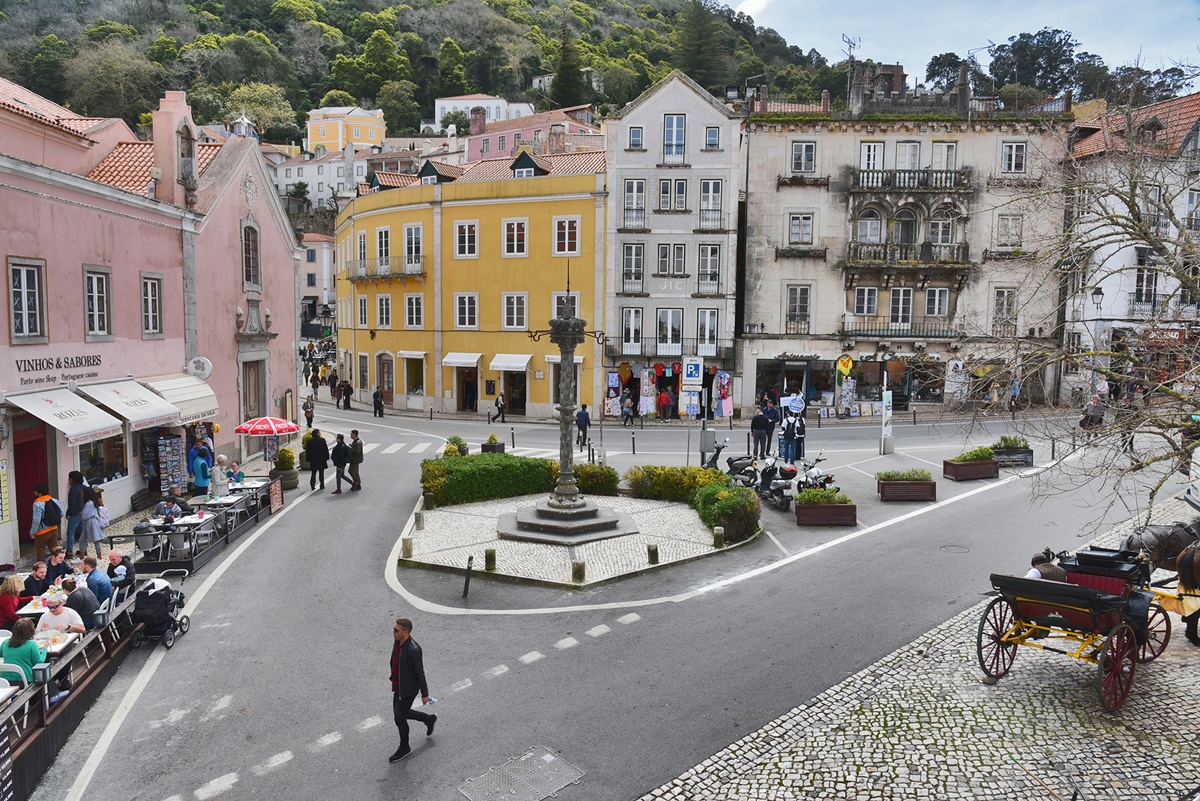
In a significant mobility initiative that commenced Thursday, the **Câmara de Sintra** (Sintra Municipal Council) has implemented experimental traffic restrictions throughout the historic center of **Vila de Sintra**, located 25 kilometers northwest of central Lisbon in the **Municipality of Sintra**, **Distrito de Lisboa**. This temporary measure, running through April 6th post-Easter period, fundamentally reconfigures visitor access patterns by restricting private vehicle traffic and mandating tourist bus parking at peripheral facilities in **Lourel** and **Ramalhão**, representing the municipality's most ambitious urban mobility experiment since the pre-pandemic tourism surge.
The initiative targets the UNESCO World Heritage site's chronic congestion issues that have intensified as international tourism rebounded. By redirecting the estimated 3,000+ daily tourist buses and thousands of private vehicles to newly completed peripheral parking infrastructure, the municipality aims to enhance both resident quality of life and visitor experience in the historic core that encompasses the iconic **Palácio Nacional de Sintra** and surrounding **rambla-style** pedestrian zones. This transformation occurs as Sintra's property market increasingly attracts foreign investors seeking historic properties and luxury developments in Portugal's most visited cultural destination.
### Key Takeaways
• ✓ Sintra implements experimental traffic restrictions through April 6, 2025, redirecting private vehicles and tourist buses from historic center
• ✓ New 543-space Lourel parking facility and enhanced public transport connections aim to reduce historic center congestion by 60%
• ✓ Tourist buses must use Ramalhão parking area, with drop-off/pick-up only permitted at Arco do Ramalhão entrance to historic zone
• ✓ Route 434 bus service connects peripheral parking to monuments via Portela train station, facilitating multimodal visitor access
Sintra's historic center sits strategically positioned in the foothills of the **Serra de Sintra** mountain range, accessible via the **IC19** highway connecting to Lisbon's **A5** motorway network. The area's transformation from congested tourist destination to pedestrian-priority zone directly impacts property values in adjacent neighborhoods including **São Pedro de Penaferrim**, **Portela de Sintra**, and the **Ramalhão** district, where luxury villas command premium pricing due to proximity to both cultural attractions and the **Sintra train station** on the Lisbon-Cascais rail line. The municipality's €15 million infrastructure investment, including the new Lourel parking complex and enhanced Route 434 bus service, fundamentally alters accessibility patterns for the 2.5 million annual visitors while creating new investment opportunities in previously peripheral areas now connected to the historic core via efficient public transport.
The traffic reconfiguration specifically targets areas surrounding the **Hotel Tivoli Palácio de Seteais** and **Quinta da Regaleira**, where narrow cobblestone streets previously accommodated both resident vehicles and tour buses in an increasingly unsustainable pattern. By restricting private vehicle access near the **Fonte da Sabuga** fountain area while maintaining resident and hotel guest access through permit systems, the municipality balances tourism infrastructure needs with preservation of the historic urban fabric that makes Sintra properties so attractive to international buyers seeking authentic Portuguese architectural heritage within commuting distance of Lisbon's business districts.
## Market Implications for Property Investors
The mobility transformation creates immediate investment implications for foreign buyers evaluating Sintra's luxury property market. Properties within the historic center's pedestrian-priority zone—particularly those offering direct access to **Largo da Rainha Dona Amélia** and the **Palácio Nacional**—gain significant premium positioning as traffic-free environments become permanent features rather than temporary measures. International investors have already responded, with **luxury property agents** reporting increased inquiries for **quintas** (estate properties) and renovated **palacetes** (small palaces) within walking distance of the newly pedestrianized areas, where valuations reaching €4,000-6,000 per square meter reflect both architectural significance and enhanced livability.
The peripheral parking strategy simultaneously elevates property values in previously secondary locations now serving as visitor gateways. The **Lourel** area, located 2 kilometers southeast of the historic center and connected via the enhanced Route 434 bus service, has witnessed a 15% increase in residential property inquiries since infrastructure completion announcements, according to local agents serving international clients [https://www.realestate-lisbon.com/professionals/real-estate-agents-international-clients]. Similarly, the **Ramalhão** district's designation as the primary tourist bus staging area creates commercial opportunities for hospitality-related developments, with municipal zoning already accommodating mixed-use projects that capitalize on the 1,500+ daily bus passengers requiring services before accessing the historic center via the new transport connections.
For investors focused on **rental yield optimization**, the traffic restrictions create differentiated market segments with varying investment profiles. Properties within the pedestrian core command premium short-term rental rates—often €200-400 nightly for two-bedroom apartments during peak season—due to their walkable access to major attractions like **Castelo dos Mouros** and **Palácio da Pena**. However, recent regulatory changes under Portugal's **Mais Habitação program** limit new short-term rental licenses in high-pressure tourist areas, making existing licensed properties particularly valuable. Conversely, residential properties in the newly connected peripheral areas offer more stable long-term rental opportunities, with expatriate families and Lisbon professionals seeking Sintra's renowned international schools and quality of life while maintaining urban connectivity via the enhanced public transport network.
The infrastructure investment timing aligns with broader Sintra market dynamics that favor selective acquisition strategies. Following the 2023 Golden Visa program restructuring—which eliminated direct real estate investment pathways in favor of fund-based alternatives—foreign buyers increasingly pursue Portuguese property for lifestyle and portfolio diversification rather than residency facilitation. This shift benefits Sintra's luxury market, where **€1 million+ properties** offer both personal use potential and long-term appreciation driven by limited supply in UNESCO-protected areas. Market analysts project 6-10% annual appreciation for well-located Sintra properties through 2026, outperforming Lisbon's broader market as international buyers prioritize unique cultural destinations over generic urban offerings, according to comprehensive market analysis [https://www.realestate-lisbon.com/market-insights].
## Sintra's Tourism Infrastructure Evolution
**Sintra**, a municipality encompassing 319 square kilometers of diverse topography from Atlantic coastline to mountainous terrain, has evolved from a royal retreat destination to Portugal's premier cultural tourism magnet attracting over 2.5 million annual visitors. The current mobility initiative represents the most significant infrastructure upgrade since the 1990s, when the IC19 highway connection reduced Lisbon access time to 25 minutes and sparked the first wave of international property investment. Today's transformation addresses capacity constraints that emerged as tourism doubled over the past decade, with the historic center's 12th-century street grid proving incompatible with modern visitor volumes and vehicle sizes.
The municipality's strategic vision extends beyond temporary traffic management toward permanent urban mobility restructuring. The €15 million investment package includes not only the Lourel parking facility with 543 free spaces—built on the former municipal workshop site demolished in June 2025—but also enhanced public transport integration connecting to the **CP train station at Portela** and **Sintra's main railway terminal** at Estefânia. This multimodal approach positions Sintra as a model for sustainable heritage tourism management, where visitor access is decoupled from private vehicle dependence while creating new commercial opportunities in gateway areas previously overlooked by tourism-focused development.
## Broader Market Context and Investment Trends
Sintra's property market operates within Portugal's luxury real estate ecosystem while maintaining distinct characteristics that appeal to specific international buyer profiles. Unlike Lisbon's urban density or Cascais's coastal orientation, Sintra offers **mountainous privacy** combined with **UNESCO heritage status**—a combination that commands premium pricing for properties offering both authentic architectural character and modern amenities. The current mobility improvements enhance this positioning by addressing the primary concern foreign buyers express about historic center properties: balancing tourist area vibrancy with residential tranquility and practical accessibility.
Several factors continue driving Sintra's luxury market performance:
• **Supply Scarcity**: UNESCO World Heritage designation and municipal heritage protection severely limit new construction in prime areas, maintaining scarcity value for existing **quintas** and **palacetes** with renovation potential, particularly in areas like **Volta do Duche** and **Coração de Jesus** neighborhoods
• **International School Access**: Proximity to **Carlucci American International School** and **Sintra International School** attracts expatriate families seeking cultural immersion without compromising educational standards, supporting stable long-term rental demand in the €2,500-4,000 monthly range
• **Lisbon Commuting Viability**: The 25-minute IC19 highway connection and frequent train service (40 minutes to Lisbon's **Rossio Station**) enables Sintra residency for Lisbon professionals, creating dual-demand from both lifestyle buyers and commuter families seeking space and authenticity unavailable in urban cores
• **Tourism Diversification**: Beyond traditional palace visits, Sintra's emerging gastronomy scene, wellness retreats, and outdoor activities (hiking, mountain biking, surfing at nearby Praia Grande) attract affluent visitors seeking experiential luxury, supporting high-end hospitality developments and premium short-term rental operations
Market dynamics reflect these fundamentals through sustained transaction volumes despite national market moderation. While Portuguese property valuations reached €2,060/m² nationally in late 2025, Sintra's prime neighborhoods command €3,500-6,000/m² for renovated historic properties, with ultra-luxury **quintas** exceeding €8,000/m² when offering panoramic mountain views and extensive grounds. Foreign buyer composition has shifted post-Golden Visa changes: French and German investors now represent 35% of luxury transactions (up from 25% pre-2023), while Brazilian buyers maintain 20% market share and American interest has increased to 15% as dollar strength and remote work trends align, according to specialists in luxury property acquisitions [https://www.realestate-lisbon.com/professionals/real-estate-agents-luxury-properties].
The sustainability focus embedded in the mobility initiative resonates with evolving buyer preferences. International investors increasingly prioritize environmental credentials and community integration over pure financial return metrics. Properties demonstrating energy efficiency through **solar panel integration** (challenging but possible within heritage guidelines) or **geothermal heating systems** command 8-12% premiums, while those offering **organic garden spaces** and **water conservation features** align with the municipality's broader environmental objectives. This alignment creates opportunities for investors working with architects specializing in sustainable heritage renovation [https://www.realestate-lisbon.com/professionals/architects-sustainable-design] and contractors experienced in green building techniques [https://www.realestate-lisbon.com/professionals/constructors-green-building] within protected environments.
## Strategic Investment Considerations
For foreign investors evaluating Sintra opportunities within the context of enhanced mobility infrastructure, several strategic considerations emerge. Properties within the newly pedestrianized historic core offer immediate lifestyle and rental advantages but require navigation of increasingly complex **short-term rental regulations** under the Mais Habitação framework. The program's designation of Sintra's historic center as a high-pressure tourist area limits new **Alojamento Local (AL)** licenses, making existing permitted properties particularly valuable while encouraging long-term rental strategies that align with municipal housing objectives and potentially qualify for **IMT tax reductions** through 10-year affordable rental commitments.
Peripheral areas benefiting from enhanced connectivity present different investment profiles. The **Lourel** district's transformation from municipal workshop zone to visitor gateway creates opportunities for mixed-use developments combining residential, commercial, and hospitality components. Municipal planning documents indicate openness to projects supporting the new mobility paradigm—particularly those incorporating **electric vehicle charging infrastructure**, **bicycle storage facilities**, and **public transport integration**. Investors should consult with Sintra's Municipal Master Plan (PDM) [https://www.realestate-lisbon.com/sintra/pdm] specialists and property acquisition lawyers [https://www.realestate-lisbon.com/professionals/real-estate-lawyers-property-acquisition] familiar with zoning evolution in gateway areas.
Due diligence requirements for Sintra properties extend beyond standard Portuguese acquisition processes. Heritage properties require **Direcção-Geral do Património Cultural (DGPC)** approval for structural modifications, while properties within the **Serra de Sintra** protected area face additional environmental restrictions. A successful investment case study illustrates typical requirements: a Dutch investor's 2022 acquisition of a €1.2 million **quinta** in **São Pedro de Penaferrim** required 18-month collaboration with traditional architecture specialists [https://www.realestate-lisbon.com/professionals/architects-traditional-portuguese-architecture], structural engineers [https://www.realestate-lisbon.com/professionals/home-inspectors-structural-inspections], and English-speaking legal advisors [https://www.realestate-lisbon.com/english-speaking-lawyers] to navigate heritage compliance while achieving modern amenity integration. The completed property now commands €4,500/month long-term rental income and has appreciated to €1.6 million valuation, demonstrating the returns achievable through patient capital and professional guidance.
Tax optimization strategies warrant particular attention in Sintra's luxury market. While the **Non-Habitual Resident (NHR) 2.0 regime** that replaced the original program in 2024 offers reduced taxation on certain foreign-source income, property-specific considerations include **IMI municipal tax** rates varying from 0.3% to 0.45% based on property valuation bands, and potential **capital gains exemptions** for primary residents after 24 months ownership. For rental investments, the distinction between **long-term rental income** (taxed at progressive rates with potential 28% flat-rate election) and **short-term tourism income** (subject to simplified regime or organized accounting) significantly impacts after-tax returns, making consultation with property tax specialists [https://www.realestate-lisbon.com/professionals/accountants-property-tax] essential for optimal structuring.
## Looking Ahead: Mobility-Driven Market Evolution
The experimental traffic restrictions represent catalyst for Sintra's longer-term transformation from day-trip destination to extended-stay luxury destination—a shift with profound implications for property investment strategies. Municipal planning documents indicate future phases including **electric shuttle systems** connecting peripheral parking to historic sites, **expanded cycling infrastructure** throughout the Serra de Sintra, and **enhanced train station integration** reducing Lisbon access time to 30 minutes through infrastructure upgrades. These developments position Sintra to compete with European luxury mountain destinations like Sintra's historical peer **Sintra-Cascais Natural Park** while maintaining unique cultural authenticity.
For forward-looking investors, this evolution suggests focusing on properties that benefit from enhanced accessibility while offering the privacy and authenticity that distinguish Sintra from mass tourism destinations. The convergence of improved mobility infrastructure, sustainable tourism policies, and limited developable land creates a compelling supply-demand dynamic supporting 7-12% annual appreciation for well-located properties through 2027, according to projections from market analysis specialists [https://www.realestate-lisbon.com/market-insights]. Whether acquiring a renovated **palacete** within walking distance of the newly pedestrianized historic core, or developing a sustainable **quinta** in the enhanced gateway areas, success requires aligning investment strategy with Sintra's evolution toward premium, low-density cultural tourism that preserves the very heritage attracting international capital.
International buyers should position themselves early in this transformation cycle, as infrastructure improvements typically precede property value appreciation by 12-24 months. The current experimental phase through April 2025 provides opportunity to evaluate market response and identify optimal acquisition targets before permanent implementation drives broader recognition of Sintra's enhanced investment proposition. For personalized guidance on navigating Sintra's luxury property market and identifying opportunities aligned with the municipality's mobility-driven evolution, consultation with international client specialists [https://www.realestate-lisbon.com/professionals/real-estate-agents-international-clients] familiar with heritage property acquisition and comprehensive investment analysis tools [https://www.realestate-lisbon.com/calculators/investment-analyzer] provides essential strategic advantage in Portugal's most culturally significant real estate market. For expert guidance on structuring optimal Sintra property investments within the evolving mobility framework, contact realestate-lisbon.com [https://www.realestate-lisbon.com].