Portugal's Shrinking Homes: New Data Reveals Declining Square Footage in Residential Market
By Nikola Zdraveski
Published: August 21, 2026
Category: market-trends
### The Efficiency Revolution: Analyzing the 39m2 Decline in Portuguese Housing Sizes
In a defining moment for the **Portuguese real estate market**, recent data from the **National Institute of Statistics (INE)** has confirmed a structural shift that will reshape investment strategies for years to come. The average habitable area of residential properties has seen a dramatic reduction, now hovering around **81.2 m2**—a decline of nearly 40 square meters over the last 15 years. This trend demonstrates a move toward high-efficiency urban living that mirrors global metropolitan standards.
### Key Takeaways
• ✓ Average Portuguese home size has contracted by 39 m2 in 15 years, reaching 81.2 m2
• ✓ Shrinking square footage is a national trend driven by construction costs and urban density
• ✓ Market shift favors high-efficiency layouts over traditional, larger floor plans
• ✓ Investors must pivot toward price-per-meter metrics and rental yield optimization
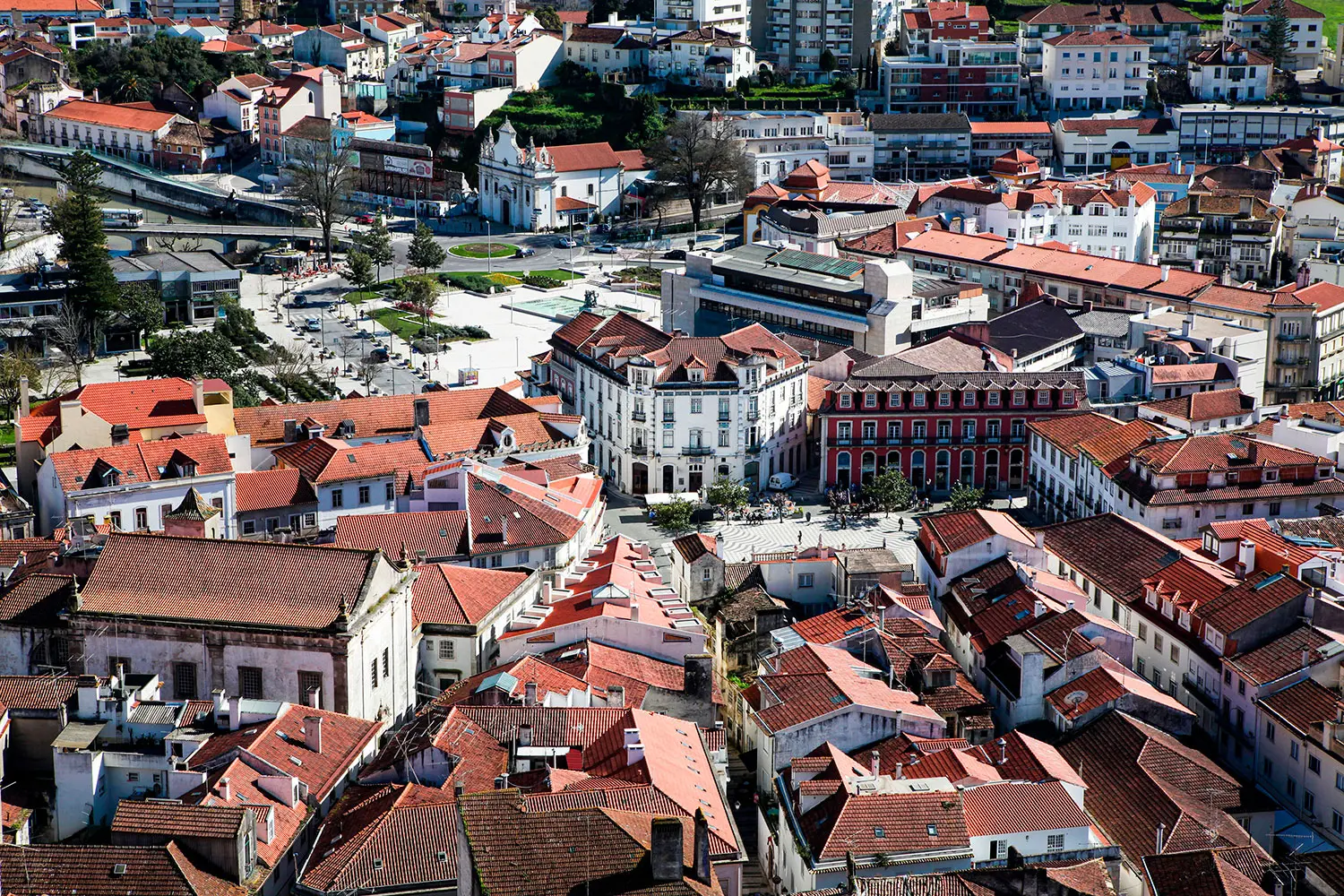
The data, while highlighted in the **Leiria** region, serves as a proxy for the broader national landscape. In prime investment hubs such as **Lisbon** and **Cascais**, the pressure on square footage is even more pronounced. The **INE** report underscores that modern "fogos" (dwellings) are not only smaller in total area but also feature fewer and more compact divisions, reflecting a departure from the sprawling family homes of the late 20th century.
For the international investor, this contraction is not necessarily a negative signal. Instead, it represents the "skinification" of the real estate market—where the quality of the interior finish, the efficiency of the layout, and the strategic location of the asset take precedence over raw volume. This evolution is particularly visible in the rise of off-plan developments in Lisbon [https://www.realestate-lisbon.com/off-plan/lisbon], where architects are increasingly tasked with maximizing utility within smaller footprints.
## Market Implications for Investors
The implications of shrinking habitable areas are multifaceted. First and foremost, it changes the **valuation metrics** for residential assets. As units become smaller, the **cost of acquisition** per unit may remain stable or even rise, while the **price per square meter** experiences significant upward pressure. This dynamic is a clear indicator of a maturing market where space is a premium commodity.
From a **rental yield** perspective, smaller units often outperform larger ones. A well-designed 60 m2 T1 (one-bedroom) apartment in a district like **Arroios** or **Estrela** often commands a higher rent per square meter than a 120 m2 T3 in a secondary location. Investors should utilize a rental yield calculator [https://www.realestate-lisbon.com/calculators/rental-yield] to model these differences, as the "sweet spot" for urban rentals is increasingly found in the 50-80 m2 range.
Furthermore, the **INE** data suggests a shift in the **exit strategy** for investors. The demand from local buyers is also pivoting toward these smaller, more affordable units due to interest rate pressures and changing family structures. This ensures a liquid secondary market for compact assets, a crucial consideration for those looking at 5- to 10-year investment horizons. Buyers can cross-reference asking prices against independent fair price indicators [https://www.homeos.pt/comprar/preco/preco-justo/] before entering negotiations to ensure they are not overpaying for reduced square footage.
## The Role of the National Institute of Statistics (INE)
The **National Institute of Statistics (INE)** plays a pivotal role in providing the transparency required for foreign direct investment. Their meticulous tracking of habitable areas, room counts, and construction permits allows investors to move beyond anecdotal evidence and base their strategies on hard **market data**. The current report serves as a warning to those holding older, oversized assets that may require significant **remodeling** to meet modern market expectations.
The 39 m2 drop in average size is a staggering figure that highlights the speed of the market's transformation. It reinforces the need for investors to work with professional architects [https://www.realestate-lisbon.com/architects] who specialize in urban regeneration and the optimization of historic buildings, ensuring that older properties can compete with the efficiency of new builds.
## Broader Market Context: The Drivers of Contraction
The reduction in habitable area is not an isolated phenomenon but the result of several converging market forces. Understanding these drivers is essential for any investor looking to navigate the Portuguese real estate market [https://www.realestate-lisbon.com/market-insights] effectively.
Several factors continue to influence the shrinking of the Portuguese home:
• **Simplex Urbanístico (DL 10/2024)**: New regulations aimed at increasing housing supply have made it easier to convert commercial spaces to residential and to build higher-density projects.
• **Construction Inflation**: With the cost of materials and specialized labor rising, developers are forced to reduce unit sizes to maintain price points that the local market can absorb.
• **Urban Migration**: The concentration of economic activity in **Lisbon** and **Porto** has driven land prices to levels where high-density, small-unit developments are the only viable financial model.
• **Demographic Shifts**: The rise of single-person households and the "digital nomad" influx has created a massive demand for T0 and T1 units that prioritize location over space.
These factors suggest that the 81.2 m2 average is likely to drop even further in the coming years, especially in the **Lisbon Metropolitan Area**. Investors should monitor the policy analysis [https://www.realestate-lisbon.com/blog/policy-analysis] regarding housing to stay ahead of further regulatory shifts.
## Investment Considerations for Foreign Buyers
When navigating a market of shrinking square footage, the **quality of the build** and the **legal compliance** of the property become paramount. In older buildings where large apartments are being subdivided into smaller units, investors must ensure that all works are properly licensed and meet modern habitation standards. Consulting with English-speaking real estate lawyers [https://www.realestate-lisbon.com/english-speaking-lawyers] is non-negotiable to verify the **Licença de Utilização** (Habitation License) for subdivided properties.
Strategic investors are also looking at the **redevelopment potential** of larger, older units. By purchasing a 150 m2 apartment in a prime district and professionally converting it into two high-efficiency units, investors can significantly increase their total **ROI**. However, this requires a deep understanding of the property quality issues [https://www.realestate-lisbon.com/buying-guide/property-quality] common in Portugal's older building stock.
Additionally, the rise of smaller units has increased the importance of **amenities**. When the private living area is limited, the value of the building's common areas, proximity to parks, and local infrastructure increases. This is why neighborhoods like **Príncipe Real** and **Marvila** remain highly desirable despite the prevalence of smaller floor plans.
## Future Outlook: The Rise of the "Smart" Home
Looking ahead, the Portuguese market is expected to embrace **PropTech** and smart design to compensate for reduced square footage. We are likely to see an increase in modular furniture, shared building amenities (co-living concepts), and highly integrated technology that makes an 80 m2 space feel significantly larger and more functional.
For the savvy investor, the **INE**'s data is a call to action. The era of "buying by the meter" is being replaced by "buying by the utility." Those who can identify properties that offer the best lifestyle-per-square-meter will be the winners in this new residential landscape. For expert guidance on identifying high-efficiency investment opportunities in Lisbon and beyond, contact realestate-lisbon.com [https://www.realestate-lisbon.com/].