Lisbon Housing Market Faces Price Surge as State Subsidies Fuel Demand Amid Severe Supply Shortage
By Pieter Paul Castelein
Published: October 29, 2026
Category: market-trends
### Lisbon Housing Market Faces Price Surge as State Subsidies Fuel Demand Amid Severe Supply Shortage
In a significant market development for **Lisbon**'s real estate ecosystem, recent empirical findings released by **Banco de Portugal** reveal that state-sponsored homeownership subsidies are driving aggressive price inflation across the metropolitan housing market. This structural pricing pressure demonstrates that public demand stimulus without commensurate supply delivery systematically accelerates asset appreciation across urban centers.
### Key Takeaways
• ✓ State Budget for 2027 extends IMT and Stamp Duty exemptions up to €338,141 with 100% state-backed financing
• ✓ Central bank econometric data shows a 1% demand increase elevates property prices by 0.69% and rents by 0.37%
• ✓ Annual Portuguese housing production of 27,000 units stands 78% below 2002 construction peak volumes
• ✓ Demand-side stimulus disproportionately capitalizes into higher asset valuations, benefiting property sellers and investors
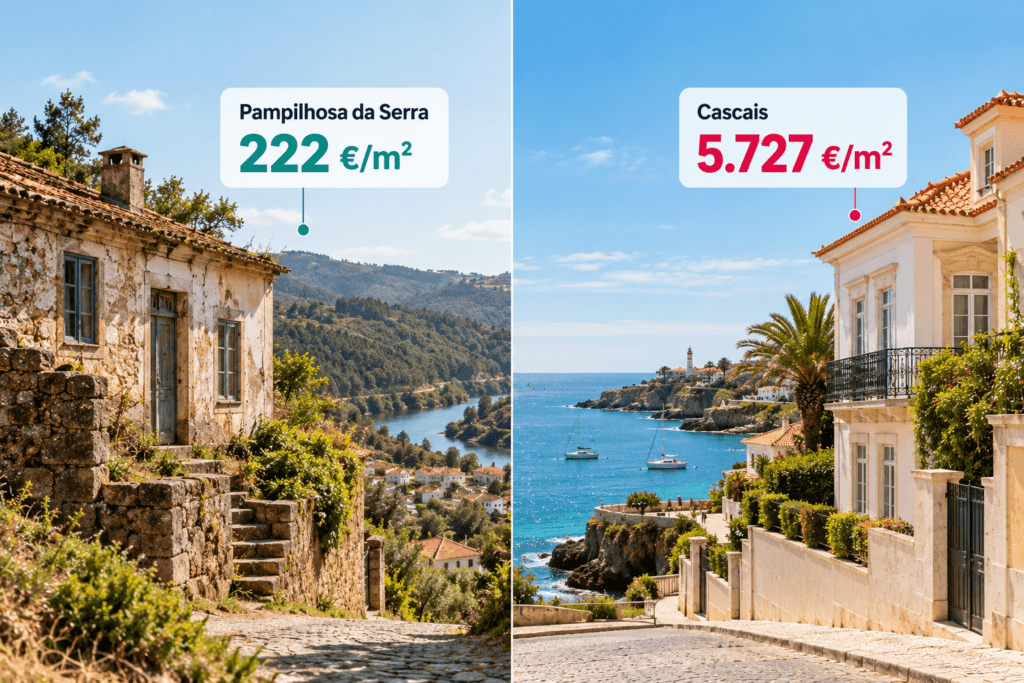
The geographic concentration of housing scarcity is most acute across the Greater Lisbon region, encompassing central prime municipalities such as **Lisboa**, **Cascais**, and **Oeiras**, as well as high-growth commuter territory in Sintra, Amadora, and Almada. These locations represent the primary economic centers of Portugal, drawing sustained professional migration and foreign direct investment. For an exhaustive geographical overview of micro-market pricing dynamics, investors can consult our detailed Lisbon neighborhoods guide [https://www.realestate-lisbon.com/lisbon-real-estate-neighborhoods].
Urban planning restrictions, municipal master plan guidelines, and strict historic preservation standards have constrained residential zoning expansion throughout the capital. As documented in municipal assessments like the Lisbon PDM master plan analysis [https://www.realestate-lisbon.com/lisboa/pdm], the availability of developable urban land remains severely limited. Consequently, new supply cannot adjust flexibly when fiscal stimulus injects substantial liquidity into residential acquisitions.
This spatial bottleneck is further aggravated by national construction metrics. While the broader Portuguese market delivered nearly 126,000 residential units in 2002, total completions plunged to just 7,000 units in 2015 and recovered to only 27,000 units in 2025. Across dynamic suburban municipalities where growing households seek family housing, limited housing starts guarantee that existing inventory trades at compounding premiums.
## Market Implications for Investors
The continuation of tax exemptions under Portugal's State Budget for 2027 carries substantial strategic implications for foreign investors and institutional property owners. By exempting buyers under 35 from Property Transfer Tax (IMT) and Stamp Duty on primary acquisitions up to €338,141, the state effectively eliminates initial transaction overhead. Rather than lowering acquisition expenses for buyers, this policy intervention expands borrowing capacity, enabling buyers to bid higher on fixed inventory. To track macroeconomic metrics impacting these valuations, review Portugal's comprehensive property market insights [https://www.realestate-lisbon.com/market-insights].
Official data compiled by the National Statistics Institute demonstrates the scale of this pricing momentum: residential property prices increased by 17.6% during 2025, maintaining a 16.5% year-on-year expansion rate through mid-2026. The government guarantee program covered 42.7% of all mortgage credit issued to young purchasers in 2025, elevating their share of new mortgage origination from 40% to 54%. Investors holding residential stock within commuting distance of major business hubs benefit from an established policy floor that underwrites sustained asset value growth.
Importantly, the structural impact extends beyond owner-occupied assets into the multifamily and rental sectors. The Banco de Portugal econometric study authored by João Amador indicates that every 1% increase in demand generates a 0.37% rise in residential lease rates. Foreign landlords seeking recurring yield can model their anticipated gross returns through our specialized rental yield calculator [https://www.realestate-lisbon.com/calculators/rental-yield]. For cross-border capital, this dynamic demonstrates that supply shortages reinforce defensive rental fundamentals across the metropolitan area.
Furthermore, broader regulatory risks associated with asset acquisitions must be analyzed in conjunction with national housing strategies. Prospective buyers can examine structural compliance considerations within our legal issues buying guide [https://www.realestate-lisbon.com/buying-guide/legal-issues], ensuring that acquisitions align with local tenancy protections and zoning classifications.
## Banco de Portugal Research Background
The academic evaluation published by the Banco de Portugal evaluates municipal-level transactions across 308 administrative jurisdictions from 2017 through 2024. The research underscores that when public policy prioritizes subsidizing purchasing capability rather than addressing structural supply barriers, financial benefits accrue almost entirely to asset sellers through elevated exit valuations.
This econometric reality highlights the stark divergence in public budget allocations. While fiscal exemptions for young buyers cost public accounts €145.6 million in 2025 alone, the state allocated merely €15 million toward digitizing and expediting municipal urban licensing frameworks. International investors assessing macro policies can explore detailed breakdowns in our dedicated real estate policy analysis [https://www.realestate-lisbon.com/blog/policy-analysis].
## Lisbon Residential Investment Market Context
The structural pricing environment across Greater Lisbon reflects the convergence of domestic credit expansion, demographic household splitting, and resilient international capital interest. Because local housing stock expansion remains heavily depressed relative to historical levels, asset liquidity in well-located micro-markets remains remarkably high even amidst broader European interest rate fluctuations.
Several institutional factors continue to influence market conditions and asset pricing across the capital:
• **Demand Capitalization**: Tax exemptions and 100% public mortgage guarantees allow purchasers to absorb higher price points, transferring public liquidity into property valuations
• **Severe Structural Underbuilding**: National completion rates of 27,000 units represent less than one-fourth of turn-of-the-century construction capacity
• **Licensing Bottlenecks**: Municipal permitting timeframes remain prolonged across major city councils, impeding private developer pipeline execution
• **Elevated Debt Effort Ratios**: Buyers utilizing state guarantees average a 34% debt-service ratio, signaling tight household credit conditions
These persistent market realities are driving sophisticated capital toward forward-funding schemes and off-plan residential developments across strategic regeneration corridors. Investors interested in ground-up opportunities can evaluate active pipelines via our directory of off-plan properties in Lisbon [https://www.realestate-lisbon.com/off-plan/lisbon], where early-stage capital captures built-in construction phase appreciation.
Understanding regional zoning trends is equally critical, as municipal councils evaluate vertical density allowances near public transit corridors. Investors tracking broader sectoral movements can consult regular updates in our market trends news section [https://www.realestate-lisbon.com/news/market-trends].
## Investment Considerations
For foreign investors and international high-net-worth buyers navigating the Portuguese housing landscape, prevailing market data provides distinct operational guidance. Although entry-level incentives primarily target domestic purchasers under 35, the resulting price inflation elevates asset valuations across all property tiers. Investors planning an acquisition should run full financial modeling via our investment ROI analyzer [https://www.realestate-lisbon.com/calculators/investment-analyzer], while cross-referencing baseline transaction expenses with the specialized IMT tax calculator [https://www.realestate-lisbon.com/calculators/imt].
When underwriting prospective residential transactions, foreign buyers can model the full acquisition cost — including IMT, stamp duty, and notary fees — using tools such as HomeOS's real cost calculator [https://www.homeos.pt/comprar/preco/custo-real/], which draws on cross-referenced registry data unavailable to general search tools. Addressing financing requirements early in the due diligence timeline is equally paramount, utilizing the Portuguese mortgage calculator [https://www.realestate-lisbon.com/calculators/mortgage] to structure debt efficiently.
Given the rigorous compliance obligations surrounding property transfers in Portugal, investors must partner with certified professionals. Engaging established property tax accountants [https://www.realestate-lisbon.com/professionals/accountants-property-tax] ensures full optimization regarding tax liabilities and deductions. Simultaneously, retaining experienced English-speaking real estate lawyers [https://www.realestate-lisbon.com/english-speaking-lawyers] protects capital during preliminary promissory contract execution, while vetted English-speaking real estate agents [https://www.realestate-lisbon.com/english-speaking-agents] provide access to exclusive inventory before broad commercialization.
## Looking Ahead
Looking toward the 2027 fiscal year and beyond, structural scarcity will remain the dominant driver of Lisbon residential property values. While political debates center on demand-side subsidies, the absence of aggressive municipal permitting deregulation ensures that housing inventory cannot expand quickly enough to reverse upward price trajectories. Developers partnering with accredited constructors [https://www.realestate-lisbon.com/constructors] to deliver residential supply will continue to find deep liquidity and sustained buyer demand.
For cross-border investors, Lisbon continues to present compelling capital appreciation dynamics backed by fundamental supply-demand imbalances and enduring lifestyle appeal. To explore bespoke acquisition strategies, market analysis, and professional advisory partnerships, contact the specialized team at realestate-lisbon.com [https://www.realestate-lisbon.com/].