Portugal's New Luxury Real Estate: Authenticity and Investment Models for Foreign Buyers
By Mihail Talev
Published: August 17, 2026
Category: investment-insights
### Portugal's New Luxury Real Estate: Authenticity and Investment Models for Foreign Buyers
In a significant shift for **Portugal**'s high-end property landscape, industry analysts are reporting a fundamental transformation in what defines **luxury real estate**. The days when luxury was defined solely by monumental architecture and international branding are evolving, replaced by a sophisticated demand for authentic experiences, **privacy**, and long-term operational sustainability. This change demonstrates a maturation of the market that foreign investors must understand to position themselves strategically.
### Key Takeaways
• ✓ High-end buyers now prioritize **privacy**, nature, and service over traditional displays of wealth.
• ✓ Luxury **tourism real estate** is shifting towards integrated operational models rather than independent property ownership.
• ✓ Professional management and consistent **maintenance funds** are essential to sustaining property value over time.
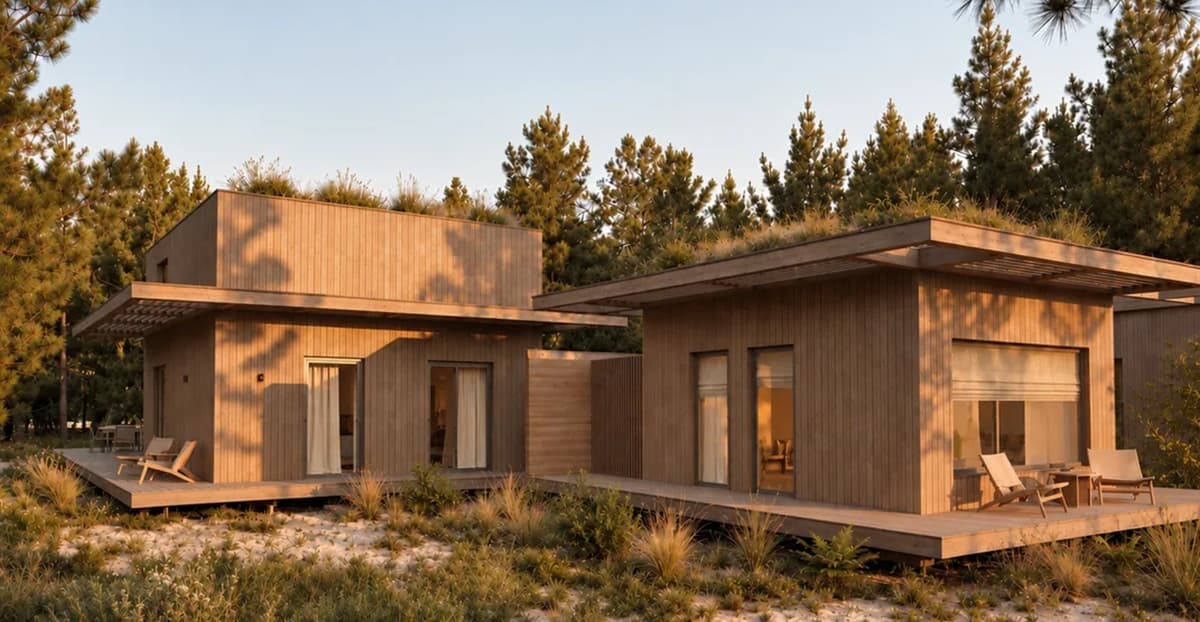
• ✓ True **authenticity** is defined by a genuine connection to the local landscape, not just aesthetic design.
Historically, luxury assets in **Lisbon**, the **Algarve**, and other prime hubs were defined by superficial markers of wealth—marble, chandeliers, and high-visibility locations. Today, that narrative has shifted significantly. International investors and **expats** are increasingly drawn to projects that offer profound tranquility, low-density living, and a symbiotic relationship with their natural environment. This trend underscores a broader transition in market dynamics [https://www.realestate-lisbon.com/market-insights], where luxury is no longer just about ownership but about curated, professionalized experiences.
Modern developments must now account for sophisticated buyer expectations, including superior acoustic insulation, rigorous energy efficiency, and high-level **technical infrastructure**. These elements, though often invisible to the casual observer, are now primary drivers of asset value and long-term desirability in the modern Lisbon neighborhoods [https://www.realestate-lisbon.com/lisbon-real-estate-neighborhoods] and beyond.
## Market Implications for Investors
For the sophisticated **foreign investor**, this evolution indicates a move away from passive 'buy-and-hold' strategies towards more active, professionally managed investment models. The most successful luxury assets are now being integrated into professional hospitality operations, where management, maintenance, and concierge services add tangible value beyond the physical structure.
This operational integration is crucial. Investors should scrutinize the management structure of any prospective asset. A property that operates without a coherent management entity risks losing value as decor becomes dated, maintenance is neglected, and the brand identity weakens. The inclusion of mandatory **maintenance funds**, often calculated as a percentage of operational revenue, is a critical safeguard—ensuring the asset retains its 'new' feel decades after the initial investment. This level of oversight is now a prerequisite for protecting investment risks [https://www.realestate-lisbon.com/buying-guide/investment-risks].
Furthermore, as the market professionalizes, the ability to generate a return is increasingly tied to the service quality provided to the end-user. Cleaning, security, internet connectivity, and centralized reservation systems are not just amenities; they are core 'materials' in the construction of a luxury experience that dictates the property's competitive standing in the market.
## The Authenticity Premium
In a saturated market, authenticity has become a premium asset. There is a marked fatigue among investors for 'cookie-cutter' developments that utilize rustic aesthetics while lacking a genuine connection to their locale.
Investors must distinguish between superficial marketing of 'authenticity' and projects that genuinely engage with the local territory. A true **luxury asset** respects its environment, utilizes sustainable construction methods, and contributes to the local economic fabric. Such projects offer higher resilience against market volatility and align with the long-term preferences of international buyers who increasingly prioritize green building [https://www.realestate-lisbon.com/professionals/constructors-green-building] and sustainable design.
## Broader Market Context
The luxury property sector in Portugal is currently navigating a period of significant recalibration. While international interest remains high, buyers are increasingly cautious, prioritizing assets that offer verified value and long-term utility.
Several factors continue to shape the current investment landscape:
• **Operational Professionalization**: A move toward centralized, professional management to ensure consistent asset performance and tenant experience.
• **Focus on Sustainability**: Growing emphasis on energy efficiency and ecological building practices, which are becoming essential for long-term asset value [https://www.realestate-lisbon.com/buying-guide/sustainability].
• **Demand for Experiential Assets**: Properties that offer unique, privacy-centric experiences are increasingly commanding higher premiums compared to generic high-end units.
• **Infrastructure Importance**: Technical specifications like thermal comfort and seismic resilience are now paramount, often requiring expert validation from civil engineers [https://www.realestate-lisbon.com/professionals/civil-engineers-structural-engineering].
These factors demonstrate that the market is evolving toward a model where structural integrity, professional management, and local authenticity determine success. Investors who align their portfolios with these drivers are positioned for superior long-term performance.
## Investment Considerations
For those deploying capital into this environment, success requires rigorous due diligence. Investors must evaluate the operational viability of projects, verifying that maintenance costs are correctly budgeted and that the management entity possesses the necessary expertise. As the Simplex 2024 liability framework has prompted buyers to conduct documentary due diligence before signing the CPCV, verifying whether licensed floor plans match the physical property has become a vital step that can be facilitated through platforms such as HomeOS's legal verification tools [https://www.homeos.pt/comprar/proteger/legalidade-do-imovel/].
Strategic positioning should also account for the asset's ability to maintain its competitive edge throughout the year, not just during peak seasons. This is particularly relevant for **investment properties** aiming to maximize occupancy and yield. Prospective investors are encouraged to work with English-speaking real estate agents [https://www.realestate-lisbon.com/english-speaking-agents] who specialize in international clients to ensure their portfolio decisions align with these emerging high-end standards.
## Future Outlook
The trajectory for Portugal's high-end property market points toward a focus on quality, professionalization, and coherence. While the era of easy, speculative gains is fading, the opportunities for value creation through well-managed, authentic, and high-performance assets remain significant.
Investors who embrace this shift—viewing property through the lens of professional hospitality and authentic experience—will likely be the best prepared for the future of the Portuguese market. For expert guidance on aligning your strategy with these high-end standards, contact realestate-lisbon.com [https://www.realestate-lisbon.com/].