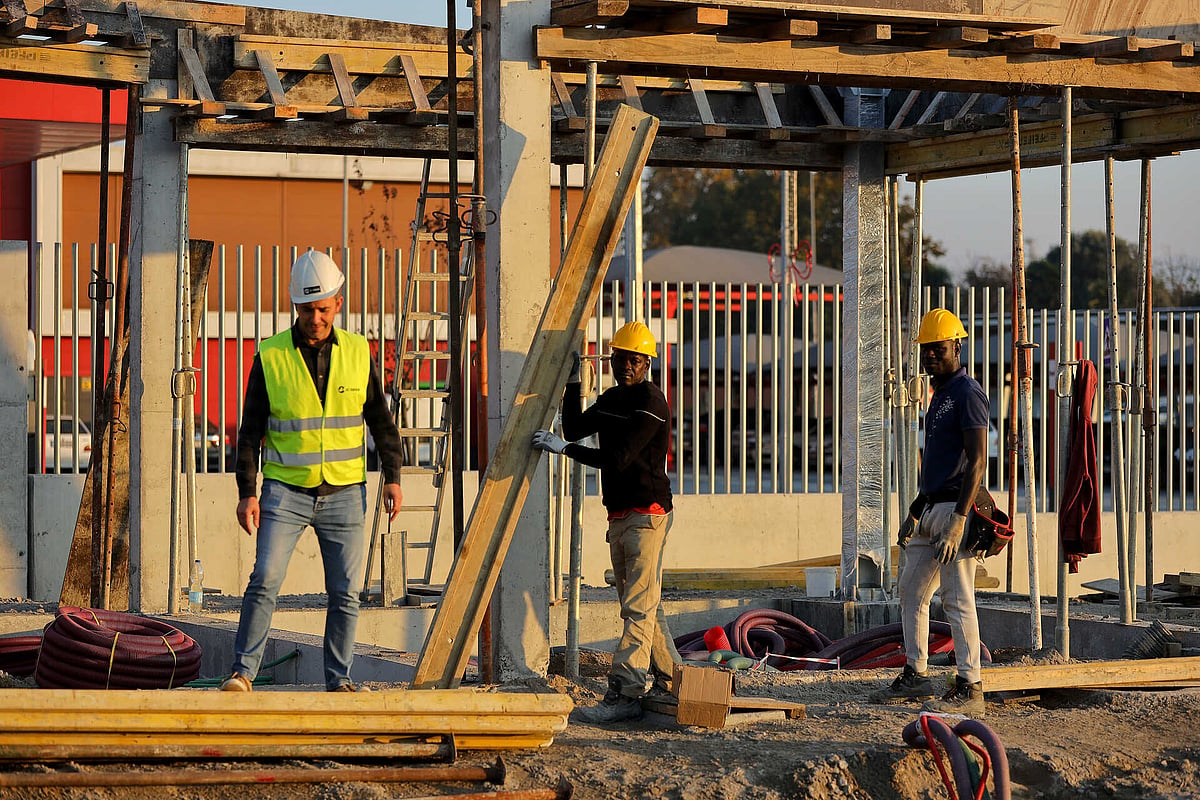
Lisbon Urban Rehabilitation Sees Slight August Slowdown Amid Rising New Orders
By Pieter Paul Castelein
Published: September 28, 2026
Category: construction-updates
### Lisbon Urban Rehabilitation: Navigating August's Mixed Signals for Foreign Investors
In a recent assessment by the **National Association of Civil Construction and Public Works Industries (AICCOPN)**, Portugal's urban rehabilitation sector experienced a marginal 0.5% decline in activity during August. This slight deceleration, however, is set against a backdrop of increasing new orders, which rose by 2.9% compared to August 2025. For foreign investors and expats focused on the dynamic **Lisbon** real estate market, these nuanced figures present a critical juncture for strategic evaluation, signaling both potential challenges and enduring opportunities within the city's vital renovation landscape.
### Key Takeaways
• ✓ Portugal's urban rehabilitation activity saw a minor 0.5% dip in August, indicating a potential easing of immediate execution.
• ✓ New orders for renovation projects increased by 2.9% year-over-year, reflecting sustained confidence in future demand.
• ✓ Licensed rehabilitation works experienced a significant 14.3% decline, raising questions about bureaucratic efficiency and project approvals.
• ✓ Sector companies report a reduced backlog of 9.4 months of guaranteed activity, down from 10.8 months, suggesting a more competitive environment.
The strategic importance of urban rehabilitation in **Lisbon** cannot be overstated. The city's charm and investment appeal are intrinsically linked to the continuous revitalization of its historic fabric. Neighborhoods such as **Alfama**, **Chiado**, and **Baixa** have undergone extensive transformation through rehabilitation, attracting substantial foreign capital and enhancing their status as prime locations for both residential and commercial ventures. This ongoing renewal directly influences property valuations, rental income potential, and the overall quality of urban living, making trends in this sector highly pertinent to international buyers.
Lisbon's commitment to preserving its architectural heritage while modernizing its infrastructure positions urban rehabilitation as a cornerstone of its real estate strategy. The city's ability to integrate contemporary living standards with historic charm is a significant draw for expats seeking a vibrant European lifestyle and investors looking for sustainable capital appreciation. Understanding the health of this sector is therefore paramount for any foreign entity considering a property acquisition in the Portuguese capital.
## Market Implications for Foreign Investors
The latest AICCOPN data offers a multifaceted perspective for foreign investors. The marginal 0.5% decrease in overall activity, while minor, could indicate a period of adjustment or a response to broader economic pressures. However, the simultaneous 2.9% increase in new orders is a robust indicator of underlying demand and investor confidence in the long-term viability of rehabilitation projects. This suggests that while immediate execution might be moderating, the appetite for new renovation initiatives remains strong, particularly in high-demand areas like Lisbon.
A more critical point for investors is the significant 14.3% decline in licensed rehabilitation works. This metric, which specifically tracks projects requiring municipal approval, could signal increased bureaucratic hurdles or a more stringent regulatory environment. For those embarking on new construction or extensive renovation projects [https://www.realestate-lisbon.com/buying-guide/new-builds-risks], this trend underscores the absolute necessity of meticulous planning and robust engagement with local authorities. Delays in licensing can significantly impact project timelines and overall profitability, a key consideration for any investment strategy.
Furthermore, the reduction in guaranteed activity for construction companies, from 10.8 months to 9.4 months, suggests a potentially more competitive landscape within the sector. This could translate into more favorable pricing for investors seeking contractors, but also necessitates thorough due diligence on the financial stability and track record of chosen partners. For comprehensive market insights [https://www.realestate-lisbon.com/market-insights] and analysis of these trends, investors are encouraged to consult specialized resources.
The interplay of these factors highlights the evolving nature of Lisbon's urban rehabilitation market. While the long-term outlook remains positive due to sustained demand, short-term operational challenges, particularly around licensing, require careful navigation. Investors must adapt their strategies to account for these dynamics, prioritizing projects with clear regulatory pathways and engaging experienced local professionals.
## AICCOPN's Role and Sector Credibility
The **Associação dos Industriais da Construção Civil e Obras Públicas Nacional (AICCOPN)** serves as a crucial barometer for Portugal's construction and public works industries. Its regular reports provide authoritative data and analysis, offering an indispensable resource for understanding the sector's health, challenges, and future trajectory. For foreign investors, AICCOPN's insights are vital for making informed decisions, as they reflect the collective experience and outlook of a significant portion of the Portuguese construction industry.
The association's focus on urban rehabilitation in its reporting underscores the strategic importance of this segment to the national economy and, by extension, to the property markets of major cities like Lisbon. The credibility of AICCOPN's data helps investors gauge market sentiment and identify areas of potential growth or concern, reinforcing the need for data-driven investment strategies.
## Lisbon's Urban Rehabilitation Market: A Deeper Dive
Lisbon's urban rehabilitation market has been a powerful engine for both economic growth and the enhancement of property values. The city's proactive approach to revitalizing its historic core, coupled with a strong influx of foreign investment, has transformed many areas, creating a vibrant and modern urban environment while preserving its unique heritage.
Several interconnected factors continue to shape and influence the urban rehabilitation market in Lisbon:
• **Government Incentives & Policy**: Ongoing tax benefits and support programs, such as reduced VAT rates for rehabilitation, continue to make renovation projects financially attractive. Investors should stay informed on regulatory and legal frameworks [https://www.realestate-lisbon.com/blog/regulatory-and-legal-frameworks].
• **Tourism & Short-Term Rentals**: The robust tourism sector fuels demand for high-quality renovated properties suitable for local accommodation (Alojamento Local) [https://www.realestate-lisbon.com/news/tourism], offering attractive rental yields.
• **Foreign Direct Investment**: International buyers, particularly from Europe and North America, are drawn to Lisbon's historic properties, seeking both lifestyle and investment opportunities. This is a key driver for the expat and investor focus [https://www.realestate-lisbon.com/news/expat-investor-focus].
• **Sustainability & Modernization**: A growing emphasis on energy efficiency and sustainable building practices in renovations aligns with global trends and enhances property value, especially with new EPBD directives. Buyers can verify compliance through platforms such as InspectOS's energy performance assessments [https://www.inspectos.pt/inspecoes-residenciais/certificado-energetico].
These factors collectively create a dynamic and resilient market for urban rehabilitation in Lisbon, offering diverse opportunities for investors across various property types and strategic objectives. The city's unique blend of history and modernity, supported by favorable market conditions, continues to attract significant capital.
## Strategic Investment Considerations for Foreign Buyers
For foreign investors, the current landscape of urban rehabilitation in Lisbon demands a strategic and informed approach. The slight dip in activity should not overshadow the consistent growth in new orders, which signals a healthy long-term demand for renovated properties. Key considerations include the selection of prime locations, such as **Príncipe Real** or **Campo de Ourique**, where demand for high-quality, modernized homes remains strong.
Navigating the licensing process is paramount. Investors should prioritize projects with clear regulatory pathways and engage experienced local professionals, including English-speaking real estate lawyers [https://www.realestate-lisbon.com/english-speaking-lawyers] and reputable construction companies [https://www.realestate-lisbon.com/constructors], to ensure compliance and mitigate potential delays. Understanding the nuances of Portuguese property law and construction regulations is critical for successful project execution and avoiding unforeseen costs. Furthermore, buyers can model the full acquisition cost — including IMT, stamp duty, and notary fees — using tools such as HomeOS's real cost calculator [https://www.homeos.pt/comprar/preco/custo-real/], which draws on cross-referenced registry data unavailable to general search tools.
The slight reduction in guaranteed activity for construction firms may also present opportunities for more competitive bidding on projects, but this must be balanced with a thorough assessment of contractor reliability and quality. Investors should focus on projects that align with Lisbon's long-term urban development plans and cater to the evolving preferences of both local and international residents.
## Future Outlook for Lisbon's Rehabilitation Market
The future of urban rehabilitation in Lisbon appears robust, despite the minor fluctuations observed in recent activity. The sustained growth in new orders, coupled with the city's enduring appeal as a global investment and lifestyle destination, provides a strong foundation for continued expansion in this sector. Lisbon's commitment to sustainable urban development and the preservation of its architectural heritage will continue to drive demand for high-quality renovation projects.
Investors who strategically navigate the regulatory landscape and partner with experienced local professionals are well-positioned to capitalize on the opportunities presented by Lisbon's dynamic urban rehabilitation market. The long-term value proposition of revitalized properties in prime locations remains compelling. For expert guidance on construction, renovation, and investment strategies in Lisbon, contact realestate-lisbon.com [https://www.realestate-lisbon.com/].