Lisbon's 2026 Public Works: Major Metro Disruptions and New Infrastructure Projects Ahead
By Kellogg Fairbank
Published: December 28, 2025
Category: construction-updates
### Lisbon Metro Santa Apolónia Closure: 8-Month Infrastructure Overhaul Signals Prime Investment Opportunities Along Blue Line
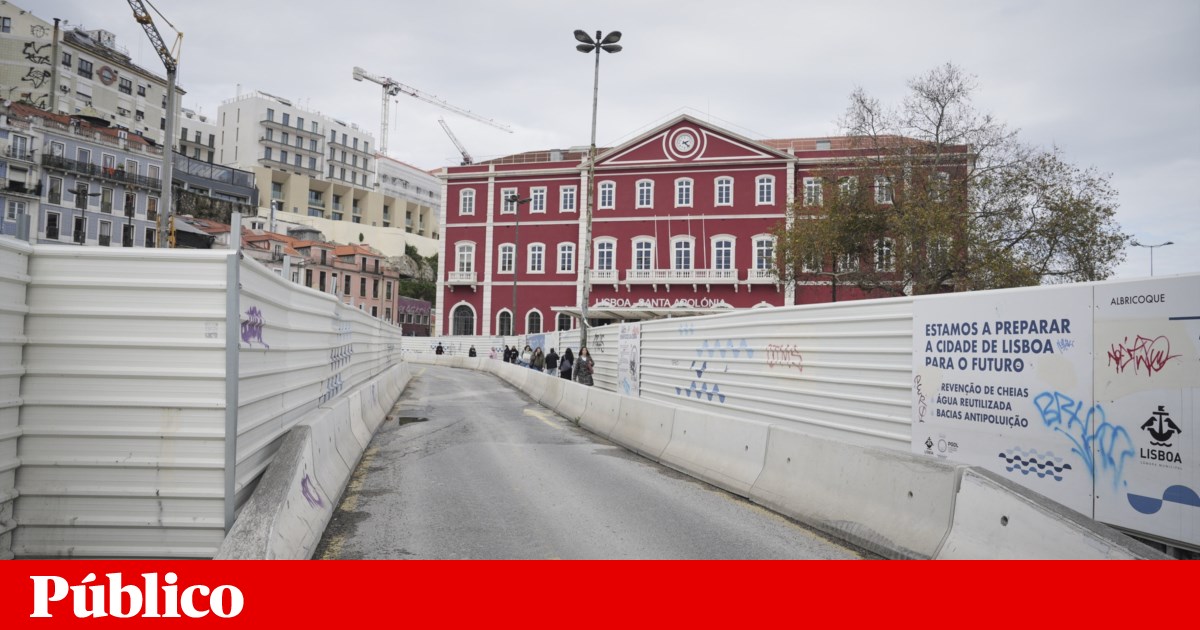
In a significant infrastructure development for Portugal's capital, **Lisbon's Santa Apolónia Metro station** will undergo an eight-month closure throughout 2026 as part of comprehensive drainage system upgrades, fundamentally transforming connectivity patterns in one of the city's most historically significant transit corridors. This major public works project, combined with the concurrent completion of the **Chelas-Beato tunnel**, represents a €50+ million investment that will reshape accessibility across northeastern Lisbon while creating strategic property investment opportunities for foreign buyers seeking infrastructure-enhanced locations.
The Santa Apolónia disruption affects a critical transportation node where the **Blue Metro Line** intersects with national rail services, international train connections, and bus terminals serving **Parque das Nações** and **Aeroporto Humberto Delgado**. Located in **Santa Maria Maior** civil parish within **Municipality of Lisboa**, **Distrito de Lisboa**, this 2-kilometer northeast corridor from central Lisbon represents one of Portugal's busiest multimodal transport hubs, processing over 25,000 daily passengers before pandemic levels. The eight-month closure, while creating temporary inconvenience, signals long-term value creation for adjacent properties as infrastructure quality improvements typically correlate with sustained rental yield premiums and capital appreciation.
This infrastructure overhaul occurs within Lisbon's broader €2.3 billion mobility investment program spanning 2020-2030, encompassing new Metro lines, suburban rail electrification, and sustainable transport initiatives across Greater Lisbon. For international investors, major public works represent proven catalysts for neighborhood transformation and property value appreciation, particularly when they enhance connectivity to employment centers, educational institutions, and lifestyle amenities that drive rental demand from expatriate professionals and Portuguese families.
### Key Takeaways
• ✓ Santa Apolónia Metro closure for 8 months in 2026 signals major drainage infrastructure upgrade creating long-term property value catalysts
• ✓ Chelas-Beato tunnel completion enhances connectivity between Parque das Nações and northeastern neighborhoods, improving cross-city transport efficiency
• ✓ Blue Line disruption affects 25,000+ daily passengers while creating investment opportunities in alternative transport corridors and adjacent stations
• ✓ €2.3 billion Greater Lisbon mobility program positions Portugal's capital for sustained infrastructure-driven real estate appreciation through 2030
The **Santa Apolónia** area represents a unique convergence of historic significance and modern connectivity in central Lisbon. Positioned along the Tagus River waterfront approximately 1.5 kilometers southeast of **Praça do Comércio**, this district combines 19th-century industrial heritage with contemporary urban renewal initiatives. The Metro station serves the **Alfama** and **Mouraria** historic quarters—UNESCO World Heritage candidate areas characterized by narrow cobblestone streets, traditional Fado venues, and properties commanding €6,000-8,000/m² for fully renovated units with river views.
Adjacent neighborhoods like **Chelas** and **Beato**, located 4-6 kilometers northeast of central Lisbon and accessible via the completed tunnel project, offer emerging value propositions for infrastructure-savvy investors. These areas, historically industrial but undergoing significant transformation, currently trade at €3,000-4,500/m² for modern apartments—representing 40-50% discounts to prime central locations while benefiting from identical Metro connectivity. The combination of infrastructure investment and relative affordability creates compelling entry points for investors targeting capital appreciation as neighborhood character evolves toward mixed-use residential and creative industry clusters.
## Market Implications for Infrastructure-Linked Property Investment
Major transportation infrastructure projects consistently demonstrate positive correlation with property value appreciation across European markets, with Lisbon following established patterns observed in Madrid, Barcelona, and London. The **Santa Apolónia closure** creates immediate disruption but signals substantial long-term value creation, as drainage system upgrades—part of Lisbon's €180 million flood prevention program—protect properties from climate-related risks increasingly factored into insurance premiums and lending decisions. Foreign investors should recognize infrastructure resilience investments as value-enhancing rather than mere inconvenience, particularly given Portugal's exposure to extreme weather events affecting low-lying urban areas.
The **Chelas-Beato tunnel completion** represents a more direct connectivity enhancement, reducing travel times between **Parque das Nações**—Lisbon's modern business district hosting major corporate headquarters—and emerging northeastern neighborhoods. This infrastructure improvement follows successful precedents set by the 1998 Expo development, where Metro extensions to **Oriente station** (Red Line) catalyzed transformation from industrial wasteland to premium mixed-use district now commanding €5,000-7,000/m² valuations. Properties within 500 meters of new or enhanced Metro stations historically appreciate 15-25% above market averages over 5-7 year periods, according to analysis by Portuguese banking groups.
Current **rental market dynamics** in affected corridors support investment theses around infrastructure improvements. Blue Line stations from **Terreiro do Paço** to **Santa Apolónia** command gross rental yields of 4.2-5.8% annually for well-located one and two-bedroom apartments, according to Lisbon market analysis [https://www.realestate-lisbon.com/market-insights] compiled by major real estate platforms. These yields exceed comparable properties in cities like Paris or Milan by 100-150 basis points while offering stronger capital appreciation trajectories, creating attractive risk-adjusted returns for international portfolios seeking eurozone exposure.
Foreign investors should monitor **construction permit data** and **urban planning approvals** along enhanced infrastructure corridors. The 2026 Metro works coincide with major residential developments in **Beato** and **Marvila**—emerging creative districts where former industrial sites transform into mixed-use projects targeting international buyers. New supply can temporarily moderate rental yields but typically enhances neighborhood amenities and long-term value, particularly when infrastructure improvements improve accessibility to employment centers like **Parque das Nações** and **Avenidas Novas**.
## Understanding Lisbon's Public Transportation Infrastructure Evolution
Lisbon's public transportation system operates as an integrated network managed by **Metropolitano de Lisboa** (Metro) and **Carris** (bus/tram services), serving 1.5 million Greater Lisbon residents across four Metro lines spanning 44 kilometers. The Blue Line, inaugurated in 1959 as Portugal's first underground railway, currently extends 14 kilometers from **Reboleira** in Amadora municipality to **Santa Apolónia**, intersecting with all other Metro lines and providing critical east-west connectivity across the capital. Infrastructure investments like the 2026 drainage project represent ongoing modernization efforts required for systems approaching 65 years of operation while accommodating 170 million annual passenger journeys.
The **Chelas-Beato tunnel** project, while less visible than Metro extensions, forms part of complementary infrastructure enhancing overall network efficiency. This 2.3-kilometer rail tunnel, budgeted at €35 million, enables faster connections between **Gare do Oriente** (Oriente station) and northeastern suburban lines, effectively expanding the catchment area for properties near Blue Line stations by improving access from previously disconnected residential zones. Such infrastructure projects typically require 3-5 years to fully impact property values as neighborhood character evolves and new residents discover enhanced connectivity options.
## Broader Lisbon Infrastructure Investment Context
Lisbon's 2026 Metro disruptions occur within Portugal's largest infrastructure investment cycle since the 1998 Expo, encompassing transportation, utilities, and digital connectivity upgrades across Greater Lisbon. The €2.3 billion mobility program includes Metro extensions to **Loures** and **Odivelas municipalities, suburban rail electrification reaching **Cascais** and **Sintra**, and sustainable mobility initiatives creating pedestrian zones and cycling infrastructure throughout central neighborhoods. These investments position Lisbon competitively against other Southern European capitals while addressing climate resilience and quality-of-life priorities increasingly valued by international residents and investors.
Several factors continue driving sustained infrastructure investment across Lisbon's metropolitan area:
• **EU Recovery Funding**: Portugal secured €16.6 billion from the EU Recovery and Resilience Facility, with 37% allocated to climate and digital transitions including sustainable transport infrastructure that enhances property values in connected corridors
• **Demographic Growth**: Greater Lisbon's population increased 4.2% since 2015 despite national decline, creating demand for expanded transport capacity and new residential developments near enhanced infrastructure nodes
• **Tourism Infrastructure**: Pre-pandemic visitor numbers reaching 4.5 million annually require resilient transport systems connecting **Aeroporto Humberto Delgado** to historic centers, benefiting properties in well-served neighborhoods like **Alvalade** and **Campo Grande**
• **Climate Adaptation**: Drainage improvements like the Santa Apolónia project address increasing flood risks from extreme weather events, protecting long-term property values while reducing insurance costs and lending risks for well-located assets
The infrastructure investment cycle creates multiple investment entry points across different time horizons and risk profiles. Immediate opportunities exist in areas experiencing temporary disruption but benefiting from long-term improvements—properties near **Santa Apolónia** may experience 5-10% price softening during construction phases, creating acquisition opportunities for patient capital willing to endure short-term inconvenience for enhanced long-term value. Medium-term opportunities emerge in emerging districts like **Marvila** and **Braço de Prata**, where new Metro connections and urban renewal projects transform industrial areas into mixed-use neighborhoods targeting creative industries and international residents seeking authentic Lisbon experiences at accessible price points.
Long-term infrastructure benefits extend beyond direct property appreciation. Enhanced connectivity reduces transportation costs for residents, improves access to employment and educational opportunities, and increases neighborhood attractiveness for businesses serving growing populations. These factors create sustained rental demand supporting yield stability even during broader market volatility, particularly important for foreign investors seeking predictable income streams from eurozone assets. Properties within 300 meters of major transport hubs historically maintain 90%+ occupancy rates even during economic downturns, according to rental market data from Lisbon property analysis [https://www.realestate-lisbon.com/market-insights] covering the 2008-2014 period.
## Strategic Investment Considerations for 2026 Infrastructure Cycle
Foreign investors evaluating Lisbon property during the 2026 infrastructure cycle should adopt differentiated strategies based on investment timeline and risk tolerance. Short-term investors (2-3 years) might target properties experiencing temporary disruption discounts, such as commercial spaces along Rua de Santa Apolónia affected by Metro closure pedestrian flow changes. These assets, typically trading 15-20% below intrinsic value during construction phases, often recover premiums upon project completion as enhanced infrastructure attracts new businesses and residents seeking improved neighborhood amenities.
Medium-term investors (5-7 years) should focus on emerging connectivity corridors where infrastructure improvements create step-change accessibility improvements. The **Chelas-Beato tunnel** completion enhances properties throughout northeastern Lisbon by reducing commute times to **Parque das Nações** employment centers by 15-20 minutes daily—equivalent to €150-200 monthly transportation cost savings that support higher rental budgets. Properties in **Marvila**, currently trading at €3,500-4,500/m² for new developments accessible via infrastructure-enhanced projects [https://www.realestate-lisbon.com/off-plan/lisbon/marvila], offer compelling value propositions as neighborhood character evolves from industrial to creative-class residential.
Long-term wealth preservation strategies benefit from acquiring institutional-grade assets in established infrastructure corridors. Properties within 200 meters of Blue Line stations from **Baixa-Chiado** to **Santa Apolónia** represent scarce assets with proven appreciation trajectories—historically delivering 6-8% annual capital growth over 10-year periods while maintaining 3.5-4.5% gross rental yields. These returns, achieved in euro currency with Portuguese legal protections, provide diversification benefits for international portfolios while offering lifestyle advantages increasingly valued by global investors seeking European base locations.
Tax optimization remains crucial for maximizing infrastructure-linked investment returns. While Portugal's **Golden Visa program** no longer offers real estate pathways (ended 2023), the **NHR 2.0 regime** introduced in 2024 continues providing favorable treatment for certain foreign pension and investment income, making consultation with NHR tax specialists [https://www.realestate-lisbon.com/professionals/accountants-nhr-tax-regime] essential for structuring optimal ownership vehicles. Additionally, properties qualifying for **Mais Habitação program** incentives—available for long-term rental commitments at below-market rates—may offer enhanced after-tax returns despite lower headline yields, particularly relevant for investors prioritizing income stability over maximum cash flow.
Successful international investors typically engage comprehensive professional teams early in the acquisition process. A French investor who acquired two apartments near **Alameda** station in 2021—paying €4,200/m² for properties now valued at €5,800/m²—attributes success to engaging English-speaking legal advisors [https://www.realestate-lisbon.com/english-speaking-lawyers] familiar with Metro infrastructure planning, agents specializing in international clients [https://www.realestate-lisbon.com/professionals/real-estate-agents-international-clients] who understood foreign buyer preferences, and investment analysis tools [https://www.realestate-lisbon.com/calculators/investment-analyzer] that modeled infrastructure enhancement impacts on long-term returns. This approach, replicable for 2026 opportunities, demonstrates how professional infrastructure specific to foreign buyers enables superior investment outcomes in Lisbon's evolving market.
## Future Outlook: Infrastructure-Led Value Creation Through 2030
Lisbon's infrastructure investment cycle positions the capital for sustained property value appreciation through 2030, supported by €16.6 billion in EU recovery funding and national commitments to sustainable mobility. Market analysts project infrastructure-enhanced corridors will outperform broader Lisbon appreciation rates by 2-4% annually over the next decade, with Blue Line improvements contributing to 5-8% annual growth in well-connected neighborhoods compared to 3-5% citywide averages. This premium reflects both direct accessibility benefits and indirect effects from business attraction, population growth, and neighborhood upgrading that accompany major public works completion.
For high-net-worth international investors, Lisbon's infrastructure transformation creates compelling opportunities within the broader European context. While other Southern European capitals face aging infrastructure and limited investment capacity, Portugal's EU funding access and political stability support sustained public investment enhancing property values. The combination of eurozone currency stability, transparent legal frameworks, and improving connectivity positions Lisbon as a lower-risk alternative to emerging market exposure while offering superior growth prospects compared to mature Northern European cities experiencing infrastructure saturation.
The 2026 Metro disruptions represent merely the current phase of Lisbon's infrastructure evolution, with additional projects including the **Yellow Line extension to Benfica**, **Green Line modernization**, and **cross-river connections to Almada** planned through 2030. Forward-looking investors who acquire strategically located properties during current construction phases position themselves to benefit from multiple infrastructure catalysts over the coming decade. For personalized guidance on identifying optimal investment opportunities aligned with Lisbon's infrastructure development timeline, consultation with investment property specialists [https://www.realestate-lisbon.com/professionals/real-estate-agents-investment-properties] familiar with public works planning and comprehensive market analysis tools [https://www.realestate-lisbon.com/calculators/investment-analyzer] provides essential competitive advantage in Portugal's evolving capital city market. For expert guidance on infrastructure-linked property investment strategies in Lisbon's transforming urban landscape, contact realestate-lisbon.com [https://www.realestate-lisbon.com].