Invest in Portugal's Future: How Energy is Reshaping Real Estate
By Nikola Zdraveski
Published: December 23, 2025
Category: Trend Analysis & Future Forecasting
**
# Invest in Portugal's Future: How Energy is Reshaping Real Estate
A structural shift is underway. Learn why access to competitive, green energy is now a primary driver of property valuation and international investment in Portugal.
## Quick Answer: Energy as a Core Value Driver
Energy is no longer a secondary cost in Portuguese real estate; it is a primary factor in property valuation. Portugal's abundant and competitively priced renewable energy is attracting massive international investment. Properties with guaranteed green energy access and high efficiency ratings now command premium prices across all sectors, from data centers to luxury homes.
[Image: A modern, sustainable luxury villa in Lisbon with solar panels seamlessly integrated into the roof, overlooking a lush green valley, symbolizing the fusion of energy and real estate.]
## Key Facts on Energy and Property Value
• Energy has become a strategic criterion for real estate investment in Portugal.
• Portugal's competitive renewable energy is attracting capital previously focused on Northern Europe.
• Data centers and logistics hubs with green energy access are seeing significant value appreciation.
• Energy-efficient residential buildings are easier to finance and more sought after by tenants.
• Developer SOLYD achieved 100% A/A+ energy ratings for its new apartments in 2024.
## The New Real Estate Mantra: Location, Location, Energy
For decades, property valuation was a simple affair dominated by location and size. Energy was merely an operational cost on a spreadsheet. As of late 2025, that reality has fundamentally changed. A property's energy profile—its efficiency, its access to the grid, and its ability to source cheap, green power—has become a decisive factor in its value and a powerful magnet for international capital. This shift, as highlighted in a December 19, 2025 market analysis, is not theoretical; it is actively reshaping investment decisions in Portugal.
Portugal finds itself in a uniquely advantageous position. The country has developed one of Europe's most abundant and competitive renewable energy infrastructures. This is not just an environmental victory; it is a profound economic advantage that is directly inflating the value of real estate assets. For investors looking to acquire property in Portugal [https://www.realestate-lisbon.com/professionals/real-estate-agents-investment-properties], understanding this energy-property nexus is no longer optional—it is the key to unlocking next-generation value.
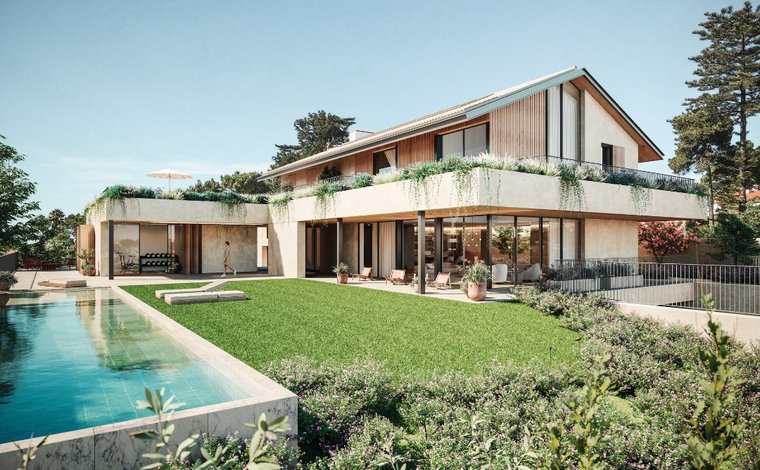
[Image: A vast, modern Luxury villa in Cascais E Estoril in Lisbon]
## Data Centers and Logistics: The Green Energy Gold Rush
The most dramatic illustration of this trend is in the data center sector. These facilities are colossal consumers of electricity, and their viability hinges on access to stable, competitive, and green energy. Portugal's ability to provide all three has placed it firmly on the map for major international operators. As a result, land and buildings with guaranteed, high-capacity grid connections are becoming prized assets, attracting capital that once flowed exclusively to markets like Frankfurt, London, and Amsterdam. This is a core topic in our Trend Analysis & Future Forecasting [https://www.realestate-lisbon.com/blog/trend-analysis-future-forecasting] blog.
A similar logic applies to the logistics sector. A modern warehouse is no longer judged solely by its proximity to a highway. Its value is now intrinsically linked to its capacity for on-site energy production, which lowers operating costs and helps tenants meet corporate ESG goals. For institutional investors, a warehouse with a solar-panel-covered roof is a de-risked, predictable, and more valuable long-term asset. This aligns with the growing importance of sustainability [https://www.realestate-lisbon.com/buying-guide/sustainability] in investment decisions.
## The Residential Revolution: Efficiency Equals Value
While the commercial sectors have led the charge, the impact on residential real estate is now clearly visible. Energy-efficient buildings with high Energy Performance Certificates (EPCs) are commanding a premium. This is driven by a confluence of factors:
• **Easier Financing:** Banks are more willing to finance green homes, recognizing their lower risk and higher long-term value.
• **Tenant Demand:** Sophisticated tenants, particularly in the luxury segment, are willing to pay more for homes with lower utility bills and a smaller carbon footprint.
• **Investor Preference:** As an investor, an energy-efficient property means a more attractive asset for tenants and a higher potential resale value.
Leading developers are responding to this demand. As reported on December 17, 2025, developer **SOLYD** announced that 97% of its evaluated units in 2024 achieved A or A+ energy ratings, with that figure hitting 100% for its apartments. This is not just good practice; it is smart business, reflecting a market that rewards sustainability. When you search for off-plan properties [https://www.realestate-lisbon.com/off-plan], the energy rating should be a primary consideration.
In our experience advising buyers, the EPC rating has gone from an afterthought to a top-five consideration, especially for international clients. A property with a poor energy rating is now seen as a liability that will require future investment.
[Image: An amazing view from Lisbon inside a famous neighborhood of Bairro Alto]
## A Strategic Opportunity for Portugal
The elevation of energy from a technical detail to a strategic criterion presents a historic opportunity for Portugal. The country has the natural resources and has made the infrastructure investments. The final piece of the puzzle is policy. To fully capitalize on this advantage, Portugal must provide:
• **Regulatory Stability:** A predictable legal framework for energy production and real estate development.
• **Efficient Licensing:** Streamlined processes for approving new renewable energy projects and building permits.
• **Policy Continuity:** A long-term national commitment to green energy that gives investors confidence.
If these conditions are met, Portugal can cement its position as a next-generation real estate investment destination—one that is more sustainable, competitive, and perfectly aligned with the future of the European economy. For investors, this means the time to factor energy into your acquisition strategy is now. To navigate the complexities, it is wise to work with expert civil engineers [https://www.realestate-lisbon.com/civil-engineers] and sustainable design architects [https://www.realestate-lisbon.com/professionals/architects-sustainable-design].
Ultimately, the fusion of energy and real estate is creating a more sophisticated and resilient market. For those who understand this new paradigm, the opportunities for value creation in Portugal are immense. To explore how you can leverage this trend for your next investment, contact our team of specialists [https://www.realestate-lisbon.com/contact].
## Frequently Asked Questions
How is energy changing real estate values in Portugal?
Energy has become a primary factor in property valuation. Access to abundant, competitive, and green renewable energy is making certain assets, like data centers and logistics hubs, significantly more valuable. Energy efficiency is also driving up prices for residential properties.
What is Portugal's advantage in renewable energy?
Portugal has one of Europe's most advanced renewable energy infrastructures, based on solar and wind power. This provides a stable supply of clean energy at a competitive cost compared to many other EU nations, creating a significant economic advantage for energy-intensive industries.
Which real estate sectors are most affected by this energy trend?
The impact is seen across all sectors. Data centers and logistics warehouses are the most prominent, as their viability depends on massive, cheap, green energy. The industrial sector also benefits greatly. Increasingly, the residential market is valuing energy-efficient homes. Explore our sector deep dives [https://www.realestate-lisbon.com/blog/geographic-sector-deep-dives] for more.
Why are data centers choosing Portugal?
Data centers are huge consumers of electricity. They are choosing Portugal because the country offers a rare combination of stable, green, and competitively priced energy. This has put Portuguese land and buildings with guaranteed grid access on the radar of major international operators.
How does energy efficiency affect residential property values?
Energy-efficient homes (e.g., with A or A+ ratings) are easier to finance, more sought after by tenants due to lower utility bills, and more valued by investors. As developer SOLYD's 2024 report shows, 100% of their new apartments achieved A/A+ ratings, reflecting market demand. This is a key part of our property quality guide [https://www.realestate-lisbon.com/buying-guide/property-quality].
What is ESG and why is it important for real estate investors?
ESG stands for Environmental, Social, and Governance. For real estate, it means investing in properties that are sustainable and socially responsible. ESG compliance is becoming a mandatory criterion for many institutional investors, making green-certified buildings a less risky and more valuable long-term asset.
What should investors look for in a property regarding energy?
Investors should scrutinize a property's Energy Performance Certificate (EPC), its potential for on-site renewable generation (like solar panels), and its access to the grid. Properties with poor energy ratings risk becoming 'stranded assets' that are difficult to sell or lease. Our sustainability guide [https://www.realestate-lisbon.com/buying-guide/sustainability] has more.
What does Portugal need to do to maintain this advantage?
To capitalize on this opportunity, Portugal must ensure regulatory stability, create efficient licensing processes for energy projects, and show continuity in its national energy policies. This will solidify its position as a next-generation real estate investment hub. Following political news [https://www.realestate-lisbon.com/news/politics] is key for investors.