Pre-Launch Properties: The €60K-€100K Advantage Smart Buyers Are Using
By Pieter Paul Castelein
Published: January 12, 2026
Category: Investment & Strategy Guides
**
# Pre-Launch Properties: The €60K-€100K Advantage Smart Buyers Are Using
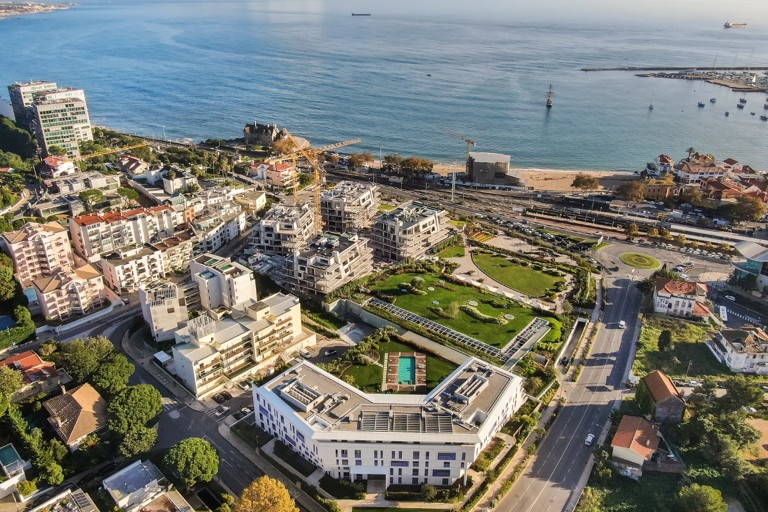
You're scrolling through Idealista when you find the perfect Cascais apartment [https://www.realestate-lisbon.com/off-plan/cascais]. €750K. Ocean view. Walking distance to international school. You call the next morning and it's gone.
**The big picture:** While you're browsing public listings, connected buyers are securing premium units 6-12 months earlier through pre-launch access [https://www.realestate-lisbon.com/off-plan]. They're choosing from 100% of inventory before you see anything online.
**Why it matters:**
• **Your wallet:** Early buyers negotiate better terms before market pricing sets
• **Your choice:** First pick of corner units, top floors, ocean views instead of leftovers
• **Your leverage:** Developers need early commitments to secure construction financing
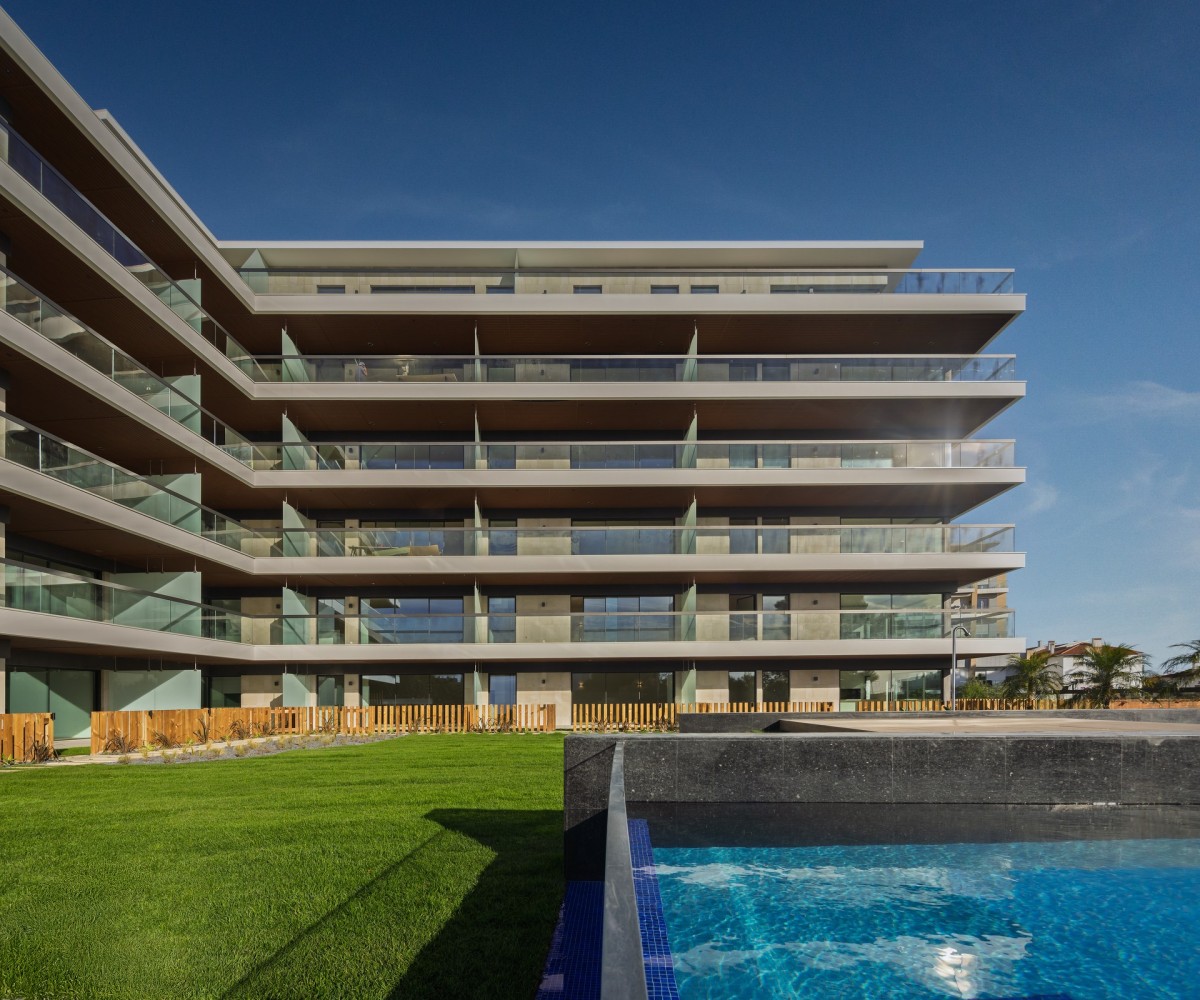
[Image: Modern pre-launch development in Cascais with ocean views]
## How Pre-Launch Actually Works
Forget online portals. Pre-launch flows through closed agent networks and developer relationships.
Here's what most buyers don't understand: Developers don't launch projects to the public until they've secured 30-40% of sales commitments. This de-risks construction financing and validates market demand.
**The pecking order:**
• Developer's existing client database gets first notification
• Top-tier buyer's agents [https://www.realestate-lisbon.com/professionals/real-estate-agents-international-clients] with proven track records get 48-hour windows
• General market sees whatever remains after these two groups finish
**Translation:** That "newly launched" development on Idealista? The best units were reserved 4-8 months ago.
**Your position:** Without an established agent relationship [https://www.realestate-lisbon.com/real-estate-agents], you're competing for position #3 inventory. Always.
## The Money Math Nobody Explains
Pre-launch isn't "pay at closing." It's staged capital deployment across 18-36 months.
Here's the real structure for a €750K Cascais apartment:
### Month 0 (Reservation): €50K-€100K deposit
• This isn't refundable in most contracts
• Secures your specific unit selection
• Developer uses this to show bank they have buyer commitment
### Month 1-2 (CPCV Signing): Additional €75K-€150K (10-20% of price)
• This is your Contrato de Promessa de Compra e Venda [https://www.realestate-lisbon.com/guides/cpcv-vs-escritura-in-lisbon-a-buyers-legal-guide]
• Legally binding purchase agreement
• Developer can now draw construction financing
### Months 6-18 (Construction Milestones): €150K-€225K in staged payments
• Tied to foundation completion, structural completion, finishing stages
• You're funding construction as it happens
• Miss a payment? You forfeit everything paid to date
### Month 18-36 (Escritura/Completion): Final €325K-€475K
• The day you get keys
• Final deed signing at notary [https://www.realestate-lisbon.com/notaries]
• Property legally transfers to your name
**The bottom line:** You've deployed €275K-€450K in cash before you ever move in.
[Image: Payment timeline diagram for pre-launch property purchase]
## The Currency Reality International Buyers Miss
Property prices lock in euros at reservation. Period.
If you're paying in USD, GBP, or any non-euro currency, you're exposed to 24-36 months of foreign exchange risk across multiple staged payments.
**Real example:** British buyer reserves €750K property in January 2024 when £1 = €1.17. By completion in December 2025, £1 = €1.10. That's an additional £39,000 in currency loss--completely erasing any "early buyer discount."
The math most agents ignore: Your reservation deposit sits in euros. Your CPCV payment converts at a different rate. Your milestone payments convert at different rates. Your final payment converts at a different rate.
**What sophisticated buyers do:** Forward contracts or currency hedging through providers like Wise, Revolut Business, or specialist FX brokers. Cost? Usually 0.3-0.8% of transaction value. Is it worth it? When you're protecting €750K across 24 months, absolutely.
## The Developer Financial Risk Nobody Talks About
Here's what happened in Lisbon's last development cycle (2008-2012): 23% of residential projects stopped mid-construction due to developer insolvency or financing collapse.
Your pre-launch deposit sits where? In the developer's account. Not escrow. Not trust. Their operating account.
**What you need to verify before transferring €50K-€100K:**
### 1. Developer's completion track record
• Demand evidence of 3+ completed projects in last 5 years
• Check Confidencial Imobiliário [https://www.ine.pt] or Cushman & Wakefield [https://knightfrank.com] project databases
• Google "[developer name] + processo" (legal proceedings)
### 2. Construction financing confirmation
• Is bank financing approved or "pending"?
• What percentage is pre-sold? (Banks typically require 30% minimum)
• Who is the financing bank? (Major Portuguese banks or unknown offshore lenders?)
### 3. Building permit status
• "Pending approval" means you're speculating on government bureaucracy
• "Approved with conditions" means specifications could change
• "Final approved" means construction can actually start
### 4. Insurance and guarantees
• Does Portugal require completion guarantees? No.
• Does the developer offer voluntary completion insurance? Rare.
• What happens to your deposits if the project halts? Usually nothing.
**The uncomfortable truth:** Portugal offers minimal buyer protection for pre-construction deposits. You're an unsecured creditor if things go wrong.
## The Opportunity Cost Most Buyers Ignore
Everyone fixates on the "discount." Nobody calculates what else that capital could do.
**Scenario:** You commit €300K across 24 months to secure a €750K pre-launch property.
**Alternative:** You deploy that same €300K into:
• Portuguese REITs averaging 7-9% annual returns = €42K-€54K over 24 months
• Dividend-paying Eurostoxx 50 stocks averaging 6-8% = €36K-€48K
• Even a 4% savings account = €24K
**The real question:** Does your "pre-launch discount" exceed what that committed capital would have earned elsewhere?
If you're getting 8% off (€60K on €750K), but your capital would have earned €40K deployed elsewhere, your net advantage is only €20K. And you've taken on construction risk, developer risk, and completion delay risk to get it.
This doesn't mean don't buy pre-launch. It means understanding the complete financial picture, not just the shiny discount percentage.
[Image: Financial comparison chart showing opportunity costs of pre-launch investment]
## When Pre-Launch Actually Makes Sense
Pre-launch works for three specific buyer profiles:
**Profile 1: The Specific Location Buyer** You need Cascais, within 800m of Salesianos school, 3+ bedrooms, parking. Inventory is limited. Pre-launch gives you first access to rare supplies.
**Profile 2: The Ground Floor Investor** You're buying for a 7-10 year hold. You want the lowest possible basis. You have capital deployed elsewhere earning returns. You're sophisticated enough to hedge currency and assess developer risk.
**Profile 3: The Customization Buyer** You're paying €1M+ and want to influence finishes, layouts, or specifications before construction locks. Pre-launch gives you this flexibility.
**Who should avoid pre-launch:**
• First-time international buyers without Portuguese legal [https://www.realestate-lisbon.com/real-estate-lawyers]/tax advisors [https://www.realestate-lisbon.com/accountants]
• Buyers who need the property within 12 months
• Anyone who can't comfortably lose the full deposit if things go wrong
• Buyers comparing pre-launch purely on "discount %" without factoring opportunity cost
## The 5 Mistakes That Cost Buyers €50K+
### Mistake 1: Signing Portuguese contracts without Portuguese legal review
Your family attorney in London or New York cannot interpret Portuguese property law. CPCV contracts contain clauses around "resolução," "sinal," and "direito de arrependimento" that don't translate to common law concepts.
Cost of Portuguese attorney [https://www.realestate-lisbon.com/professionals/real-estate-lawyers-property-acquisition]: €1,500-€2,500
Cost of getting it wrong: Your entire deposit (€50K-€100K)
### Mistake 2: Believing "refundable deposit" means what you think it means
In Portuguese property law, deposits can be characterized as:
• **Sinal** (earnest money, forfeitable)
• **Princípio de pagamento** (payment on account, potentially refundable)
• **Penalidade** (penalty clause, definitely not refundable)
The difference? Whether you get your €75K back if you need to withdraw. English translation of contracts often blur these distinctions.
### Mistake 3: Not stress-testing the payment schedule
You commit to a 24-month payment schedule. Then:
• Month 8: Your employer relocates you to Singapore
• Month 14: Global recession hits, your stock portfolio drops 30%
• Month 20: You need liquidity for family emergency
Can you exit? Probably not without forfeiting everything paid to date. Did you model this scenario? Probably not.
### Mistake 4: Trusting renders over reality
Those beautiful architectural renders show:
• Premium finishes (actual: builder-grade unless you pay €40K-€80K for upgrades)
• Lush landscaping (actual: dirt and construction debris for 12-18 months post-completion)
• Immediate neighborhood amenities (actual: planned but not funded)
Visit the actual site. Walk the actual neighborhood. Verify the actual infrastructure exists today, not "coming soon."
### Mistake 5: Ignoring the tax implications of staged payments
Portuguese IMT (property transfer tax) is calculated on total purchase price but paid at escritura. Your staged payments don't reduce your final tax bill--they just mean you've deployed more capital earlier.
For non-residents buying €750K property:
• IMT [https://www.realestate-lisbon.com/calculators/imt]: €44,513 (paid at final completion)
• Stamp duty: €5,625 (paid at CPCV and at escritura)
• Notary/registration: €2,000-€3,000
None of this changes whether you buy pre-launch or complete. But many buyers forget to budget for €52K in closing costs after already deploying €300K in staged payments.
## Your Pre-Launch Action Plan
If you're serious about pre-launch access (not just curious):
### Month 1: Build your infrastructure
Interview 4-6 buyer's agents [https://www.realestate-lisbon.com/english-speaking-agents]. Ignore anyone who:
• Pushes specific developments without understanding your criteria first
• Claims "exclusive access" without naming which developers
• Can't provide references from international clients who closed pre-launch deals
Look for agents who:
• Ask detailed questions about your financing, timeline, risk tolerance first
• Explain downsides and risks before showing opportunities
• Have closed 5+ pre-launch transactions in last 24 months (verify this)
### Month 1: Arrange specialists before you need them
• Portuguese property attorney [https://www.realestate-lisbon.com/english-speaking-lawyers] (not international law firm, specialized local attorney)
• International tax advisor [https://www.realestate-lisbon.com/professionals/accountants-expatriate-tax-services] who understands Portugal-[your country] tax treaties
• Portuguese mortgage broker if you're financing (get pre-approval now, not when you find something)
• Currency hedging specialist if you're non-eurozone
### Month 2-3: Define your exact criteria
Developers and agents work with specific profiles:
• **Location:** Exact neighborhoods, not "Lisbon area"
• **Budget:** Total all-in including closing costs, not just purchase price
• **Timeline:** When you actually need the property completed
• **Must-haves:** Schools, transportation, specific features
• **Deal-breakers:** Things you absolutely won't compromise on
Vague criteria get vague opportunities. Specific criteria get matched to actual inventory.
### Month 3-6: Start seeing opportunities
Good agents will show you 2-4 pre-launch opportunities per quarter. If you're seeing 2-4 per week, you're seeing everything--which means you're not in the VIP pipeline.
**When you find something:**
• Visit the site (the actual dirt) within 48 hours
• Engage attorney for contract review (5-7 business day turnaround)
• Verify developer credentials independently (not through selling agent)
• Model complete financial picture including opportunity cost
• Negotiate: Developer's first offer is never their only offer
**Don't negotiate on:** Unit selection, floor, orientation (this is why you're buying pre-launch)
**Do negotiate on:** Deposit structure, payment timeline, specification upgrades, penalty clauses
[Image: Timeline visualization showing pre-launch property buying process]
## The Bottom Line
Pre-launch access isn't magic. It's information asymmetry.
You're not getting a discount because developers are generous. You're getting pricing flexibility because developers need your capital to secure construction financing. You're taking on 24-36 months of risk they can't hedge. That's the exchange.
**The reward:** First selection of inventory, some pricing flexibility, locked-in purchase before market demand materializes.
**The cost:** Capital deployed 2-3 years early, construction risk, developer risk, completion delays, currency exposure, opportunity cost.
**Is it worth it?** Depends entirely on your financial position, risk tolerance, timeline flexibility, and how well you've done the work above.
For most international buyers, pre-launch makes sense once:
• You understand Portuguese property law [https://www.realestate-lisbon.com/buying-guide/legal-issues] (through qualified attorney)
• You've built relationships with specialized agents (not just contacted them)
• You've stress-tested your financial capacity to complete staged payments
• You've visited Lisbon/Cascais/Oeiras enough times to know exactly where you want to be
• You have 12+ months before you need the property
**Skip pre-launch if:**
• This is your first Portuguese property transaction
• You need to move in within 12 months
• You're not comfortable potentially losing your deposit
• You haven't built the specialist team (attorney, tax advisor, currency specialist)
• You're attracted to the "discount" without understanding the complete costs
## FAQ: What Nobody Tells You
How do I find these "top-tier agents" everyone mentions?
You don't find them by Googling "Lisbon buyer's agent." They find clients through:
• Referrals from previous international clients (ask for 3 references, call them)
• Presence at international real estate conferences/events
• Long-term relationships with expat communities in target locations
Start by asking: "How many pre-launch transactions did you personally close in the last 12 months, with which developers, and can I speak with those clients?"
If they can't answer specifically, keep looking.
What's a realistic timeline from "interested in pre-launch" to "moved in"?
**Months 0-3:** Building agent relationships, seeing opportunities
**Months 3-6:** Finding right opportunity, due diligence, reservation
**Months 6-8:** CPCV signing, initial payments
**Months 8-30:** Construction period, milestone payments
**Months 30-36:** Completion delays, snagging, final payments
**Month 36+:** Actually moving in
Realistic total timeline: 36-48 months from "I'm interested" to "I'm living here."
If you need to be living in Portugal within 12 months, buy completed properties [https://www.realestate-lisbon.com/lisbon-real-estate-neighborhoods].
Can I visit the property before completion?
Most developers allow site visits at major milestones (foundation, structure, finishes). You cannot visit weekly--insurance and liability issues.
**What you should do:** Visit during the structural completion phase to verify build quality, actual specifications match contract, no obvious construction defects.
**What you should not do:** Assume you can't visit at all. This is your €750K investment--negotiate site visit rights into your CPCV.
What happens if I need to sell before completion?
You're selling your contract position, not a property. This requires:
• Developer approval (most contracts require this)
• Buyer who qualifies financially for remaining payments
• Premium pricing to compensate for your deployed capital plus risk
Reality: Pre-launch contract assignments are difficult to execute and often result in losses. If you might need liquidity before completion, pre-launch is the wrong strategy.
Do banks finance pre-launch purchases?
Portuguese banks will finance pre-launch, but:
• Maximum 70% LTV (vs 80% for completed properties)
• Disbursements tied to construction milestones (not your payment schedule)
• Higher interest rates (0.5-1% premium vs completed property mortgages)
• Stricter qualification requirements for international buyers
Your deposit and early payments must be cash. Bank financing typically only covers the final 50-70% paid at completion.
**Ready to explore pre-launch in Cascais [https://www.realestate-lisbon.com/off-plan/cascais] or Oeiras [https://www.realestate-lisbon.com/off-plan/oeiras]?**
Start with agents who've closed 5+ pre-launch deals in the last 24 months. Ask them to walk you through their last 3 international client transactions: timelines, challenges, how they structured deposits.
If they can't discuss specifics, they don't have the track record.
The True Cost Calculator [https://www.realestate-lisbon.com/calculators/true-cost] and Investment Analyzer [https://www.realestate-lisbon.com/calculators/investment-analyzer] help model complete financial picture--deployed capital, opportunity costs, carrying costs, tax implications.
Pre-launch is sophisticated real estate investing. Treat it that way.