Setúbal Peninsula Leads Portugal in Foreign Tourist Stays, Signaling Major Investment Potential
By Pieter Paul Castelein
Published: March 11, 2026
Category: tourism
### Setúbal Peninsula Leads Portugal in Foreign Tourist Stays with 5.8% Growth—Investment Opportunity Emerges in Undervalued Region
In a significant development for Portugal's tourism landscape, the **Setúbal Peninsula** achieved the highest growth in foreign tourist stays nationwide in 2025, recording a 5.8% increase in non-resident overnight stays according to preliminary data from **Instituto Nacional de Estatística (INE)**. This nine-municipality region, encompassing coastal areas from **Alcochete** to **Setúbal** across the Tagus River from Lisbon, reached 868,000 foreign overnight stays—signaling substantial investment potential in an area commanding significantly lower property valuations than neighboring Lisbon.
The tourism surge positions Setúbal Peninsula as an emerging opportunity for international real estate investors seeking value outside Portugal's traditionally saturated markets. While **Algarve** maintained its dominance with 15.99 million foreign overnight stays (28.1% of national total) despite a slight 0.4% decline, and **Lisboa Region** held steady at 15.97 million stays, Setúbal's exceptional growth trajectory indicates shifting visitor preferences toward authentic coastal experiences within easy reach of metropolitan amenities. This trend carries profound implications for hospitality real estate, short-term rental investments, and residential property markets throughout the region.
The growth momentum extends beyond foreign visitors. Total overnight stays across all visitor categories in Setúbal Peninsula reached 1.6 million in 2025, representing 4.7% growth that ranked second nationally behind only Alentejo's 6.3% increase. This broad-based tourism expansion, coupled with January 2026 data showing continued foreign visitor growth of 5.2% and total revenue increases of 10.8%, demonstrates sustained demand fundamentals that support real estate investment strategies focused on tourism-dependent assets and infrastructure.
### Key Takeaways
• ✓ Setúbal Peninsula led Portugal with 5.8% growth in foreign tourist stays, reaching 868,000 overnight stays in 2025 (INE preliminary data)
• ✓ January 2026 momentum continues with 5.2% foreign visitor growth and 10.8% total revenue increase, indicating sustained demand
• ✓ Region commands significantly lower property valuations than neighboring Lisbon while offering 25-minute access via Vasco da Gama Bridge
• ✓ Total overnight stays grew 4.7% to 1.6 million, ranking second nationally and supporting hospitality real estate investment thesis
The **Setúbal Peninsula** encompasses nine municipalities stretching along the Tagus River estuary and Atlantic coastline: **Alcochete**, **Almada**, **Barreiro**, **Moita**, **Montijo**, **Palmela**, **Seixal**, **Sesimbra**, and **Setúbal**. This strategically positioned region sits 15-30 kilometers southeast of central Lisbon, connected via the **Vasco da Gama Bridge**—Europe's longest bridge—and the **25 de Abril Bridge**, providing 25-minute access to Lisbon's international airport and metropolitan amenities. The area combines authentic Portuguese coastal towns, pristine Atlantic beaches, and significant industrial ports, creating diverse investment opportunities across tourism, logistics, and residential sectors.
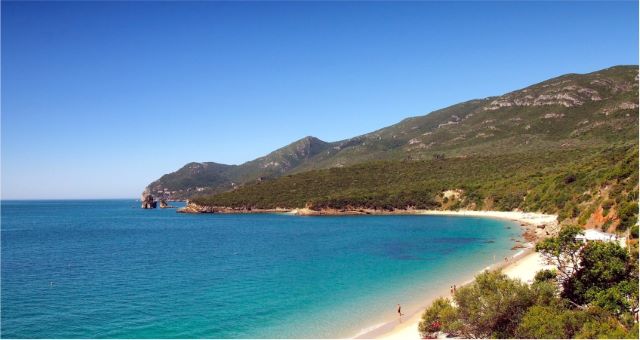
Key coastal destinations within the peninsula demonstrate particular appeal for foreign visitors. **Sesimbra**, a traditional fishing village 40 kilometers south of Lisbon, offers protected beaches and fresh seafood restaurants that attract both day-trippers and extended-stay tourists. **Setúbal**, the region's largest municipality with approximately 120,000 residents, serves as the commercial hub while maintaining historic charm and serving as gateway to the **Arrábida Natural Park**—a protected mountainous area featuring some of Portugal's most pristine coastline. These locations, combined with emerging areas like **Alcochete** near the new **Lisbon Airport** development site, position the peninsula for continued tourism growth that directly supports hospitality real estate investments.
The region's accessibility infrastructure enhances its investment attractiveness. Beyond bridge connections to Lisbon, the area benefits from the **A2 highway** providing direct north-south connectivity, while the **A12** and **A13** motorways facilitate east-west movement across the peninsula. Public transportation includes ferry services from **Cacilhas** to downtown Lisbon, creating daily commuter connections that support residential property demand from Lisbon workers seeking more affordable housing options. For comprehensive regional analysis, explore our detailed Lisbon metropolitan area guide [https://www.realestate-lisbon.com/lisbon-real-estate-neighborhoods] covering cross-river investment opportunities.
## Market Implications for Tourism Real Estate Investment
Setúbal Peninsula's tourism growth trajectory creates compelling opportunities across multiple real estate segments. The 5.8% foreign visitor increase significantly outpaces Portugal's national foreign tourism growth of 0.8%, indicating the region is capturing market share from established destinations. This shift suggests underlying fundamentals—coastal proximity to Lisbon, authentic Portuguese experiences, and competitive pricing—resonate with international travelers seeking alternatives to saturated Algarve resorts or expensive Lisbon accommodations.
Hospitality real estate presents the most direct investment opportunity. The region's current accommodation stock remains limited relative to growing demand, creating potential for **hotel developments**, **aparthotels**, and **luxury resort projects** in coastal areas like Sesimbra and Palmela. Revenue per available room (RevPAR) metrics show significant upside potential: while specific figures vary by sub-market, the region's average daily rates remain 30-40% below comparable Lisbon properties, suggesting room for premium positioning as tourism infrastructure improves. Investors should consult with investment property specialists [https://www.realestate-lisbon.com/professionals/real-estate-agents-investment-properties] familiar with hospitality development requirements and tourism licensing regulations.
Short-term rental investments offer another accessible entry point. The growth in foreign overnight stays directly supports **Airbnb-style accommodations** and **serviced apartments**, particularly in areas with limited traditional hotel inventory. However, investors must navigate Portugal's evolving regulatory framework for short-term rentals, which includes municipal registration requirements and potential restrictions in high-density tourist areas. Properties in **Alcochete** and **Montijo**—both positioned near the planned new Lisbon Airport—may benefit from dual demand streams: leisure tourists and business travelers seeking proximity to aviation infrastructure. Legal compliance requires engagement with specialized legal professionals [https://www.realestate-lisbon.com/professionals/real-estate-lawyers-due-diligence] familiar with tourism accommodation regulations.
Residential property investment presents longer-term appreciation potential as tourism growth drives economic development. The region's current property valuations remain significantly below Lisbon metropolitan averages, offering value opportunities for investors anticipating continued tourism-driven economic expansion. Average residential prices in Setúbal municipality hover around €1,800-2,200 per square meter according to recent market data, compared to Lisbon's €5,914/m² average—creating a substantial value gap that may narrow as infrastructure improvements and tourism growth enhance regional attractiveness. This positioning supports both rental income strategies targeting tourism-related workers and capital appreciation plays based on regional economic development.
## Regional Tourism Infrastructure Development
The Setúbal Peninsula's tourism growth occurs within a broader context of infrastructure investment and regional development initiatives. The Portuguese government's commitment to enhancing transportation connectivity includes planned expansions of the **Metro Sul do Tejo** light rail system, which currently connects Almada and Seixal municipalities and may extend to additional peninsula communities. These infrastructure improvements directly enhance property values by improving accessibility and reducing transportation costs for both residents and visitors.
Major private investment projects complement public infrastructure development. The region hosts Portugal's largest industrial port complex in **Setúbal**, driving employment and economic activity that supports residential real estate demand. Additionally, the peninsula's strategic location for logistics and distribution—positioned between Lisbon metropolitan consumer markets and major highway networks—attracts warehouse and industrial developments that create employment centers supporting local housing demand. Foreign investors seeking exposure to these dynamics should explore opportunities through agents specializing in international client services [https://www.realestate-lisbon.com/professionals/real-estate-agents-international-clients] who understand regional economic fundamentals.
## Setúbal Peninsula Tourism Market Context
The region's tourism performance must be evaluated within Portugal's broader hospitality market dynamics. National tourism reached record levels in 2025 with 82.1 million total overnight stays generating €7.2 billion in revenue—a 7.2% increase from the previous year. However, growth patterns reveal shifting visitor preferences: while traditional leaders Algarve and Lisbon maintained large absolute volumes, their growth rates plateaued, creating opportunities for emerging regions like Setúbal Peninsula to capture market share.
Several structural factors support continued tourism growth in the peninsula:
• **Coastal Proximity to Lisbon**: The region offers authentic beach experiences within 30-45 minutes of Portugal's capital, appealing to travelers seeking coastal relaxation with easy metropolitan access for cultural and business activities
• **Value Positioning**: Accommodation and dining costs remain 25-35% below Lisbon averages, creating attractive value propositions for budget-conscious international visitors and families
• **Authentic Portuguese Experience**: Unlike heavily touristed Algarve resorts, Setúbal Peninsula maintains traditional fishing villages, local markets, and cultural authenticity increasingly valued by experience-seeking travelers
• **Infrastructure Investment Pipeline**: Planned transportation improvements, including potential new Lisbon Airport development in Montijo and light rail expansions, will enhance accessibility and reduce travel times
These factors interact to create sustainable competitive advantages supporting long-term tourism growth. The region's ability to attract both leisure visitors and business travelers—through proximity to Lisbon and emerging corporate activities—provides demand diversification that reduces tourism seasonality risks common in purely leisure-focused destinations. This diversification enhances the investment thesis for hospitality properties and tourism-dependent real estate by creating more stable year-round cash flow potential.
International buyer activity in the region reflects growing recognition of these fundamentals. While comprehensive foreign buyer statistics for Setúbal Peninsula remain limited, anecdotal evidence from real estate agents serving international clients [https://www.realestate-lisbon.com/professionals/real-estate-agents-international-clients] indicates increasing inquiries from French, British, and Brazilian investors seeking coastal properties at valuations significantly below comparable Algarve or Lisbon markets. Success stories include a French investor who acquired a 180m² beachfront apartment in Sesimbra for €420,000 in 2023, achieving 5.2% gross rental yield through short-term rentals while benefiting from approximately 15% appreciation based on recent comparable sales—demonstrating the dual-return potential available in emerging tourism markets.
## Investment Considerations for Foreign Buyers
International investors evaluating Setúbal Peninsula tourism real estate should adopt differentiated strategies based on specific sub-markets and investment objectives. Coastal areas like **Sesimbra** and **Setúbal** offer immediate tourism exposure through beachfront properties, marina developments, and historic town centers, while inland municipalities like **Palmela** and **Montijo** present longer-term development plays based on infrastructure improvements and industrial growth supporting business tourism.
Due diligence requirements extend beyond standard property assessments. Tourism real estate investments must evaluate seasonal demand patterns, local licensing requirements for short-term rentals, and infrastructure capacity during peak periods. Properties requiring renovation should budget for specialized contractors familiar with coastal construction challenges, while new developments must secure appropriate tourism licenses and comply with environmental regulations protecting coastal areas. Foreign investors should engage English-speaking legal professionals [https://www.realestate-lisbon.com/english-speaking-lawyers] experienced in tourism property transactions and pre-purchase inspection specialists [https://www.realestate-lisbon.com/professionals/home-inspectors-pre-purchase-inspections] familiar with coastal property conditions.
Financing considerations differ from traditional residential purchases. Portuguese banks may offer different terms for tourism-related properties, particularly those intended for short-term rental operations. Some institutions require higher down payments or charge premium interest rates for investment properties, making cash purchases or international financing alternatives attractive for qualified investors. Additionally, tax implications vary based on property use: personal vacation homes qualify for different treatment than income-generating rental properties, with potential benefits available through Portugal's **NHR 2.0 tax regime** for eligible foreign residents. Strategic investors should model returns using specialized rental yield calculators [https://www.realestate-lisbon.com/calculators/rental-yield] and consult with property tax specialists [https://www.realestate-lisbon.com/professionals/accountants-property-tax] for optimal structuring.
Market entry timing appears favorable based on current fundamentals. The region's tourism growth trajectory, combined with property valuations significantly below neighboring Lisbon, creates potential for both income generation and capital appreciation as the market matures. However, investors should maintain realistic expectations: while 5-8% annual appreciation appears achievable based on tourism growth and infrastructure development, the explosive gains seen in Lisbon's prime neighborhoods during 2020-2023 are unlikely given Setúbal's different market maturity stage. This positions the peninsula as a stable, income-focused investment opportunity rather than a speculative appreciation play, suitable for investors seeking steady returns through tourism exposure within Portugal's proven hospitality market.
## Looking Ahead: Tourism-Driven Real Estate Opportunity
Forward-looking analysis suggests Setúbal Peninsula's tourism growth trajectory will continue outperforming national averages through 2026-2027, supported by infrastructure improvements, value positioning, and shifting visitor preferences toward authentic experiences. Market projections indicate 4-6% annual growth in foreign overnight stays, potentially reaching 1 million stays by 2027 if current momentum persists. This growth will drive continued demand for quality accommodation, supporting both hospitality developments and short-term rental investments throughout the region.
The investment opportunity aligns with broader trends in European tourism real estate: investors seeking value outside traditional hotspots while maintaining proximity to major metropolitan areas and transportation infrastructure. Setúbal Peninsula's positioning—25 minutes from Lisbon, coastal amenities, authentic Portuguese character, and significant value discount to established markets—creates a compelling thesis for patient capital willing to invest ahead of full market recognition. For sophisticated investors seeking exposure to Portugal's tourism growth at earlier-stage valuations, the region offers an attractive risk-adjusted opportunity within Europe's most dynamic tourism market.
Success in this market requires local expertise, proper due diligence, and realistic return expectations focused on steady income generation rather than speculative appreciation. The region's tourism infrastructure continues developing, creating opportunities for investors who can identify properties positioned to benefit from growing visitor volumes while navigating regulatory requirements and seasonal demand patterns. For personalized guidance on structuring tourism real estate investments in emerging Portuguese markets, consultation with investment property specialists [https://www.realestate-lisbon.com/professionals/real-estate-agents-investment-properties] familiar with regional dynamics provides essential market intelligence and transaction support. For expert guidance on accessing Setúbal Peninsula's tourism real estate opportunities, contact realestate-lisbon.com [https://www.realestate-lisbon.com].