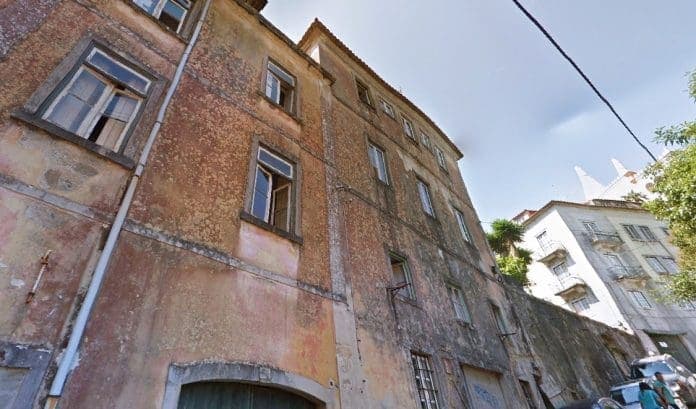
Lisbon Upholds Urban Pressure Zone Status, Imposing Sixfold IMI Tax Hike on Vacant Homes
By Adrian Garuta
Published: December 17, 2025
Category: politics
### Lisbon Maintains Urban Pressure Zone Status, Sixfold Property Tax Increase on Vacant Homes Continues
In a decisive move for **Lisbon**'s housing market, the Municipal Assembly has voted to extend the city's entire territory as an Urban Pressure Zone (ZPU) for another year, maintaining a sixfold increase in property taxes on vacant homes. This **Urban Pressure Zone classification**, first implemented in 2020, penalizes owners of empty buildings or units by multiplying their **IMI (Imposto Municipal sobre Imóveis)** tax rate by six times the standard amount.
The decision, approved Tuesday with opposition only from the right-wing **Chega** party, targets an estimated 48,000 vacant or abandoned housing units across Lisbon municipality according to 2021 Census data. For foreign investors navigating Portugal's property market, this development signals intensified municipal pressure to activate dormant housing stock amid ongoing supply constraints.
### Key Takeaways
• ✓ Lisbon maintains entire city as Urban Pressure Zone for 2021, extending sixfold IMI tax on vacant properties
• ✓ 48,000 vacant housing units targeted across Lisbon municipality according to 2021 Census data
• ✓ Measure applies citywide pressure to activate dormant housing stock amid supply shortage
• ✓ Foreign investors must assess vacancy risks and tax implications when evaluating Lisbon properties
The **ZPU designation** covers all of Lisbon's diverse neighborhoods, from the historic **Alfama** district to modern **Parque das Nações**, creating uniform pressure across the capital's varied real estate landscape. This geographic scope matters for investors because it eliminates safe havens within the city for property owners seeking to avoid vacancy penalties.
Lisbon's comprehensive approach distinguishes it from other Portuguese municipalities that apply targeted pressure zones to specific areas. The policy's citywide application reflects the municipal government's assessment that housing scarcity affects all neighborhoods, though impacts vary by location characteristics and market dynamics. For detailed neighborhood analysis, see our comprehensive Lisbon neighborhoods guide [https://www.realestate-lisbon.com/lisbon-real-estate-neighborhoods].
## Market Implications for Investors
This **tax policy continuation** carries significant implications for foreign investors evaluating Lisbon real estate opportunities. The sixfold IMI increase transforms vacant property holding costs from minor annual expenses into substantial financial burdens, fundamentally altering investment calculations for properties without active tenants or occupants.
For **buy-to-let investors**, the policy reinforces Lisbon's rental market fundamentals by reducing potential competition from vacant units. Properties with reliable tenant occupancy gain relative value compared to empty units facing punitive taxation. This dynamic particularly benefits investors in investment property specialists [https://www.realestate-lisbon.com/professionals/real-estate-agents-investment-properties] who focus on rental yield optimization.
The **vacancy penalty structure** also creates opportunities for value-add investors willing to rehabilitate and activate dormant properties. However, successful execution requires understanding Portuguese renovation regulations, tax implications, and market demand patterns. Foreign investors should consult English-speaking real estate lawyers [https://www.realestate-lisbon.com/english-speaking-lawyers] experienced in municipal property regulations before acquiring potentially vacant units.
## Political Context and Policy Background
The **Portuguese Communist Party (PCP)** initiated the extension proposal, demonstrating cross-party support for housing activation policies despite opposition from Chega. This political consensus reflects broad municipal recognition of housing scarcity as a critical urban challenge requiring interventionist approaches.
**Carlos Moedas**, Lisbon's mayor, now faces a 12-month mandate to update the 2020 ZPU study that originally justified the citywide designation. This review process will examine whether comprehensive vacancy penalties remain optimal or whether more targeted geographic approaches might prove more effective while reducing policy externalities.
## Lisbon Housing Market Context
Lisbon's vacancy activation policy operates within broader Portuguese housing market dynamics characterized by supply constraints, international investment demand, and affordability pressures. The 48,000 vacant units represent substantial latent supply that could meaningfully impact market conditions if effectively activated.
Several factors influence the effectiveness of vacancy penalties in activating dormant housing stock:
• **Rehabilitation Costs**: Many vacant units require significant investment to achieve habitability standards, creating economic barriers to activation despite tax penalties
• **Inheritance Complexities**: Portuguese property inheritance laws often create ownership structures that complicate decision-making and investment timelines
• **Market Rent Levels**: Rental yields must justify activation investments, particularly in areas where regulated rents limit income potential
• **Regulatory Requirements**: Municipal permitting and construction regulations can create lengthy timelines for property rehabilitation projects
According to recent market analysis [https://www.realestate-lisbon.com/market-insights], these structural factors mean tax penalties alone may prove insufficient without complementary policies addressing rehabilitation financing and regulatory streamlining.
## Investment Strategy Considerations
Foreign investors should incorporate **vacancy risk assessment** into their Lisbon property evaluation process. Properties with unclear occupancy status or extended vacancy histories require careful due diligence to understand potential tax exposure and activation requirements.
Working with pre-purchase inspection professionals [https://www.realestate-lisbon.com/professionals/home-inspectors-pre-purchase-inspections] becomes critical when evaluating properties that may have been vacant for extended periods. These assessments can identify necessary rehabilitation work and associated costs that factor into investment viability calculations under the enhanced tax regime.
For investors seeking golden visa eligible properties, vacancy status carries additional implications since rehabilitation projects may qualify for the program while providing path to tax compliance. However, navigating these overlapping regulations requires specialized expertise in both immigration and property law.
## Looking Ahead
Lisbon's continued ZPU status indicates municipal commitment to housing activation policies despite implementation challenges. The upcoming study revision may refine geographic targeting or penalty structures, but core policy direction appears firmly established with broad political support.
For real estate investors, this policy stability provides planning certainty while reinforcing the importance of active property management and market-responsive investment strategies. As Lisbon's market evolves, successful investors will likely be those who align their portfolios with municipal policy objectives rather than attempting to circumvent them. For expert guidance on navigating Lisbon's property market regulations, contact realestate-lisbon.com [https://www.realestate-lisbon.com/].