EU Greenlights Portugal's PT2030 Funding Overhaul: Major Boost for Affordable Housing and Green Construction
By Nikola Zdraveski
Published: December 25, 2025
Category: politics
### EU Approves €890M Portugal Funding Overhaul: Affordable Housing and Green Construction Investment Opportunities Accelerate
In a significant development for Portugal's infrastructure investment landscape, the **European Commission** has approved the Portuguese government's request to reprogram **PT2030** (Portugal 2030) European Union funding, unlocking approximately **€890 million** in previously at-risk allocations. This reprogramming, announced by the **Ministry of Economy and Territorial Cohesion**, redirects substantial resources toward five strategic priority areas including affordable housing, green construction, and energy transition—presenting immediate opportunities for international investors in **Portugal's real estate** and infrastructure sectors.
The funding overhaul addresses Portugal's delayed PT2030 program execution, ensuring compliance with the EU's **N+3 rule**—a financial mechanism requiring member states to meet predetermined spending thresholds across seven-year funding cycles or face budget cuts. By eliminating what officials termed the "guillotine risk," the reprogramming secures Portugal's access to essential EU cohesion funds while redirecting investments toward housing affordability challenges and climate adaptation initiatives that have become increasingly critical for Lisbon's property market dynamics [https://www.realestate-lisbon.com/market-insights].
This strategic pivot occurs as Portugal navigates evolving EU priorities responding to geopolitical tensions, climate challenges, and housing affordability pressures across member states. For foreign investors evaluating Portuguese opportunities, the reprogramming signals institutional commitment to infrastructure development and sustainable construction—fundamentals that historically correlate with enhanced property values and investment returns in target markets throughout **Greater Lisbon** and Portugal's regional economic centers.
### Key Takeaways
• ✓ EU approved Portugal's PT2030 reprogramming unlocking €890M in affordable housing and green construction funding
• ✓ Five priority sectors include competitive decarbonization, defense/security, affordable housing, water resilience, and energy transition
• ✓ Regional programs across Algarve, Alentejo, Centro, Norte, and Madeira strengthened for social housing and sustainable construction
• ✓ Enhanced execution flexibility includes increased co-financing rates and extended implementation periods for infrastructure projects
The PT2030 reprogramming specifically targets Portugal's diverse regional markets, from **Lisbon's metropolitan area**—encompassing the Municipality of Lisboa and surrounding municipalities in **Distrito de Lisboa**—to emerging investment destinations across the Alentejo and Centro regions. In Lisbon, the funding infusion supports the city's ongoing transformation through projects like the **Matinha mega-regeneration** development along the Tagus River waterfront, accessible via the Red Metro Line and serving as a model for sustainable urban renewal attracting international investor interest [https://www.realestate-lisbon.com/professionals/real-estate-agents-international-clients].
Regional programs demonstrate particular strength in areas experiencing rapid appreciation. The **Alentejo 2030** program, covering municipalities from Évora to coastal Comporta, has expanded financing for affordable housing and sustainable construction—directly addressing supply constraints that have driven property valuations in premium coastal areas. Similarly, **Centro 2030** modifications strengthen funding for social housing and critical technologies, supporting markets like Coimbra and Leiria that offer value alternatives to Lisbon's premium pricing while maintaining excellent connectivity via Portugal's motorway network and rail connections to Lisbon's central business district [https://www.realestate-lisbon.com/lisbon].
## Investment Implications for Real Estate Markets
The €890 million funding allocation creates immediate investment implications across Portugal's property ecosystem. For developers and investors, the reprogramming signals enhanced public-private partnership opportunities in affordable housing segments—a market experiencing severe supply-demand imbalances as **INE data** shows Portuguese property valuations reaching €2,060/m² nationally in November 2025, with **Greater Lisbon** commanding €2,711/m² for houses. This pricing pressure makes government-supported affordable housing projects increasingly attractive for institutional capital seeking stable returns while addressing social needs.
Green construction priorities within the funding framework particularly benefit investors focused on sustainable development. The **Sustainable 2030** program's enhanced allocations for smart energy systems and climate adaptation directly support projects achieving EU taxonomy compliance—an increasingly important factor for international funds and environmentally-focused constructors [https://www.realestate-lisbon.com/professionals/constructors-green-building]. Properties meeting these standards typically command 10-15% valuation premiums while qualifying for preferential financing terms, creating compelling economics for developers willing to invest in sustainable technologies and specialized architectural expertise [https://www.realestate-lisbon.com/professionals/architects-sustainable-design].
Regional development patterns suggest emerging opportunities beyond Lisbon's saturated prime markets. The funding infusion enables infrastructure improvements and urban renewal in secondary cities like **Braga**, **Aveiro**, and **Setúbal**—each offering significantly lower entry costs (€1,500-2,500/m²) while maintaining strong connectivity to Lisbon via motorways and rail networks. These markets historically follow Lisbon's appreciation trajectory with 12-18 month lags, suggesting early positioning could capture enhanced returns as regional programs accelerate development according to comprehensive market analysis [https://www.realestate-lisbon.com/market-insights].
Water resilience and energy transition priorities create additional investment angles. Projects addressing Portugal's water security challenges—particularly relevant in Alentejo and interior regions—offer opportunities in utility infrastructure and agricultural technology. Similarly, renewable energy initiatives supported by PT2030 funding align with Portugal's ambitious carbon neutrality targets, creating demand for commercial properties suitable for solar installations, battery storage facilities, and clean technology manufacturing—all sectors attracting significant institutional investment interest [https://www.realestate-lisbon.com/professionals/real-estate-agents-investment-properties].
## Understanding Portugal's EU Funding Architecture
Portugal's PT2030 program represents the country's allocation from the EU's **Cohesion Policy Funds** for 2021-2027, totaling approximately €24.3 billion across various programs. The **N+3 rule**—requiring member states to execute allocated funds within three years of commitment or face automatic decommitment—creates urgency for project implementation. The current reprogramming addresses Portugal's execution challenges by extending timelines and increasing flexibility while redirecting resources toward EU-wide priorities including housing affordability and climate adaptation.
The **Ministry of Economy and Territorial Cohesion**, led by Minister Manuel Castro Almeida, oversees coordination between EU requirements and national development priorities. This ministry's role in managing cohesion funds makes it a critical stakeholder for investors pursuing public-private partnerships or seeking alignment with government development priorities. The ministry's emphasis on eliminating execution delays while maintaining funding allocations demonstrates institutional commitment to infrastructure development—a positive signal for long-term property market fundamentals.
## Regional Market Context and Opportunities
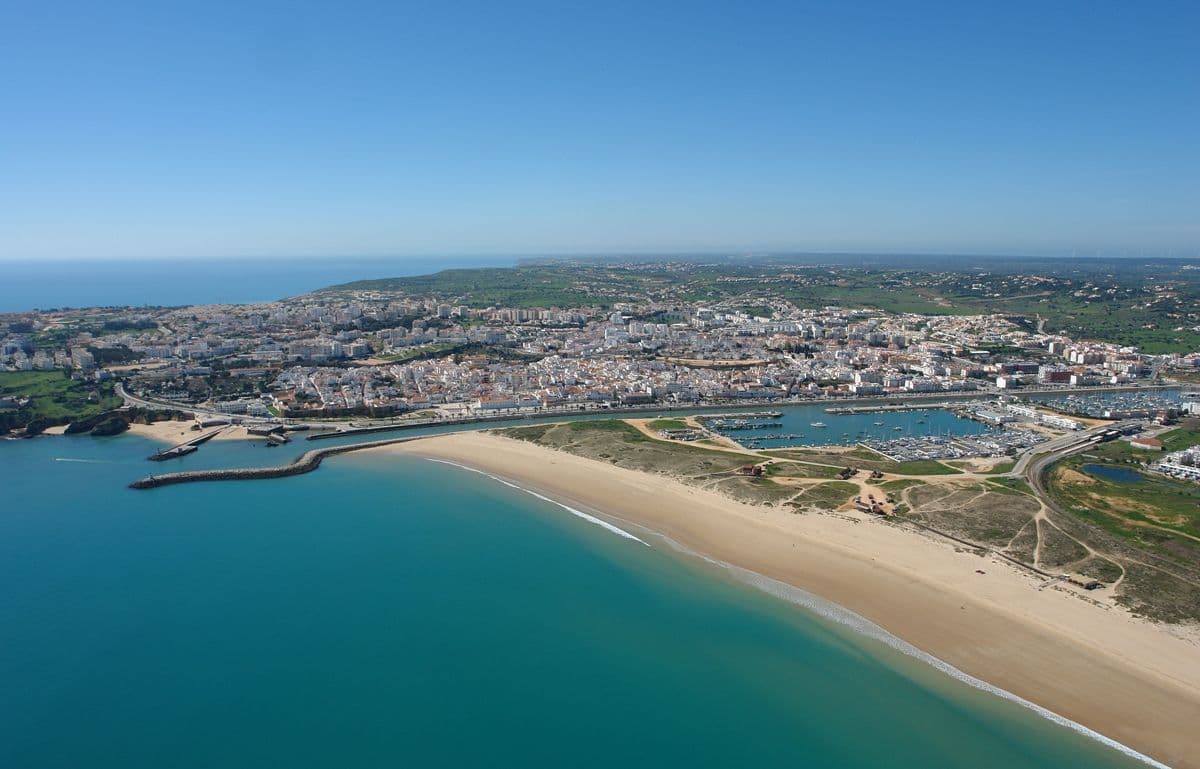
Portugal's regional property markets present varied opportunities aligned with PT2030 reprogramming priorities. The **Algarve region**, traditionally focused on tourism and second-home markets, now benefits from enhanced funding for water management and sustainable construction—addressing critical infrastructure needs as the region faces increasing climate pressures. Properties in areas like **Lagos** and **Tavira**, accessible via Faro airport and the A22 motorway, offer entry points around €2,500-3,500/m² while qualifying for sustainability-focused development incentives.
The **Centro region**'s reprogramming particularly emphasizes affordable housing and critical technologies, supporting markets like **Coimbra**—home to Portugal's oldest university and a growing international student population. This academic presence creates sustained rental demand, with gross yields typically 5.5-6.5% compared to Lisbon's 3.8-5.0%, while property valuations remain substantially lower at €1,800-2,200/m². The region's connectivity via the A1 motorway (1.5 hours to Lisbon) and rail links makes it attractive for professionals seeking value alternatives to capital city pricing.
Several factors position investors to capitalize on PT2030 funding realignment:
• **Timing Advantages**: The funding reprogramming creates a multi-year implementation window (2025-2027) allowing strategic positioning before full market recognition of regional development potential
• **Co-Financing Leverage**: Increased EU co-financing rates (up to 85% for some projects) reduce private capital requirements while maintaining full upside participation in supported developments
• **Regulatory Alignment**: Projects qualifying for EU funding automatically meet stringent environmental and social governance standards, enhancing marketability to institutional tenants and buyers
• **Infrastructure Catalyst Effects**: Historical analysis shows EU-funded infrastructure improvements typically generate 15-25% property value appreciation in immediately affected areas within 36 months of project completion
The **Alentejo region** presents particularly compelling opportunities given its combination of affordability (€1,200-1,800/m²), natural beauty, and targeted funding for water resilience and sustainable construction. Coastal areas like **Comporta** and **Melides**, accessible via the A2 motorway and served by regional airports, have attracted significant international investment despite lower absolute pricing. The region's reprogramming toward affordable housing and environmental resilience creates opportunities for developers and investors aligned with sustainability priorities while capturing appreciation potential as infrastructure improvements enhance accessibility and amenities.
## Strategic Investment Considerations
For international investors evaluating Portuguese opportunities amid PT2030 reprogramming, several strategic approaches merit consideration. Direct development partnerships with local constructors qualifying for EU funding can provide enhanced returns through reduced capital requirements and accelerated project timelines. Alternatively, acquiring properties in areas targeted for infrastructure investment allows investors to benefit from appreciation catalysts without direct development risk. Success in either approach requires engagement with English-speaking legal professionals [https://www.realestate-lisbon.com/english-speaking-lawyers] familiar with EU funding compliance requirements and regional market specialists [https://www.realestate-lisbon.com/professionals/real-estate-agents-regional-expertise] who understand local development patterns.
Tax structuring becomes particularly important for investors participating in EU-funded projects. While Portugal's **Non-Habitual Resident (NHR) 2.0 regime** offers favorable treatment for certain foreign-source income, participation in publicly-supported developments may trigger additional compliance requirements. Properties qualifying for EU funding often involve extended holding periods and specific usage requirements, making consultation with property tax specialists [https://www.realestate-lisbon.com/professionals/accountants-property-tax] essential for optimizing after-tax returns while maintaining program eligibility.
Risk assessment for EU-supported projects requires understanding both market dynamics and regulatory compliance. While public funding reduces development risk, projects must meet stringent environmental, social, and governance standards throughout implementation. Investors should evaluate developers' track records in managing EU-funded projects and ensure adequate risk mitigation strategies [https://www.realestate-lisbon.com/buying-guide/investment-risks] address potential regulatory changes or funding modifications. Additionally, currency exposure for non-euro investors requires consideration, though Portugal's eurozone membership provides stability relative to emerging market alternatives.
Market entry timing appears favorable for investors positioned to act on reprogramming opportunities. Current market conditions—characterized by moderating appreciation rates (5-8% projected for 2026 versus recent double-digit growth) and enhanced public funding availability—create an attractive risk-adjusted environment for strategic acquisitions. Success stories from similar EU funding cycles demonstrate potential for significant returns: investors who positioned early in previous cohesion fund programs typically captured 20-35% total returns over 3-5 year periods through combinations of direct project participation and property appreciation in affected markets.
## Looking Ahead: Implementation Timeline and Market Impact
The PT2030 reprogramming sets Portugal on an accelerated implementation trajectory through 2027, with project approvals and funding allocations expected to accelerate throughout 2025-2026. For investors, this creates a defined window for strategic positioning before full market recognition of funding impacts drives increased competition and pricing. The combination of secured EU allocations, enhanced execution flexibility, and alignment with Portugal's broader economic development priorities suggests sustained infrastructure investment momentum regardless of domestic political changes.
Market analysts project the funding infusion will catalyze approximately €2-3 billion in total investment activity when combining EU allocations with private co-financing and multiplier effects. This capital injection arrives as Portugal's property market moderates from pandemic-era extremes toward sustainable growth patterns, creating favorable conditions for value-focused investment strategies. International investors leveraging professional guidance from investment-focused agents [https://www.realestate-lisbon.com/professionals/real-estate-agents-investment-properties] and comprehensive analysis tools [https://www.realestate-lisbon.com/calculators/investment-analyzer] can identify specific opportunities aligned with EU funding priorities while maintaining balanced risk-return profiles.
The convergence of EU policy priorities with Portugal's market fundamentals positions the country favorably for continued international capital attraction. As environmental regulations tighten across Europe and housing affordability challenges persist, Portugal's proactive approach through PT2030 reprogramming demonstrates institutional capacity for adaptive policy-making—an increasingly important factor for institutional investors evaluating long-term market stability. For high-net-worth individuals seeking European real estate exposure, Portugal's combination of eurozone stability, transparent legal frameworks, and now-enhanced infrastructure investment creates compelling wealth preservation and appreciation opportunities accessible through specialized luxury property advisors [https://www.realestate-lisbon.com/professionals/real-estate-agents-luxury-properties] and comprehensive market intelligence. For expert guidance on structuring optimal Portuguese real estate investments aligned with EU funding opportunities and infrastructure development priorities, contact realestate-lisbon.com [https://www.realestate-lisbon.com].