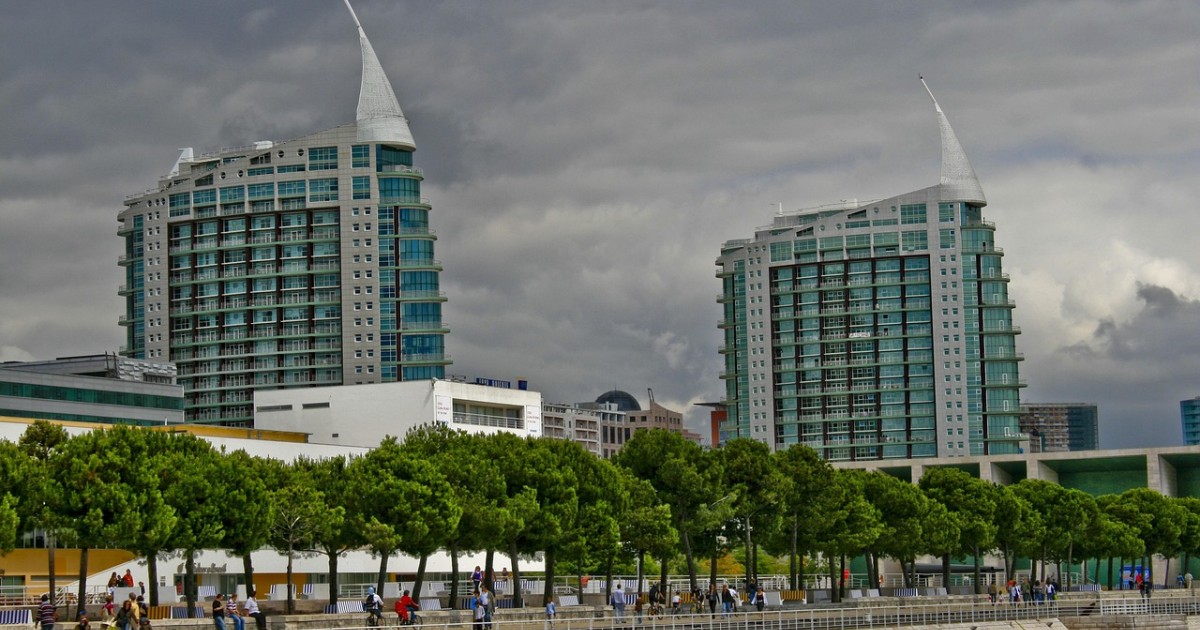
Lisbon's Luxury Property Market Outperforms London and Paris with 3.1% Growth, Knight Frank Report Reveals
By Kellogg Fairbank
Published: December 16, 2025
Category: market-trends
### Lisbon's Prime Property Market Defies Global Slowdown with 3.1% Growth, Outpacing London and Paris
In a notable demonstration of market resilience, **Lisbon's prime residential property market** recorded 3.1% annual price growth in Q3 2025, significantly outperforming major European capitals including London and Paris in the latest Knight Frank Prime Global Cities Index. The Portuguese capital secured 18th position globally despite worldwide market headwinds, according to data from **Quintela + Penalva**, Knight Frank's exclusive Portuguese affiliate specializing in luxury real estate.
This performance contrasts sharply with the global trend, where prime residential price growth slowed to 2.5% annually—its weakest pace in two years. While major European cities like London posted a -3.6% decline and Paris managed just 1.4% growth, Lisbon's market demonstrated remarkable stability amid macroeconomic uncertainty.
### Key Takeaways
• ✓ Lisbon prime properties grew 3.1% annually, ranking 18th globally in Knight Frank's index
• ✓ Portuguese capital outperformed London (-3.6%), Paris (1.4%), and other major European cities
• ✓ Demand-supply imbalance and international buyer interest drive Lisbon's market resilience
• ✓ Comporta, Cascais-Estoril, and Porto identified as additional Portuguese growth markets
The **prime residential market**—defined as the top 5% of properties by value—has found particular strength in Lisbon's historic neighborhoods and waterfront districts. Areas like **Chiado** and **Príncipe Real** continue attracting international buyers seeking quality properties in Portugal's capital, which offers both lifestyle appeal and investment potential. For detailed neighborhood analysis, see our comprehensive Lisbon neighborhood guide [https://www.realestate-lisbon.com/lisbon-real-estate-neighborhoods].
Lisbon's strategic positioning as a safe haven for real estate investment has strengthened considerably since 2020. The city's combination of political stability, favorable tax regimes including the **NHR program**, and high quality of life continues drawing wealthy individuals from across Europe and beyond. This sustained international interest has created a fundamental supply-demand imbalance that supports price appreciation even during broader market slowdowns.
## Market Implications for Luxury Property Investors
The 3.1% growth figure carries significant implications for **international property investors** evaluating European luxury markets. Lisbon's outperformance demonstrates the market's ability to maintain value during global uncertainty, a crucial consideration for portfolio diversification and wealth preservation strategies.
This **resilience factor** becomes particularly relevant when compared to traditional luxury markets showing volatility. While London's prime market suffers from financing cost sensitivity and macroeconomic concerns, Lisbon benefits from what Francisco Quintela describes as "solid, secure, and sustainable" market fundamentals that appeal to risk-conscious investors seeking European exposure.
The data suggests Portuguese prime properties offer defensive characteristics increasingly valued in uncertain times. Unlike speculative markets driven primarily by leverage, Lisbon's growth stems from genuine demand fundamentals including limited supply in historic areas, consistent international buyer interest, and improving infrastructure connections. Investors exploring luxury property opportunities [https://www.realestate-lisbon.com/professionals/real-estate-agents-luxury-properties] should note these structural advantages.
Furthermore, the broader Portuguese market shows synchronized strength across multiple locations. Quintela's positive outlook on **Comporta**, **Cascais-Estoril**, and **Porto** indicates a national luxury market benefiting from coordinated growth drivers rather than capital-city concentration effects typical in other countries.
## Knight Frank's Global Analysis Framework
**Knight Frank**, the global property consultancy tracking luxury real estate across 46 cities worldwide, provides institutional-grade market intelligence through its Prime Global Cities Index. The firm's methodology monitors price movements in the top 5% of each market, creating standardized comparisons for international investors evaluating cross-border opportunities.
The index's global scope reveals important contextual factors affecting luxury markets. While Tokyo leads with 55.9% annual growth driven by currency effects and supply scarcity, and Dubai maintains 8.5% growth despite quarterly corrections, European markets show mixed performance with Lisbon emerging as a relative bright spot amid continental uncertainty.
## Portugal's Luxury Real Estate Ecosystem
Portugal's luxury property market has evolved into a sophisticated ecosystem serving diverse international clientele. From historic **palacetes** in Lisbon's **Lapa** district to contemporary villas in **Cascais**, the market offers varied product types meeting different investor preferences and lifestyle requirements.
Several structural factors continue supporting Portugal's luxury market resilience:
• **Supply Constraints**: Limited developable land in prime Lisbon areas restricts new luxury supply, supporting price stability
• **International Demand**: Consistent buyer interest from Brazil, UK, France, and other markets seeking EU access and lifestyle benefits
• **Quality Developments**: New luxury projects in areas like Avenidas Novas [https://www.realestate-lisbon.com/off-plan/lisbon/avenidas-novas] and waterfront locations meeting international standards
• **Investment Fundamentals**: Rental yields, capital appreciation potential, and favorable tax treatment creating compelling total returns
These factors combine to create what market participants describe as a "new normal" for Portuguese luxury real estate—less speculative, more fundamentals-driven, and increasingly integrated with global wealth management strategies. The market's maturation attracts institutional capital and family offices seeking stable European exposure.
## Investment Strategy Considerations
For investors evaluating Lisbon's luxury market against broader European opportunities, the 3.1% growth figure provides important benchmarking data. The performance suggests Portuguese prime properties offer competitive risk-adjusted returns while providing portfolio diversification benefits often missing in correlated luxury markets.
Strategic considerations include timing entry around expected interest rate movements in 2026, as noted by Knight Frank's research team. Lower financing costs could provide additional tailwinds for an already resilient market. Foreign buyers should consult with English-speaking real estate lawyers [https://www.realestate-lisbon.com/english-speaking-lawyers] familiar with Portuguese luxury property transactions to navigate specific legal requirements and tax optimization strategies.
The market's evolution toward quality over quantity also suggests selective investment approaches may outperform broad market exposure. Properties with unique characteristics—historic significance, exceptional locations, or architectural distinction—demonstrate superior price resilience and appreciation potential. Working with agents specializing in international clients [https://www.realestate-lisbon.com/professionals/real-estate-agents-international-clients] can provide access to off-market opportunities in this segment.
## Future Market Trajectory
Lisbon's luxury property market appears positioned for continued outperformance relative to European peers. The combination of structural supply constraints, sustained international demand, and improving macroeconomic conditions creates favorable fundamentals for medium-term appreciation.
The market's demonstrated resilience during global uncertainty, combined with Portugal's improving economic profile and infrastructure development, suggests luxury properties will continue attracting capital seeking both lifestyle benefits and investment returns. For comprehensive guidance on navigating Lisbon's luxury property market, contact realestate-lisbon.com [https://www.realestate-lisbon.com/].