Portugal's Luxury Housing Market Enters New Growth Phase with Geographic Diversification: Key Insights for Lisbon Investors
By Nikola Zdraveski
Published: September 24, 2026
Category: investment-insights
### Portugal's Luxury Housing Market Enters New Growth Phase with Geographic Diversification: Key Insights for Lisbon Investors
A pivotal report, 'The Luxury Housing Market in Portugal,' meticulously compiled by the insurer **Hiscox**, unequivocally demonstrates that the Portuguese residential market is transitioning into a robust new phase of growth. This expansion is not merely driven by the sustained appreciation of established prime destinations but, more significantly, by a profound geographic diversification in both the demand for and supply of high-value properties across the nation. This shift underscores a maturing market, offering expanded opportunities for discerning foreign investors and expats.
### Key Takeaways
• ✓ Portugal's luxury real estate market is expanding beyond traditional hubs like Lisbon and the Algarve.
• ✓ Emerging regions such as Comporta, Madeira, and Grândola are attracting substantial international investment.
• ✓ Lisbon maintains its central role, exhibiting strong growth potential and competitive pricing relative to other European capitals.
• ✓ Foreign demand is a critical market driver, with buyers prioritizing privacy, sustainability, energy efficiency, and integrated technology.
While **Lisbon** and the **Algarve** have historically commanded central positions on Portugal's premium real estate map, the Hiscox document highlights a compelling trend: other destinations are rapidly ascending in prominence. Regions such as **Comporta**, the island of **Madeira**, **Porto**, **Vila Nova de Gaia**, and **Grândola** are increasingly attracting a diverse cohort of national and international buyers. This signals a broadening appeal for luxury properties, extending well beyond the traditional investment corridors and creating new focal points for geographic and sector deep dives [https://www.realestate-lisbon.com/blog/geographic-and-sector-deep-dives].
The first quarter of 2026 provided tangible evidence of this widespread appreciation. **Albufeira**, a key Algarve locale, registered a substantial 16% increase in value, closely followed by **Lagos** at 13.5%, and both **Loulé** and **Tavira** at 11.1%. In the northern region, **Porto** and **Vila Nova de Gaia** demonstrated robust growth rates of 10.5% and 14.3%, respectively. Madeira's market performance was equally impressive, with **Funchal** appreciating by 16.9% and **Calheta** by 16.7%. This regional dynamism contributed to an extraordinary 75% surge in luxury property sales across Madeira during 2025, underscoring the island's burgeoning appeal for high-net-worth individuals.
## Market Implications for Foreign Investors
This pronounced geographic diversification carries significant implications for foreign investors seeking to optimize their portfolios in Portugal. The emergence of territories like **Grândola**, which recorded an impressive 27.5% annual appreciation and an average luxury property price of 2.7 million euros in 2025, clearly demonstrates that Portugal's premium market is transcending its traditional Lisbon-Algarve axis. This expansion necessitates a more comprehensive investment strategy, encouraging a broader assessment of investment property opportunities [https://www.realestate-lisbon.com/professionals/real-estate-agents-investment-properties] in these rapidly appreciating areas.
A primary catalyst for the sustained vitality of the luxury segment is the escalating internationalization of demand. In the **Algarve**, foreign buyers constitute over 30% of all residential transactions and an overwhelming 80% in prime luxury locations. This firmly establishes the region as a premier European destination for those acquiring a second residence or a high-value real estate asset. Such robust foreign interest signals enduring demand for premium properties across Portugal, a trend that astute investors can leverage by consulting English-speaking real estate agents [https://www.realestate-lisbon.com/english-speaking-agents] specializing in international clientele.
The contemporary luxury buyer is characterized by an international outlook, mobility, extensive information, and heightened demands. Their criteria extend beyond mere location and size to encompass privacy, sustainability, energy efficiency, cutting-edge technology, and flexible usage options. High-value properties are increasingly perceived as multifaceted assets—simultaneously a primary residence, a strategic investment, and a generational legacy. This complex profile necessitates a sophisticated approach to investment risk assessment [https://www.realestate-lisbon.com/buying-guide/investment-risks] and property management, which platforms like HomeOS's foreign buyer guide [https://www.homeos.pt/foreign-buyers/] can assist with, consolidating registry data from 308 Portuguese municipalities.
## Hiscox's Strategic Market Overview
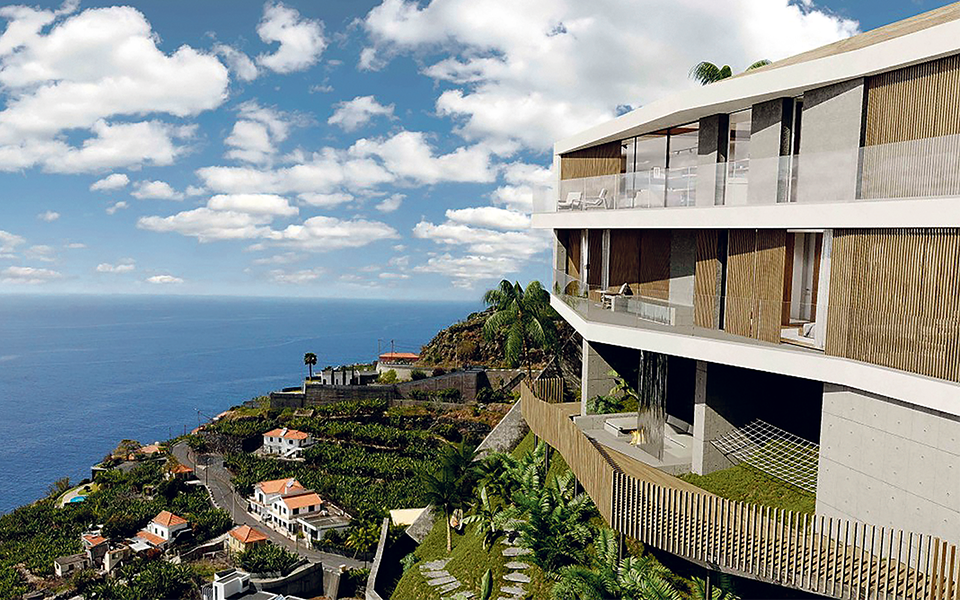
The Hiscox report offers a granular understanding of the evolving luxury market, emphasizing that geographic diversity fosters distinct expressions of luxury living. In the **Algarve**, the prevailing ethos revolves around the international second home and a lifestyle intrinsically linked to the climate and coastal proximity. **Comporta**, conversely, attracts demand primarily associated with nature, unparalleled privacy, and low-density development. In **Porto**, the rich historical heritage, urban authenticity, and unique identity gain significant relevance. Meanwhile, **Madeira** distinguishes itself through its temperate climate, dramatic landscapes, and superior quality of life, all of which become critical differentiating factors for buyers.
**Lisbon** unequivocally remains at the epicenter of Portugal's premium residential market. The capital recorded a substantial 6% growth in prime values during 2024 and is strategically positioned among the top five global markets for appreciation in 2026, with a projected growth trajectory of between 4% and 6%. Crucially, Lisbon's average prime property price maintains a highly competitive edge, remaining approximately 25% below that of Paris or London and a remarkable 45% below New York. This significant price differential substantially enhances its allure for international investors [https://www.realestate-lisbon.com/blog/investment-and-strategy-guides] seeking value and growth.
## Lisbon Metropolitan Area: Micro-Market Dynamics
The intense demand pressure observed in Lisbon extends robustly to the premium municipalities and distinct zones within its metropolitan area. In the first quarter of 2026, **Cascais** achieved an average price of €7,168/m², demonstrating a compelling annual appreciation of 13.0%. Concurrently, **Sintra** reached €4,733/m², experiencing a 14.9% growth over the same period, notably surpassing Lisbon's 4.9% increase. Within the most exclusive segments, values are even more pronounced: **Quinta da Marinha** commanded €11,293/m² and **Avenida da Liberdade** €9,964/m², unequivocally reinforcing the existence of sophisticated submarkets within the broader luxury real estate universe. Investors can explore off-plan properties in Cascais [https://www.realestate-lisbon.com/off-plan/cascais] for new development opportunities.
Several interconnected factors continue to shape and influence the luxury market dynamics within the Lisbon metropolitan area:
• **Diverse Buyer Profiles**: Lisbon attracts a global, urban, and younger demographic, often seeking vibrant city living and investment opportunities in areas like Chiado [https://www.realestate-lisbon.com/lisbon/chiado] or Baixa [https://www.realestate-lisbon.com/lisbon/baixa].
• **International Family Appeal**: **Cascais** and **Estoril** predominantly draw international families and more mature investors, valuing their coastal lifestyle, international schools, and established communities.
• **Exclusivity and Nature Integration**: **Sintra** distinguishes itself by offering unique properties, often nestled within natural landscapes, providing exclusivity and a tranquil environment that appeals to a niche premium segment.
• **Property Sophistication**: There is a growing demand for properties featuring premium materials, advanced home automation systems, and integrated technological solutions, reflecting a global trend towards smart and sustainable living.
The report further elucidates that the diversification of the luxury residential market inherently introduces greater complexity in the management and protection of these assets. Seasonal residences managed remotely, coastal properties, historic buildings, or properties situated in natural or insular contexts each present highly distinct needs for prevention, evaluation, repair, and assistance. This necessitates a bespoke approach from specialized professionals, including pre-purchase inspection services [https://www.realestate-lisbon.com/home-inspectors-pre-purchase-inspections] and structural engineering firms [https://www.realestate-lisbon.com/civil-engineers-structural-engineering].
## Strategic Investment Considerations
For foreign investors, the evolving landscape of Portugal's luxury real estate market signifies a significantly broader spectrum of opportunities extending beyond the historically dominant hubs. A nuanced understanding of the specific characteristics, growth drivers, and buyer demographics of each region is paramount for formulating informed investment decisions. The pronounced emphasis on sustainability, energy efficiency, and integrated technology within new luxury developments also aligns seamlessly with global investment trends, promising enhanced long-term value and resilience. Investors are strongly advised to utilize sophisticated tools such as a property investment analyzer [https://www.realestate-lisbon.com/calculators/investment-analyzer] to meticulously evaluate potential returns and risks.
Eva Peribáñez, the esteemed director of Hiscox Iberia's Art and Private Clients division, powerfully articulates that a luxury home in the contemporary context transcends the traditional definition of mere property. It is simultaneously a living space, a strategic investment, a cherished family legacy, and frequently, a profound reflection of an international lifestyle. This multifaceted transformation mandates an equally personalized and comprehensive approach to asset protection, recognizing that each property's unique location, architectural integrity, intended use, and degree of customization collectively determine a specific risk profile. Engaging with real estate lawyers specializing in due diligence [https://www.realestate-lisbon.com/professionals/real-estate-lawyers-due-diligence] is indispensable for navigating these intricate legal and financial considerations.
## Future Outlook and Opportunities
The ongoing evolution of Portugal's luxury real estate market, characterized by its dynamic geographic diversification and the increasingly sophisticated demands of its buyer base, points towards a future brimming with potential. The sustained and robust interest from international buyers, synergized with the unique and compelling appeal of various Portuguese regions, firmly positions the country as an exceptionally attractive destination for high-value property investments. This positive trajectory is further bolstered by Portugal's competitive pricing structure when compared to other major European capitals, a factor consistently highlighted in our trend analysis and future forecasting [https://www.realestate-lisbon.com/blog/trend-analysis-future-forecasting].
As the Portuguese luxury real estate market continues its trajectory of maturation and expansion, investors are strongly encouraged to proactively seek expert guidance to adeptly navigate its inherent nuances and strategically capitalize on the myriad emerging opportunities. For unparalleled insights and professional assistance in Portugal's dynamic luxury real estate sector, contact realestate-lisbon.com [https://www.realestate-lisbon.com/].