New 'Land Staging' Method by Portuguese Architects Promises up to 50% Boost in Real Estate Project Value
By Pieter Paul Castelein
Published: November 23, 2025
Category: investment-insights
### New 'Land Staging' Method by Portuguese Architects Promises up to 50% Boost in Real Estate Project Value
In a notable innovation within Portugal's dynamic real estate landscape, the architecture firm **Segmento Urbano** has developed and registered a proprietary methodology known as 'Land Staging,' which has proven to increase the value of real estate development projects by as much as **50%**. This strategic, pre-construction approach transforms raw land into a high-value, market-ready asset, a development of significant interest to foreign investors and developers looking to maximize returns in Portugal. The firm, with offices in Lisbon, Porto, and Luanda, is pioneering a shift from traditional design to value-driven architectural strategy.
### Key Takeaways
• ✓ **Segmento Urbano**, a leading Portuguese architecture firm, has launched 'Land Staging,' a methodology to significantly increase property project valuations.
• ✓ The method delivered a **50%** value increase for the Avintes Valley Living project and over 15% for another in Famalicão, demonstrating its financial impact.
• ✓ 'Land Staging' de-risks investments by conducting comprehensive technical, legal, and strategic analysis before construction, boosting investor confidence.
• ✓ This integrated approach, combining architecture, engineering, and economics, is designed to unlock the full economic potential of land assets in competitive markets like Lisbon.
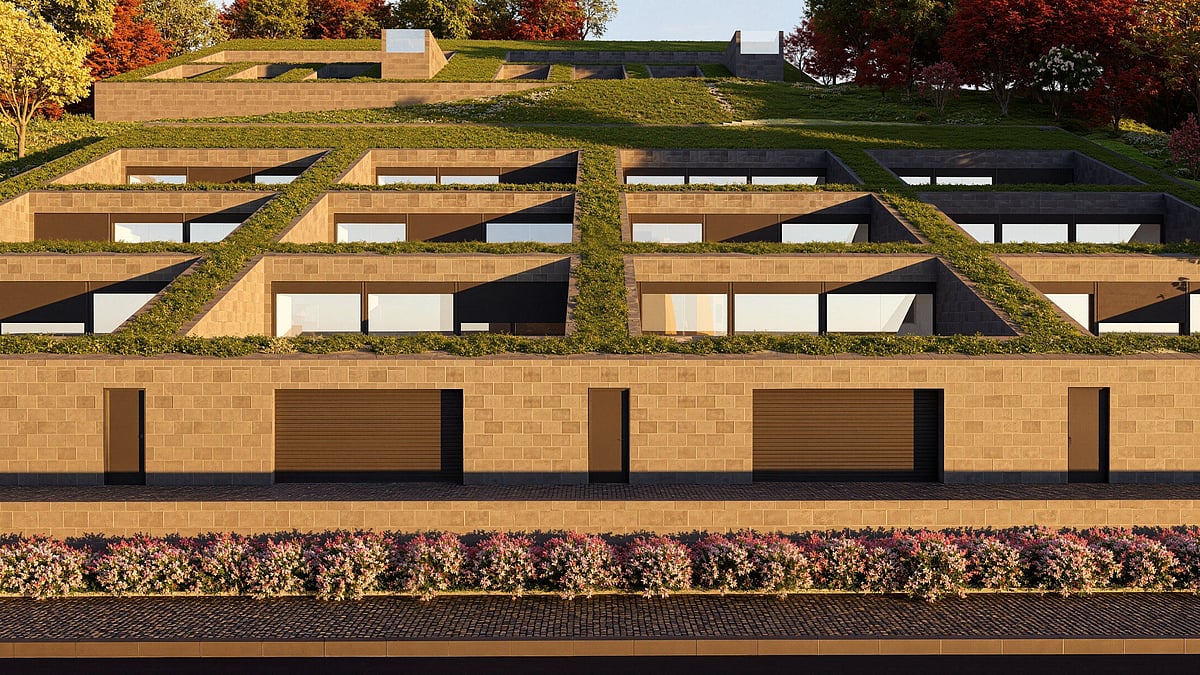
The power of 'Land Staging' is best illustrated by its application to a complex plot in Avintes, near Porto, which became the **Avintes Valley Living** project. Maria João Correia, the founder of Segmento Urbano, explained that the terrain's challenging urban framework was systematically analyzed and repositioned to create a contemporary housing concept perfectly aligned with the land's potential. This process involved optimizing the building layout and enhancing the usable-to-gross area ratio, directly boosting its market appeal and financial viability. Such strategic planning is essential for anyone navigating the complexities of real estate, a topic covered extensively in our main buying guide [https://www.realestate-lisbon.com/main-buying-guide].
This methodology is not just theoretical; it has a proven track record. Before the 50% uplift in Avintes, the firm transformed an 'architecturally identity-less' plot in Famalicão into the 'Roots & Wings' project, achieving a valuation increase exceeding 15%. According to Correia, these successes hinge on 'strategic decisions made before the investment,' such as redesigning typologies and clarifying construction potential. This proactive analysis serves to 'eliminate uncertainties, define urban planning procedures, and generate confidence among investors and buyers,' a critical advantage in any development venture. The principles are universally applicable, from residential projects to larger commercial developments, and are especially pertinent for those looking at off-plan properties in Portugal [https://www.realestate-lisbon.com/off-plan].
## Market Implications for Investors
The formalization of 'Land Staging' represents a pivotal shift in how real estate projects can be approached in Portugal. For foreign investors, it offers a tangible framework to mitigate risk and enhance profitability. By making architecture 'the starting point for economic value,' the methodology ensures that every design decision is tied to a financial outcome. This is a departure from the traditional model where architecture is often seen as a later-stage creative input rather than a foundational economic strategy. This aligns with the growing need for detailed financial analysis, for which tools like a property investment analyzer [https://www.realestate-lisbon.com/calculators/investment-analyzer] are invaluable.
This approach is particularly powerful in a market where land is scarce and regulations can be complex. By providing a clear, evidence-based valuation and development plan before major capital is deployed, 'Land Staging' makes projects more attractive to lenders and equity partners. It effectively de-risks the initial, most uncertain phase of development. The methodology’s international registration via the Madrid Protocol, covering the EU, UK, US, and Switzerland, also provides a recognized standard of quality and strategic thinking, giving international investors an added layer of confidence. For those specifically interested in the legal side, consulting with English-speaking real estate lawyers [https://www.realestate-lisbon.com/english-speaking-lawyers] is a recommended step.
## Segmento Urbano's Market Position
With a history spanning nearly two decades, **Segmento Urbano** has carved out a niche as an innovator in the Portuguese market. The creation of 'Land Staging' was born from founder Maria João Correia’s direct experience with projects that failed to realize their potential because they 'started at the end,' focusing on construction without a robust upfront strategy. Her vision was to create a process that values land holistically, turning it into a 'strategic, sustainable, and emotionally relevant asset.'
The firm’s structure underpins this philosophy. Its 26-person in-house team, supported by external collaborators, brings together a wide range of disciplines. 'Land Staging integrates architecture, engineering, economics, urbanism, landscaping, and strategic communication,' Correia states. This multidisciplinary approach ensures that every dimension of a land asset is analyzed, from spatial potential and technical viability to profitability paths and market narrative. This integrated service is reflective of the high-quality professionals listed in directories like our professionals section [https://www.realestate-lisbon.com/professionals].
## Lisbon & Broader Market Context
The emergence of a methodology like 'Land Staging' is a direct response to the maturation of the Portuguese real estate market, particularly in hotspots like Lisbon. As property values have risen, the margin for error in development projects has shrunk. Investors can no longer rely on a rising tide to lift all boats; success now requires sophisticated, data-driven strategies. This is a key theme in our market intelligence and analysis blog [https://www.realestate-lisbon.com/blog/market-intelligence-and-analysis].
Several market factors underscore the need for such a strategic approach:
• **Regulatory Hurdles**: Navigating Portugal's planning permissions and municipal regulations (PDMs) is a significant challenge. A methodology that clarifies these procedures upfront is invaluable. For instance, understanding the Cascais PDM [https://www.realestate-lisbon.com/cascais/pdm] is critical for any project there.
• **Investor Expectations**: The influx of international capital has raised the bar. Global investors are accustomed to rigorous due diligence and expect clear, predictable returns, which 'Land Staging' helps deliver.
• **Product-Market Fit**: In a competitive environment, ensuring the final development meets a specific market need is crucial. This method's focus on creating a 'coherent and desirable product' directly addresses this.
• **Sustainability and ESG**: Growing emphasis on environmental, social, and governance (ESG) criteria means that sustainable design is no longer a bonus but a core requirement, a principle embedded in the 'Land Staging' process and a focus for specialized green building constructors [https://www.realestate-lisbon.com/professionals/constructors-green-building].
This strategic framework provides a robust answer to these evolving market demands, positioning it as a vital tool for future-focused developers.
## Investment Considerations
For foreign investors considering a development project in Portugal, the 'Land Staging' methodology offers a clear and compelling value proposition. It essentially provides a comprehensive business plan for a plot of land, transforming it from a passive holding into an active, value-generating asset. This is particularly useful for those who may lack deep local knowledge of the intricate planning laws and market nuances.
The key takeaway for investors is the importance of allocating resources to this pre-development phase. While it represents an initial cost, the potential 50% uplift in final project value demonstrates a powerful return on investment. It shifts the development process from being reactive to proactive, allowing investors to control the narrative and positioning of their asset from the outset. Engaging with a forward-thinking architecture firm [https://www.realestate-lisbon.com/architecture-firms] that employs such methodologies can be the difference between a standard project and a landmark success.
## Future Outlook
As the Portuguese real estate market continues to attract global attention, methodologies like 'Land Staging' are likely to become more widespread. They represent the natural evolution of the industry towards greater professionalism, predictability, and value creation. This approach not only benefits investors by maximizing returns but also contributes to better urban planning and more sustainable development outcomes.
The success of Segmento Urbano's innovative model reinforces the notion that Portugal's property sector is not just growing, but also maturing in its strategic capabilities. For investors seeking to capitalize on this evolution, partnering with firms that are at the forefront of such trends is essential. For expert guidance on identifying and executing high-value real estate projects in Portugal, contact realestate-lisbon.com [https://www.realestate-lisbon.com/].