Lisbon Student Housing: 41 Projects Approved, But Bureaucracy and Costs Stall Development
By Kellogg Fairbank
Published: March 20, 2026
Category: investment-insights
### Lisbon Student Housing Crisis: 41 Approved Projects Stalled by Bureaucracy and Construction Costs
In a stark demonstration of Portugal's bureaucratic challenges, the **Câmara Municipal de Lisboa** has approved 41 student housing projects between early 2022 and February 18, 2026, representing 5,992 beds, yet many may never materialize due to regulatory hurdles and rising construction costs. This disconnect between approval and execution underscores a critical shortage—Lisbon faces a deficit of approximately 30,000 student beds—while monthly rents for private rooms range from €250 to €945 according to the **Observatório do Alojamento Estudantil**.
The stalled development pipeline reflects broader systemic issues affecting Portuguese real estate, particularly in specialized housing segments. While the municipality prioritizes student accommodation through its **Urban Rehabilitation Society (SRU)**, which promotes three public projects in **Marvila** and **Parque das Nações** totaling 723 beds, the path from architectural approval to construction commencement remains fraught with obstacles. International investors monitoring Lisbon's property market dynamics should note these execution challenges as indicators of regulatory complexity that extends beyond student housing to broader residential development.
This analysis examines the implications for foreign investors, the structural barriers affecting development, and the market opportunities emerging from Portugal's persistent housing shortage across multiple demographic segments.
### Key Takeaways
• ✓ Lisbon approved 41 student housing projects (5,992 beds) since 2022, with 16 additional proposals (5,810 beds) under review
• ✓ Despite approvals, many projects never break ground due to post-approval requirements and construction cost escalations
• ✓ Monthly student accommodation costs range €250-945, highlighting significant market demand for quality housing
• ✓ Shortfall of 30,000 student beds creates investment opportunity in purpose-built student accommodation segment
The geographic distribution of approved student housing projects spans Lisbon's diverse neighborhoods, from the historic eastern district of **Marvila** to the modern waterfront area of **Parque das Nações**. **Marvila**, located 5 kilometers southeast of central Lisbon and accessible via the Green Metro Line, has emerged as an emerging creative quarter with industrial heritage buildings increasingly converted for residential and educational use. The area's transformation from traditional manufacturing to knowledge-economy uses makes it particularly attractive for student accommodation, offering lower land costs than prime central areas while maintaining excellent connectivity to major universities.
**Parque das Nações**, positioned 7 kilometers northeast of central Lisbon along the Tagus River waterfront and served by Gare do Oriente transport hub, represents the opposite end of the development spectrum. This post-1998 Expo district features contemporary infrastructure, international corporate presence, and established residential communities, making it suitable for premium student housing targeting international students and postgraduate researchers. The area's modern amenities, including the **Vasco da Gama Shopping Center** and extensive riverside parks, create an appealing environment for academic communities. For detailed neighborhood analysis, explore our comprehensive Lisbon neighborhoods guide [https://www.realestate-lisbon.com/lisbon-real-estate-neighborhoods].
## Market Implications for Real Estate Investors
The persistent student housing shortage creates compelling investment opportunities for developers and institutional investors willing to navigate Portugal's regulatory landscape. The **Plano Nacional para o Alojamento no Ensino Superior (PNAES)**—created in February 2019 through Decree-Law 30/2019—establishes a €447 million ten-year program targeting expansion from 15,073 to 26,772 student beds by 2026. This represents the largest student housing investment in Portuguese history, signaling sustained government commitment to the sector despite implementation challenges.
The PNAES operates through three primary mechanisms: rehabilitation of existing buildings through the **Fundo Nacional de Reabilitação do Edificado (FNRE)** with its €1.4 billion allocation; direct promotion by higher education institutions; and public-private partnerships with entities like **Pousadas de Juventude**. For foreign investors, understanding these structures is essential as they determine project financing, regulatory requirements, and potential returns. The program's annual review process, managed by the **Direção-Geral de Ensino Superior (DGES)**, creates opportunities for new proposals but also introduces policy uncertainty that affects long-term planning.
Current rental yields in Lisbon's student accommodation sector range from 5% to 8% gross annually, according to market data from specialized operators, significantly exceeding traditional residential yields of 3-4%. This premium reflects specialized operational requirements but also demonstrates the segment's revenue potential. Private rooms commanding €250-945 monthly rents indicate strong demand elasticity, with international students and postgraduates typically occupying the upper price bands while domestic students seek more affordable options.
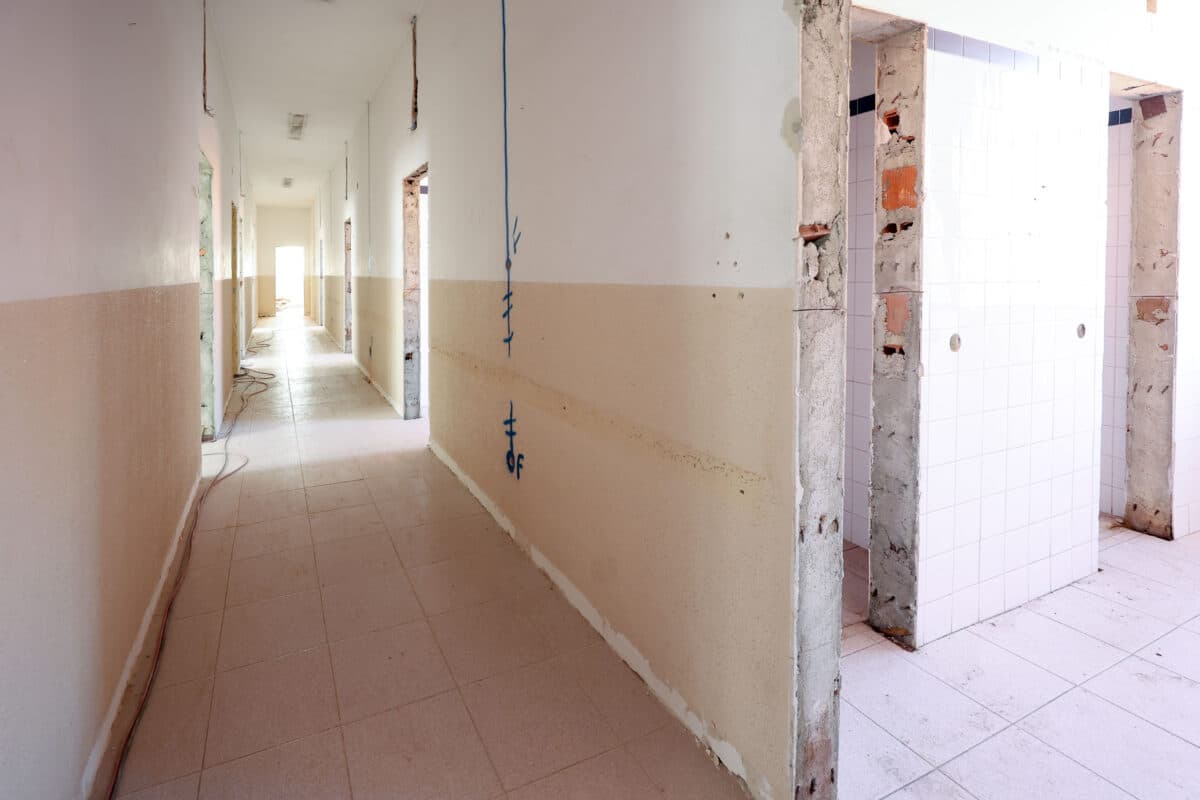
The construction cost challenge represents the sector's most significant barrier. Rising civil construction prices have rendered many approved projects financially unviable, particularly when government-mandated rent caps limit revenue potential. The failed **Ministry of Education building** project exemplifies this dynamic: despite €17.5 million valuations for the 12,200 m² property on **Avenida 5 de Outubro**, bed count reductions from 600 to 425 units made the economics unsustainable. For investors, this highlights the critical importance of thorough financial modeling and contingency planning when evaluating student housing opportunities, particularly for projects requiring significant rehabilitation investment.
## Understanding Portugal's Student Housing Ecosystem
Portugal's student housing landscape operates within a complex framework involving multiple stakeholders and regulatory layers. The **Fundação para o Alojamento no Ensino Superior (FAPES)** and individual universities manage traditional residence halls, while private operators like **Domus Vi** and **Xior Student Housing** have expanded presence through purpose-built accommodations. These private operators typically target international students willing to pay premium rents for modern amenities, professional management, and social programming.
The public sector's role extends beyond direct provision to include regulatory oversight and financial support mechanisms. The **Fundo Nacional de Reabilitação do Edificado (FNRE)**, despite its challenges with the Ministry of Education project, remains a potential financing source for qualifying rehabilitation projects. However, the fund's dissolution and integration into **Construção Pública, E.P.E.** has created uncertainty about future availability and application processes, requiring careful navigation by prospective developers.
## Lisbon Student Housing Market Context
Lisbon's student housing shortage reflects broader demographic and economic trends reshaping Portuguese higher education. International student enrollment has increased 40% since 2019, driven by Portugal's reputation for quality education, relatively affordable living costs, and post-graduation employment opportunities. This growth has concentrated demand in Lisbon, home to major institutions like **Universidade de Lisboa**, **Universidade Nova de Lisboa**, and numerous private colleges.
Several structural factors continue influencing market dynamics:
• **University Expansion**: Lisbon's higher education institutions continue expanding capacity, with new programs attracting international students willing to pay premium rents for quality accommodation near campus locations
• **Regulatory Complexity**: Post-approval requirements, including mandatory construction commencement notifications, create bottlenecks where approved projects remain dormant due to financing, permitting, or strategic delays
• **Construction Economics**: Rising material and labor costs, combined with government-imposed rent limitations, compress developer margins and render marginal projects unfeasible
• **Location Preferences**: Students increasingly demand proximity to public transport, particularly Metro stations, and lifestyle amenities, favoring developments in well-connected areas like **Avenidas Novas** and **Saldanha**
These factors create a market where successful student housing development requires sophisticated understanding of local dynamics, regulatory navigation, and operational expertise. The 41 approved projects represent significant potential supply, but execution challenges suggest opportunities for well-capitalized developers with proven track records in Portuguese real estate. International investors entering this market typically partner with established local operators or engage specialized consultants familiar with university relationships, student preferences, and regulatory requirements.
The failed Ministry of Education building project, despite its ultimate abandonment, demonstrates both the opportunities and pitfalls. The property's prime location on **Avenida 5 de Outubro**—a major thoroughfare connecting central Lisbon to the airport—and substantial 12,200 m² footprint offered excellent development potential. However, bed count reductions, cost escalations, and institutional changes ultimately derailed the project. For investors, this case study highlights the importance of conservative underwriting, flexible design allowing for program modifications, and maintaining contingency reserves for unexpected challenges.
## Investment Considerations for Foreign Developers
For institutional investors and developers evaluating Lisbon's student housing opportunity, several strategic considerations merit attention. The €447 million PNAES allocation represents committed government funding supporting sector growth, while the 30,000-bed shortage indicates sustained demand fundamentals. However, successful execution requires navigating Portugal's regulatory environment, construction cost volatility, and specialized operational requirements that distinguish student housing from conventional residential development.
Financial modeling should account for specialized operational expenses including 24/7 staffing, common area maintenance, utilities typically included in rents, and higher wear-and-tear from student occupants. These factors justify premium rents but also require professional management capabilities that many traditional residential operators lack. Successful international entrants typically partner with specialized student housing operators or hire experienced management teams familiar with academic calendars, student services, and regulatory compliance specific to educational accommodation.
Due diligence requirements extend beyond standard property assessments to include university enrollment projections, competitive supply analysis, and transportation connectivity evaluation. Properties within 15 minutes of major university campuses via public transport command significant premiums, while those requiring longer commutes face absorption challenges. The **Yellow Metro Line** serving universities like **Universidade Técnica de Lisboa** and the **Green Line** accessing **Universidade Nova** represent particularly valuable corridors for student housing development.
Tax considerations for foreign developers include standard Portuguese property taxes—**IMT** (0-8% based on property value) and annual **IMI** (0.3-0.45% of tax registration value)—plus specialized treatment for student housing operations. Some developments may qualify for reduced IMT rates if committed to long-term educational use, while operational income benefits from standard corporate tax structures. Given the complexity of Portuguese tax law and frequent regulatory changes, consultation with property tax specialists [https://www.realestate-lisbon.com/professionals/accountants-property-tax] and English-speaking legal advisors [https://www.realestate-lisbon.com/english-speaking-lawyers] experienced in educational real estate is essential for optimal structuring.
Success stories in Portuguese student housing typically involve partnerships between international capital and local expertise. A French investment fund's 2023 acquisition and development of a 400-bed residence in **Campo Pequeno** exemplifies effective execution: purchasing land for €8 million, investing €12 million in construction through experienced local contractors [https://www.realestate-lisbon.com/professionals/constructors-luxury-construction], and achieving 95% occupancy within six months of opening at average rents of €650 monthly. The project succeeded through careful site selection near multiple universities, modern amenities including study spaces and fitness facilities, and professional management targeting international students willing to pay premium rents for quality accommodation.
## Looking Ahead: Market Evolution and Opportunities
Forward-looking analysis suggests Lisbon's student housing market entering a consolidation phase where execution capabilities separate successful developers from those struggling with regulatory complexity and cost pressures. The 2026 target of 26,772 beds under PNAES represents significant expansion potential, but achieving this goal requires resolving structural barriers including construction cost inflation, regulatory streamlining, and financing availability for private developers.
For sophisticated international investors, this environment creates opportunities for selective acquisitions and developments in prime locations with proven demand fundamentals. The shift from speculative approvals to execution-focused development favors well-capitalized operators with track records in Portuguese real estate and established relationships with universities, municipalities, and financing institutions. Market analysts project continued rent growth of 3-5% annually through 2027, supported by enrollment increases and limited new supply coming to market.
Portugal's broader appeal as a study destination—combining EU education standards, relatively affordable living costs, and post-graduation employment pathways—provides sustained support for student housing demand regardless of short-term economic fluctuations. For investors seeking exposure to Portugal's real estate market with defensive characteristics, student housing offers recession-resilient demand, government policy support, and premium yield potential compared to conventional residential development. Success requires partnering with experienced local operators, maintaining conservative underwriting assumptions, and committing to professional management standards that meet international student expectations for quality accommodation and service.
The market's evolution toward institutional-quality student accommodation creates opportunities for developers capable of delivering modern, well-located properties with professional management and student-focused amenities. As Lisbon continues attracting international students and expanding higher education capacity, the 30,000-bed shortage represents a multi-year development opportunity for investors with the expertise and capital to navigate Portugal's complex but ultimately rewarding student housing market. For expert guidance on structuring optimal student housing investments and navigating regulatory requirements, contact realestate-lisbon.com [https://www.realestate-lisbon.com].