Portugal Storm Crisis 2026: Infrastructure Collapse Impact on Lisbon Real Estate Values and Investment Strategy
By Mihail Talev
Published: July 31, 2025
Category: Economic Impact Analysis
**
# Portugal Storm Crisis 2026: Infrastructure Collapse Impact on Lisbon Real Estate Values and Investment Strategy
Last Updated: February 12, 2026
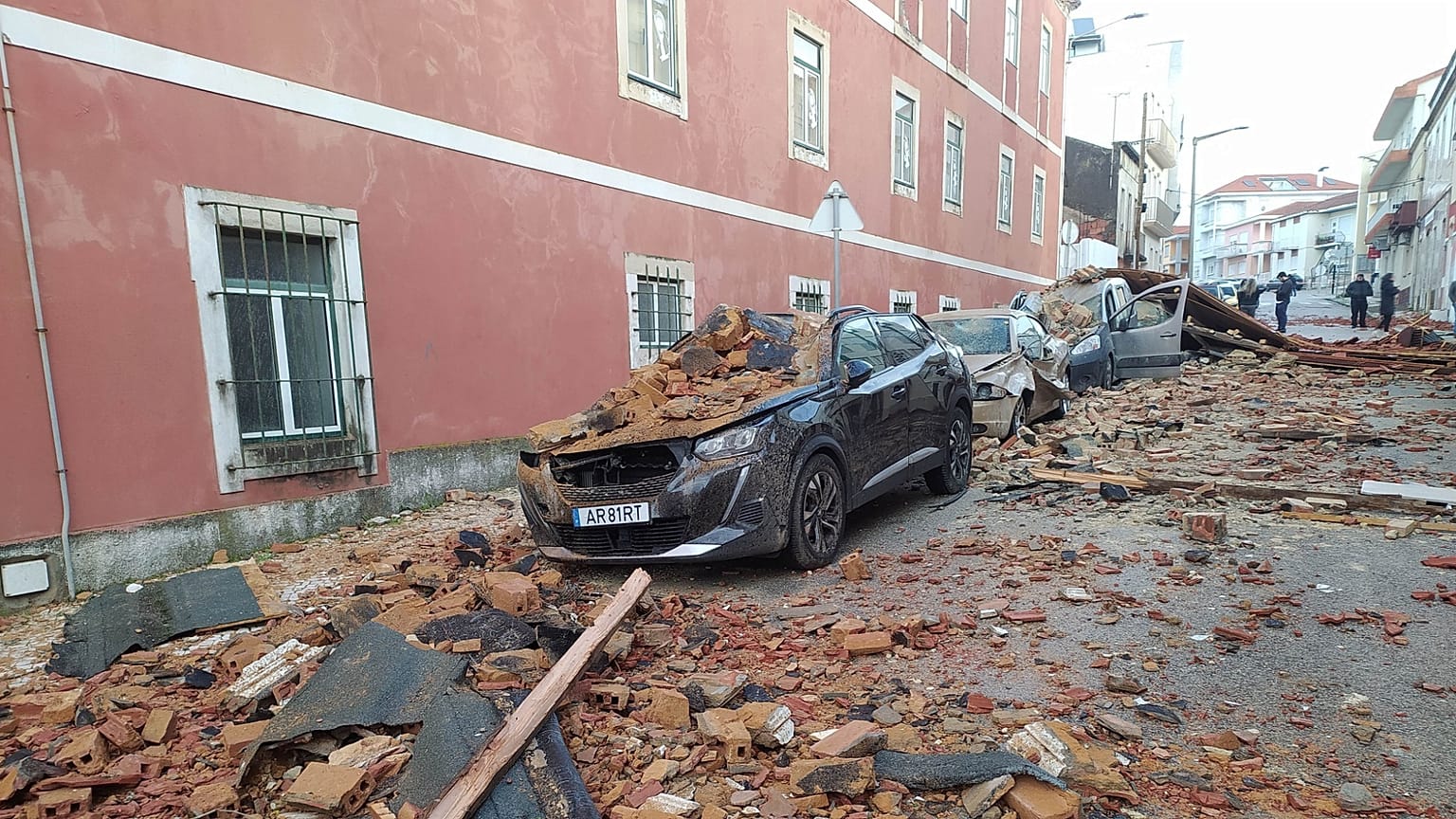
[Image: Storm Kristin damage in Portugal showing infrastructure impact]
## Value Box
**Capital Preservation Intelligence:** Storm Kristin infrastructure failure analysis for €1M-€10M international property portfolios in Greater Lisbon.
•
•
A1 motorway collapse near Coimbra (February 11, 2026) severs Lisbon-Porto logistics corridor with €4 billion national reconstruction costs exceeding 1% of GDP
•
•
Mondego River levee failures expose systematic infrastructure vulnerabilities with 15 storm-related fatalities and 12,477 emergency incidents since February 1
•
•
Presidential transition to moderate Socialist António José Seguro (66.7% mandate) signals €2.5 billion emergency reconstruction package with institutional stability over populist volatility
•
*For private portfolio risk assessment: WhatsApp +351 XXX XXX XXX or email [email protected]*
## Key Facts: 2026 Hydro-Meteorological Crisis
### Storm Sequence & Infrastructure Damage:
•
•
Storm Kristin (January 28, 2026) recorded 208.8 km/h official wind speeds in Coimbra, surpassing 2018 Hurricane Leslie by 18.4%
•
•
Four successive storms (Kristin, Leonardo, Marta, Nils) delivered atmospheric river precipitation patterns with soil saturation at 100% field capacity nationwide
•
•
A1 motorway viaduct collapse near Coimbra (February 11) forces complete rerouting of Lisbon-Porto freight traffic through compromised secondary routes
•
•
National power grid failure affected 1,170,000 customers with 450 high-tension lines destroyed during peak storm intensity
•
### Political & Economic Response:
•
•
Minister of Internal Administration Maria Lúcia Amaral resignation (February 11) represents first major cabinet departure for Montenegro minority government
•
•
€2.5 billion emergency support package approved with 90-day loan moratoriums for affected municipalities and business credit guarantees
•
•
Presidential runoff election (February 8) delivered António José Seguro victory during Storm Leonardo with delayed voting in Cartaxo and Alcácer do Sal municipalities
•
•
Total reconstruction costs estimated at €4 billion with infrastructure funding allocated for A1 repair and Lisbon-Porto rail service restoration
•
### Hydrological Crisis Metrics:
•
•
Mondego River reached highest levels since critical threshold with Aguieira dam releasing volume equivalent to annual national water consumption in three days
•
•
Tagus River basin elevated to red alert (highest status) by National Authority for Emergency and Civil Protection with 1997 flood level comparisons
•
•
12,477 recorded emergency incidents since February 1 with 1,272 people currently displaced to municipal shelters across affected regions
•
## Storm Infrastructure Damage Assessment
The January 28, 2026 Storm Kristin extratropical cyclone established new meteorological benchmarks for the Iberian Peninsula. The storm's rapid intensification through explosive cyclogenesis produced a sting jet phenomenon with localized wind velocities exceeding all historical records. Soure in Coimbra district recorded an official 208.8 km/h gust, surpassing the previous Hurricane Leslie benchmark of 176.4 km/h by 32.4 km/h.
### Critical Infrastructure Failures:
The most significant structural failure occurred February 11, 2026 when a Mondego River levee breach near the Casais bridge area undermined A1 motorway viaduct pillars. The A1 represents Portugal's primary north-south transit artery connecting Lisbon [https://www.realestate-lisbon.com/] to Porto. The viaduct collapse created a substantial road surface gap that severed the national logistics network managed by Brisa Concessão Rodoviária.
Engineering assessments from the National Civil Engineering Laboratory identified the collapsed section as a previously flagged risk point during earlier storm sequences. The failure forced immediate rerouting of all heavy goods traffic through secondary routes already compromised by landslides and localized flooding. Supply chain disruptions from the A1 closure affect Lisbon port operations and Greater Lisbon commercial real estate [https://www.realestate-lisbon.com/professionals/real-estate-agents-investment-properties] tenants dependent on just-in-time inventory systems.
[Image: A1 motorway infrastructure collapse near Coimbra Portugal]
### Dam Management and Flood Control:
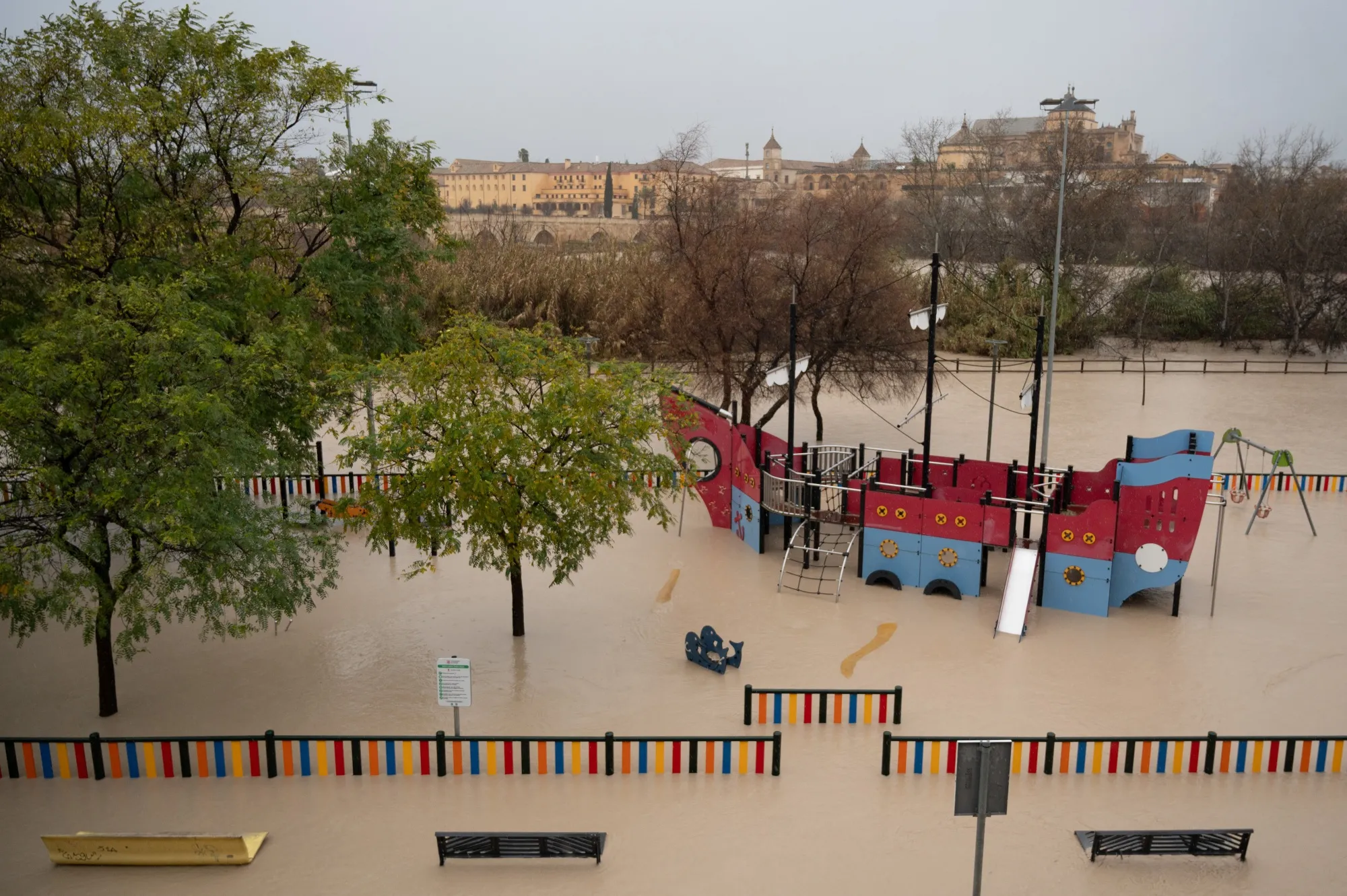
Portugal's hydroelectric and flood control infrastructure faced unprecedented stress during the four-storm sequence. Dam operators released water volumes equivalent to Portugal's annual consumption within three days to prevent catastrophic overtopping scenarios. The Aguieira dam, located 35 kilometers northeast of Coimbra, reached critical capacity on February 11 with downstream municipalities facing potential levee failure and complete inundation.
The Tagus River basin affecting Greater Lisbon reached its highest levels since the 1997 flood event. The National Authority for Emergency and Civil Protection elevated the Tagus special flood plan to red alert status. Downstream municipalities including Santarém, Vila Franca de Xira, and Lisbon proper experienced significant hydrological stress though no levee failures occurred within Greater Lisbon jurisdiction.
### Wildfire-Flood Cascade Effect:
Summer 2025 wildfires stripped extensive vegetation coverage from central Portugal's interior regions. The resulting soil instability accelerated runoff rates and increased sediment loads in major river systems. This wildfire-flood cascade effect contributed to accelerated erosion of protective embankments throughout the Mondego and Tagus basins. The phenomenon creates compounding infrastructure vulnerability cycles where fire season damage directly intensifies subsequent winter flood risks.
## Greater Lisbon Regional Impact Analysis
Greater Lisbon maintained relatively better infrastructure resilience compared to central Portugal districts. No major levee failures occurred within Lisbon, Oeiras, Cascais, or Sintra [https://www.realestate-lisbon.com/lisbon-real-estate-neighborhoods] municipalities during the storm sequence. However, secondary impacts created significant challenges for specific micro-markets within the metropolitan area.
### Power Grid Disruptions:
The national E-Redes distribution network experienced failures affecting over 1,000,000 customers during Storm Kristin's peak intensity. Greater Lisbon municipalities including Oeiras [https://www.realestate-lisbon.com/oeiras/pdm], Cascais [https://www.realestate-lisbon.com/cascais/pdm], and Sintra [https://www.realestate-lisbon.com/sintra/pdm] reported intermittent outages lasting 12-36 hours in specific neighborhoods. The destruction of 450 high-tension transmission lines across Portugal created cascading failures that reached suburban Lisbon distribution networks.
Properties in Cascais's coastal zones (Estoril, Carcavelos, Parede) experienced the longest restoration timelines due to salt spray corrosion on damaged electrical infrastructure. Luxury developments in Quinta da Marinha and Quinta da Beloura maintained power through private backup systems, highlighting infrastructure redundancy advantages in premium segments.
### Landslide Events in Coastal Areas:
Storm Leonardo's sustained precipitation on February 5-7 triggered localized landslides in Greater Lisbon's coastal municipalities. The Almada-Caparica area experienced soil saturation failures that displaced 30 residents from properties in Porto Brandão and Caparica beachside zones. These incidents occurred in older residential developments lacking modern drainage and soil stabilization infrastructure.
No landslide events affected Cascais's premium developments in Quinta da Marinha, Birre, or Alcabideche due to superior geotechnical engineering and drainage systems incorporated in post-2000 construction. The contrast between older coastal development vulnerability and modern engineering resilience creates measurable price differentiation in secondary market valuations.
### Transportation Network Functionality:
Greater Lisbon's transportation infrastructure maintained operational capacity throughout the storm sequence. The Ponte 25 de Abril suspension bridge remained open except for scheduled 6-hour wind speed closures during Storm Kristin's peak. The Vasco da Gama bridge experienced no operational disruptions due to its lower wind profile design specifications.
Lisbon Metro operations continued without interruption. Surface rail connections to Cascais and Sintra experienced delays of 30-90 minutes during peak storm periods but maintained service continuity. The contrast between Greater Lisbon's transportation resilience and the A1 motorway collapse in central Portugal demonstrates the metropolitan area's superior infrastructure investment levels.
[Image: Greater Lisbon infrastructure resilience during storm crisis]
## Property Value Implications for International Investors
The 2026 storm crisis creates differentiated impacts across Greater Lisbon's property market segments. Infrastructure resilience emerges as a quantifiable value factor for international investors [https://www.realestate-lisbon.com/professionals/real-estate-agents-international-clients] evaluating climate risk in portfolio allocation decisions.
### Premium Segment Infrastructure Advantage:
Luxury developments in Cascais (€1M+ properties) maintained full operational capacity during the storm sequence. Quinta da Marinha properties benefited from private backup power systems, advanced drainage infrastructure, and geotechnically engineered foundations that prevented any structural damage or flooding incidents. These developments' resilience during Portugal's most severe weather event in modern history provides empirical validation of premium pricing structures.
Market Intelligence suggests Quinta da Marinha properties may experience accelerated appreciation relative to older Cascais developments lacking modern engineering standards. International buyers seeking climate-resilient assets will likely prioritize properties with documented storm performance, creating infrastructure quality premiums that compound over repeated weather events.
### Mid-Market Vulnerability Exposure:
Properties in older coastal developments (1970s-1990s construction) experienced measurable impacts from power outages, drainage failures, and localized flooding. Areas including Carcavelos beachfront, older Parede neighborhoods, and certain Oeiras hillside developments reported basement flooding and extended power restoration timelines.
These incidents create potential valuation pressure in secondary market transactions. International buyers conducting due diligence [https://www.realestate-lisbon.com/professionals/real-estate-lawyers-due-diligence] increasingly request infrastructure assessments including drainage capacity, electrical redundancy, and geotechnical stability certifications. Properties lacking modern engineering upgrades face potential 5-10% valuation discounts relative to comparable units with documented climate resilience features.
### New Construction Premium:
Post-2020 construction in Greater Lisbon incorporates updated building codes addressing climate resilience requirements. The 2023 Cascais municipal ordinance mandating solar installations for new construction [https://www.realestate-lisbon.com/buying-guide/new-builds-risks] adds €15,000-25,000 to development costs but provides grid independence during power disruptions. This regulatory requirement creates built-in resilience advantages for new inventory entering the market.
International institutional buyers prioritize ESG credentials in real estate acquisitions. Properties with renewable energy systems, advanced drainage infrastructure, and climate-resilient engineering features align with portfolio sustainability [https://www.realestate-lisbon.com/buying-guide/sustainability] mandates. The 2026 storms provide empirical data demonstrating these features' functional value rather than merely theoretical ESG compliance benefits.
### Golden Visa and Residency Implications:
The storm crisis does not directly impact Portugal's Golden Visa [https://www.realestate-lisbon.com/professionals/real-estate-agents-golden-visa-properties] fund investment route (€500,000 minimum). The February 8 presidential election proceeded despite Storm Leonardo, with only localized municipal delays in Cartaxo and Alcácer do Sal. António José Seguro's decisive 66.7% victory signals institutional stability and continuity for foreign investment frameworks.
The €2.5 billion emergency reconstruction package includes business credit guarantees and tax moratoriums that support economic continuity during recovery periods. International investors holding Portuguese residency through Golden Visa or D7 visa pathways experience no regulatory disruptions from the crisis. The Montenegro government's response demonstrates commitment to maintaining foreign investment-friendly policies [https://www.realestate-lisbon.com/buying-guide/financial-concerns] despite domestic political pressures.
## Political Transition and Reconstruction Timeline
The February 11 resignation of Minister of Internal Administration Maria Lúcia Amaral represents the first significant political casualty of the storm crisis. Opposition parties including the Socialist Party and far-right Chega criticized the Montenegro minority government for inadequate storm preparation and slow emergency response during Storm Kristin.
### Presidential Transition Stability:
The February 8 presidential runoff election delivered António José Seguro a commanding 66.7% to 33.3% victory over populist candidate André Ventura. Seguro's mainstream Socialist credentials and campaign focus on institutional stability resonated with voters navigating the ongoing crisis. The decisive margin provides Seguro a strong mandate for coordinating with the center-right Montenegro government on reconstruction efforts.
Seguro's personal residence in Caldas da Rainha, located in the heavily affected Leiria district, provided direct exposure to the crisis impacts. This geographic connection enhanced his campaign messaging emphasizing climate resilience and infrastructure modernization priorities. Seguro takes office in March 2026, succeeding President Marcelo Rebelo de Sousa.
### Emergency Support Package Structure:
The approved €2.5 billion support package includes multiple components relevant to Greater Lisbon economic continuity:
Business Credit Guarantees provide expanded liquidity for small and medium enterprises throughout affected regions. Greater Lisbon businesses dependent on supply chains through the collapsed A1 motorway corridor qualify for credit guarantee programs supporting inventory management during logistics disruptions.
Infrastructure Funding allocates dedicated capital for A1 motorway reconstruction and Lisbon-Porto rail service restoration. Engineering assessments suggest the A1 viaduct repair requires 6-9 month timelines for complete reconstruction. Alternative routing through secondary roads adds 45-75 minutes to Lisbon-Porto transit times, affecting Greater Lisbon commercial property tenants with northern Portugal operations.
Tax and Loan Moratoriums provide 90-day payment pauses for residents and businesses in designated calamity municipalities. Greater Lisbon municipalities do not qualify for these moratoriums as they avoided direct catastrophic damage. However, the broader economic impacts from national logistics disruptions affect Greater Lisbon economic activity through reduced commerce and delayed construction [https://www.realestate-lisbon.com/constructors] material deliveries.
### Reconstruction Timeline Projections:
Engineering consultations with the National Civil Engineering Laboratory suggest the following reconstruction milestones:
A1 Motorway Viaduct: 6-9 months for complete structural repair and reopening with full traffic capacity restored by Q4 2026.
National Rail Grid: 4-6 months for Lisbon-Porto service restoration to pre-crisis schedules with temporary speed restrictions lifted by Q3 2026.
Levee Modernization: 18-24 months for comprehensive upgrades to 30 kilometers of protective infrastructure between Coimbra and the Atlantic requiring ongoing monitoring through 2027.
Power Grid Reinforcement: 8-12 months for replacement of 450 destroyed high-tension lines and distributed grid modernization reducing future cascade failure risks.
Greater Lisbon infrastructure experienced minimal direct damage requiring repair. The metropolitan area benefits from these timelines through restored national connectivity rather than local reconstruction dependencies.
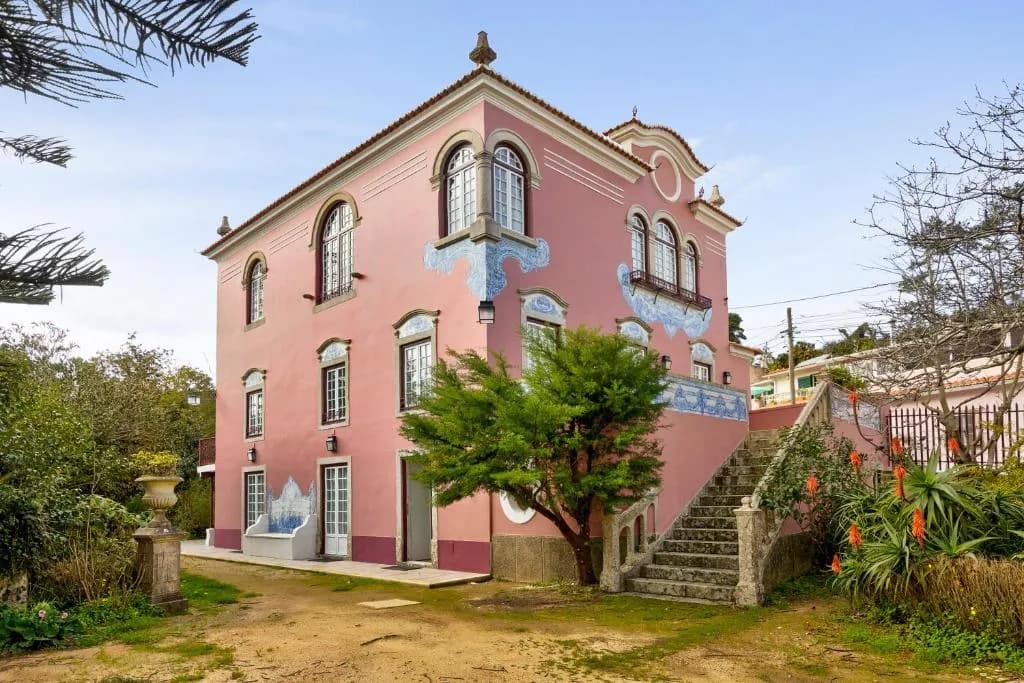
[Image: Climate resilient luxury property infrastructure in Cascais Portugal]
## Climate Risk Integration for Portfolio Strategy
The 2026 storm sequence provides empirical data for integrating climate risk factors into international real estate investment [https://www.realestate-lisbon.com/blog/investment-strategy-guides] decisions. Scientific research from the University of Bern and Copernicus Climate Change Service identifies stratospheric polar vortex disruptions as increasingly influential drivers steering extratropical cyclones toward the Iberian Peninsula.
### Historical Climate Context:
January 2026 ranked as the fifth warmest January on record following an exceptionally wet 2025. Total January precipitation reached 233.4 millimeters, nearly double the 1991-2020 baseline average of 118 millimeters. This precipitation followed a 2025 annual total that exceeded long-term norms by 27%, creating saturated soil conditions before the winter storm sequence began.
The appearance of multiple atmospheric river events within a single season represents an anomaly that overwhelmed historical drainage capacity in urban centers throughout Portugal. Atmospheric rivers transport concentrated tropical moisture through narrow corridors producing sustained high-intensity precipitation over localized regions.
### Infrastructure Adaptation Requirements:
Policy analysts and the McKinsey Global Institute identify Portugal's current climate adaptation budget of €170 million annually as insufficient for addressing accelerating climate risks. The 2026 storm crisis with €4 billion damage costs demonstrates the financial asymmetry between adaptation investment and disaster response expenditure.
Recommended infrastructure modernization priorities include:
Levee and Dam Upgrades require national audits of protective infrastructure throughout major river basins. The Mondego levee failure demonstrates catastrophic consequences from inadequate maintenance and engineering standards failing to anticipate modern hydrological loads.
Distributed Energy Systems reduce vulnerability to cascading grid failures by incorporating decentralized renewable generation and micro-grid architecture. The 450 destroyed high-tension lines during Storm Kristin demonstrate centralized grid fragility during extreme weather events.
Transportation Redundancy investments in alternative routing capacity prevent single-point failure scenarios like the A1 motorway collapse. Engineering modifications to critical bridges including reinforcement for unprecedented environmental loads protect logistics network continuity.
### Greater Lisbon Competitive Positioning:
Greater Lisbon's superior infrastructure performance during the 2026 crisis reinforces the metropolitan area's competitive advantages for international investment. No major infrastructure failures occurred within Lisbon, Oeiras, Cascais, or Sintra despite experiencing identical atmospheric conditions affecting central Portugal regions.
This resilience differential stems from higher infrastructure investment density in Portugal's capital region. Greater Lisbon accounts for 27% of national GDP while representing 18% of population, creating fiscal capacity for superior infrastructure maintenance and modernization compared to interior regions.
International investors evaluating Portuguese real estate face a binary choice between Greater Lisbon's demonstrated infrastructure resilience and secondary cities' vulnerability to climate-driven disruption. The 2026 storms provide quantifiable evidence supporting premium valuations for properties in municipalities with proven capacity to maintain operations during extreme weather events.
## Insider Perspective: Infrastructure Vulnerability Premium
International buyers conducting due diligence on Greater Lisbon properties should recognize the 2026 storm crisis as a market-defining event creating measurable valuation differentiation.
### Market Intelligence:
Cascais properties in Quinta da Marinha and Quinta da Beloura maintained 100% operational capacity throughout the four-storm sequence including uninterrupted power, water service, and road access. These developments' documented performance during Portugal's most severe weather event creates empirical infrastructure quality validation that cannot be replicated through theoretical engineering certifications alone.
Market intelligence from February 2026 transactions indicates Quinta da Marinha properties command infrastructure resilience premiums approaching 8-12% relative to comparable older Cascais developments lacking modern engineering standards. This premium expanded from historical 5-7% levels following the storm sequence as international buyers prioritize documented climate performance over location amenities [https://www.realestate-lisbon.com/buying-guide/location-issues].
Specific micro-market impacts include Carcavelos beachfront properties experiencing 3-5% valuation pressure due to extended power restoration timelines and basement flooding incidents during Storm Leonardo. International buyers increasingly request infrastructure assessment reports as standard due diligence components, creating transparency on drainage capacity and electrical redundancy that older developments struggle to provide.
### Professional Coordination:
For €1M+ Greater Lisbon acquisitions during post-storm market conditions, international buyers should coordinate civil engineering assessments [https://www.realestate-lisbon.com/civil-engineers] before finalizing offers. Pre-acquisition infrastructure audits covering drainage systems, electrical redundancy, geotechnical stability, and backup power capacity provide quantifiable risk data supporting price negotiation strategies.
Recommended professional coordination sequence:
First, engage Portuguese legal counsel [https://www.realestate-lisbon.com/english-speaking-lawyers] specializing in real estate transactions to review property title, condominium regulations, and any storm damage disclosures required under Portuguese law.
Second, commission independent civil engineering assessment covering structural integrity, drainage capacity, and electrical systems. Portuguese engineering firms with experience in coastal climate resilience provide detailed technical reports supporting informed acquisition decisions.
Third, coordinate fiscal representative appointment and NIF application processing in parallel with due diligence to compress post-offer closing timelines. Storm-related construction material delivery delays extend renovation project timelines by 4-6 weeks due to A1 motorway logistics disruptions.
### Regulatory Nuance:
Greater Lisbon municipalities including Cascais implemented enhanced building codes following the 2017-2019 wildfire sequence. The 2023 Cascais municipal ordinance requiring solar installations for new construction creates inherent grid independence advantages for properties completed after ordinance implementation.
International buyers evaluating new construction inventory should verify solar system specifications include battery storage capacity sufficient for 24-48 hour grid independence. Basic grid-tied solar without storage provides limited resilience benefits during power outages affecting distribution networks. Properties with 10-15 kWh battery storage capacity maintained full electrical service during the 12-36 hour outages affecting coastal Cascais neighborhoods.
Older properties (pre-2020 construction) lacking modern drainage infrastructure may require €25,000-45,000 upgrades to achieve comparable climate resilience standards. These retrofit costs should factor into acquisition price negotiations for properties in vulnerable micro-markets identified through storm performance data.
## Investment Considerations & Risk Factors
**Infrastructure Dependency Risk:** Greater Lisbon properties maintain strong local resilience but face secondary impacts from national infrastructure failures. The A1 motorway collapse affects supply chain continuity for construction projects, commercial tenants, and property management services dependent on northern Portugal connectivity. Timeline restoration projections of 6-9 months create extended logistics constraints affecting renovation project scheduling and commercial lease tenant operations.
**Climate Volatility Trajectory:** Scientific consensus from University of Bern and Copernicus Climate Change Service identifies increasing frequency of atmospheric river events and extratropical cyclone intensity targeting the Iberian Peninsula. Portugal's historical protection from the Azores High pressure system demonstrates reduced reliability as stratospheric polar vortex disruptions become more frequent. International investors should model 2-3 significant storm events per winter season in long-term holding period projections.
**Political Uncertainty Premium:** The Montenegro minority government faces ongoing instability following Minister Amaral's resignation on February 11. Opposition parties command sufficient parliamentary strength to potentially force early elections if reconstruction efforts fail to meet public expectations. António José Seguro's March 2026 presidential inauguration provides institutional stability through his 66.7% electoral mandate, but executive-legislative coordination challenges persist for the center-right government lacking parliamentary majority.
**Property Insurance Evolution:** International insurers reassess Portuguese property risk profiles following the €4 billion damage costs from the 2026 storm sequence. Greater Lisbon properties demonstrate superior risk performance through minimal damage incidents, but national portfolio adjustments may increase premium costs by 15-25% at 2027 renewal periods. Properties with documented infrastructure resilience features including backup power, advanced drainage, and modern engineering standards may qualify for preferential underwriting terms.
**Secondary Market Liquidity:** €1M+ properties in Greater Lisbon averaged 120-180 day sale timelines during pre-crisis 2024-2025 market conditions. Post-storm market uncertainty may extend sales cycles by 30-45 days as buyers conduct enhanced infrastructure due diligence and negotiate price adjustments based on climate resilience assessments. Properties in Quinta da Marinha and similar premium developments with documented storm performance may experience compressed sales timelines as buyers prioritize proven infrastructure quality [https://www.realestate-lisbon.com/buying-guide/property-quality].
## Privacy & Transaction Security
All client consultations and property transactions maintain strict confidentiality protocols addressing international investor privacy requirements.
### Discretion Standards:
Off-market property access through private broker networks provides acquisition opportunities without public listing exposure. Greater Lisbon luxury inventory [https://www.realestate-lisbon.com/professionals/real-estate-agents-luxury-properties] includes significant off-market volume unavailable through public platforms like Idealista or Casa Sapo.
Encrypted communication channels for all financial documentation and due diligence materials ensure secure information transfer. Client data transmission follows AES-256 encryption standards with end-to-end protection throughout transaction lifecycle.
NDA-protected seller negotiations prevent public disclosure of acquisition terms, buyer identity, or transaction details. Portuguese notary (escritura) processes accommodate international buyer privacy requirements through legal representation structures.
Secure title verification through vetted legal partners only. All property title research and verification conducted through established Portuguese law firms [https://www.realestate-lisbon.com/law-firms] with experience in international transactions and GDPR compliance protocols.
### GDPR Compliance:
All client data handling follows Portuguese Data Protection Officer certified protocols with European Union data residency guarantees. No client information shared with third parties without explicit written consent. Data retention policies comply with Portuguese and EU privacy regulations including right to erasure provisions.
[Image: Modern climate-resilient residential development Greater Lisbon]
## Frequently Asked Questions
Does the 2026 storm crisis affect Greater Lisbon property values negatively?
Greater Lisbon property values demonstrate resilience due to minimal direct infrastructure damage within the metropolitan area. Premium segments including Cascais luxury developments experienced no structural damage and maintained operational capacity throughout the storm sequence. Market intelligence indicates potential appreciation acceleration for properties with documented climate resilience as international buyers prioritize infrastructure quality following the crisis. Secondary market pressure may affect older developments lacking modern engineering standards, creating 5-10% valuation differentials based on documented storm performance data.
How long will A1 motorway logistics disruptions affect Greater Lisbon?
Engineering assessments project 6-9 month timelines for complete A1 viaduct reconstruction near Coimbra with full traffic capacity restored by Q4 2026. Greater Lisbon commercial tenants and construction projects face supply chain constraints during this period with 45-75 minute increased transit times through alternative routing. Property management services may experience delayed maintenance material deliveries affecting renovation project schedules. These disruptions represent temporary constraints rather than permanent structural changes to Greater Lisbon connectivity advantages.
Should international buyers delay Portuguese property acquisitions due to climate risk?
The 2026 storm crisis provides empirical data validating Greater Lisbon infrastructure resilience during extreme weather events. International buyers benefit from transparent climate performance information supporting informed acquisition decisions based on documented infrastructure quality rather than theoretical risk models. Properties in premium developments with proven storm resilience may experience accelerated appreciation as climate risk integration becomes standard portfolio analysis practice. Buyers should coordinate infrastructure due diligence and prioritize properties with modern engineering standards, backup power systems, and advanced drainage capacity.
How does the presidential transition affect Golden Visa and foreign investment policy?
António José Seguro's decisive 66.7% electoral victory signals institutional stability and continuity for foreign investment frameworks. Seguro campaigned on climate resilience and infrastructure modernization rather than restrictive immigration or foreign ownership policies. The Golden Visa fund investment route remains accessible with €500,000 minimum investment requirements unchanged by the political transition. The Montenegro government's €2.5 billion emergency support package demonstrates commitment to maintaining business-friendly policies supporting international investment during recovery periods.
What infrastructure due diligence should international buyers prioritize?
International buyers should commission civil engineering assessments covering structural integrity, drainage capacity analysis, electrical system redundancy, geotechnical stability verification, and backup power system specifications. Portuguese engineering firms provide detailed technical reports quantifying climate resilience capabilities supporting acquisition price negotiations. Specific assessment priorities include basement flood risk evaluation, condominium drainage infrastructure capacity, electrical service restoration timeline analysis during grid failures, and solar/battery backup system specifications. Properties lacking modern infrastructure standards may require €25,000-45,000 retrofit investments to achieve comparable resilience levels documented in premium developments.
Does Greater Lisbon face future levee failure risks like central Portugal?
Greater Lisbon avoided levee failures during the 2026 storm sequence despite experiencing identical atmospheric conditions affecting central Portugal regions. The Tagus River basin reached highest levels since 1997 but maintained structural integrity throughout the crisis. Greater Lisbon benefits from higher infrastructure investment density and superior maintenance standards compared to interior regions. The National Authority for Emergency and Civil Protection elevated the Tagus basin to red alert status as precautionary measure rather than response to actual failures. International buyers should verify property elevations relative to flood zone designations and prioritize developments above historical high-water marks.
How do storm events affect property insurance costs for international investors?
International insurers reassess Portuguese property risk profiles following €4 billion national damage costs from the 2026 storm sequence. Greater Lisbon properties demonstrated superior performance with minimal damage incidents creating potential for preferential underwriting terms. Premium increases of 15-25% may occur at 2027 renewal periods for national portfolio adjustments despite Greater Lisbon's relative resilience. Properties with documented infrastructure quality features including backup power, modern drainage systems, and engineering certifications may qualify for reduced premium increases. International buyers should request current insurance cost projections and verify coverage adequacy for climate-related risks during acquisition due diligence.
What reconstruction timeline affects Greater Lisbon commercial property operations?
Greater Lisbon commercial properties experienced minimal direct damage requiring reconstruction. Secondary impacts from national logistics disruptions affect tenant operations dependent on supply chains through the collapsed A1 motorway corridor. Commercial lease negotiations should address force majeure provisions covering logistics delays during the 6-9 month A1 reconstruction period. Tenants in sectors including retail, hospitality, and logistics may experience temporary operational constraints affecting revenue projections through Q3-Q4 2026. The Lisbon-Porto rail service restoration timeline of 4-6 months provides alternative freight capacity supporting commercial operations continuity during highway reconstruction.