Why Green Buildings Define the Future of Portugal's Property Market
By Nikola Zdraveski
Published: November 7, 2025
Category: sustainability-environment
### Sustainability Drives Portugal Property Market Transformation as Green Building Standards Become Investment Imperative
Portugal's real estate sector is undergoing a fundamental transformation as **sustainability transitions from optional feature to market necessity**, reshaping investment criteria and property valuations across Lisbon, Porto, and emerging markets. **ADDSOLID**, a Portuguese construction and development firm specializing in sustainable building practices, reports that energy efficiency and environmental performance now directly influence property pricing and investor demand, marking a decisive shift in how the market values real estate assets.
This transformation reflects broader European regulatory pressures and demographic shifts as younger, environmentally conscious buyers increasingly prioritize properties that combine comfort with reduced environmental impact. For foreign investors evaluating **Portuguese property opportunities**, understanding these sustainability dynamics has become essential to identifying assets with long-term appreciation potential and rental competitiveness.
The construction and real estate sectors account for significant portions of global emissions and energy consumption, making building efficiency a critical factor in Portugal's climate commitments and a growing consideration in property investment analysis. Properties meeting higher environmental standards now command premium valuations and attract quality tenants more readily than conventional alternatives.
### Key Takeaways
• ✓ Energy efficiency certifications directly impact Portuguese property valuations and investment returns
• ✓ IoT technology and smart building systems reduce operational costs while increasing asset value
• ✓ Urban regeneration projects prioritizing sustainability attract premium pricing in Lisbon and Porto
• ✓ Green building standards have become competitive necessity rather than optional differentiation in Portugal's property market
The shift toward sustainable construction manifests most visibly in Portugal's major urban markets, particularly **Lisbon's expanding business districts** and **Porto's regenerating historic center**. New developments in areas such as Parque das Nações in eastern Lisbon—a modern waterfront district 7 kilometers northeast of the city center served by the Gare do Oriente transport hub—increasingly incorporate thermal efficiency, renewable energy systems, and smart resource management as standard features rather than premium upgrades.
These locations appeal to foreign investors because they combine contemporary infrastructure with strong rental demand from international professionals and companies prioritizing environmental credentials. For comprehensive analysis of how sustainability factors influence neighborhood valuations, see our Lisbon neighborhoods guide [https://www.realestate-lisbon.com/lisbon-real-estate-neighborhoods] covering district-specific market dynamics.
## Market Implications for Property Investors
The integration of sustainability standards into Portugal's property market carries direct financial implications for foreign investors. **Energy Performance Certificates (EPCs)**—mandatory ratings measuring building energy efficiency on scales from A+ (most efficient) to F (least efficient)—now significantly influence property liquidity, rental yields, and appreciation potential across all Portuguese markets.
Properties with superior energy ratings demonstrate measurably lower operational costs through reduced utility consumption, creating immediate cash flow advantages for rental investors while appealing to cost-conscious tenants. This operational efficiency translates into higher net yields compared to equivalent properties with poor energy performance, making EPC ratings a critical due diligence factor for investment property evaluation.
Beyond operational savings, sustainable buildings increasingly command valuation premiums as European Union regulations progressively tighten energy efficiency requirements for existing buildings. Portugal's implementation of EU Energy Performance of Buildings Directive standards means properties failing to meet minimum efficiency thresholds may face future renovation mandates or rental restrictions, creating potential capital expenditure obligations for owners of older, inefficient buildings.
For foreign investors, this regulatory trajectory suggests properties already meeting high sustainability standards offer better long-term value retention and lower regulatory risk than conventional alternatives requiring future efficiency upgrades. According to recent Portuguese market data [https://www.realestate-lisbon.com/market-insights], the valuation gap between energy-efficient and conventional properties has widened measurably over the past three years, indicating growing market recognition of sustainability's financial impact.
## Technology Integration in Sustainable Building
**Internet of Things (IoT) systems**—networks of connected sensors and devices that monitor and optimize building performance in real-time—have emerged as critical infrastructure in premium Portuguese developments. These technologies enable automated management of heating, cooling, lighting, and water systems, reducing resource consumption while maintaining occupant comfort through data-driven optimization.
**Building Information Modeling (BIM)**, a digital design methodology creating detailed 3D models of building systems and components, allows developers and constructors to identify efficiency improvements during planning stages rather than through costly post-construction modifications. Portuguese developers increasingly adopt BIM to meet sustainability targets while controlling construction costs, particularly in complex urban regeneration projects where building system integration presents technical challenges.
## Urban Regeneration and Nature-Based Solutions
Portugal's major cities increasingly prioritize **urban regeneration over expansion**, rehabilitating existing buildings and neighborhoods rather than developing greenfield sites on urban peripheries. This approach particularly characterizes Lisbon's historic districts such as Mouraria and Marvila, where mixed-use developments combine residential, commercial, and leisure functions within rehabilitated industrial and residential buildings.
Several nature-based urban planning concepts are gaining adoption in Portuguese cities:
• **Sponge City Design**: Infrastructure that absorbs and reuses rainwater through permeable surfaces and retention systems, reducing flood risk while supporting urban vegetation
• **Urban Heat Island Mitigation**: Strategic tree planting and vegetation coverage that reduces ambient temperatures through shade and evapotranspiration, particularly important in Lisbon's hot summer climate
• **Native Species Landscaping**: Gardens and green spaces using indigenous Portuguese plants adapted to local climate conditions, requiring less irrigation while supporting local biodiversity
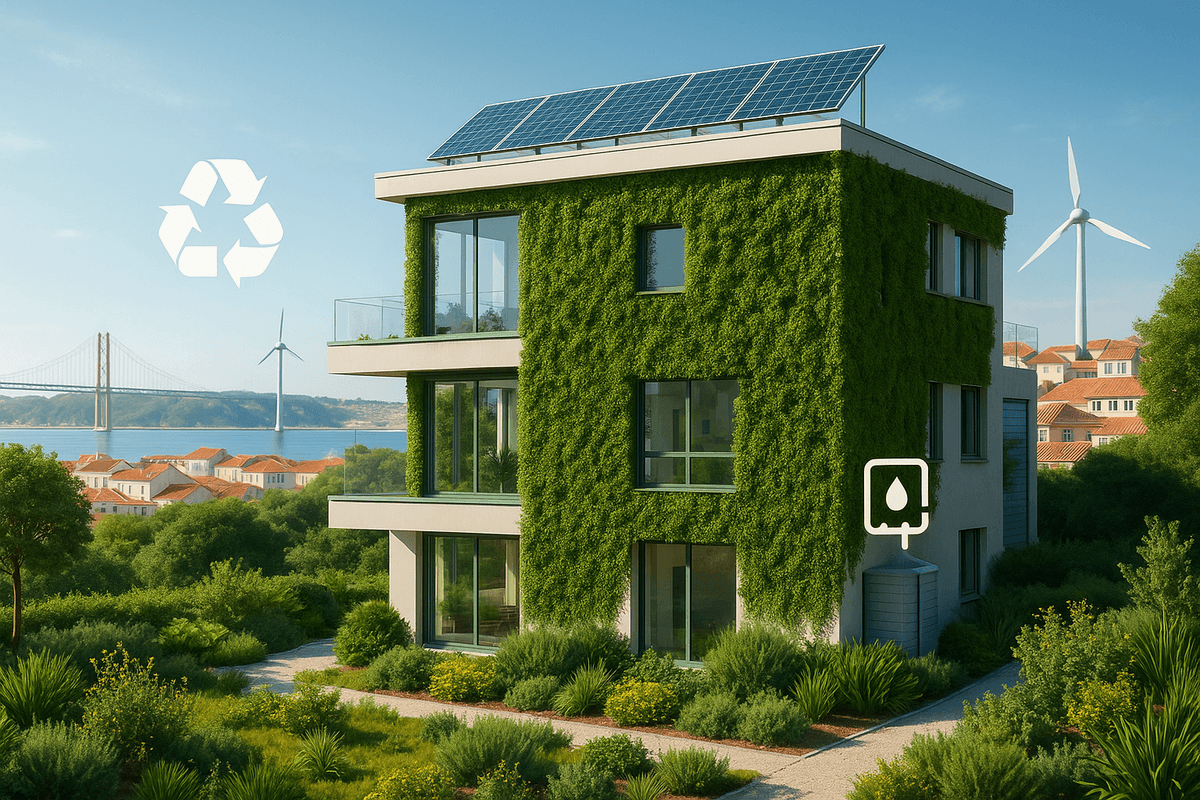
• **Green Infrastructure**: Green roofs, urban gardens, and micro-forests that increase nature presence within dense urban environments while providing community gathering spaces
These approaches enhance neighborhood livability and climate resilience, factors increasingly valued by international buyers and renters seeking quality urban environments. Properties in neighborhoods implementing comprehensive green infrastructure typically demonstrate stronger rental demand and price stability compared to conventional urban areas.
For investors evaluating **regeneration district opportunities**, understanding municipal master plans and sustainability commitments provides insight into future neighborhood trajectories and infrastructure investment. Areas designated for comprehensive regeneration often experience accelerated appreciation as public improvements enhance overall district appeal.
## Investment Considerations for Foreign Buyers
Foreign investors should prioritize properties with strong energy performance ratings and modern building systems when evaluating Portuguese real estate opportunities. Buildings rated A or B on Portugal's energy efficiency scale offer optimal combinations of rental competitiveness, operational efficiency, and regulatory compliance, reducing future capital expenditure risk while maximizing yield potential.
New developments incorporating sustainability features from design stages typically deliver better long-term performance than older buildings retrofitted with efficiency improvements, as integrated systems achieve higher performance levels than added components. Investors should consult with architects specializing in sustainable design [https://www.realestate-lisbon.com/professionals/architects-sustainable-design] when evaluating new construction projects to assess whether sustainability features represent genuine performance improvements or superficial marketing.
Properties in neighborhoods with comprehensive sustainability planning and green infrastructure investment offer additional advantages through enhanced livability and community appeal. Foreign buyers should work with English-speaking real estate agents [https://www.realestate-lisbon.com/english-speaking-agents] familiar with municipal regeneration plans and sustainability initiatives to identify districts positioned for appreciation driven by environmental improvements.
Tax considerations also merit attention, as Portugal offers various incentives for energy efficiency improvements and sustainable building practices. Foreign investors should consult accountants specializing in property tax [https://www.realestate-lisbon.com/professionals/accountants-property-tax] to understand available deductions and credits for sustainability investments, which can improve overall investment returns through reduced tax obligations.
## Looking Ahead
Sustainability has transitioned from differentiating feature to baseline expectation in Portugal's property market, fundamentally altering investment criteria and property valuations. Properties failing to meet evolving environmental standards face increasing competitive disadvantages and potential regulatory constraints, while buildings incorporating advanced efficiency features command premium pricing and stronger rental demand.
For foreign investors, this transformation creates both opportunities and risks depending on asset selection and market positioning. Properties meeting high sustainability standards offer enhanced long-term value retention and income potential, while conventional buildings may require significant capital investment to maintain competitiveness as regulatory requirements tighten and buyer preferences continue shifting toward environmentally conscious options. For expert guidance on evaluating sustainable property investments in Portugal's evolving market, contact realestate-lisbon.com [https://www.realestate-lisbon.com/].


_1175370073.jpg&w=1200&q=75)