Lisbon's Infrastructure Inspires Sustainable Building: Insights from the National Metal Construction Congress
By Pieter Paul Castelein
Published: November 23, 2025
Category: sustainability-environment
### Lisbon's Infrastructure Inspires Sustainable Building: Insights from the National Metal Construction Congress
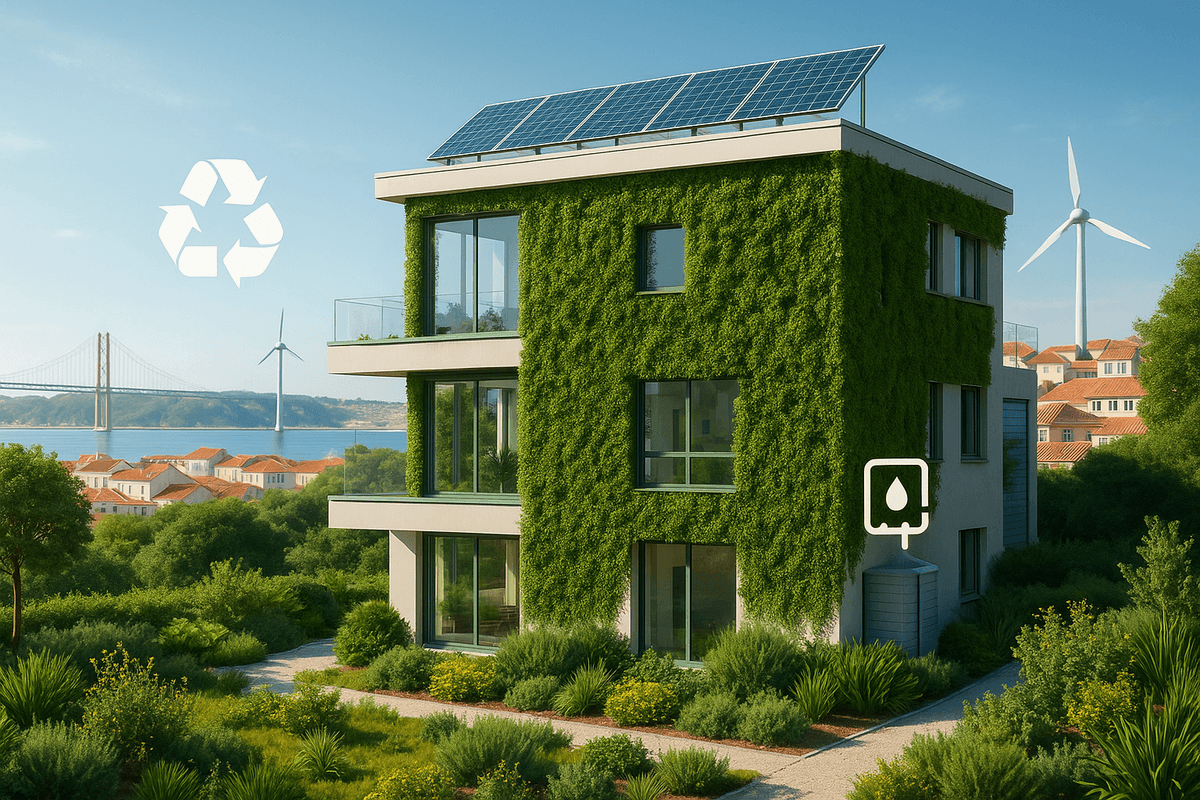
In a significant development for **Portugal**'s real estate and construction sectors, industry leaders and international experts convened at the **XV Congress of Mixed Metal Construction** to champion a paradigm shift towards sustainability and circularity. The event, organized by the **Portuguese Association of Metal and Mixed Construction (CMM)**, underscored the urgent need for advanced research and development (R&D) in building practices. Lisbon's iconic **25 de Abril Bridge** was prominently featured as a testament to Portuguese engineering's ability to conquer complex, long-term structural challenges, setting a precedent for future ambitious projects.
### Key Takeaways
• ✓ Portugal's construction industry is strategically pivoting towards sustainability and advanced R&D, particularly in metal construction, signaling a new era for the built environment.
• ✓ The successful railway integration on the 25 de Abril Bridge was presented as a key case study, demonstrating the nation's capacity for complex, high-stakes engineering projects.
• ✓ Global trends in sustainable architecture and complex metal designs, showcased by international experts, are directly influencing Portugal's high-end development market.
• ✓ The congress reinforced the high caliber of Portuguese engineering, highlighting a powerful synergy between academic research and industrial application that investors can leverage.
The congress unfolded against a backdrop of increasing global pressure on the construction industry to mitigate its environmental impact. The dialogue centered on how metal, a cornerstone of modern architecture, can be utilized more sustainably. The choice of Portugal as the host nation was symbolic, reflecting its deep-rooted engineering heritage and its contemporary role as a hub for innovation. The successful completion of the railway on the **25 de Abril Bridge**—a project planned at its inception but delayed for decades—was highlighted by José Oliveira Pedro of **GRID** as a powerful example of overcoming formidable challenges. This narrative of resilience and technical prowess is a crucial indicator for investors assessing the capabilities of the local industry, a topic we delve into in our market intelligence and analysis blog [https://www.realestate-lisbon.com/blog/market-intelligence-and-analysis].
This focus on sophisticated problem-solving indicates a market that is maturing beyond simple construction. It is moving towards creating assets that are not only aesthetically pleasing but also durable, adaptable, and compliant with future environmental standards. For foreign investors analyzing opportunities in the diverse neighborhoods of Lisbon [https://www.realestate-lisbon.com/lisbon-real-estate-neighborhoods], understanding this fundamental shift from construction to long-term asset creation is paramount for making informed decisions.
## Market Implications for Investors
The themes dominating the congress—sustainability, circularity, and technology—are not merely academic; they are direct signposts for the future of the Portuguese real estate market. Investors must now factor in a project's environmental credentials as a core component of its value proposition. Murray Cook, representing the **European General Galvanizers Association (EGGA)**, articulated the industry's dual mission: pioneering new sustainable solutions while also developing methods to upgrade existing building stock. This points towards a burgeoning market for green renovations and retrofitting, particularly in older urban districts.
This trend presents a clear and actionable opportunity for investors focused on off-plan properties in Lisbon [https://www.realestate-lisbon.com/off-plan/lisbon]. Developments that proactively integrate **green building principles** and circular economy models are better positioned to achieve premium valuations and attract high-quality corporate and residential tenants. Conversely, assets that ignore these trends risk accelerated obsolescence and diminished returns. This dynamic is a critical consideration for any long-term strategy, as detailed in our guide to sustainability in real estate [https://www.realestate-lisbon.com/buying-guide/sustainability].
## Fusing Global Innovation with Local Expertise
A key highlight of the congress was the interplay between global innovation and local expertise. Jennifer Anna Pazdon of **CastConnex** captivated the audience with her presentation on the intricate connection elements that enable breathtaking architectural feats, citing world-class projects like the **Salesforce Transit Center** and the sculptural ceilings of **Stuttgart Airport**. These examples are not just inspirational; they are blueprints for the next generation of luxury residential and landmark commercial projects emerging in Portugal.
The technical deep-dives, such as the presentation on advanced numerical modeling by Professor Ben Young of **The Hong Kong Polytechnic University**, underscored the scientific rigor now demanded in modern construction. Crucially, the event concluded with a consensus: Portuguese engineering has achieved a level of quality that allows it to not only adopt but also contribute to these global advancements. This fusion of world-class knowledge with a highly capable local talent pool is a powerful assurance for investors, providing confidence in the execution of even the most ambitious projects. For those looking to engage with top-tier firms, our directory of construction companies [https://www.realestate-lisbon.com/construction-companies] is an essential resource.
## The Evolving Landscape of Portuguese Construction
The congress provided a clear forecast for the Portuguese construction landscape, where sustainability and technology are the twin pillars of future growth. The market is decisively shifting towards buildings that offer superior performance, resilience, and a lower environmental impact over their entire lifecycle.
Investors should monitor the following key drivers of this transformation:
• **Stricter Environmental Regulations**: The government and EU will continue to roll out stricter building codes and offer incentives for green construction, making sustainability a non-negotiable aspect of development.
• **Advanced Technology Integration**: The application of Building Information Modeling (BIM), high-strength steel, and prefabricated components will become standard, improving efficiency and quality.
• **Circular Economy Principles**: A paradigm shift towards designing for deconstruction and material reuse will influence project viability and attract ESG-focused capital. Investors can explore this further in our trend analysis and future forecasting [https://www.realestate-lisbon.com/blog/trend-analysis-future-forecasting] section.
• **High-Skilled Professional Base**: The proven expertise of Portugal's engineers, architects, and technicians will be a critical competitive advantage in delivering complex, high-value projects.
This evolution demands a more sophisticated approach from all market participants, from developers to financiers. The era of short-term, cost-driven building is giving way to a focus on long-term, value-driven asset creation.
## Investment Considerations
For foreign investors, the primary implication is that project due diligence must now extend beyond financial projections and legal checks. A rigorous technical and sustainability assessment is essential. Partnering with constructors who specialize in green building [https://www.realestate-lisbon.com/professionals/constructors-green-building] is no longer a niche strategy but a mainstream requirement for mitigating risk and maximizing long-term returns. The ability to understand and vet the technical specifications of a development—from its structural systems to its energy performance—will differentiate successful investors.
Furthermore, navigating the complex web of evolving regulations and incentives requires expert legal counsel. We strongly advise consulting with English-speaking real estate lawyers [https://www.realestate-lisbon.com/english-speaking-lawyers] who are well-versed in Portuguese construction and environmental law to ensure full compliance and to capitalize on available benefits. This proactive approach will be fundamental to securing a project's success and profitability.
## Future Outlook
The insights from the XV Congress of Mixed Metal Construction paint a vibrant and optimistic picture of Portugal's real estate development future. The sector's proactive embrace of sustainability, coupled with its deep engineering talent, is creating a fertile ground for innovative and high-value investment. As Portugal continues to align with global best practices, it is cementing its status as a premier European destination for sophisticated, future-proof property development.
The journey ahead is one of intelligent, sustainable expansion, built on a foundation of technical excellence and a clear-eyed vision for the future. For expert guidance on identifying and executing investment opportunities within this dynamic construction landscape, contact the specialists at realestate-lisbon.com [https://www.realestate-lisbon.com/].


_1175370073.jpg&w=1200&q=75)