Lisbon Housing Policy Reversal: Marvila's Quinta das Conchinhas Affordable Housing Project Back on Track
By Pieter Paul Castelein
Published: November 5, 2025
Category: neighborhood-news
### Lisbon Government Reverses Course on Marvila Affordable Housing Site Sale
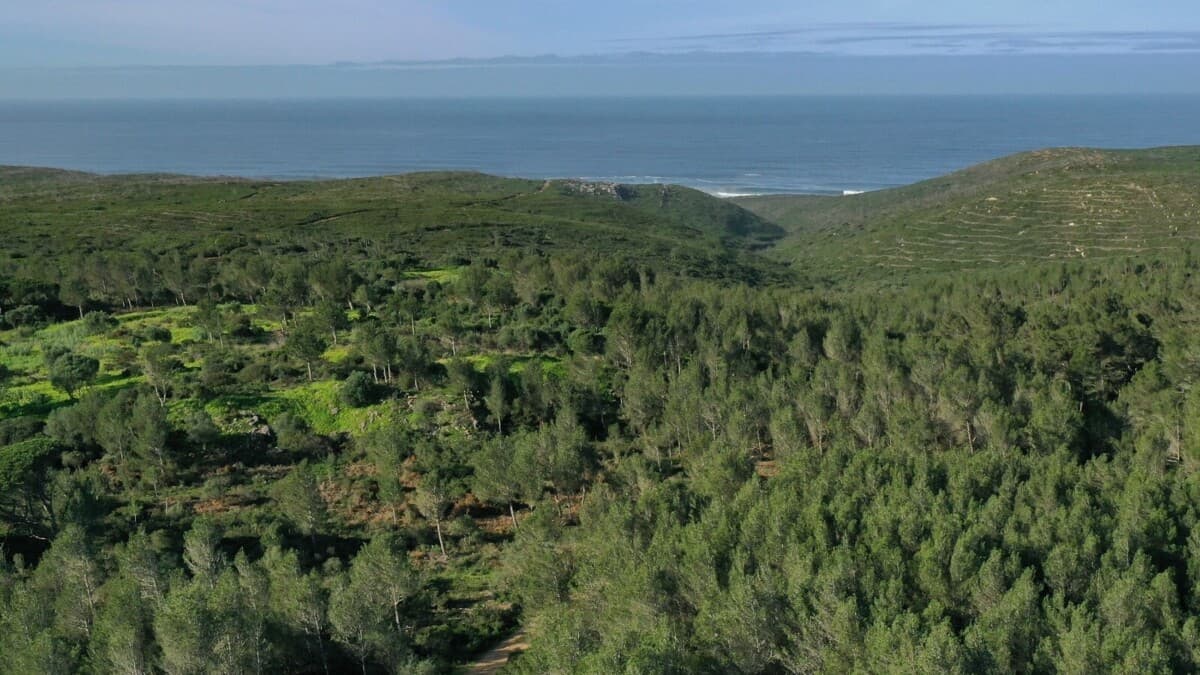
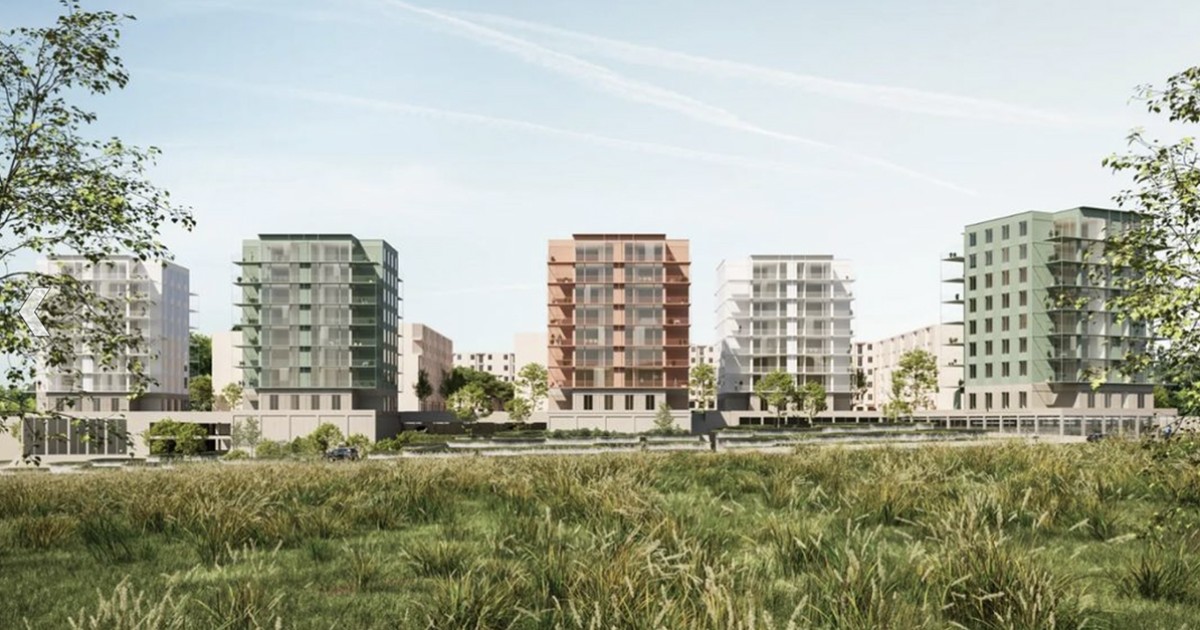
In a significant policy reversal that underscores the complexities of Portugal's housing strategy, the Portuguese government confirmed on Monday, November 3, 2025, that the **Quinta das Conchinhas** site in **Marvila** will not be sold at public auction as previously announced. The 16,000-square-meter parcel, designated for the construction of 168 affordable rental units, will instead proceed with its original purpose as a public housing project developed by the **Instituto da Habitação e da Reabilitação Urbana (IHRU)**, Portugal's national housing and urban rehabilitation institute responsible for implementing the country's social housing policies and managing state-owned residential properties.
According to the Ministry of Infrastructure and Housing, the property's inclusion in a list of state assets slated for sale under Council of Ministers Resolution No. 159/2025 was characterized as an administrative error. This reversal arrives after the project had reached advanced planning stages, with final architectural designs submitted in August 2024 and municipal approval already secured from Lisbon City Council.
For foreign investors monitoring Lisbon's residential market dynamics, this development illuminates the tension between Portugal's need to finance affordable housing programs and its commitment to delivering public housing in neighborhoods experiencing significant transformation and gentrification pressures.
### Key Takeaways
• ✓ Portuguese government reverses planned sale of 16,000-square-meter Marvila site designated for 168 affordable housing units
• ✓ Administrative error highlights coordination challenges in Portugal's state asset management and housing policy implementation
• ✓ Marvila's strategic importance as affordable housing corridor reinforced despite pressure to monetize state-owned land
• ✓ Project financing secured through European Investment Bank and state budget demonstrates institutional commitment to social housing delivery
The **Quinta das Conchinhas** site occupies a strategic position within **Marvila**, a historically working-class parish located approximately 5 kilometers northeast of Lisbon's city center along the Tagus River waterfront. This eastern Lisbon neighborhood sits between the established commercial district of **Parque das Nações** to the north and the traditional neighborhoods of **Beato** and **Xabregas** to the west, accessible via the Green Line metro stations at Chelas and Olivais, as well as several bus routes connecting to Gare do Oriente transport hub.
Marvila has emerged as one of Lisbon's most dynamic transformation zones over the past decade, attracting significant private investment in residential development, creative industries, and cultural venues while simultaneously facing concerns about displacement of existing communities. The area combines industrial heritage buildings undergoing conversion, new residential construction targeting middle-income buyers, and remaining pockets of social housing, creating a complex socioeconomic fabric that municipal authorities aim to balance through strategic public housing interventions. Foreign investors view Marvila as an emerging opportunity zone where property values remain below premium Lisbon districts while benefiting from improving infrastructure and cultural amenities, though the neighborhood's evolution raises questions about long-term affordability and community character. For comprehensive analysis of Lisbon's evolving neighborhoods, see our Lisbon neighborhoods guide [https://www.realestate-lisbon.com/lisbon-real-estate-neighborhoods].
The Quinta das Conchinhas parcel represents one of the largest remaining state-owned development sites in Marvila suitable for residential construction, giving it particular significance in municipal affordable housing strategy as private development continues reshaping the surrounding area with market-rate apartments typically priced between €4,000 and €5,500 per square meter.
## Market Implications for Investors
This policy reversal carries multiple implications for foreign investors evaluating Lisbon's residential market and Portugal's broader housing policy environment. Most immediately, it demonstrates that state commitment to affordable housing delivery can override short-term asset monetization strategies, even when government entities face pressure to generate revenue for housing programs through property sales.
The incident reveals coordination challenges within Portugal's housing policy apparatus. The original sale plan involved **Estamo SA**, a state-owned company that manages public real estate assets and was tasked with selling 16 properties across Portugal—including prime Lisbon locations such as the former Prime Minister's Office headquarters and Ministry of Education buildings—to finance affordable housing initiatives. For investors, this highlights the complexity of Portugal's institutional framework where multiple state entities (IHRU, Estamo, municipal authorities, and various ministries) must coordinate on housing policy, occasionally producing contradictory signals about strategic priorities.
The government's characterization of the inclusion as an administrative error, while politically convenient, underscores potential inconsistencies in how state assets are evaluated and allocated. Foreign investors should recognize that Portugal's housing policy remains in flux, with tensions between fiscal constraints, affordable housing commitments, and market liberalization creating occasional policy reversals that can affect development timelines and market expectations. According to recent market analysis [https://www.realestate-lisbon.com/market-insights], these institutional dynamics represent one of several factors influencing Lisbon's residential development pipeline alongside financing conditions, construction costs, and regulatory frameworks.
For investors focused on Marvila specifically, the project's continuation signals that public authorities intend to maintain mixed-income development patterns rather than allowing the neighborhood to transition entirely to market-rate housing. This affects investment calculus for those acquiring development sites or existing buildings in the area, as the presence of 168 affordable units will influence neighborhood composition, amenity development, and potentially the pace of property value appreciation compared to scenarios where all new supply targets market-rate buyers.
## Project Background and Stakeholder Response
The Quinta das Conchinhas affordable housing project was designed by prominent Portuguese architects **Ricardo Bak Gordon** and **Inês Lobo**, both established figures in contemporary Portuguese architecture known for residential and public building projects. Their involvement reflects IHRU's approach of engaging respected architectural talent for social housing initiatives, aiming to deliver quality design rather than purely functional construction—a strategy intended to integrate affordable housing into neighborhood fabric without visual or spatial stigmatization.
The architects expressed frustration with the initial sale decision, which caught them by surprise despite having delivered final designs in August 2024 and awaiting only the construction tender launch. Their public criticism highlighted broader concerns about institutional capacity and commitment to completing public housing projects, with Bak Gordon noting "a clear incapacity, whether political, technical or financial, to move things forward" and Lobo emphasizing that "people who get involved in these processes expect them to reach completion and fulfill the function for which they were conceived." For foreign investors, such professional commentary provides insight into the challenges of navigating Portugal's public sector development processes, where approved projects can face unexpected delays or reversals even at advanced stages.
## Lisbon Affordable Housing Market Context
The Quinta das Conchinhas situation unfolds against Lisbon's acute affordable housing shortage, where median residential prices have increased approximately 150% since 2015 while rental costs have risen even more dramatically in desirable neighborhoods. This price escalation has created significant accessibility challenges for local residents, particularly younger Portuguese professionals and families whose incomes have not kept pace with housing cost inflation.
Several factors continue to shape Lisbon's affordable housing landscape and the policy responses it generates:
• **Supply Constraints**: Limited public land availability in central and well-connected areas forces difficult choices between selling parcels to generate immediate revenue or developing them for affordable housing with longer-term social benefits but substantial upfront capital requirements
• **Financing Complexity**: Public housing projects typically require blended financing from multiple sources including European Investment Bank loans, state budget allocations, and EU structural funds, creating coordination challenges and potential delays when any funding stream faces obstacles
• **Gentrification Pressures**: Neighborhoods like Marvila experiencing rapid private investment and demographic change require strategic public housing interventions to maintain socioeconomic diversity, but such projects must compete with alternative uses of scarce public resources
• **Political Dynamics**: Housing policy remains politically sensitive in Portugal, with public scrutiny of decisions affecting affordable housing supply creating pressure for policy consistency even when asset sales might appear financially rational in isolation
These dynamics create a challenging environment for public housing delivery where institutional actors must balance competing priorities while managing limited resources. For private investors, understanding these constraints helps explain why affordable housing obligations increasingly appear in private development approvals as municipalities seek to leverage market-rate construction to generate mixed-income supply.
The government's decision to proceed with European Investment Bank financing for the Quinta das Conchinhas construction demonstrates access to institutional capital for qualifying public housing projects. The **European Investment Bank (EIB)**, the European Union's lending institution that provides long-term financing for projects supporting EU policy objectives, has increased its Portuguese housing sector exposure in recent years as affordability challenges have intensified across southern European capitals. This financing pathway, combined with state budget allocations, enables projects like Quinta das Conchinhas to proceed without requiring immediate land sale proceeds, though it commits future public resources to debt service.
## Investment Considerations
For foreign investors evaluating Lisbon residential opportunities, the Quinta das Conchinhas episode offers several practical lessons about market dynamics and policy environment. First, it confirms that affordable housing remains a policy priority capable of overriding short-term fiscal optimization, particularly in neighborhoods where gentrification concerns are prominent. Investors acquiring sites in similar transformation zones should anticipate that municipal authorities may impose affordable housing requirements or mixed-income development conditions as approval prerequisites.
Second, the incident highlights that Portugal's institutional framework for housing policy involves multiple actors whose coordination is not always seamless. Development timelines and policy consistency can be affected by inter-agency dynamics, political pressures, and administrative processes that may appear opaque to foreign investors accustomed to different governance structures. Engaging English-speaking real estate lawyers [https://www.realestate-lisbon.com/english-speaking-lawyers] with experience in Portuguese public sector processes becomes particularly valuable when projects involve public land, municipal partnerships, or affordable housing components where institutional relationships and regulatory navigation prove critical.
Third, the resolution demonstrates that public scrutiny and professional advocacy can influence policy outcomes in Portugal's housing sector. The architects' public criticism and parliamentary questioning contributed to the reversal, suggesting that transparency and stakeholder engagement remain meaningful factors in Portuguese governance. For investors, this underscores the importance of understanding not just formal regulatory requirements but also the broader political economy of housing policy and community expectations in specific neighborhoods.
## Looking Ahead
The Portuguese government's confirmation that Quinta das Conchinhas will proceed as planned provides clarity for this specific project while raising broader questions about state asset management strategy and affordable housing financing approaches. The transfer of project implementation to **Construção Pública EPE**, a state-owned company specializing in public infrastructure construction, positions the development for tender launch and construction commencement, potentially delivering units within a three-year timeframe typical for projects of this scale.
For Marvila's continued evolution, the project's confirmation ensures that public housing supply will accompany private market-rate development, maintaining the mixed-income character that municipal authorities view as essential to sustainable neighborhood transformation. Foreign investors should monitor how this balance affects property value trajectories, rental market dynamics, and the area's appeal to different demographic segments as both public and private construction progresses over the coming years. For expert guidance on navigating Lisbon's evolving residential market and understanding policy implications for investment strategy, contact realestate-lisbon.com [https://www.realestate-lisbon.com/].