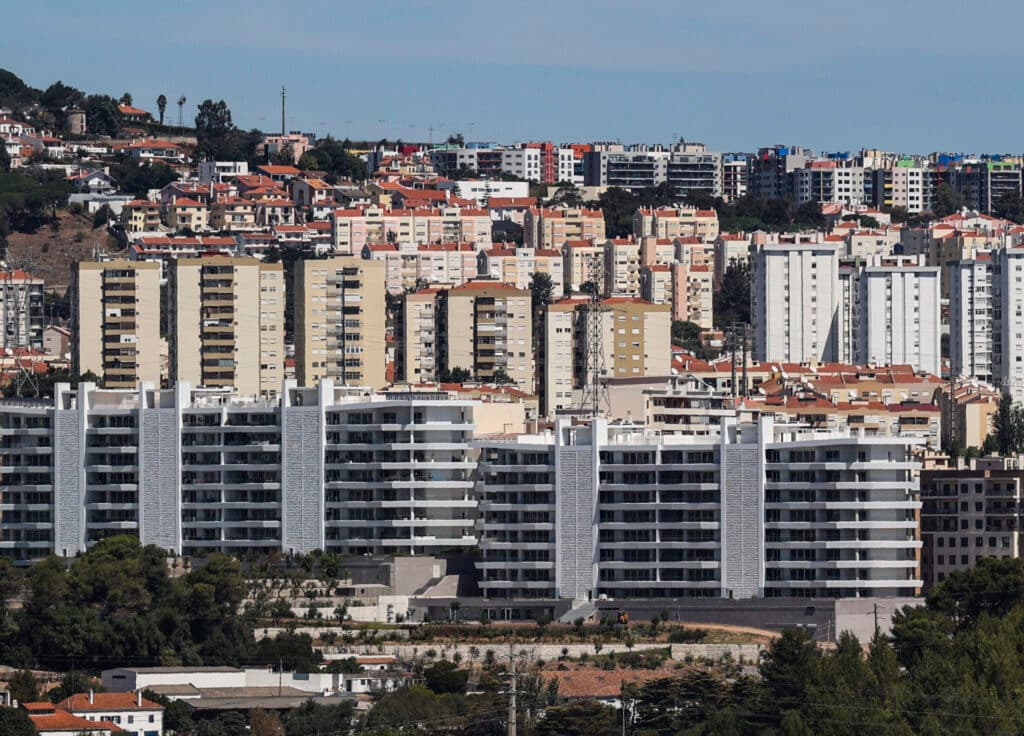
Why a Fall in Portuguese House Prices is an Unlikely and Dangerous Wish
By Nikola Zdraveski
Published: November 14, 2025
Category: market-trends
### Lisbon Real Estate Defies Price Decline Predictions Amid Structural Supply Constraints
In a market analysis that challenges conventional wisdom about Portuguese housing affordability, structural fundamentals indicate that **Lisbon property prices** face sustained upward pressure despite widespread calls for market correction. This reality stems from fundamental supply-demand imbalances rather than speculative bubbles, creating a complex investment landscape where declining prices would paradoxically signal economic distress rather than relief.
The **Portuguese housing market** operates within constraints that differentiate it from typical real estate cycles. With Portuguese incomes ranking among the lowest relative to property costs across OECD nations, the affordability crisis reflects structural economic factors rather than temporary market overheating. For comprehensive analysis of Lisbon's property dynamics, see our market insights [https://www.realestate-lisbon.com/market-insights] covering supply-demand fundamentals.
This persistent price resilience carries profound implications for foreign investors evaluating Portuguese real estate opportunities. Understanding why prices cannot meaningfully decline—and why such declines would prove economically damaging—becomes crucial for strategic investment positioning in Lisbon's constrained market environment.
### Key Takeaways
• ✓ Portuguese house price declines remain structurally impossible due to supply constraints
• ✓ Historical analysis shows property price drops correlate with severe economic crises
• ✓ Lisbon's constrained geography limits new supply despite sustained demand
• ✓ Foreign investors face persistent appreciation trends rather than cyclical corrections
**Lisbon's geographic constraints** fundamentally differentiate its property market from expandable urban centers. The city sits between the Atlantic Ocean and the Tagus River, with protected historic districts and topographical limitations restricting horizontal expansion. This natural containment creates an artificial supply ceiling that persists regardless of price signals, making traditional market correction mechanisms ineffective.
The **metropolitan area's transportation network** further concentrates demand within central Lisbon, as suburban connectivity remains limited compared to other European capitals. Major employment centers cluster around Parque das Nações, Saldanha, and the historic downtown, forcing commuters to compete for centrally located housing. For detailed neighborhood analysis, consult our comprehensive Lisbon guide [https://www.realestate-lisbon.com/lisbon-real-estate-neighborhoods].
These geographic realities mean that unlike markets where developers can expand outward to meet demand, Lisbon faces permanent supply scarcity that supports long-term price appreciation regardless of short-term economic fluctuations.
## Market Implications for Investors
The structural inability of Portuguese property prices to decline carries significant implications for **foreign real estate investors** approaching Lisbon with traditional market-cycle assumptions. Rather than anticipating buying opportunities during downturns, investors must recognize that price appreciation represents the normal market state rather than exceptional conditions requiring correction.
This **non-stationary price behavior**—where property values trend upward over decades with minimal sustained corrections—means that timing purchases around predicted price drops proves counterproductive. Historical data demonstrates that Portuguese property maintains its long-term appreciation trajectory despite periodic volatility, making delayed purchases in anticipation of declines a losing strategy.
Furthermore, the relationship between property price declines and economic catastrophe suggests that any meaningful market correction would coincide with severe broader economic damage. The **2008 financial crisis** illustrates this dynamic, where property price collapses triggered banking crises, unemployment spikes, and credit market freezes that ultimately harmed buyers more than sellers.
For investors evaluating Lisbon opportunities, this structural reality shifts focus from market timing to asset selection, emphasizing quality properties in supply-constrained locations rather than waiting for broad market corrections that historical patterns suggest will not materialize.
## Portuguese Housing Market Fundamentals
**Portugal's housing market dynamics** reflect decades of underinvestment in new construction combined with accelerating demand from both domestic and international buyers. The country's construction sector never fully recovered from the 2008 crisis, with building permits remaining below historical averages despite population growth and urbanization trends.
This supply shortage intensifies as **foreign investment flows** increase, driven by Portugal's political stability, Golden Visa programs, and competitive cost of living relative to other Western European nations. The resulting demand pressure concentrates in Lisbon and Porto, where international buyers compete with domestic purchasers facing the same constrained inventory.
## Lisbon Property Investment Context
Lisbon's transformation into a European technology and tourism hub creates sustained demand pressure that compounds supply constraints. Major international companies including **Google, Mercedes-Benz, and Vodafone** have established significant Portuguese operations, attracting skilled workers who compete for limited housing stock.
Several factors continue driving Lisbon property demand:
• **Golden Visa Attraction**: Portugal's residency-by-investment program channels foreign capital into real estate despite recent restrictions
• **Digital Nomad Migration**: Remote workers discover Lisbon's quality of life advantages, creating sustained rental demand
• **Tourism Conversion**: Short-term rental returns exceed long-term yields, removing units from permanent housing stock
• **Banking Sector Recovery**: Improved lending conditions increase domestic purchasing power without corresponding supply increases
These demand drivers operate within a market where new construction faces bureaucratic delays, limited developable land, and high building costs that prevent rapid supply responses to price signals. For current market data, see our investment analysis [https://www.realestate-lisbon.com/market-insights] covering supply-demand metrics.
## Strategic Investment Considerations
Foreign investors must recalibrate expectations away from traditional real estate cycles toward **permanent appreciation investing** that acknowledges Lisbon's structural supply constraints. This approach emphasizes immediate entry over timing strategies, focusing on asset quality within permanently supply-constrained submarkets.
**Financing strategies** become crucial given sustained appreciation trends, as mortgage leverage amplifies returns in rising markets while fixed-rate products hedge against interest rate risks. International buyers should consult Portuguese real estate lawyers [https://www.realestate-lisbon.com/english-speaking-lawyers] experienced in cross-border transactions to structure optimal ownership vehicles.
Investment selection should prioritize locations with permanent supply barriers—historic districts with preservation restrictions, waterfront areas with development limits, or central neighborhoods where height restrictions prevent density increases. These constraints ensure that even market-wide demand fluctuations cannot trigger oversupply corrections that damage asset values.
## Looking Ahead
Lisbon's property market trajectory points toward continued appreciation moderated only by affordability constraints rather than supply increases. The city's economic diversification into technology and services, combined with its emergence as a European lifestyle destination, supports sustained demand growth within fundamentally constrained supply conditions.
This structural reality positions Portuguese real estate as a long-term wealth preservation vehicle rather than a cyclical trading opportunity. For investors seeking exposure to European property markets with strong fundamentals, Lisbon offers compelling prospects grounded in geographic and regulatory constraints rather than speculative momentum. For expert guidance on navigating Portugal's unique market dynamics, contact realestate-lisbon.com [https://www.realestate-lisbon.com/].