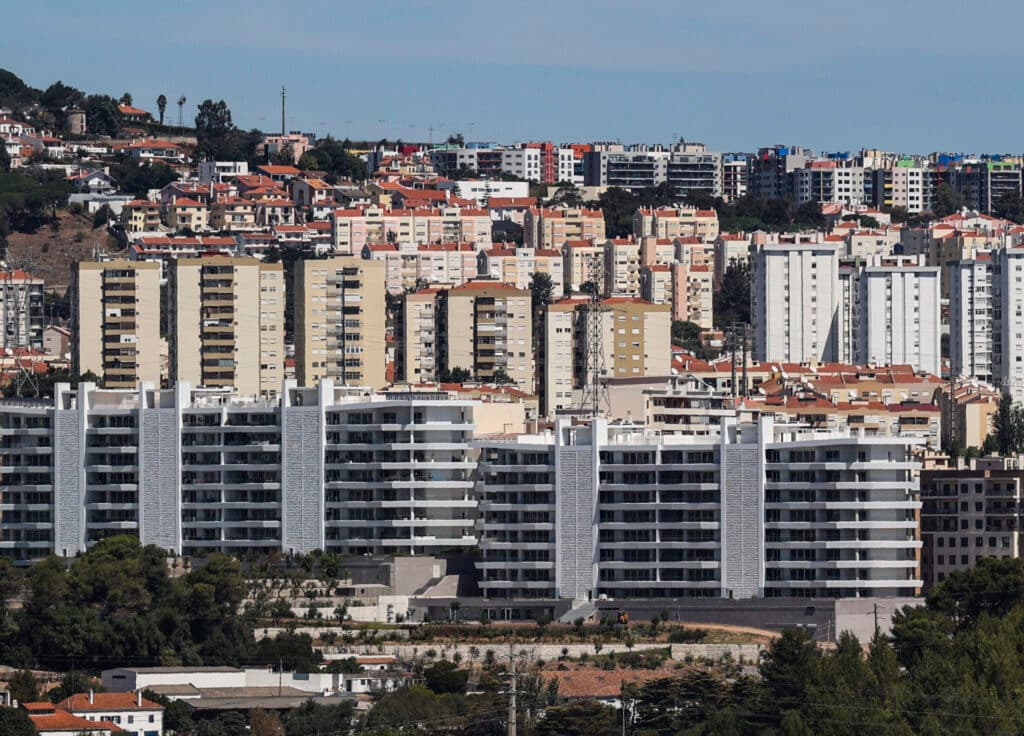
Portuguese Property Prices Hit New Record High in November, Lisbon Reaches €5,914/m²
By Nikola Zdraveski
Published: December 3, 2025
Category: market-trends
### Lisbon Property Prices Hit Record €5,914/m² as National Housing Costs Surge 7.8%
Portugal's residential property market has reached a historic milestone, with **nationwide housing prices** climbing 7.8% year-over-year to reach €3,000 per square meter in November 2024. This dramatic acceleration, driven by persistent supply-demand imbalances, has pushed **Lisbon** property values to an unprecedented €5,914/m², reinforcing the capital's position as Portugal's most expensive housing market.
The **idealista price index** data reveals that this price appreciation extends far beyond Lisbon, with 17 of 18 district capitals posting annual gains. This widespread growth pattern indicates a fundamental market shift rather than isolated regional bubbles, presenting both opportunities and challenges for international investors seeking Portuguese real estate exposure.
For foreign investors evaluating Portugal's property landscape, these record-breaking figures signal robust market fundamentals but also underscore the importance of strategic location selection and timing considerations.
### Key Takeaways
• ✓ Portuguese housing prices hit record €3,000/m² nationally, up 7.8% year-over-year
• ✓ Lisbon leads at €5,914/m², followed by Porto at €3,908/m² and Funchal at €3,864/m²
• ✓ Interior cities show explosive growth: Santarém surges 27.2%, Beja jumps 26.6%
• ✓ Supply-demand imbalance drives sustained price appreciation across all market segments
**Lisbon's premium positioning** at €5,914/m² reflects its status as Portugal's economic and political capital, home to multinational headquarters, tech startups, and a growing expatriate community. The city's strategic location on the Atlantic coast, combined with excellent connectivity via **Humberto Delgado Airport** and an expanding Metro network, continues to attract both domestic and international buyers seeking prime real estate exposure.
The **Algarve region**, represented by Faro at €3,400/m², demonstrates the enduring appeal of Portugal's southern coastline for lifestyle buyers and tourism investors. This coastal market benefits from year-round sunshine, world-class golf courses, and established expat communities that support consistent rental demand. For comprehensive analysis of Portugal's regional property dynamics, consult our market insights dashboard [https://www.realestate-lisbon.com/market-insights].
**Porto's emergence** at €3,908/m² reflects northern Portugal's economic renaissance, driven by the city's thriving tech scene, improved infrastructure, and cultural renaissance. The city's historic center, UNESCO World Heritage designation, and growing international connectivity through **Francisco Sá Carneiro Airport** position it as a compelling alternative to Lisbon's premium pricing.
## Market Implications for Investors
The **7.8% national price appreciation** demonstrates Portugal's continued attractiveness to international investors despite broader European economic uncertainties. This sustained growth trajectory, supported by factors including the **Non-Habitual Resident (NHR) tax regime** and **Golden Visa program**, indicates structural demand rather than speculative bubble conditions.
However, investors should note the **divergent regional performance patterns**. While Lisbon maintains moderate 4% growth, interior cities like Santarém (27.2% growth) and Beja (26.6% growth) show explosive appreciation. This suggests a market maturation where value-seeking buyers migrate from saturated primary markets to secondary cities offering better price-to-rent ratios and growth potential.
The **supply constraint factor** remains fundamental to Portugal's price dynamics. Construction permitting delays, limited developable land in prime areas, and skilled labor shortages continue restricting new supply. For investors considering off-plan developments [https://www.realestate-lisbon.com/off-plan], these constraints suggest continued price support but also extended delivery timelines.
International buyers should understand that **Portuguese property law** includes specific considerations around urban rehabilitation, historic property restrictions, and coastal development limitations. Working with English-speaking real estate lawyers [https://www.realestate-lisbon.com/english-speaking-lawyers] familiar with cross-border transactions becomes essential for navigating these regulatory frameworks.
## Price Dynamics Across Portuguese Cities
The **idealista price index** methodology tracks actual listing prices across Portugal's major urban centers, providing investors with real-time market sentiment indicators. The November data reveals a market where traditional interior cities, long overlooked by international buyers, now command attention through exceptional growth rates.
Cities like **Évora** (€2,567/m², 9.9% growth) and **Coimbra** (€2,267/m², 9.8% growth) represent compelling value propositions for investors seeking Portuguese university city exposure. These locations benefit from stable student populations, growing research sectors, and historic centers that support tourism-related rental strategies.
## Regional Market Analysis and Investment Opportunities
Portugal's property market demonstrates **distinct regional characteristics** that create varied investment profiles. The **Lisbon Metropolitan Area**, extending to Setúbal (€2,957/m²) and other commuter cities, offers established infrastructure and international connectivity but commands premium pricing that may limit yield potential.
The **northern region**, anchored by Porto's €3,908/m² pricing, benefits from industrial diversification, tourism growth, and improved transportation links including the **Francisco Sá Carneiro Airport** expansion. Cities like Braga (€2,133/m², 8.7% growth) and Viana do Castelo (€2,112/m², 13.8% growth) offer compelling alternatives for investors seeking northern exposure at accessible price points.
Several factors drive Portugal's sustained property appreciation:
• **International Relocation**: Post-pandemic remote work trends bring high-income residents seeking quality of life improvements
• **Golden Visa Residual Impact**: Though restricted to interior regions, the program established Portugal as a premium investment destination
• **Tourism Recovery**: Record visitor numbers in 2024 support short-term rental demand in key markets
• **European Union Stability**: Portugal's EU membership provides currency stability and legal framework confidence
These fundamental drivers suggest Portugal's price appreciation reflects genuine demand shifts rather than speculative excess, though investors should monitor interest rate impacts on mortgage affordability.
## Strategic Investment Considerations
Foreign investors approaching Portugal's record-high market should adopt **location-specific strategies** aligned with investment objectives. **Yield-focused buyers** might consider interior cities showing strong growth momentum, where entry costs remain reasonable relative to rental potential. Cities like Leiria (€1,746/m²) or Viseu (€1,705/m²) offer university markets with stable tenant bases.
**Capital appreciation seekers** should analyze infrastructure development corridors, particularly around Lisbon's Metro expansion areas or Porto's light rail extensions. These transportation improvements historically drive property revaluation as accessibility improves. Investors should consult investment property specialists [https://www.realestate-lisbon.com/professionals/real-estate-agents-investment-properties] familiar with infrastructure planning timelines.
Tax considerations significantly impact net returns for international investors. Portugal's **IMT transfer tax**, **stamp duty**, and ongoing **IMI property tax** vary by property type and location. Working with English-speaking accountants [https://www.realestate-lisbon.com/english-speaking-accountants] experienced in international property ownership ensures optimal tax structuring and compliance.
## Looking Ahead: Market Trajectory and Investment Timing
Portugal's property market faces a complex outlook as **record pricing** intersects with evolving economic conditions. While supply constraints support continued appreciation, rising interest rates and affordability pressures may moderate growth rates in 2025. International investors benefit from diverse entry points across Portugal's varied regional markets.
The **interior city renaissance** evident in price data suggests Portugal's property market is maturing beyond Lisbon and Porto concentration. This geographic diversification creates opportunities for investors willing to research secondary markets with strong fundamentals. For strategic guidance on navigating Portugal's record-breaking property market, contact realestate-lisbon.com [https://www.realestate-lisbon.com/].