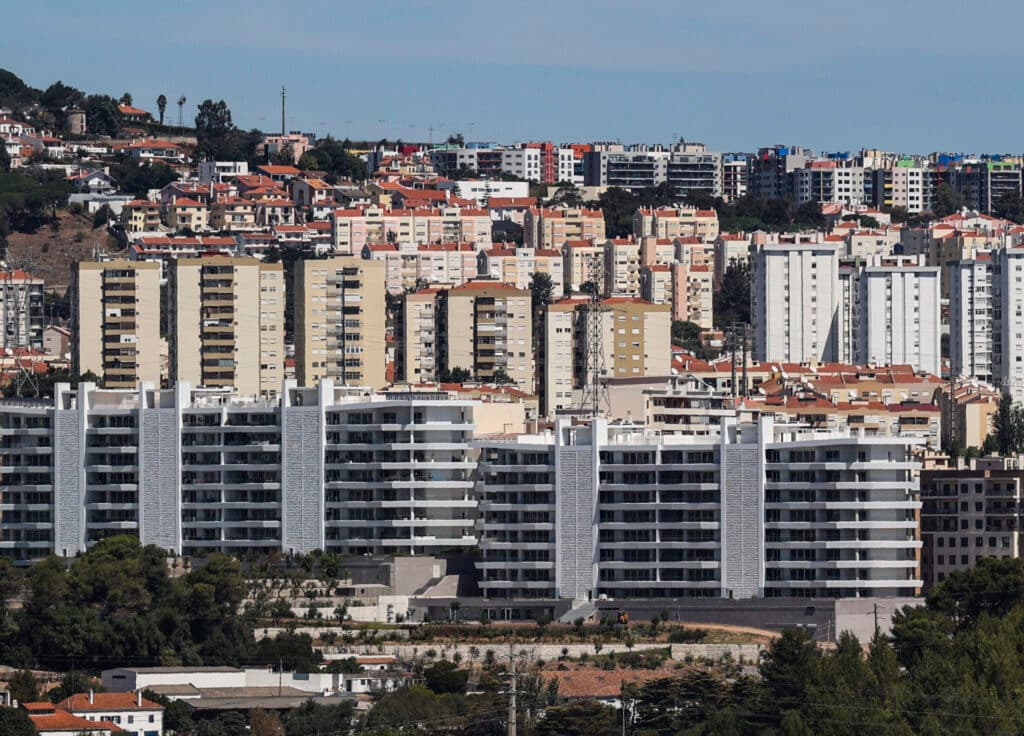
Portugal's Property Market Contrasts: Where to Buy for Under €500/sqm vs. Lisbon's €5,800/sqm
By Mihail Talev
Published: November 17, 2025
Category: market-trends
### Portugal's Stark Property Divide: €494/sqm Interior Bargains vs. €5,886/sqm Lisbon Premium
Portugal's residential property market demonstrates unprecedented geographic polarization, with **median housing prices** ranging from €494 per square meter in rural Pampilhosa da Serra to €5,886 per square meter in central Lisbon—a twelvefold differential that presents distinct investment opportunities and challenges. This dramatic price dispersion reflects Portugal's dual-speed property market, where coastal urban centers face severe supply constraints while interior regions offer exceptional affordability but limited liquidity.
The latest **idealista** analysis, Portugal's leading real estate marketplace, reveals twenty municipalities where investors can acquire 100-square-meter properties for under €50,000, contrasting sharply with Lisbon's prime locations where equivalent properties command over €580,000. For foreign investors seeking exposure to Portuguese real estate, understanding these market dynamics [https://www.realestate-lisbon.com/market-insights] becomes crucial for portfolio strategy and risk management.
This pricing divergence creates distinct investment profiles: interior municipalities offer high rental yields but face demographic challenges, while coastal premium markets provide capital appreciation potential with established international demand. The data underscores Portugal's emergence as a two-tier property market requiring sophisticated location analysis and investment horizon alignment.
### Key Takeaways
• ✓ Portugal's cheapest properties found in Pampilhosa da Serra at €494/sqm, 91% below Lisbon prices
• ✓ Twenty interior municipalities offer sub-€650/sqm properties, creating value investment opportunities
• ✓ Lisbon's €5,886/sqm median price signals premium market positioning with international buyer appeal
• ✓ Coimbra and Guarda districts concentrate affordable inventory, presenting portfolio diversification options
**Pampilhosa da Serra**, located 50 kilometers northeast of Coimbra in central Portugal's mountainous interior, exemplifies Portugal's affordable property segment with its €494 per square meter median price. This rural municipality, accessible via the IC6 regional highway connecting to Coimbra's A1 motorway, offers traditional Portuguese village lifestyle but faces population decline as younger residents migrate to urban centers.
The **Beira interior** region, encompassing districts like Guarda and Castelo Branco, dominates Portugal's affordable property rankings with twelve municipalities under €700 per square meter. These areas, characterized by aging demographics and limited economic diversification, present unique challenges for property investors seeking rental income or capital appreciation. For comprehensive analysis of Portugal's regional property variations, consult our regional investment guide [https://www.realestate-lisbon.com/lisbon-real-estate-neighborhoods].
Investment appeal varies dramatically across Portugal's geographic spectrum. Interior municipalities offer immediate rental yields exceeding 8% on purchase prices but face structural economic headwinds. Conversely, premium coastal markets command lower yields around 3-4% but benefit from sustained international demand and infrastructure development. Foreign investors must balance cash flow objectives against long-term demographic and economic trends when evaluating these contrasting opportunities.
## Market Implications for Investors
The extreme price differential between Portugal's interior and coastal markets creates distinct **risk-return profiles** requiring careful portfolio allocation. Interior properties offer immediate affordability and high rental yields relative to purchase prices, but face structural challenges including population decline, limited employment opportunities, and reduced liquidity during exit scenarios.
Coastal premium markets, particularly **Lisbon's €5,886 per square meter** median price, reflect sustained international demand driven by Golden Visa programs, tech sector expansion, and tourism growth. These markets demonstrate greater price stability and liquidity, attracting institutional investors and high-net-worth individuals seeking European real estate exposure with established resale markets.
The **twelvefold price differential** between Portugal's cheapest and most expensive municipalities signals market segmentation rather than arbitrage opportunity. Interior properties function as localized markets dependent on domestic demand, while coastal premium locations operate within international buyer networks. This segmentation means price convergence remains unlikely, as each market responds to fundamentally different demand drivers and buyer profiles.
## idealista's Market Analysis Significance
**idealista** operates Portugal's largest real estate marketplace, processing over 2 million property listings monthly and providing authoritative market data through its price index. The company's analysis encompasses both residential sales and rental markets, offering investors comprehensive visibility into pricing trends across Portugal's 308 municipalities.
The platform's quarterly reports have become essential tools for institutional investors, property funds, and individual buyers seeking Portuguese real estate exposure. Their methodology tracks actual listing prices rather than transaction values, providing real-time market sentiment indicators that often precede official statistical releases by several months.
## Portugal's Regional Property Market Dynamics
Portugal's property market fragmentation reflects broader economic geography patterns, with **coastal urban centers** attracting international investment while interior regions remain dependent on domestic demand. The concentration of affordable properties in districts like Coimbra and Guarda correlates with population density, employment opportunities, and infrastructure accessibility.
Several structural factors perpetuate Portugal's property price divide:
• **Demographic Trends**: Interior regions experience population decline averaging 1.2% annually, reducing housing demand and price appreciation potential
• **Economic Geography**: Coastal cities concentrate service sector employment, particularly tech and tourism industries driving wage growth and housing demand
• **International Accessibility**: Lisbon and Porto offer direct flights to major European cities, while interior regions require multi-hour connections to international airports
• **Policy Incentives**: Golden Visa programs and tax benefits primarily benefit coastal investment, limiting foreign capital flows to interior markets
These factors create self-reinforcing cycles where coastal markets attract sustained investment while interior regions struggle to overcome structural disadvantages. For investors, this suggests divergent rather than convergent price trajectories across Portugal's geographic markets.
## Investment Strategy Considerations
Foreign investors approaching Portugal's polarized market must align property selection with **investment objectives** and risk tolerance. Interior properties suit yield-focused strategies where immediate rental income outweighs capital appreciation concerns, particularly for investors comfortable with Portuguese tenant law and property management requirements.
Premium coastal markets serve **capital preservation objectives** within European real estate portfolios, offering exposure to established international buyer networks and institutional liquidity. However, entry costs require substantial capital commitments, with Lisbon properties typically demanding minimum investments of €500,000 for quality assets.
Portfolio diversification across Portugal's price spectrum can balance yield generation with appreciation potential, though such strategies require sophisticated local market knowledge and professional management. Investors should consult with English-speaking real estate lawyers [https://www.realestate-lisbon.com/english-speaking-lawyers] familiar with regional market variations and regulatory requirements before committing capital to either market segment.
## Looking Ahead
Portugal's property market polarization appears structurally entrenched, with coastal premium markets likely maintaining international buyer appeal while interior regions depend on domestic demographic recovery. The dramatic price differential creates opportunities for investors with appropriate risk profiles and investment horizons, but convergence remains improbable given divergent demand fundamentals.
Strategic investors may find value in selective interior acquisitions targeting specific demographic niches or tourism potential, while institutional capital continues flowing toward established coastal markets. For expert guidance on navigating Portugal's complex geographic property landscape, contact realestate-lisbon.com [https://www.realestate-lisbon.com/].