Portugal's Construction Sector Booms with 23% Rise in Housing Permits, Mirroring Economic Growth
By Nikola Zdraveski
Published: November 16, 2025
Category: market-trends
### Portugal's Construction Sector Booms with 23% Rise in Housing Permits, Mirroring Economic Growth
Portugal's construction sector is demonstrating remarkable vitality, with new data revealing a significant expansion that mirrors the nation's overall economic growth. In the first eight months of 2025, the number of permits issued for new homes surged by an impressive **23.1% year-over-year**, a key indicator that developers are ramping up activity to meet sustained demand. This construction boom is underpinned by a national economy that grew 2.4% in the third quarter, creating a fertile environment for real estate investment and development across the country.
### Key Takeaways
• ✓ Portugal's construction sector is in a strong expansion phase, aligning with the national economy's 2.4% year-over-year GDP growth in Q3 2025.
• ✓ A total of 27,295 new homes were licensed in the first eight months of the year, a 23.1% increase that signals a robust response to housing demand.
• ✓ The sector's labor market is tightening, with unemployment falling by 10% in September, indicating high demand for skilled workers.
• ✓ Public works investment is also surging, with tenders up 33% to €8.6 billion, driven by major infrastructure projects like the high-speed rail line.
A recent analysis by the **Association of Industrialists of Civil Construction and Public Works (AICCOPN)**, using official data from the **National Statistics Institute (INE)**, paints a detailed picture of a sector in full swing. The 0.8% quarter-on-quarter GDP growth was largely driven by domestic demand and accelerating private consumption, creating positive ripple effects throughout the economy. For the construction industry, this has translated into tangible growth across multiple metrics, from employment to project financing. These comprehensive statistics offer a solid foundation for analysis, and investors can find ongoing reports in our real estate market insights [https://www.realestate-lisbon.com/market-insights] section.
The health of the sector is not just a top-line story; the underlying indicators are equally strong. Unemployment in construction fell by 10% in September compared to 2024, a clear sign of a tightening labor market and a high volume of active projects. Simultaneously, the credit stock for construction companies rose by 8.6% to €6.82 billion, confirming that financial institutions are confidently backing the sector's expansion. This combination of rising employment and available credit creates a powerful engine for sustained development.
## Market Implications for Investors
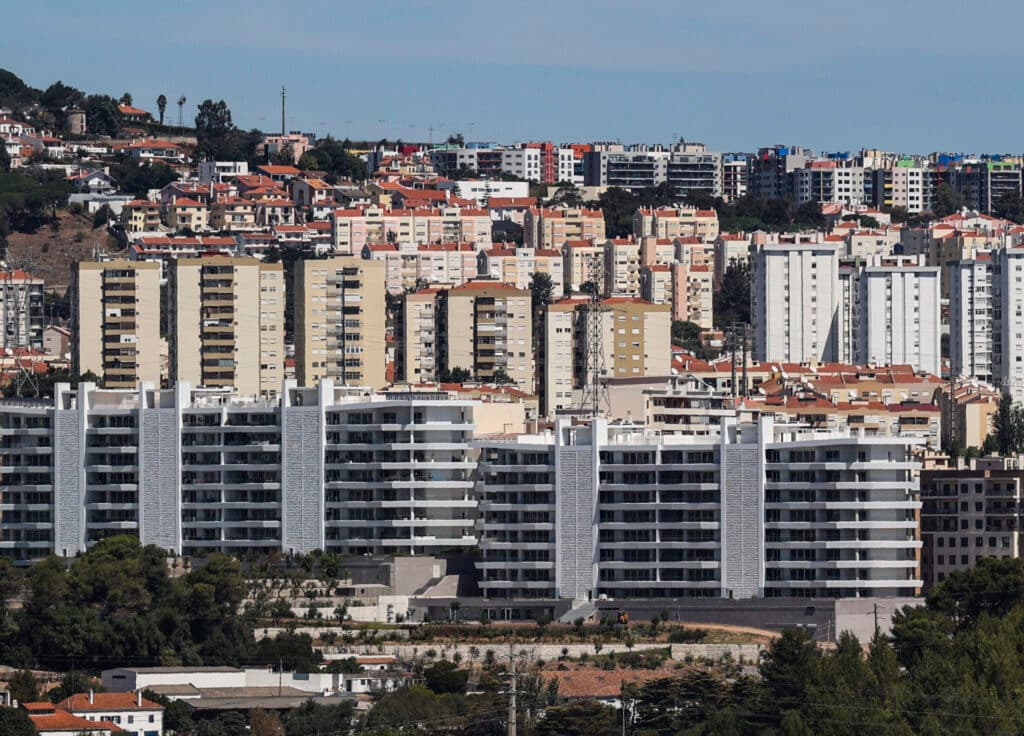
For foreign and domestic investors, the 23.1% surge in new housing permits is perhaps the most critical takeaway. This figure, representing 27,295 new units, indicates that the supply side of the market is actively working to close the housing deficit that has characterized recent years. While increased supply could theoretically temper rapid price appreciation, the depth of demand—fueled by both local and international buyers—suggests that the market can absorb this new inventory, particularly in high-demand urban centers like Lisbon and Porto. The 18.1% growth in licensed residential area also points to a trend of building larger homes, catering to evolving post-pandemic lifestyle preferences.
This data provides a crucial signal for investment strategy. It suggests that while the market for existing properties remains competitive, significant opportunities are emerging in the new-build and off-plan segments. Investors who can identify and partner with reputable developers stand to benefit from this wave of new construction. However, it also highlights the importance of due diligence, particularly regarding the quality and location of new projects, a topic we explore in our guide to the risks of new builds [https://www.realestate-lisbon.com/buying-guide/new-builds-risks].
## Dual Engines: Public Works and Residential Construction
A key strength of the current market is that growth is not solely dependent on the residential sector. A massive increase in public works spending is providing a second, powerful engine for the construction industry. This diversification adds a layer of stability and resilience to the market.
The scale of this public investment is substantial and has far-reaching implications:
• **Massive Tender Volume**: At €8.624 billion by the end of the third quarter, the 33% year-over-year increase in public works tenders is injecting enormous capital into the industry.
• **Transformative Infrastructure**: The €1.66 billion contract for the **Porto-Oiã High-Speed Rail Line** is a landmark project that will fundamentally improve connectivity and is likely to stimulate property markets along its corridor.
• **High Execution Rate**: With €5.345 billion in contracts already awarded, it is clear that these are not just paper projects but are moving into the execution phase, guaranteeing a pipeline of work for years to come.
• **Synergistic Effects**: Large-scale infrastructure upgrades often precede increases in property values and rental demand in the areas they serve, creating secondary investment opportunities for savvy investors.
## Investment Considerations
The confluence of a booming residential market and a surge in public infrastructure spending creates a uniquely favorable environment for real estate investment in Portugal. For foreign investors, this dual-track growth mitigates risk and offers a variety of entry points into the market. Opportunities exist not only in direct residential development but also in ancillary sectors and in acquiring assets in locations set to benefit from new infrastructure.
The data suggests that now is an opportune moment to engage with the market, whether through direct acquisition, development partnerships, or funds focused on Portuguese real estate. Partnering with experienced construction companies and developers [https://www.realestate-lisbon.com/constructors] will be key to navigating the landscape and capitalizing on the current momentum. The robust health of the sector suggests a positive outlook for long-term capital appreciation and rental income generation.
## Future Outlook
Looking ahead, the Portuguese construction sector is well-positioned for sustained growth. The strong economic fundamentals, coupled with a clear political will to invest in both housing and public infrastructure, provide a stable foundation for the coming years. While challenges such as labor shortages and rising material costs persist, the overwhelming momentum and deep pipeline of projects suggest the industry will remain a key driver of the Portuguese economy.
This vibrant and expanding market offers a wealth of opportunities for informed investors who understand the underlying dynamics. For expert guidance on navigating the complexities and unlocking the potential of the Portuguese property market, contact realestate-lisbon.com [https://www.realestate-lisbon.com/].