Portugal's Construction Sector Booms: New Housing Licenses Surge by 23.1% in 2025
By Mihail Talev
Published: November 17, 2025
Category: market-trends
### Portugal Housing Permits Surge 23.1%: Investment Opportunities Emerge Amid Construction Boom
Portugal's construction sector has demonstrated remarkable resilience with new housing permits surging 23.1% year-over-year through August 2025, reaching 27,295 licensed units. This acceleration reflects strengthening economic fundamentals, with GDP expanding 2.4% in Q3 2025 versus the same period in 2024, according to **AICCOPN**, the Portuguese Construction Industry Association that monitors sector performance using National Statistics Institute data.
The housing permit surge signals robust developer confidence and represents a critical inflection point for foreign investors monitoring Portugal's real estate recovery. Construction sector unemployment fell 10% year-over-year in September, while corporate credit expanded 8.6% to €6.82 billion, indicating healthy capital availability for development projects across Portuguese municipalities.
### Key Takeaways
• ✓ Portugal issued 27,295 new housing permits through August 2025, marking 23.1% growth
• ✓ Residential licensed area increased 18.1% while non-residential declined, showing market segmentation
• ✓ Public works contracts reached €5.345 billion, including €1.661 billion high-speed rail project
• ✓ Construction sector credit expansion to €6.82 billion signals strong institutional support
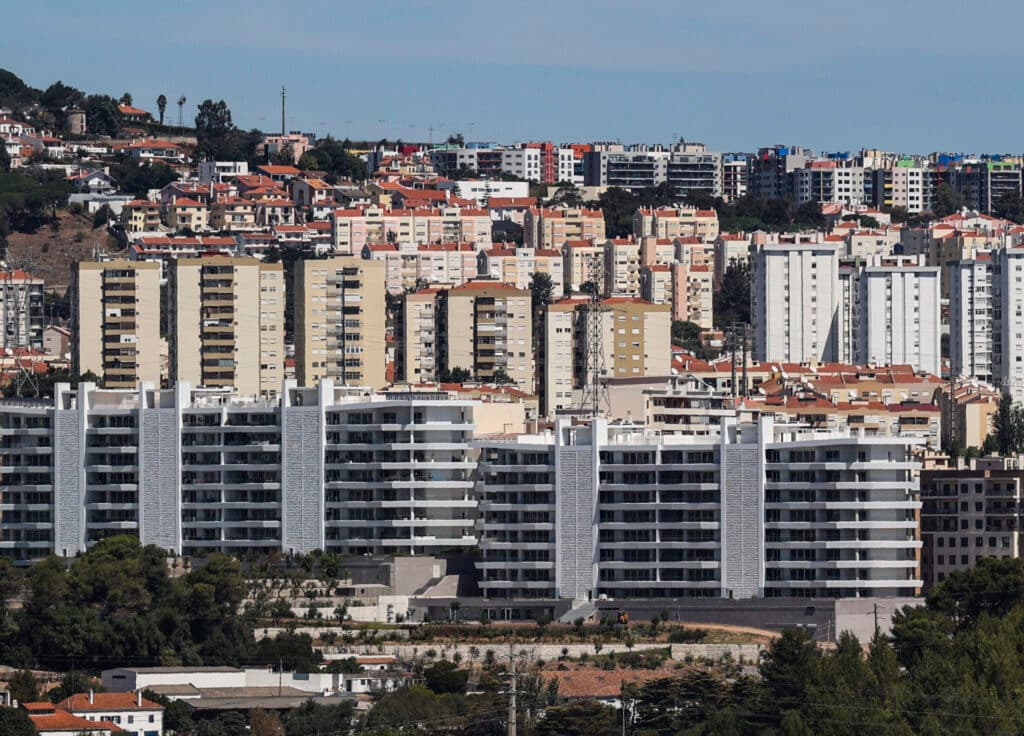
The construction boom spans Portugal's diverse geographic markets, from **Lisbon's** metropolitan area to emerging secondary cities. The **Instituto Nacional de Estatística (INE)**, Portugal's official statistics agency, tracks permit data across all municipalities, providing transparency for international investors evaluating development opportunities in different regions.
This geographic diversification matters significantly for foreign investors. Unlike concentrated booms in single markets, Portugal's permit growth reflects broad-based demand across multiple municipalities, reducing concentration risk for portfolio investors. For detailed municipal analysis, see our comprehensive Lisbon neighborhoods guide [https://www.realestate-lisbon.com/lisbon-real-estate-neighborhoods] covering construction trends by area.
The residential focus contrasts sharply with declining non-residential permits, revealing asymmetric market evolution. This divergence creates specific opportunities for investors targeting housing development, particularly in high-demand areas serving international buyers and the growing expatriate community.
## Market Implications for Investors
The 23.1% permit surge carries profound implications for real estate investors evaluating Portuguese market entry. This growth rate substantially exceeds European averages, indicating supply response to persistent housing shortages that have driven price appreciation since 2020. For investors monitoring **market cycles**, permit acceleration typically precedes increased construction activity by 12-18 months.
Construction sector employment growth contradicts broader European construction downturns, suggesting Portugal's market operates on different fundamentals. The **credit expansion** to €6.82 billion demonstrates banking sector confidence in development projects, reducing financing risk for investors considering development partnerships or direct construction investment.
However, the asymmetric growth between residential and non-residential segments reveals selective opportunity. While housing permits surge, commercial development lags, potentially creating future supply-demand imbalances. Investors should analyze municipal master plans and zoning regulations [https://www.realestate-lisbon.com/market-insights] to identify areas where residential development concentrates.
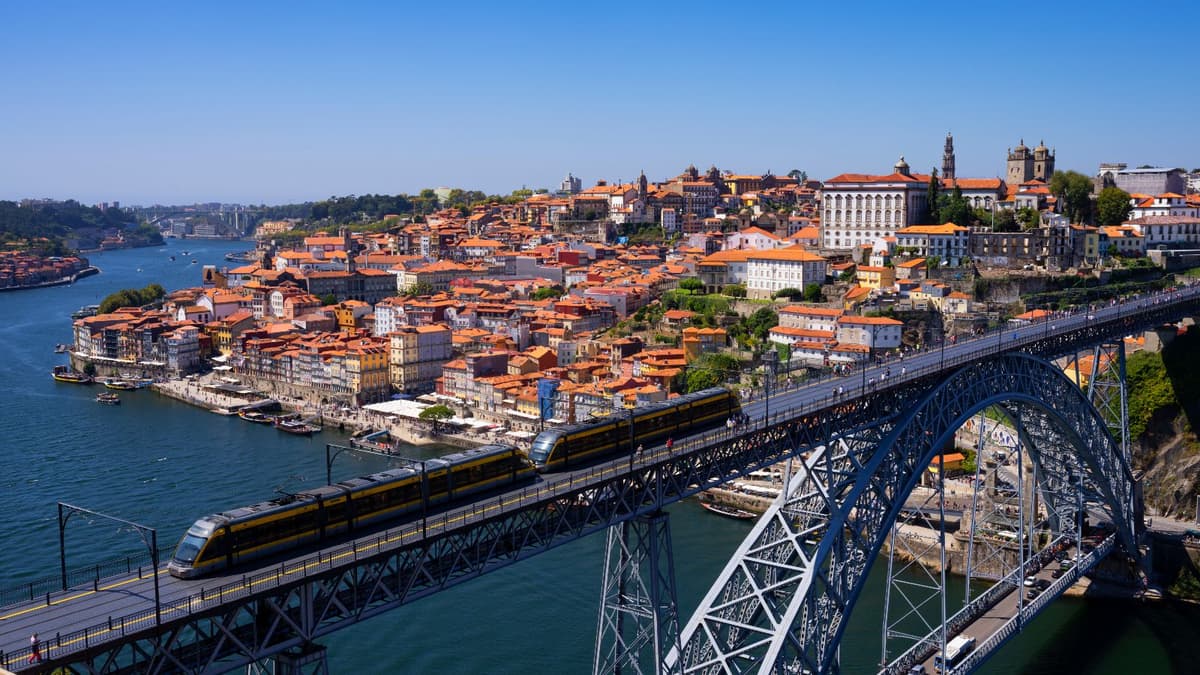
The **public works acceleration** to €8.624 billion in tenders, including major infrastructure projects, enhances long-term property values through improved connectivity. The Porto-High Speed Rail project alone represents €1.661 billion investment, fundamentally altering accessibility patterns between Portugal's two largest metropolitan areas.
## AICCOPN's Sector Analysis Framework
**AICCOPN**, the Portuguese Construction Industry and Public Works Association, represents the country's leading construction companies and provides authoritative sector intelligence. Their analysis integrates cement consumption data, employment statistics, banking sector information, and public tender monitoring to deliver comprehensive market insights that international investors rely upon for strategic decisions.
The association's methodology combines quantitative indicators with qualitative assessment of regulatory changes, providing early signals of market shifts. Their quarterly reports track performance across residential, commercial, and infrastructure segments, offering granular detail on regional variations that sophisticated investors require for portfolio allocation decisions.
## Portugal Construction Market Context
Portugal's construction boom occurs within a broader European context of housing supply constraints and demographic shifts. The country's attractiveness to international residents, combined with relatively affordable pricing compared to other Western European markets, creates sustained demand fundamentals supporting current development levels.
Several structural factors continue driving Portugal's construction sector growth:
• **Golden Visa Residency**: Investment migration programs attract foreign capital requiring quality housing stock, particularly in Lisbon and Porto metropolitan areas
• **Non-Habitual Resident Tax Regime**: Favorable tax treatment for foreign retirees and professionals increases demand for high-quality residential developments
• **Tourism Infrastructure**: Post-pandemic tourism recovery drives hospitality development and secondary housing construction in coastal regions
• **Urban Rehabilitation**: Government incentives for historic building renovation create opportunities in city centers while preserving architectural heritage
These factors interact to create multi-layered demand supporting sustained construction activity. Unlike speculative bubbles driven solely by domestic credit expansion, Portugal's boom reflects genuine demographic and economic shifts with long-term staying power.
The cement consumption stability at 0.2% growth despite permit acceleration suggests efficient supply chain management and indicates developers are securing materials for current projects rather than speculative hoarding. This measured approach reduces inflationary pressure while maintaining construction momentum.
## Strategic Investment Considerations
For foreign investors evaluating Portuguese construction market entry, the permit surge offers multiple strategic pathways. Direct development investment provides exposure to construction margins, while land banking in high-growth municipalities offers leveraged plays on continued expansion. Investors should analyze **municipal master plans** to identify infrastructure corridors benefiting from public investment.
The residential-commercial divergence creates specific opportunities. Investors might consider mixed-use developments combining residential towers with limited commercial components, or focus exclusively on residential projects in high-demand areas. Consulting with English-speaking real estate lawyers [https://www.realestate-lisbon.com/english-speaking-lawyers] experienced in construction licensing ensures proper due diligence on permits and regulatory compliance.
Regional diversification within Portugal reduces concentration risk. While Lisbon and Porto command premium pricing, emerging secondary cities like Braga, Aveiro, or Coimbra offer lower entry costs with similar demographic tailwinds. The **public works program** improves connectivity between regions, potentially narrowing traditional pricing gaps over time.
## Looking Ahead
Portugal's construction sector trajectory appears sustainable given underlying demographic and economic fundamentals. The 23.1% permit growth reflects market response to genuine housing shortages rather than speculative excess, supported by employment growth and banking sector confidence. Foreign investor participation continues expanding as international buyers recognize Portugal's strategic positioning within Europe.
The sector's evolution toward higher-density, quality developments aligns with European urbanization trends while respecting Portugal's architectural heritage. For investors seeking European real estate exposure with favorable risk-adjusted returns, Portugal's construction boom offers compelling opportunities across multiple investment strategies. For expert guidance on navigating Portugal's construction investment landscape, contact realestate-lisbon.com [https://www.realestate-lisbon.com/].