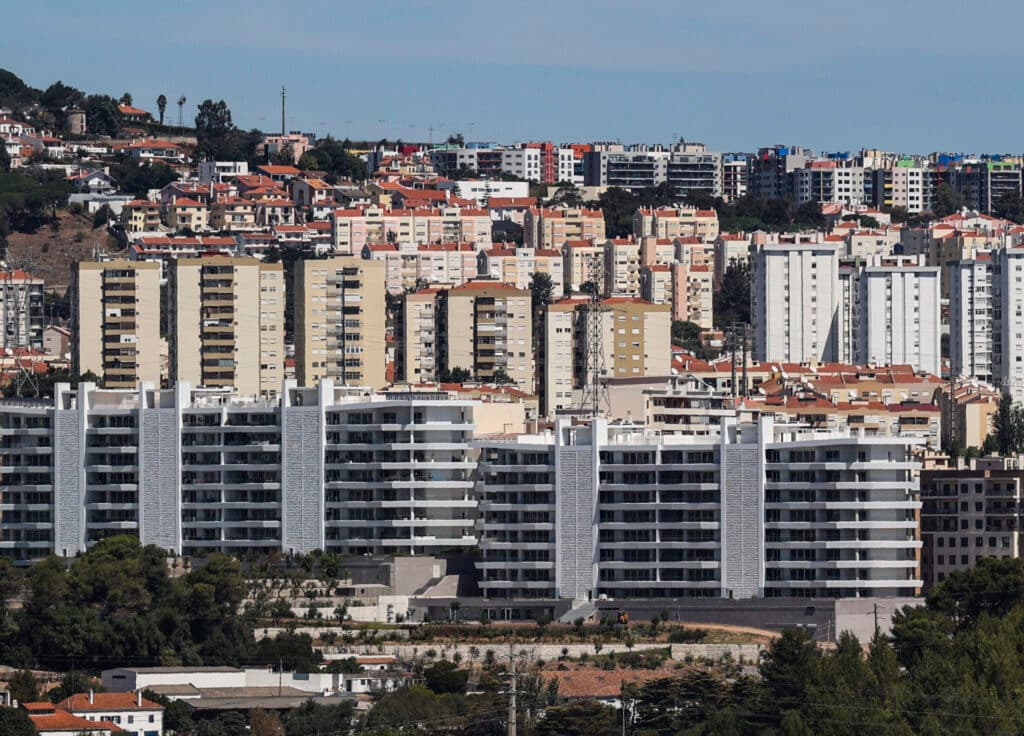
Lisbon's Office Market Shows Stability While Porto's Sales Prices Surge in Q3 2025
By Kellogg Fairbank
Published: November 29, 2025
Category: market-trends
### Lisbon's Office Market Shows Stability While Porto's Sales Prices Surge in Q3 2025
In a compelling analysis of Portugal's commercial real estate landscape, the latest **Iberia Property Market Report Q3 2025** from asset management firm **MVGM** reveals a tale of two cities. Lisbon, the nation's capital, is cementing its reputation for stability and resilience with moderate, sustained growth. Meanwhile, Porto is capturing headlines with a dramatic 28.4% year-on-year surge in office sales prices. This divergence underscores a maturing market that offers sophisticated, multi-layered opportunities for discerning foreign investors and international corporations.
### Key Takeaways
• ✓ Lisbon's office sales prices grew a steady 5.1% year-on-year to €2,775/m², confirming its status as a stable, mature market ideal for long-term institutional investment.
• ✓ Porto's office sales prices skyrocketed by 28.4% to €2,531/m², signaling a high-growth phase driven by intense demand from new corporate arrivals.
• ✓ While Lisbon's rents show healthy annual growth (+7.4%), Porto's rents adjusted downwards (-6.2%), suggesting new supply is meeting demand and potentially creating a strategic entry point for investors.
• ✓ The report highlights a clear choice for investors: Lisbon for predictable, consistent returns versus Porto for aggressive capital appreciation and value-add opportunities.
The report provides a detailed snapshot of Lisbon's market, painting a picture of reassuring stability. With an average sales price of €2,775 per square meter, the capital's office sector is a bastion of predictability. This environment is particularly attractive to institutional investors, such as pension funds and large family offices, who prioritize capital preservation and steady, long-term returns. The city's robust infrastructure and its role as a political and economic center provide a solid foundation for this stability. Investors looking to understand the nuances of its various business districts can find valuable information in our in-depth Lisbon neighborhoods guide [https://www.realestate-lisbon.com/lisbon-real-estate-neighborhoods].
In stark contrast, Porto is characterized by dynamic acceleration. The city's transformation into a vibrant tech and business hub has unleashed a wave of demand, causing office property values to soar. This rapid appreciation offers significant potential for capital gains, attracting a different class of investor—one more focused on growth and value-add strategies. The data suggests that Porto is rapidly maturing, presenting a limited-time opportunity to capitalize on its growth trajectory before the market stabilizes. For those looking to explore this burgeoning market, connecting with English-speaking real estate agents [https://www.realestate-lisbon.com/english-speaking-agents] is a crucial first step.
## Market Implications for Investors
The distinct dynamics between Lisbon and Porto necessitate different investment approaches. In Lisbon, the 5.1% growth in sales prices, coupled with a 7.4% rise in annual rents, indicates a market in healthy equilibrium. According to Filipa Moreira, Head of Offices at **MVGM Portugal**, this performance “confirms the confidence of investors and users.” For investors, this translates to a low-risk environment where income-generating assets can be acquired with a high degree of confidence in future cash flows. A detailed review of the market insights [https://www.realestate-lisbon.com/market-insights] confirms this trend toward stable, long-term growth.
Porto's market, however, tells a story of rapid evolution. The 28.4% explosion in sales prices is a clear indicator of intense investor appetite. Yet, the concurrent -6.2% year-on-year adjustment in average rents is a critical detail. It suggests that a new wave of office supply is coming online, temporarily tempering rental growth. This creates a fascinating strategic dilemma for investors: acquire assets now based on their capital appreciation potential, with the expectation that rents will soon follow as the new supply is absorbed. This scenario is ripe for investors skilled in asset management and repositioning. Engaging with legal experts for due diligence [https://www.realestate-lisbon.com/professionals/real-estate-lawyers-due-diligence] is paramount to navigating such a fast-moving market.
This bifurcation of the market is a sign of health, offering a balanced portfolio of options within a single country. Investors can hedge high-growth plays in Porto with stable, income-producing assets in Lisbon, creating a diversified Portuguese commercial property portfolio.
## MVGM's Expert Analysis
The analysis from **MVGM**, a respected voice in European real estate, lends significant weight to these findings. Their report moves beyond simple data reporting to offer strategic interpretation. The firm highlights that institutional interest remains strong in both cities, but for different reasons. Moreira explains, “Porto has been establishing itself as an increasingly attractive hub... The strong growth in sales values reflects this demand.”
This expert commentary confirms that the choice between Lisbon and Porto is not about which is 'better,' but which aligns with a specific investment thesis. Lisbon offers 'consistency and predictability,' while Porto provides a compelling 'rhythm of valorization.' This distinction is crucial for international investors trying to allocate capital effectively within the Iberian Peninsula. For more expert commentary, our professional insights blog [https://www.realestate-lisbon.com/blog/professional-insights] features analysis from industry leaders.
## Portugal's Commercial Real Estate Context
The trends in the office market are reflective of Portugal's broader economic success story. The nation has successfully positioned itself as a premier destination for international business, technology, and talent, which directly fuels the demand for high-quality office environments. This macroeconomic tailwind provides a strong foundation for the entire commercial real estate sector.
Several key factors are underpinning this growth:
• **Corporate Relocation**: A consistent influx of multinational corporations, particularly in the tech and shared services sectors, is a primary driver of office demand.
• **Talent Magnetism**: Portugal's high quality of life, safety, and vibrant culture make it easy for companies to attract and retain a skilled, multilingual workforce.
• **Investor Confidence**: The stable political climate and pro-business policies have boosted investor confidence, leading to increased capital flows into real estate.
• **Infrastructure and Connectivity**: Significant investments in digital and physical infrastructure have made both Lisbon and Porto highly efficient and connected places to do business. Exploring the investment risks and opportunities [https://www.realestate-lisbon.com/buying-guide/investment-risks] provides a fuller picture.
These elements combine to create a fertile ground for real estate investment. While global economic headwinds exist, Portugal's core fundamentals remain strong, suggesting continued resilience and growth in its key commercial markets.
## Investment Considerations
For foreign investors, the MVGM report serves as a strategic roadmap. A decision to invest in Lisbon's office market is a vote for stability and predictable income. This strategy is well-suited for those with a long-term horizon who require dependable cash flow from their assets. Tools like our rental yield calculator [https://www.realestate-lisbon.com/calculators/rental-yield] can help model the potential income from such an investment.
Conversely, an allocation to Porto is a more aggressive play on capital growth. The current market dynamics—soaring sales prices and temporarily adjusting rents—suggest an opportunity for significant value creation. This path is better suited for investors with a higher risk tolerance and expertise in development or asset repositioning. A deep understanding of local construction and development [https://www.realestate-lisbon.com/professionals/constructors] would be a distinct advantage here.
Ultimately, the choice depends on the investor's specific goals, risk profile, and portfolio strategy. The Portuguese market is now mature enough to cater to both conservative and aggressive capital.
## Future Outlook
Looking ahead, the outlook for Portugal's commercial real estate sector is overwhelmingly positive. Lisbon is set to continue its role as a benchmark for stability in Southern Europe, attracting blue-chip tenants and long-term institutional capital. Porto is expected to continue its impressive growth trajectory, with its real estate market maturing in line with its growing economic importance.
This dual-speed market offers a rich and diversified investment landscape, allowing investors to tailor their strategy to specific financial objectives. The insights from the MVGM report are invaluable in navigating this promising environment. For bespoke advice and access to exclusive opportunities in both Lisbon and Porto, contact the expert team at realestate-lisbon.com [https://www.realestate-lisbon.com/].