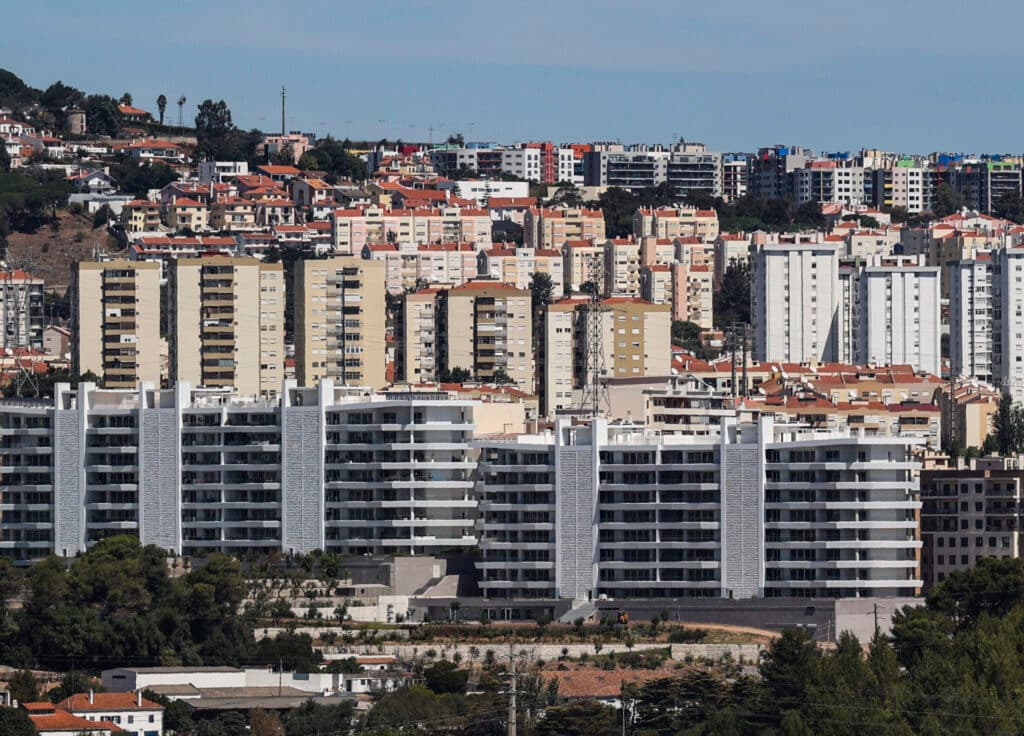
Lisbon Mortgage Shock: Over a Third of Homeowners Face Payment Hikes in December
By Pieter Paul Castelein
Published: November 30, 2025
Category: market-trends
### Lisbon Mortgage Shock: Over a Third of Homeowners Face Payment Hikes in December
In a pivotal market inflection that demands the attention of all property investors in **Portugal**, monthly payments for a significant portion of variable-rate mortgages are set to increase in December. This marks the definitive end of a 20-month cycle of falling interest costs and ushers in a new era of financial pressure for homeowners. For foreign investors and expatriates with leveraged assets in markets like **Lisbon** and the **Algarve**, this trend reversal is a critical development with far-reaching implications for cash flow, investment returns, and future acquisition strategies.
### Key Takeaways
• ✓ **End of Relief:** For the first time since January 2024, variable-rate mortgages tied to 3 and 6-month Euribor will see payments rise upon their December revision.
• ✓ **Widespread Impact:** This change will affect over a third of Portuguese households with a mortgage, signaling a broad-based increase in the cost of property ownership.
• ✓ **Euribor's New Floor:** The increase is driven by Euribor rates holding firm above the 2% level, indicating that the period of ultra-low interest rates is firmly in the past.
• ✓ **Future Hikes Expected:** Market forecasts (forward contracts) not only rule out a return to lower rates but also suggest more significant payment increases could materialize from mid-2026, requiring immediate strategic planning.
This turning point is not a minor fluctuation but a structural shift in the interest rate environment. It is directly linked to the behavior of the Euribor, the benchmark for the vast majority of Portugal's €100 billion housing loan market. According to the latest data from the **Bank of Portugal**, 54% of this market is on variable rates, and of those, nearly two-thirds are indexed to the 3 or 6-month Euribor—the very cohorts now facing payment hikes. This data underscores the systemic nature of the change and its importance for anyone analyzing Portuguese real estate market trends [https://www.realestate-lisbon.com/market-insights].
The end of this nearly two-year 'honeymoon' period for borrowers requires a fundamental reset of expectations. For investors, this means that financial models based on declining or static financing costs are now obsolete. The ability to accurately forecast and absorb rising carrying costs will separate successful investors from those who are over-leveraged. Tools like our property investment analyzer [https://www.realestate-lisbon.com/calculators/investment-analyzer] are essential for stress-testing a portfolio against this new reality.
This development also brings the mortgage market itself into sharp focus. While variable rates have long been the default choice, the prospect of sustained increases may lead to a strategic pivot. Understanding the nuances of different financing options is now more critical than ever, a topic we explore in our comprehensive guide to financial concerns [https://www.realestate-lisbon.com/buying-guide/financial-concerns] when buying property.
## Market Implications for Investors
For savvy international investors, this interest rate shift presents both challenges and opportunities. The primary challenge is the direct impact on profitability. For buy-to-let properties in **Lisbon**, an increase in mortgage payments directly erodes net rental yield unless rents can be adjusted upwards. This puts pressure on investors to optimize their rental strategy and property management to maintain target returns. Our rental yield calculator [https://www.realestate-lisbon.com/calculators/rental-yield] is an indispensable tool for this analysis.
On a macroeconomic level, sustained higher mortgage costs could cool down the domestic buyer market. While prime real estate in Lisbon has shown resilience due to strong international demand, a slowdown in the broader market could moderate the rapid price appreciation seen in recent years. This could create more favorable entry points for cash buyers or well-capitalized investors who are less reliant on leverage.
Furthermore, this new environment could trigger a flight to quality. As financing becomes more expensive, buyers are likely to be more discerning, prioritizing properties in prime locations with strong fundamentals. This reinforces the long-term investment case for premium neighborhoods in **Lisbon**, such as those highlighted in our Lisbon neighborhoods guide [https://www.realestate-lisbon.com/lisbon-real-estate-neighborhoods], over secondary or tertiary markets.
## A Closer Look at the Financial Impact
The immediate financial impact, while not dramatic, is symbolically significant. On a typical **€150,000, 30-year mortgage** with a 1% spread, the December revision on a 3-month Euribor contract will mark the first payment increase in 20 months. While the initial rise is small, it breaks a powerful psychological trend of continuous relief.
The key takeaway for investors is not the size of this first increase, but the trajectory it signals. The forward markets, which reflect institutional investor expectations, are pricing in a scenario where Euribor rates do not fall back below 2% and could climb further. This suggests that the December hike is the beginning of a new trend, not a one-off event. Preparing for this requires a forward-looking approach to financing, perhaps by exploring fixed-rate options or budgeting for higher variable payments. A mortgage eligibility scan [https://www.realestate-lisbon.com/calculators/mortgage-scanner] can provide clarity on available options.
## The Future of Portuguese Interest Rates
The consensus among market analysts is that the era of cheap money that fueled real estate booms across Europe is over. The focus now is on managing the transition to a more normalized interest rate environment. For Portugal, this has specific implications.
Several factors will shape the path of interest rates for property owners:
• **European Central Bank (ECB) Policy**: While Euribor is a market rate, it is heavily influenced by the ECB's benchmark rates. The ECB's stance on inflation will be the primary driver.
• **Economic Performance**: The strength of the Portuguese and broader Eurozone economies will influence banks' lending margins (spreads) and their appetite for risk.
• **Inflation Dynamics**: Persistent inflation could force the ECB to maintain higher rates for longer, directly impacting mortgage costs.
• **Global Geopolitical Factors**: International instability can affect investor sentiment and capital flows, indirectly influencing interest rate markets.
This complex interplay of factors suggests that volatility may be a feature of the mortgage market for some time. This uncertainty underscores the value of expert financial advice from professionals like English-speaking accountants [https://www.realestate-lisbon.com/english-speaking-accountants] who specialize in the Portuguese market.
## Investment Considerations for the New Rate Environment
In this evolving landscape, investors must adapt their strategies. The 'buy-and-hold' approach funded by cheap debt requires re-evaluation. A more active approach to portfolio management is now essential. This includes regularly reviewing financing structures, exploring refinancing options, and stress-testing investment models against higher rate scenarios.
For those considering new acquisitions, the analysis must be more rigorous. The required rental yield to achieve a target cash-on-cash return will be higher to offset increased financing costs. This may shift focus towards properties with value-add potential or those in areas with strong rental growth prospects. Due diligence, including legal checks by English-speaking real estate lawyers [https://www.realestate-lisbon.com/english-speaking-lawyers], becomes even more critical to avoid costly mistakes.
## Future Outlook
The December 2025 mortgage payment increase is a watershed moment for the Portuguese real estate market. It signals a return to more traditional financial conditions, where the cost of capital is a primary consideration in investment decisions. While this may create short-term challenges, it also contributes to a more sustainable and less speculative market in the long run.
Investors who are well-informed, well-capitalized, and who plan strategically will be best positioned to navigate this new environment successfully. The ability to adapt to changing market dynamics will be the key to unlocking continued opportunities in Portugal's vibrant property sector. For expert guidance on investment strategy and market analysis, contact realestate-lisbon.com [https://www.realestate-lisbon.com/].