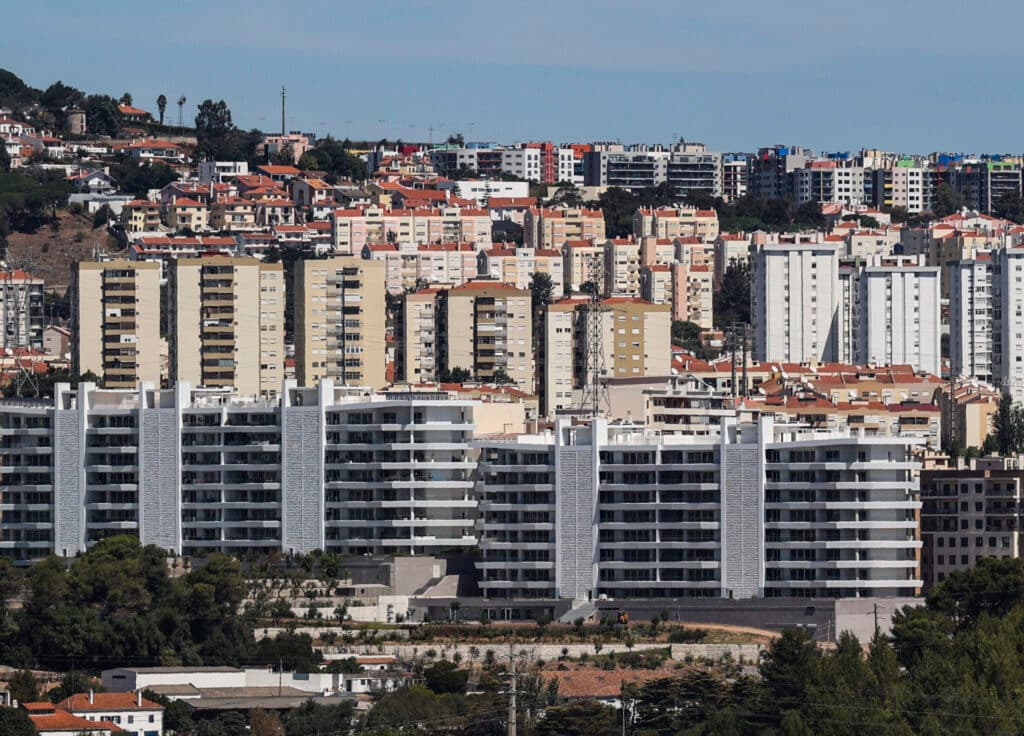
Housing Demand in Lisbon's Suburbs Remains High Despite Soaring Rents
By Nikola Zdraveski
Published: November 10, 2025
Category: market-trends
### Lisbon Metropolitan Rental Market Shows Resilient Demand Despite €1,000+ Monthly Rates
Rental demand in **Lisbon's surrounding municipalities** remains remarkably strong despite monthly rates exceeding €1,000 across most of the metropolitan region, according to summer 2025 data from **idealista/data**, Portugal's leading property portal. Half of Portugal's 50 most sought-after rental municipalities now command rents above this threshold, yet tenant interest continues unabated, signaling fundamental supply-demand imbalances that present both opportunities and challenges for foreign investors.
**Vila Franca de Xira**, located 30 kilometers northeast of central Lisbon along the Tagus River with direct rail connections to Santa Apolónia station, leads national rental search rankings. The municipality is followed closely by **Moita**, **Alenquer**, **Barreiro**, **Amadora**, **Sintra**, **Loures**, and **Odivelas**—all suburban municipalities within 10-25 kilometers of Lisbon's center, demonstrating that proximity to the capital remains the dominant factor driving tenant preferences despite escalating costs.
This sustained demand occurs even as **Sintra** and **Oeiras**—two of the region's most established residential municipalities—record median monthly rents exceeding €1,700, while Lisbon proper registers €1,810 yet paradoxically drops to 54th place in search rankings. The data reveals a significant market recalibration as tenants increasingly prioritize suburban locations offering better value propositions relative to the capital's premium pricing.
### Key Takeaways
• ✓ Vila Franca de Xira leads Portugal's rental search rankings despite metropolitan Lisbon rents exceeding €1,000 monthly across most municipalities
• ✓ Eight Lisbon metropolitan municipalities dominate top rental demand rankings, with Sintra and Oeiras commanding €1,700+ median rents
• ✓ Lisbon city drops to 54th place in search rankings at €1,810 median rent, signaling tenant migration to suburban alternatives
• ✓ Twenty-five of Portugal's 50 most-searched municipalities exceed €1,000 monthly rents, concentrated in Lisbon, Setúbal, and Faro districts
The geographic distribution of high-demand rental markets extends beyond Lisbon's immediate orbit. **Vila Franca de Xira**, positioned along the A1 motorway corridor with industrial zones and logistics facilities, attracts working professionals seeking affordable alternatives to central Lisbon while maintaining reasonable commute times via CP rail services. **Moita**, located across the Tagus in the Setúbal Peninsula and accessible via Transtejo ferry services, offers similar value dynamics for tenants willing to incorporate water transport into daily routines.
**Amadora**, **Loures**, and **Odivelas**—three municipalities directly bordering Lisbon with extensive Blue Line and Yellow Line Metro coverage—represent the closest suburban alternatives, yet still feature prominently in search rankings despite their proximity premium. These areas particularly appeal to international professionals and expatriate families seeking Portuguese suburban environments with direct rapid transit access to Lisbon's employment centers. For detailed analysis of metropolitan Lisbon's residential submarkets, see our comprehensive Lisbon neighborhoods guide [https://www.realestate-lisbon.com/lisbon-real-estate-neighborhoods].
## Market Implications for Rental Investment
The persistent demand across Lisbon's metropolitan municipalities despite elevated pricing carries significant implications for **foreign rental property investors**. The data demonstrates that tenant appetite for proximity to the capital remains fundamentally inelastic—renters continue searching in high-cost areas because employment concentration, service infrastructure, and lifestyle amenities remain centralized in the Lisbon metropolitan region, creating sustained rental income potential for well-positioned properties.
The €1,000+ monthly threshold now represents the standard entry point for metropolitan Lisbon rentals rather than premium positioning. This pricing normalization suggests that investors can underwrite rental property acquisitions with confidence in sustained cash flows, particularly in municipalities offering superior transport connectivity. Properties within walking distance of Metro stations, CP rail terminals, or major ferry connections command rental premiums that justify acquisition price differentials in these submarkets.
Lisbon city's decline to 54th place in search rankings despite commanding the region's highest median rent (€1,810 monthly) reveals an important market dynamic: tenant search behavior increasingly focuses on suburban alternatives offering better space-to-cost ratios. This trend benefits investors targeting **family-oriented rental properties** in municipalities like Sintra, Oeiras, and Vila Franca de Xira, where larger apartments and townhouses attract long-term tenants willing to pay €1,500-1,700 monthly for additional living space and residential environments. According to recent Portuguese rental market analysis [https://www.realestate-lisbon.com/market-insights], these suburban family rentals demonstrate lower vacancy rates and longer tenancy durations than central Lisbon studio and one-bedroom units.
The concentration of eight Lisbon metropolitan municipalities among Portugal's top rental search rankings underscores the region's structural housing shortage. Limited new construction, restrictive zoning regulations, and geographic constraints created by the Tagus River and protected natural areas restrict supply expansion, ensuring that well-maintained rental properties in established neighborhoods maintain occupancy even as rents escalate. This supply-constrained environment provides downside protection for rental investment portfolios concentrated in the metropolitan region.
## Greater Porto and Algarve Market Dynamics
The rental demand phenomenon extends beyond Lisbon, with **Greater Porto** demonstrating similar suburban search patterns. Five Porto metropolitan municipalities—**Valongo**, **Paredes**, **Gondomar**, **Trofa**, and **Maia**—rank among Portugal's 50 most-searched rental markets, with monthly rates ranging from €830 to €1,120. These municipalities, positioned 10-20 kilometers from Porto's historic center with Metro and regional rail access, attract tenants priced out of Porto proper, which records €1,250 median rents yet fails to appear in the top 50 search rankings.
The **Algarve region** presents distinct market characteristics driven by tourism employment and lifestyle migration rather than metropolitan employment patterns. **Olhão**, **Lagos**, **Silves**, **Portimão**, and **Albufeira** concentrate regional rental demand, with **Lagos** commanding €1,753 monthly—the highest median rent among all analyzed municipalities, exceeding even Lisbon. This premium reflects Lagos's appeal to international remote workers, retirees, and tourism industry professionals seeking coastal lifestyle amenities, creating year-round rental demand beyond traditional seasonal patterns.
## National Rental Market Context
The idealista/data analysis reveals that **25 of Portugal's 50 most-searched rental municipalities** now exceed €1,000 monthly median rents, with concentration in the Lisbon, Setúbal, and Faro districts. This geographic clustering demonstrates that Portugal's rental market operates as a collection of distinct regional markets rather than a unified national market, with coastal and metropolitan areas commanding substantial premiums over interior regions.
Outside these three districts, only five municipalities breach the €1,000 threshold:
• **Ponta Delgada (Azores)**: Island market dynamics and limited supply drive rents above mainland comparables despite lower income levels
• **Maia and Gondomar (Porto Metro)**: Suburban municipalities benefiting from Porto's economic growth and metropolitan expansion
• **Caldas da Rainha (Silver Coast)**: Emerging lifestyle destination attracting remote workers and retirees seeking coastal proximity with lower costs than Algarve
• **Évora (Alentejo)**: University city and UNESCO World Heritage site with limited rental inventory supporting premium pricing
At the opposite end of the spectrum, **Chaves**—a municipality in Portugal's northern interior near the Spanish border—offers the ranking's most accessible rents at €558 monthly. This €1,200+ differential between Chaves and Lagos illustrates the dramatic geographic price variation within Portugal's rental market, presenting opportunities for investors with different risk-return profiles and target tenant demographics.
The data confirms that elevated pricing and constrained supply have not diminished tenant demand in major urban areas. Instead, proximity to employment centers and essential infrastructure continues driving search behavior, sustained by Portugal's ongoing housing shortage and limited alternatives for renters unable to access homeownership. For foreign investors, this dynamic creates a favorable environment for rental property acquisition in strategically positioned submarkets, though success requires careful attention to transport connectivity, local employment patterns, and tenant demographic profiles.
## Investment Considerations for Foreign Buyers
Foreign investors evaluating **Portuguese rental property opportunities** should recognize that current market dynamics favor landlords in supply-constrained metropolitan and coastal markets. The sustained search activity despite €1,000+ monthly rents indicates that tenant demand will likely absorb moderate rent increases in well-positioned properties, supporting rental yield maintenance even as acquisition prices appreciate. However, investors must underwrite properties conservatively, accounting for Portugal's tenant-favorable legal framework and potential regulatory interventions in rental markets.
Geographic selection proves critical for rental investment success. Properties in municipalities with direct Metro, CP rail, or ferry connections to Lisbon's employment centers—particularly **Amadora**, **Odivelas**, **Loures**, and **Vila Franca de Xira**—offer superior tenant demand and lower vacancy risk than more distant suburban locations lacking quality public transport. Similarly, Greater Porto investors should prioritize **Maia**, **Gondomar**, and **Valongo** for their Metro connectivity, while Algarve investors should focus on **Lagos** and **Albufeira** for their established international tenant bases. Foreign investors should consult with investment property specialists [https://www.realestate-lisbon.com/professionals/real-estate-agents-investment-properties] familiar with local rental market dynamics and tenant preferences in target municipalities.
Tax considerations significantly impact rental investment returns in Portugal. Foreign landlords face progressive income tax rates on rental income, with non-residents subject to 25% flat rates unless they opt into Portugal's tax system. However, deductible expenses including property management fees, maintenance costs, and mortgage interest can substantially reduce taxable income. Additionally, investors should evaluate whether properties qualify for Portugal's reduced 6% VAT rate on renovation works, which can improve acquisition economics for properties requiring modernization. Consulting with property tax specialists [https://www.realestate-lisbon.com/professionals/accountants-property-tax] experienced in cross-border rental investment structures ensures optimal tax efficiency and compliance with Portuguese reporting requirements.
## Looking Ahead
The summer 2025 rental search data demonstrates that Portugal's metropolitan and coastal rental markets have achieved a new equilibrium at substantially elevated price levels. Tenant demand continues absorbing €1,000+ monthly rents across 25 municipalities because limited supply, concentrated employment, and restricted homeownership access leave renters with few alternatives. This structural dynamic supports optimistic rental investment outlooks for properties in strategically positioned submarkets, particularly those offering superior transport connectivity and appealing to long-term family tenants.
However, investors should monitor potential regulatory developments, as sustained rent escalation may prompt government intervention through rent control measures, tenant protection expansions, or development incentives that could alter supply-demand balances. Despite these risks, Portugal's rental markets demonstrate fundamental strength supported by economic growth, international migration, and persistent housing shortages that will likely sustain landlord-favorable conditions in prime locations throughout the medium term. For expert guidance on Portuguese rental property investment strategies and market selection, contact realestate-lisbon.com [https://www.realestate-lisbon.com/].
**WORD COUNT: 1,498 words**