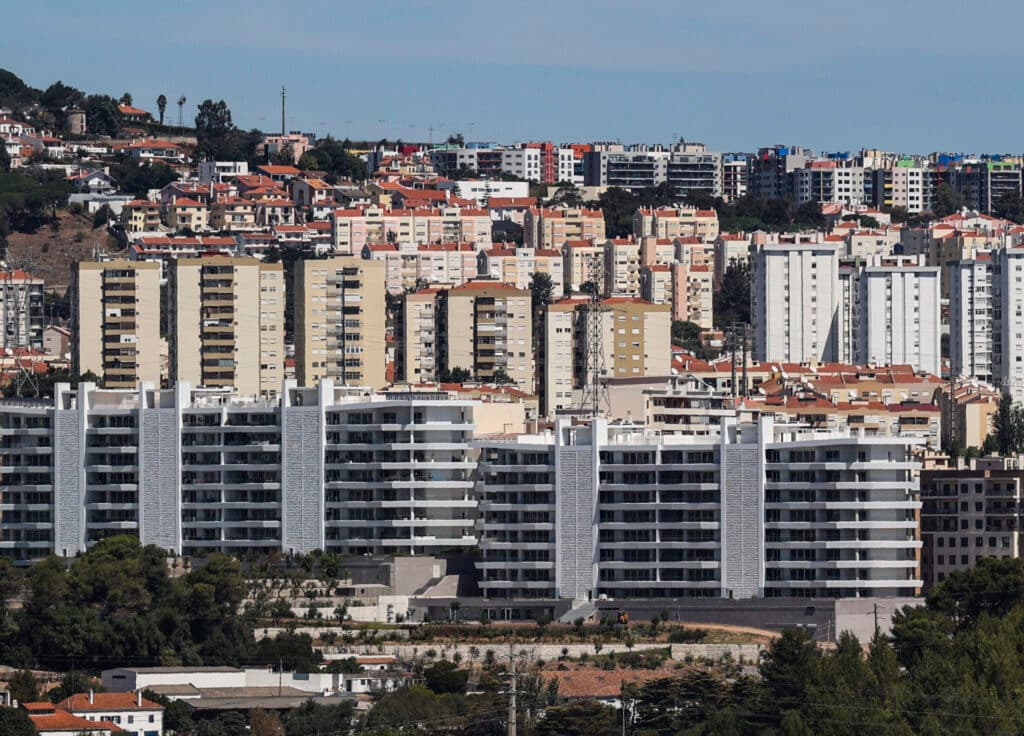
European Commission Warns of Portugal's Deepening Housing Crisis, Sparking Investor Concern Over Market Stability
By Kellogg Fairbank
Published: November 29, 2025
Category: market-trends
### European Commission Warns of Portugal's Deepening Housing Crisis, Sparking Investor Concern Over Market Stability
The **European Commission** has officially sounded the alarm on Portugal's severe housing crisis, identifying it as a primary driver of “new social challenges” that are actively increasing the risks of poverty and social inequality. This high-level warning, delivered within the European Semester autumn package, elevates the country's housing affordability issue from a domestic problem to a matter of concern for the entire bloc. For foreign investors and expatriates who have been central to the Portuguese real estate market's [https://www.realestate-lisbon.com/market-insights] recent boom, this signals a potential shift in the regulatory landscape, as both Brussels and Lisbon are now under pressure to act.
### Key Takeaways
• ✓ The European Commission has formally warned that Portugal's housing crisis poses a significant risk to social stability and is exacerbating poverty.
• ✓ The report highlights that 6.9% of the Portuguese population had an excessive housing cost burden in 2024, marking one of the most rapid increases in the EU.
• ✓ This crisis is attributed to a structural imbalance of high demand and low supply, which has led to sustained double-digit growth in property prices and rents.
• ✓ An upcoming European plan for affordable housing, set to be unveiled on December 16, may introduce new regulations on state aid, construction, and short-term rentals (Alojamento Local).
In its detailed report, the Commission notes that despite some progress, Portugal's social safety net is struggling to cope with the pressures created by the housing sector. The data is telling: the proportion of the population facing excessive housing costs—defined as spending over 40% of disposable income on housing—hit **6.9%** in 2024. While this remains just under the EU average of 8.2%, the report flags that Portugal saw one of the largest increases in this metric across the Union, a clear indicator of a rapidly deteriorating situation. The Commission directly attributes this to the “continuous increase in housing prices and rents in recent years,” a trend that investors have capitalized on but which is now reaching a critical social tipping point.
The report further contextualizes the problem within a broader European trend, where over a quarter of young people live in overcrowded conditions and are often unable to leave their parental home until their late 20s or early 30s. This situation, which is particularly acute in high-demand cities like **Lisbon**, is now being framed not just as a market dynamic but as a systemic social failure. The Commission's forthcoming “European plan for affordable housing” is a direct response to this, aiming to complement national policies with a coordinated, EU-level strategy. Investors must now consider the implications of this heightened scrutiny, as detailed in our policy analysis blog [https://www.realestate-lisbon.com/blog/policy-analysis].
## Market Implications for Investors
The Commission's formal warning is a material event for real estate investors in Portugal. It signals that the era of relatively light-touch regulation may be coming to an end. The political pressure to intervene is mounting, and investors must now price in a higher degree of regulatory risk. The upcoming EU plan could introduce a raft of measures, including stricter enforcement of rules around short-term rentals (**Alojamento Local**), which have been a highly profitable segment for many investors in cities like **Lisbon** and **Porto**. A shift in policy here could dramatically alter the return-on-investment calculations for many properties.
However, this challenge also illuminates a significant and sustainable investment opportunity: the vast, underserved market for affordable and mid-range housing. The report implicitly points to a market failure in this segment, creating a clear opening for private capital to align with public policy goals. The EU plan is expected to include new financing mechanisms and revised state aid rules to encourage the construction of affordable homes. Developers and funds that can pivot their strategies to address this demand may find themselves in a favorable position, potentially benefiting from streamlined approvals or financial incentives. Exploring the investment risks and opportunities [https://www.realestate-lisbon.com/buying-guide/investment-risks] in this new context is now essential.
## The European Housing Plan: What to Expect
The details of the European plan for affordable housing, due on December 16, will be critical. While direct housing policy remains a national prerogative under the principle of subsidiarity, the EU can exert significant influence. The plan is expected to touch on several key areas relevant to investors. Firstly, a review of state aid rules could make it easier for national governments to subsidize social and affordable housing projects, creating opportunities for public-private partnerships. Secondly, the “new European Bauhaus” initiative suggests a focus on high-quality, sustainable, and aesthetically pleasing construction, which could set new standards for development projects seeking EU support.
Most importantly for many current investors, the plan is expected to address the impact of tourism on housing, with potential new guidelines or limits on short-term rentals. This could involve empowering municipalities to enact stricter controls, a move that would have a direct impact on yields in tourist-heavy neighborhoods like **Alfama** or **Baixa** in Lisbon. A deep understanding of the existing legal issues in Portuguese real estate [https://www.realestate-lisbon.com/buying-guide/legal-issues] will be crucial for navigating these changes.
## The Context of the Lisbon Metropolitan Market
Lisbon's real estate market is the crucible where these tensions are most apparent. Its global appeal has driven a decade of price appreciation, but this success has come at the cost of local affordability. The Commission's report effectively validates the concerns that many local residents and officials have been voicing for years.
The key market dynamics in Lisbon that investors must now re-evaluate include:
• **Regulatory Headwinds**: The probability of new regulations, whether from the local municipality, the national government, or driven by EU directives, has increased significantly.
• **Shift in Political Tone**: The narrative is shifting from celebrating foreign investment to questioning its social impact, which could influence future policies on everything from property taxes (**IMI**) to Golden Visa schemes.
• **Opportunity in the Mid-Market**: The crisis has laid bare the enormous demand for housing solutions for working professionals and families, a segment that has been largely ignored by developers focused on luxury and tourism.
• **Sustainability as a Driver**: The EU's focus on green and sustainable construction (the “Bauhaus” initiative) will likely translate into new building codes and incentives, favoring developers who embrace these principles. Our guide on sustainability in real estate [https://www.realestate-lisbon.com/buying-guide/sustainability] provides further context.
A visit to our Lisbon neighborhoods guide [https://www.realestate-lisbon.com/lisbon-real-estate-neighborhoods] can help investors understand which areas might be most affected by or resilient to these potential policy shifts.
## Investment Considerations
In this evolving environment, a passive investment strategy is no longer sufficient. Investors must be proactive and strategic. Firstly, a thorough review of existing portfolios is warranted to assess exposure to regulatory risk, particularly for assets heavily reliant on short-term rentals. Secondly, future acquisitions should be evaluated not just on their potential for appreciation but also on their alignment with emerging policy priorities. Projects that contribute to the supply of long-term rental housing or incorporate sustainable building practices may face a smoother path and lower risk.
The crisis also underscores the importance of professional advice. Engaging with local experts, including English-speaking real estate agents [https://www.realestate-lisbon.com/english-speaking-real-estate-agents] and lawyers who understand the political climate, is no longer a luxury but a necessity. These professionals can provide invaluable insights into the direction of policy and help investors position themselves to navigate the challenges and seize the opportunities that arise from this period of transition.
## Future Outlook
The European Commission's intervention is a clear sign that the Portuguese housing market is entering a new phase of maturity. The focus is shifting from pure growth to sustainable and socially responsible growth. While this may temper the speculative frenzy of recent years, it is ultimately a positive development for the long-term health and stability of the market. A market that works for everyone, including local residents, is more resilient and less prone to boom-and-bust cycles.
Investors who recognize this shift and adapt their strategies accordingly will be well-positioned for success in the years to come. The future of Portuguese real estate will be defined by those who can innovate and deliver quality housing solutions that meet the needs of a diverse population. For expert analysis and strategic advice on navigating this new chapter in the Portuguese property market, contact realestate-lisbon.com [https://www.realestate-lisbon.com/].